
(Disclaimer: post made long after pictures were taken). We saw many bird species in Botswana.
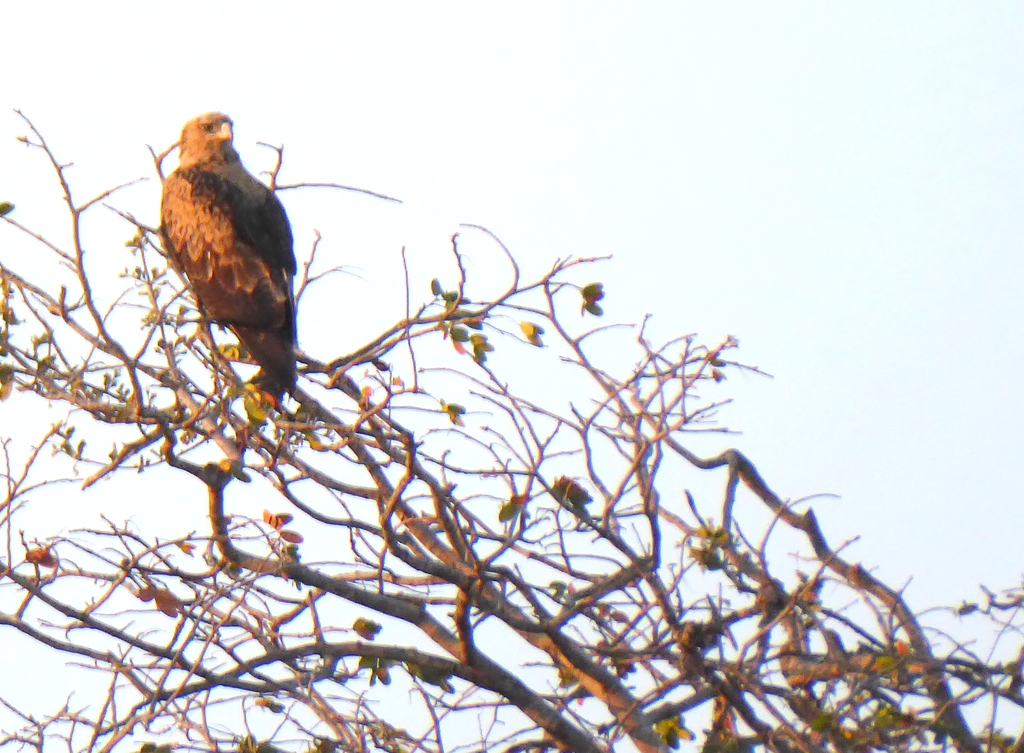
I think this was a Fish Eagle.
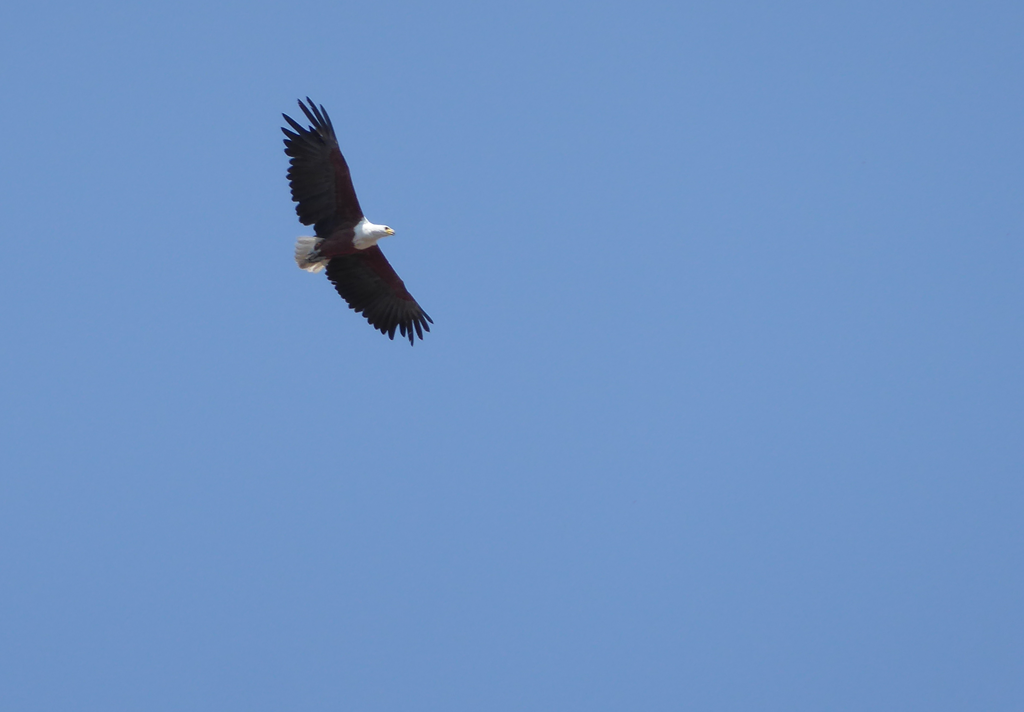
This doesn’t look like a fish eagle.
This is fish eagle food, well maybe not as it isn’t a fish. 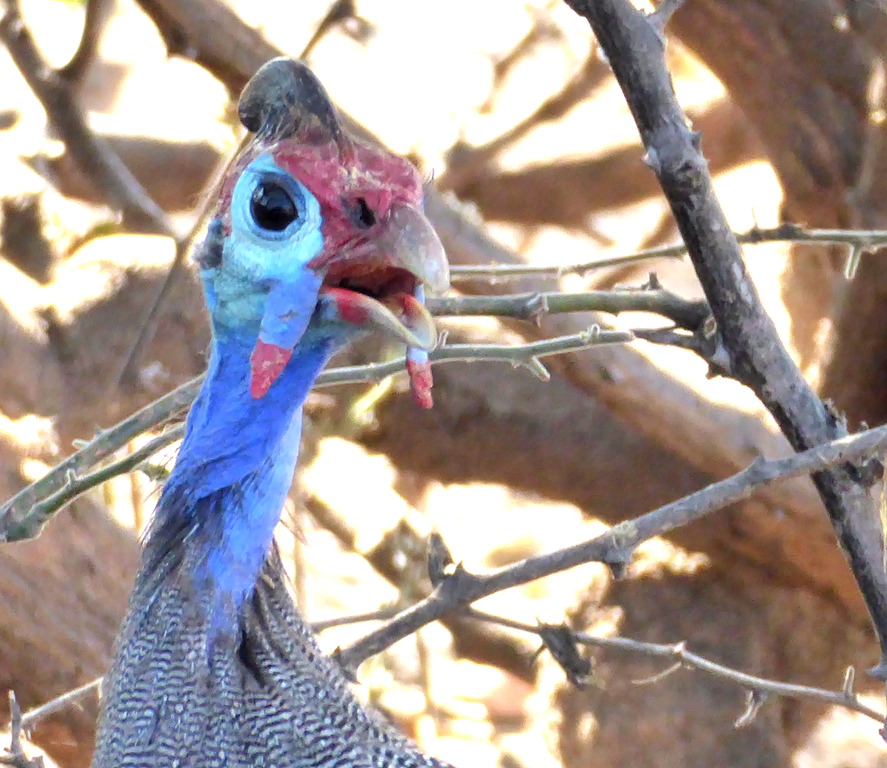
Here is a stork patiently waiting for food to swim by.

Here’s another bird. This time of the yellow variety.

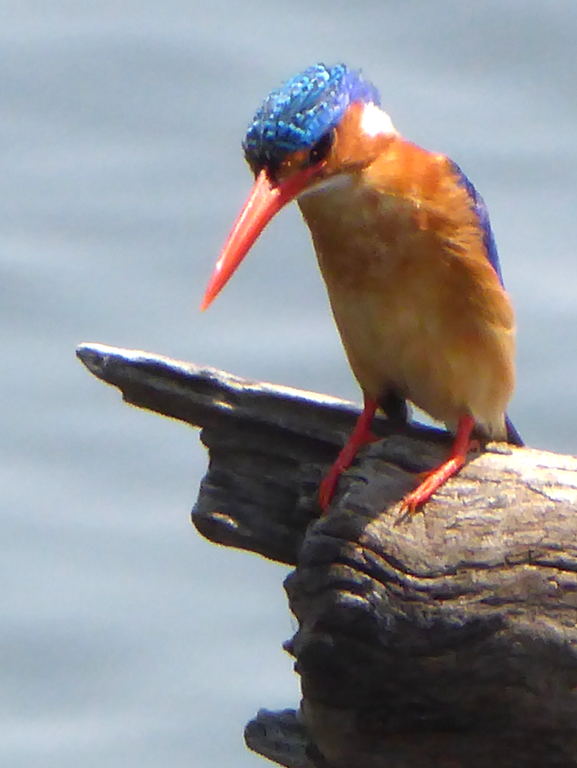
Here’s a much more colourful bird. Maybe a kingfisher?
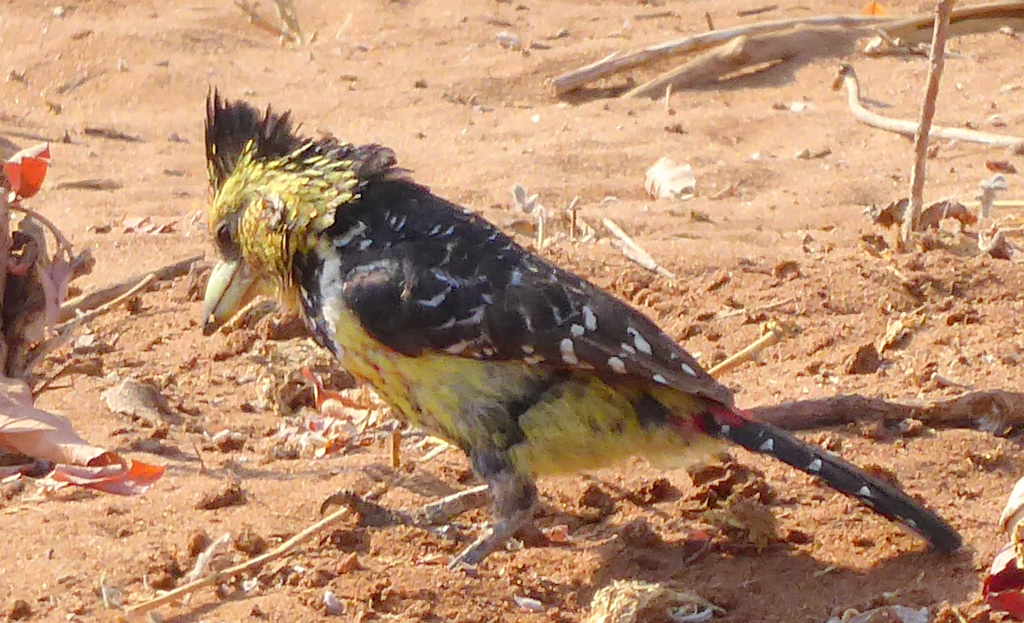
This is a less blown out shot of the yellow feathered bird.
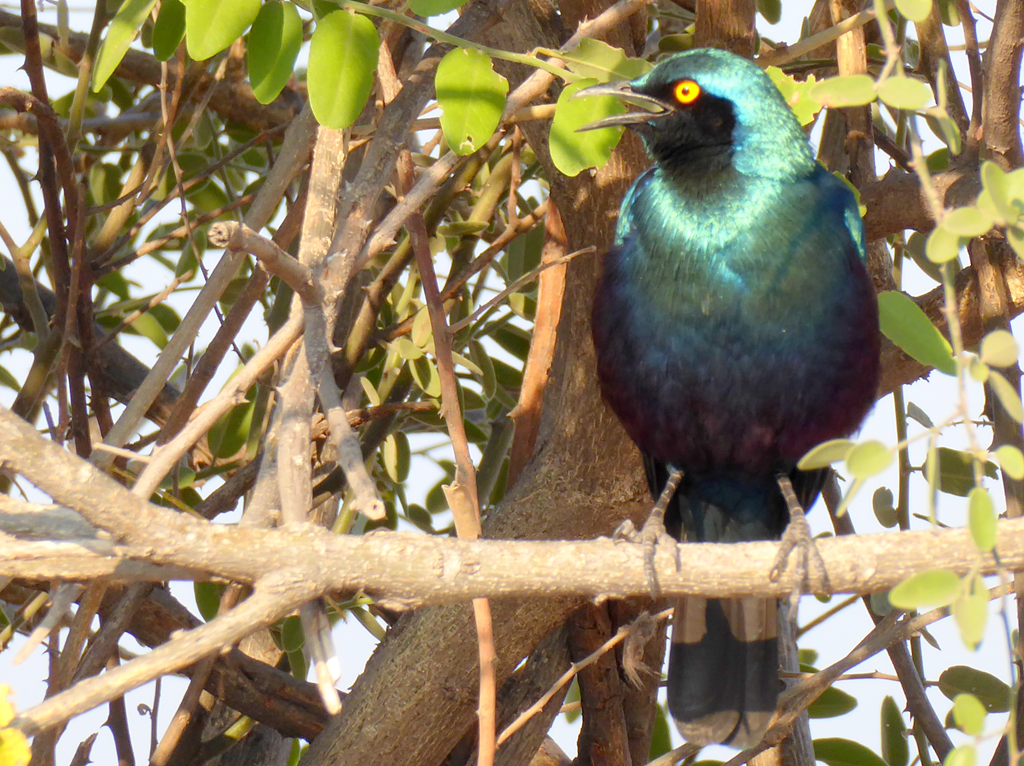
This bright-eyed bird has irridescent feathers that does not help it to hide.
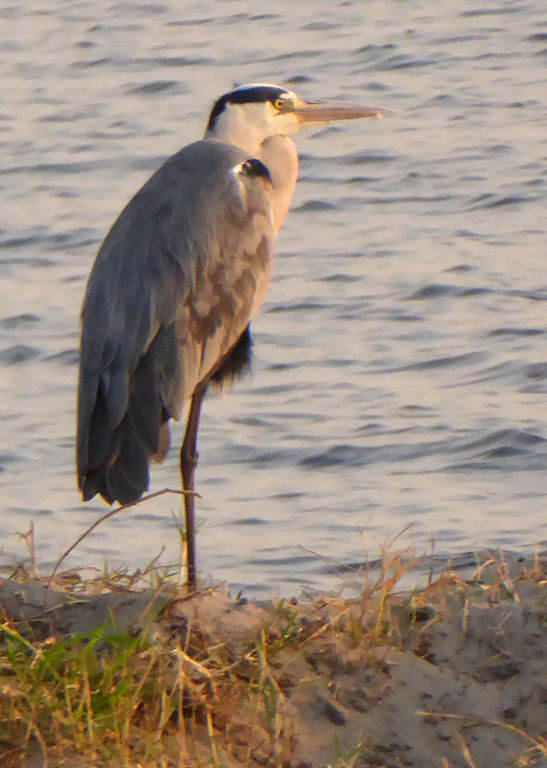
This confused looking bird is failing to look for its food which is down. It is probably on the lookout for predators.
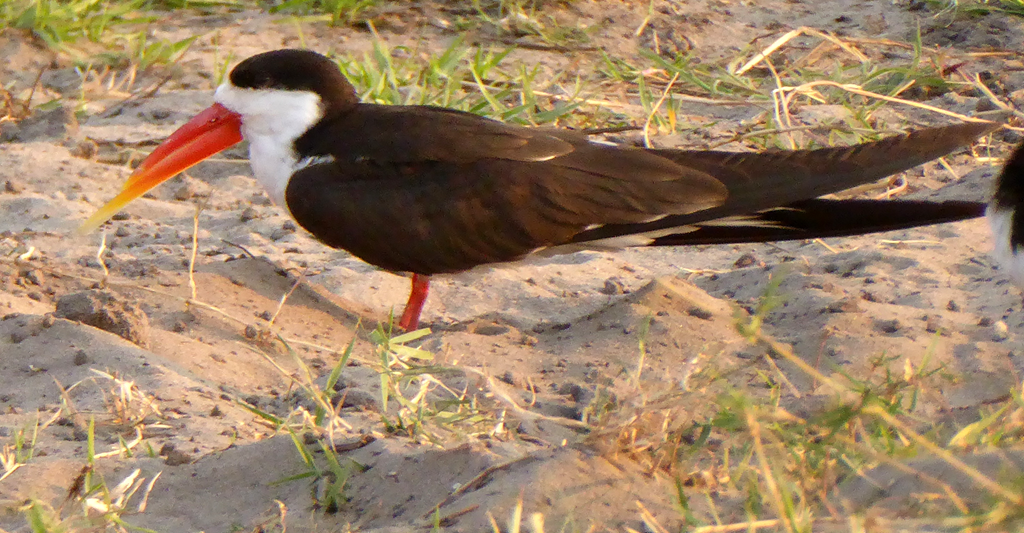
This bird must scoop insects from the ground as it’s upper beak is much shorter than the lower beak.
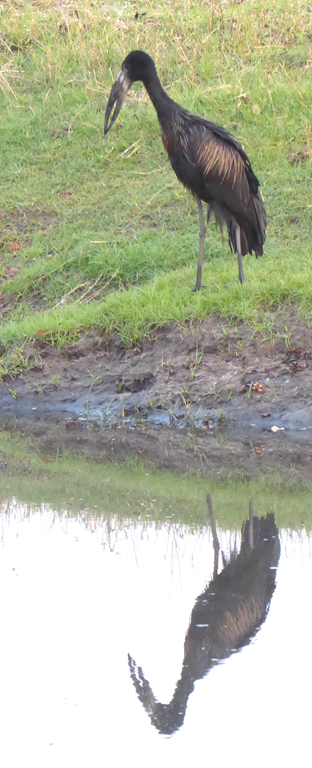
Oh I remember this one. It is an open-bill stork. If you are surprised at the name it is called that because it’s bill is in fact open at rest. This lets the water drain out when fishing.
And back to not remembering. Looks like a very slim pelican, probably isn’t but we’ll call it that so we have a caption and can include the picture in the post.
(Kerri would like to note that we have been seeing cormorants for a full year now, on every continent. But Matt still thinks this is a pelican.) Matt would like to point out he forgets the name of cormorants every time he sees one and instead thinks there’s one of those…uh…swimming birds.
(Kerri thought that at least the Australian name – shag – would stick.)
Kerri thought wrong, it didn’t.
Hope you have enjoyed this post which has probably made you less knowledgeable about African birds than when you started.
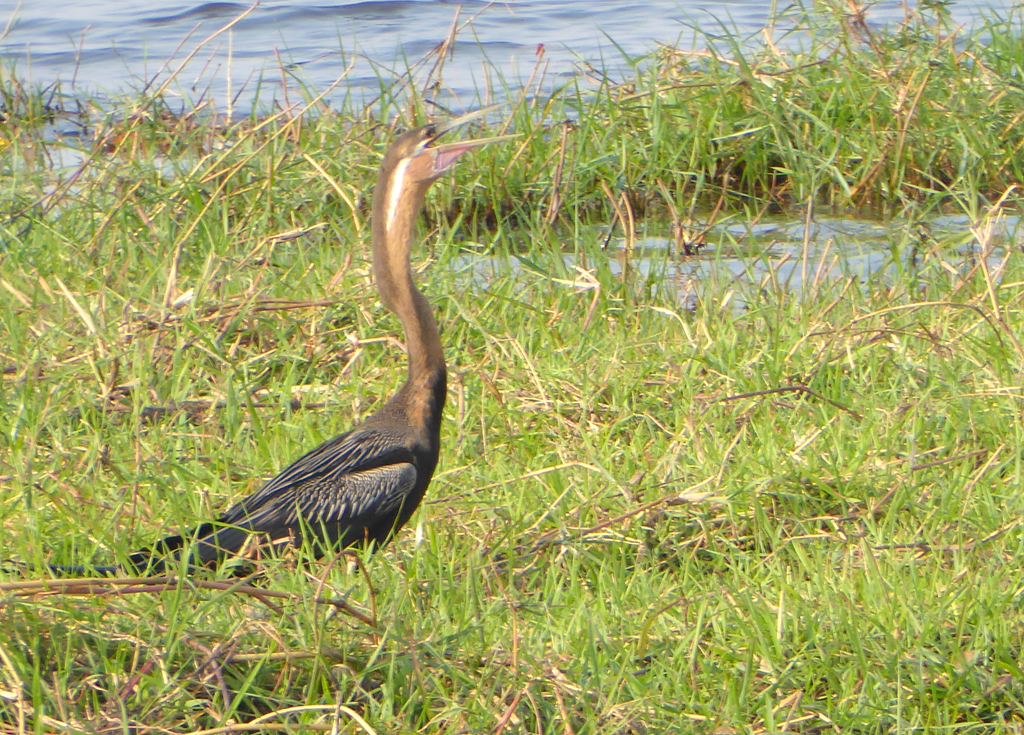

I would say it is definitely some kind of shaggy cormorant. Definitely not a pelican. Next time you should pour a bucket of water of their feathers. On pelicans and other “normal” birds the water will run off because they make their feathers greasy. The cormorants don’t which makes them less buoyant and thus it is easier to dive. But they need a lot of time to dry their feathers.
The cormorant was sitting between a crocodile and a herd of hippos. Staying in the boat and calling it a pelican is definitely a better idea than going over there with a bucket of water.