The reason to head to Puno is really to head out on the lake. It is shared by Peru and Bolivia and it is split either 60-40 (in Peru’s favour) if you are in Peru or 30-70 (in Bolivia’s favour) if you are in Bolivia. There is a patrol but no real border. You can’t land on a dock in the other country though which leads to complicated boat transfers just off shore. It is 280m deep at its deepest point and the depth can fluctuate by over a metre due to the rainy season.
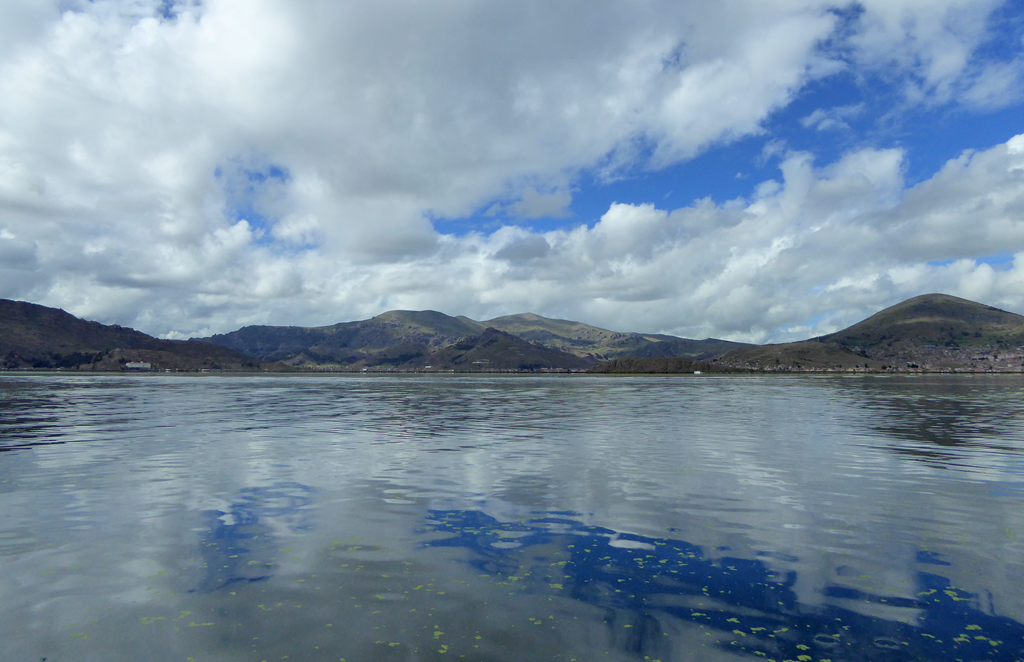
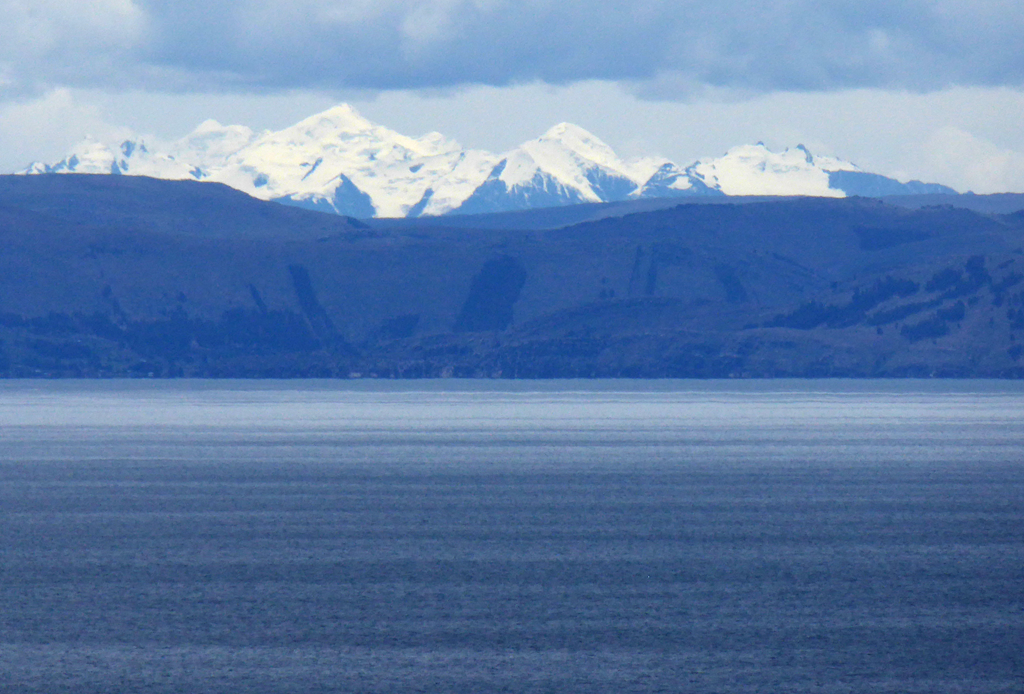
Titikaka means grey puma and is the highest navigable body of water at 3809m above sea level. The snow topped mountains barely seem to be higher than the lake.
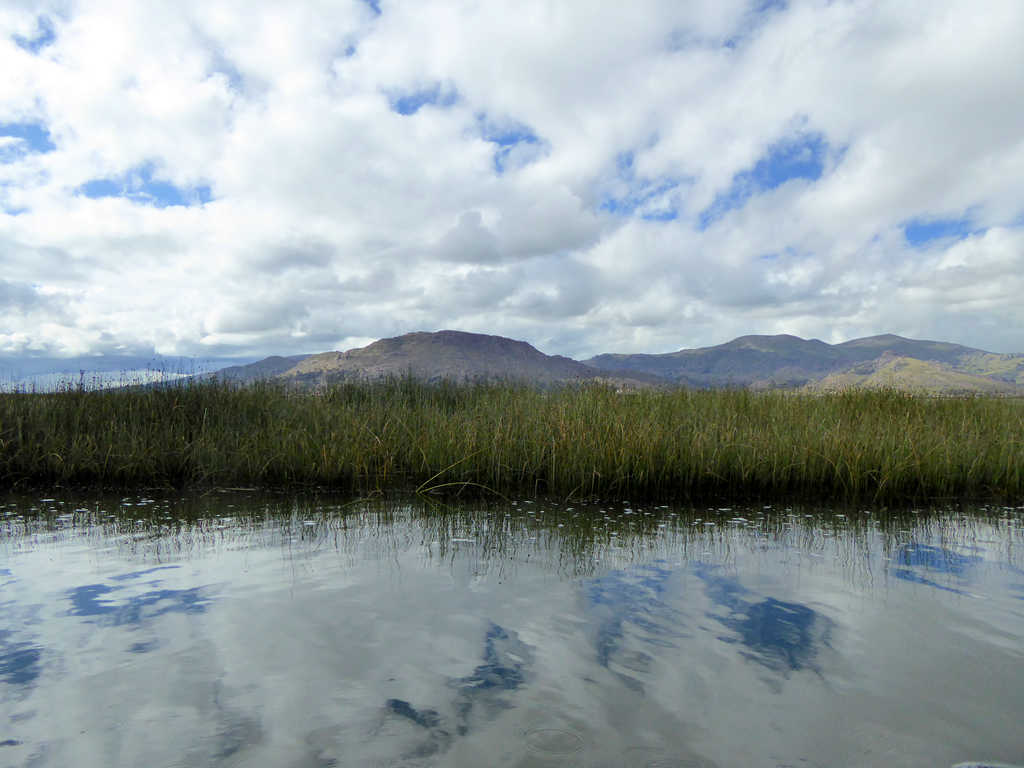
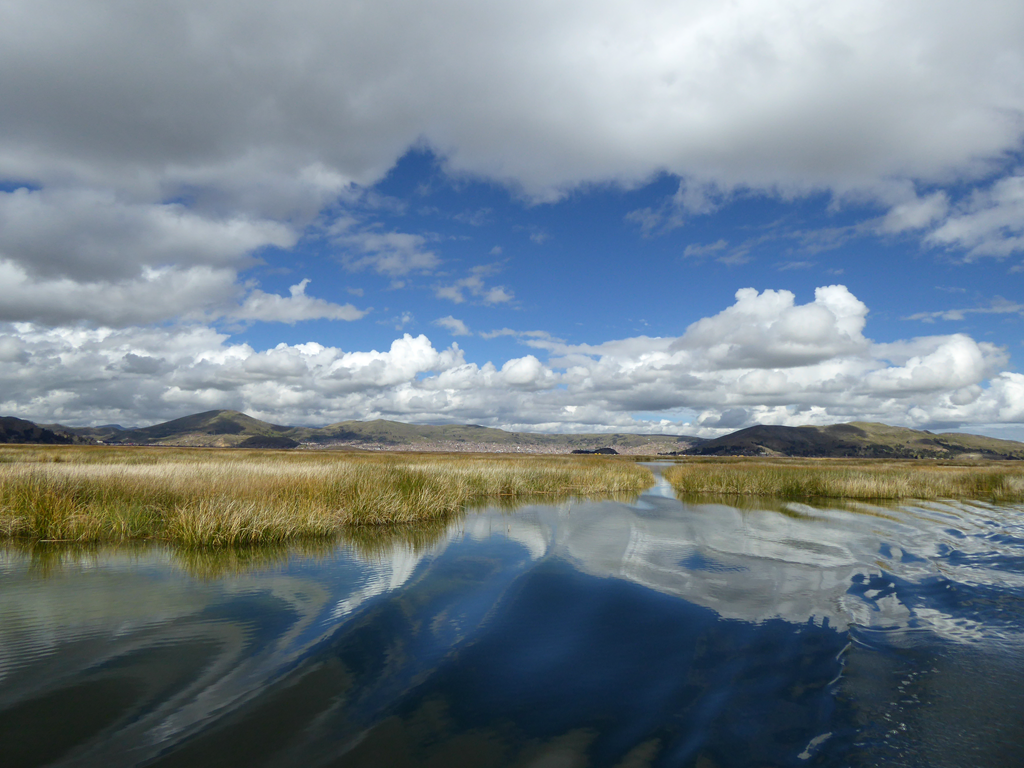
 Reeds grow along the banks of the river and quite a ways out. They have to clear a path for boats to actually get out to the main body and move around due to the growth.
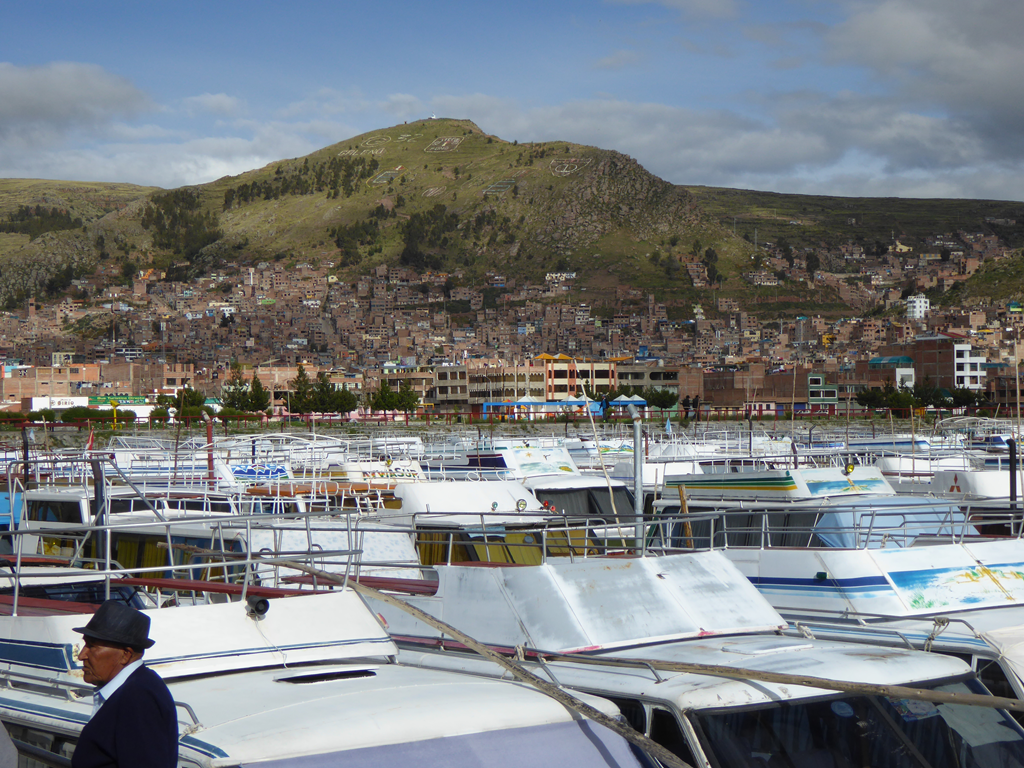
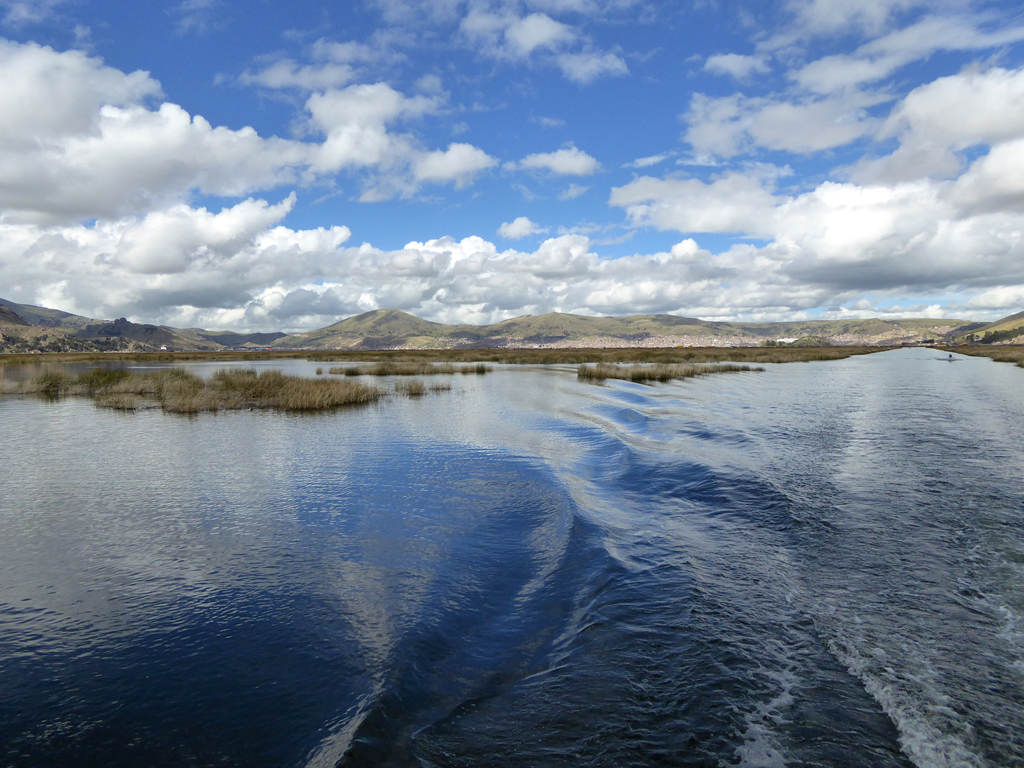
After we finally got out of the reeds you could see the lake better. Here is looking back at Puno off in the distance.
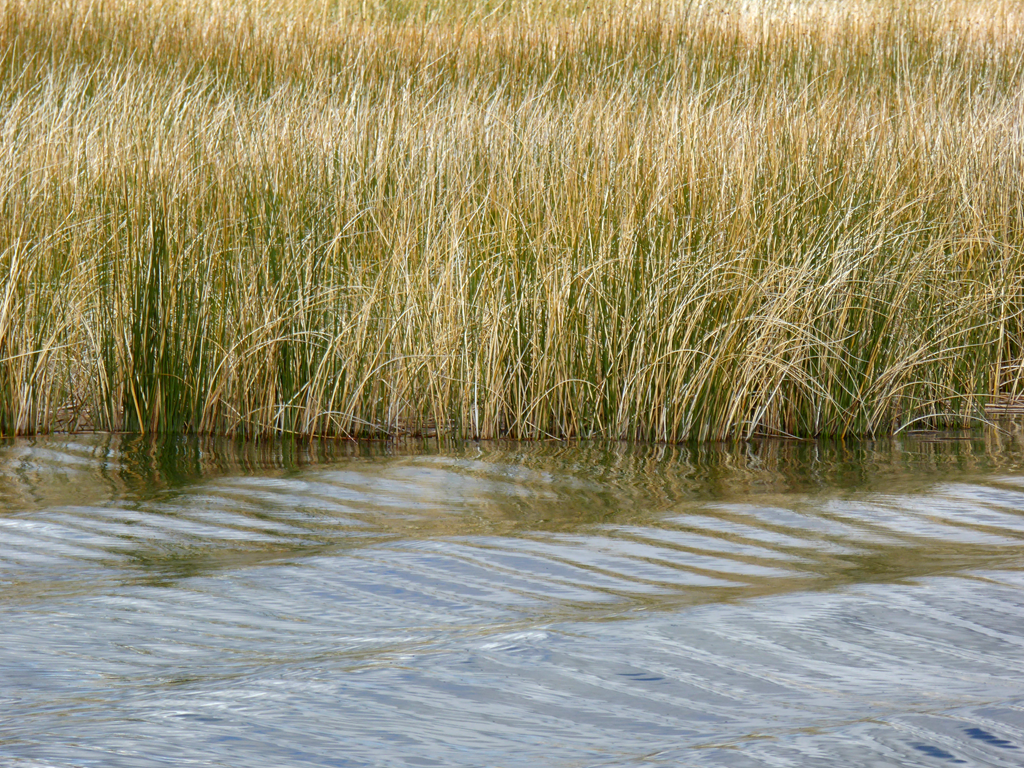
The reeds grow really close together and you’ll see what they are used for in another post.
Even though it was bright out the altitude keeps it pretty cool and the water stays a cool 9C all year round.
The lake is considered fresh water because it only has 1 ppm salt, but they can’t use it for irrigation because the salt accumulation eventually kills everything.