
I spent this weekend at Dinosaur National Park searching for fossils. It is by far the most underrated attraction in Alberta. You get to search the preserve and find hundreds of 75 million year old dinosaur fossils. I had signed up for their guided excavation program, but like every time I visit the desert, it rained, so the program was cancelled. I did get to do 3 shorter tours of the preserve: the sunset bus tour and two Great Badlands Hikes.
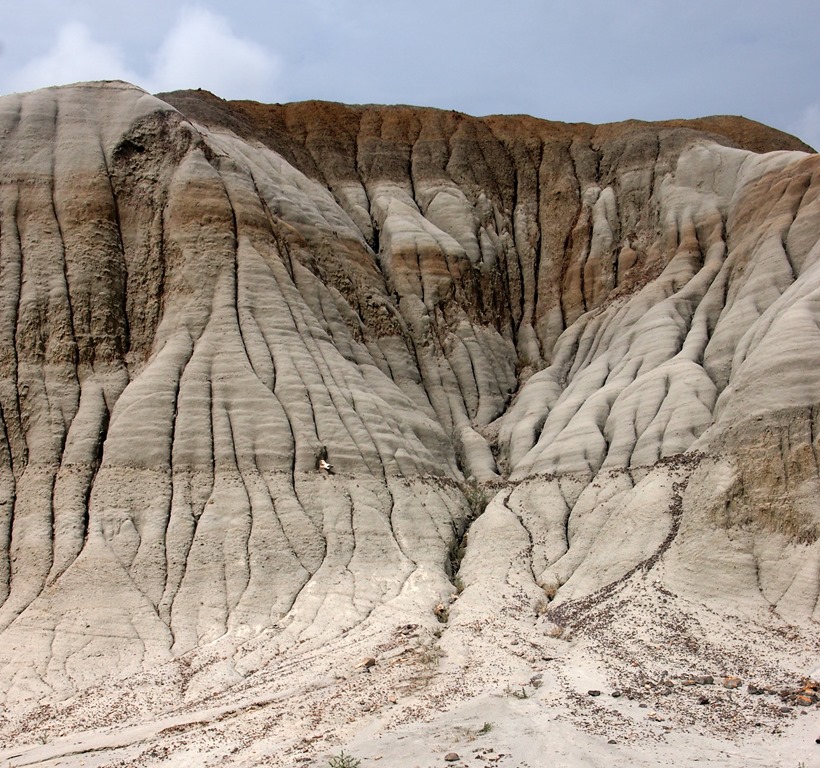
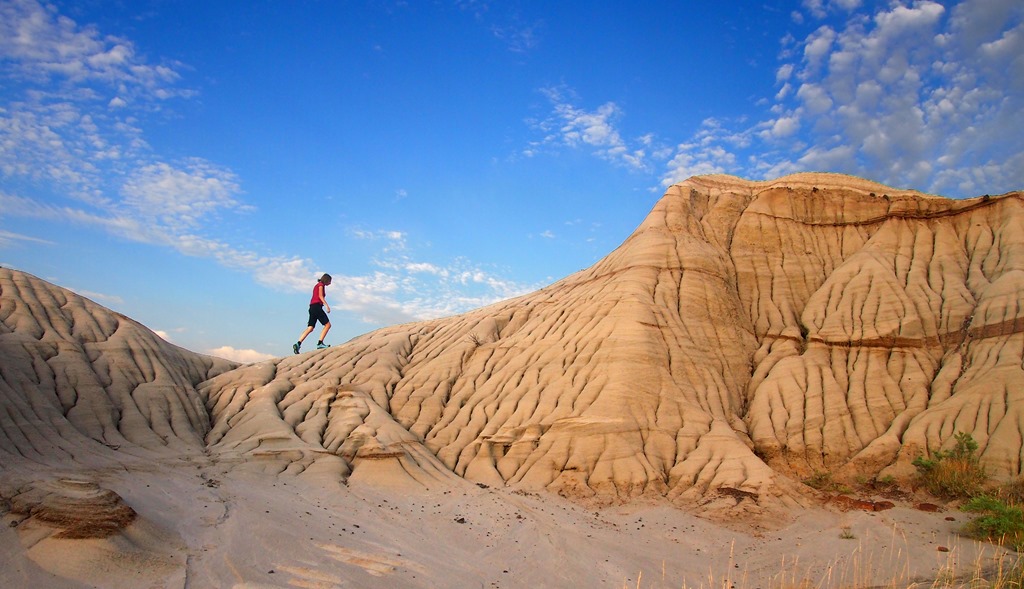
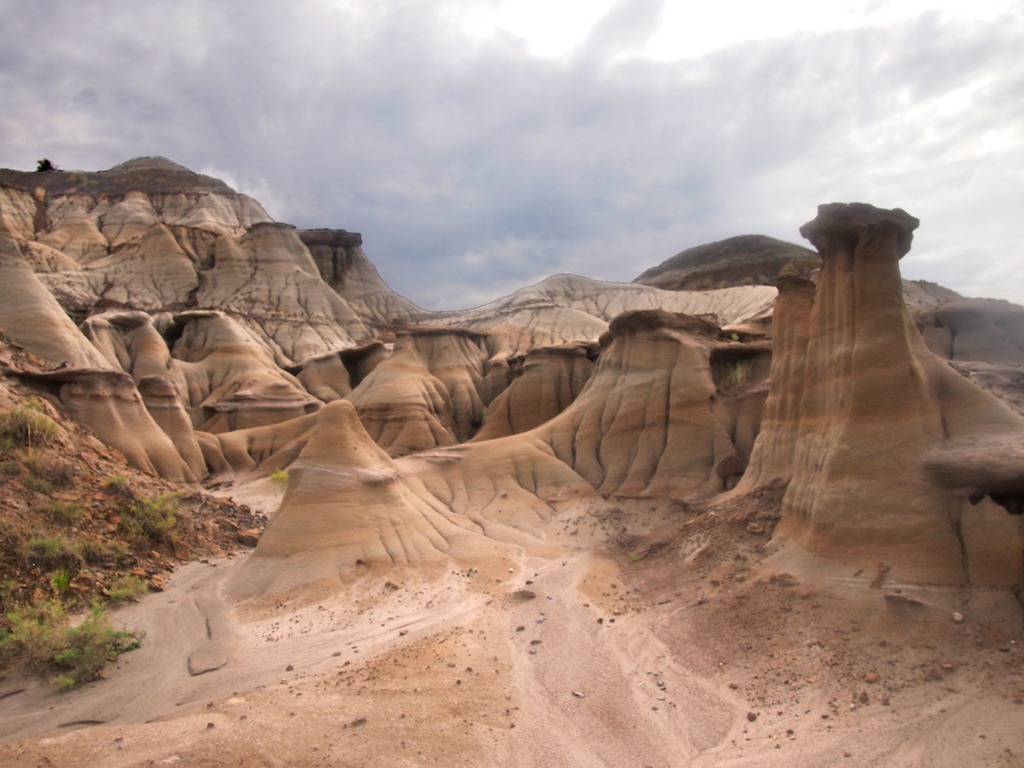
The park is absolutely beautiful. It has the sharpest transition from prairies to badlands I have ever seen. I thought I must be lost because my GPS said I should be getting close but all I could see in all directions were wheat fields. Then all of a sudden the ground just dropped away in front of me revealing miles of sculpted coulees and hoodoos.
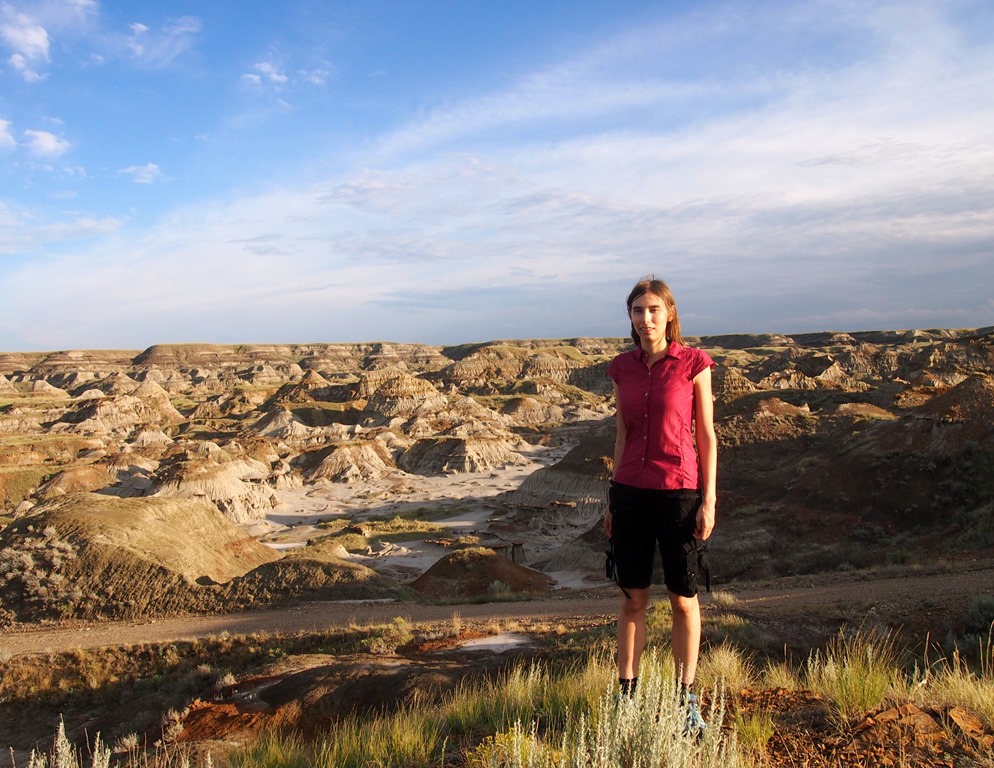
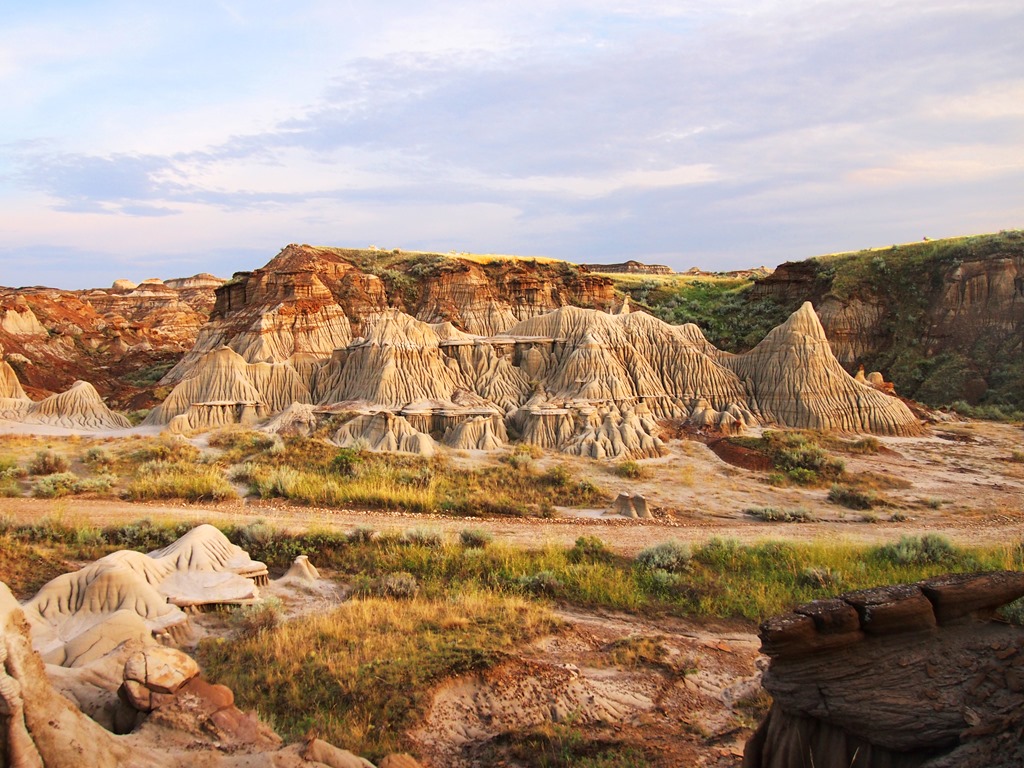
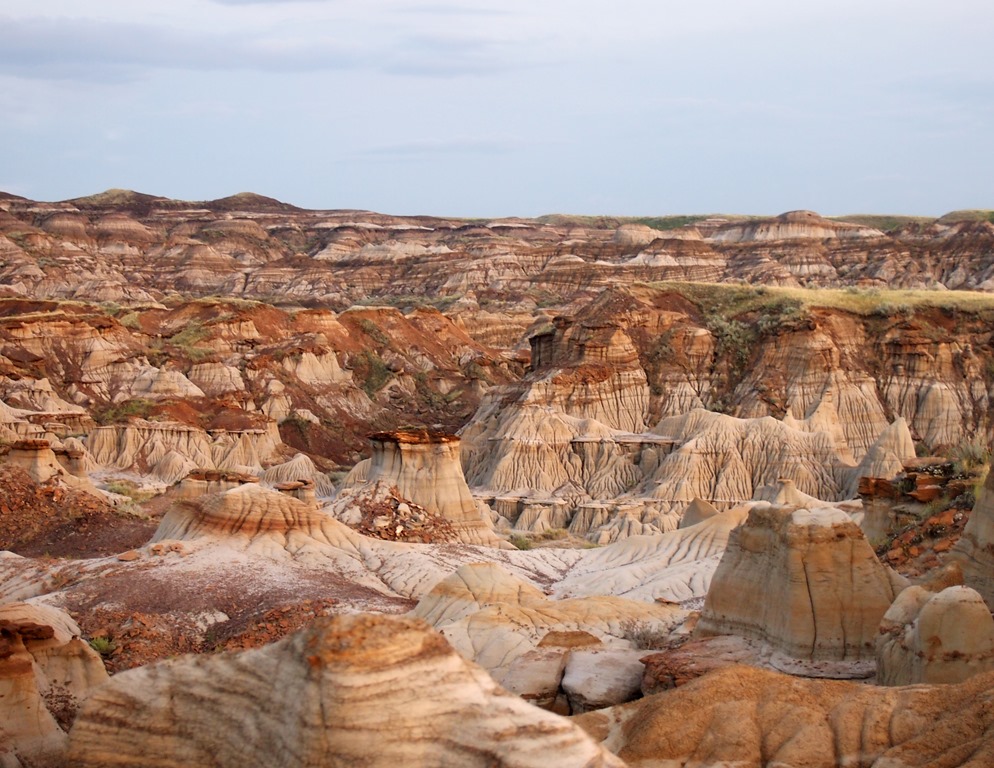
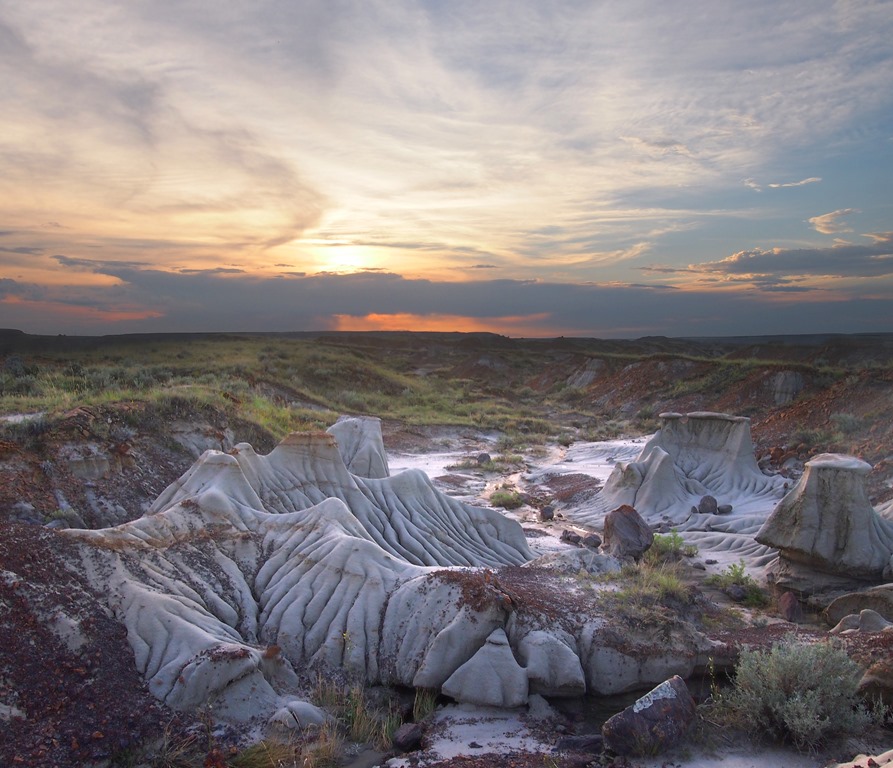
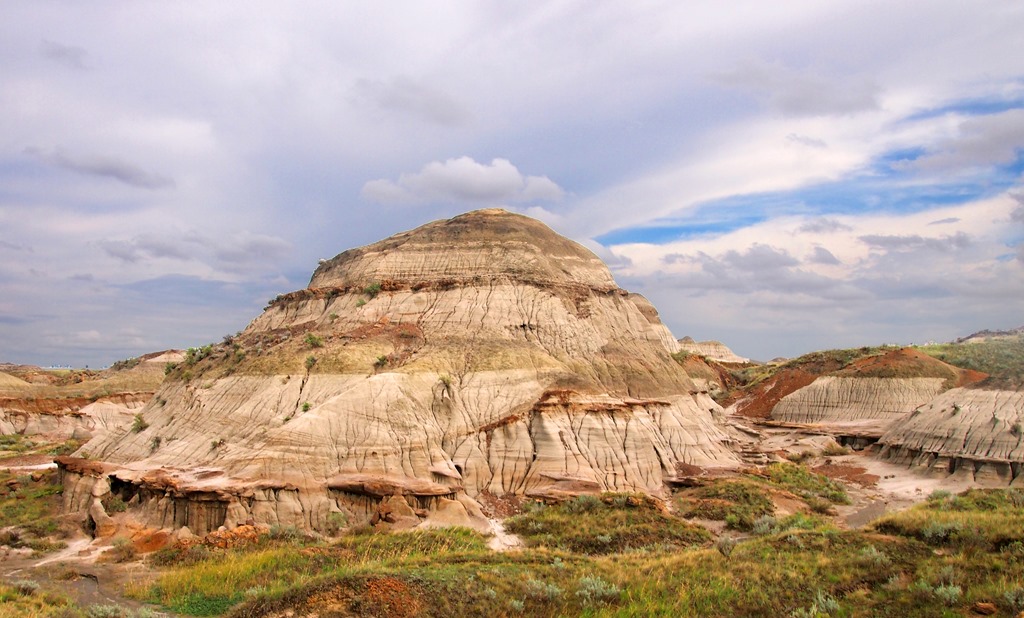
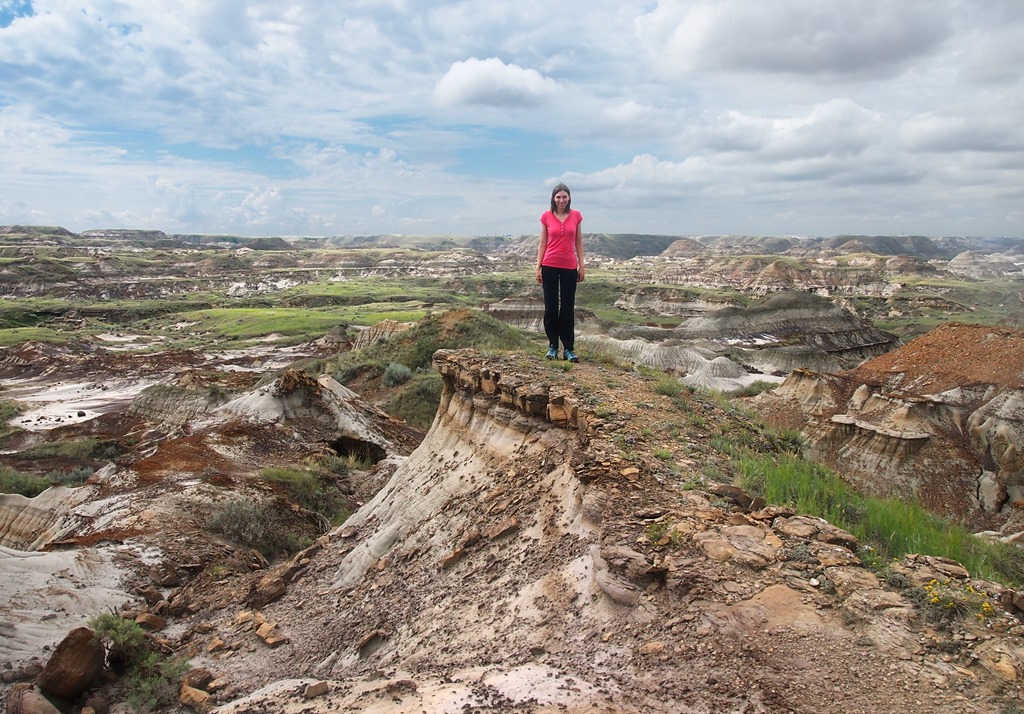
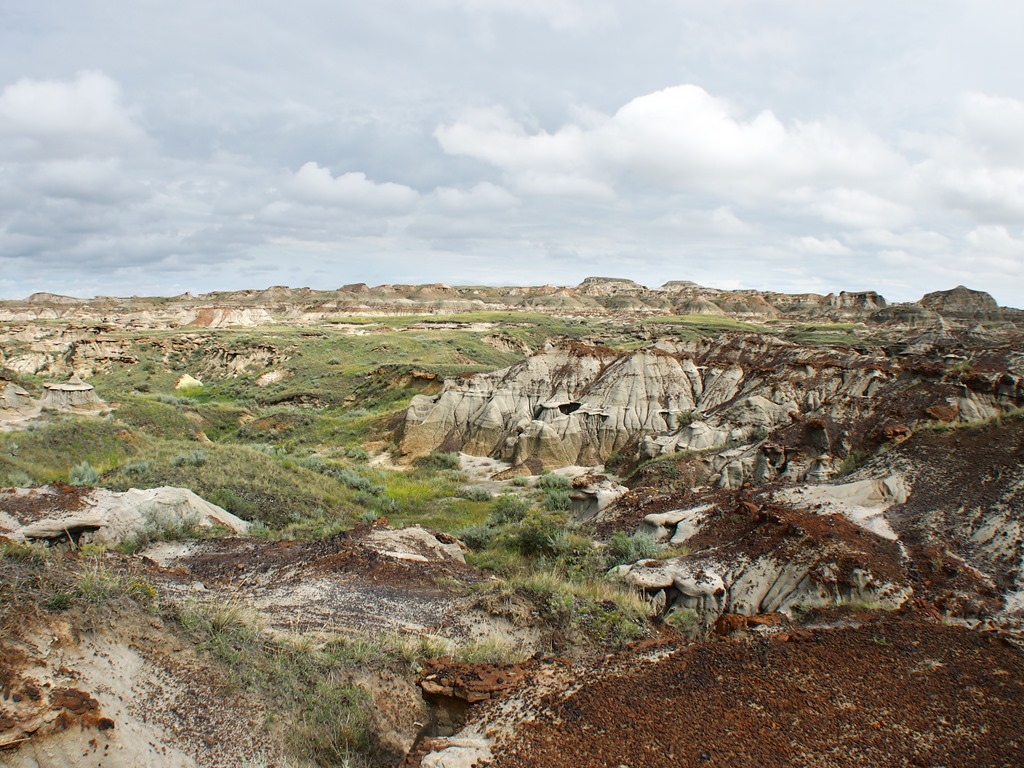
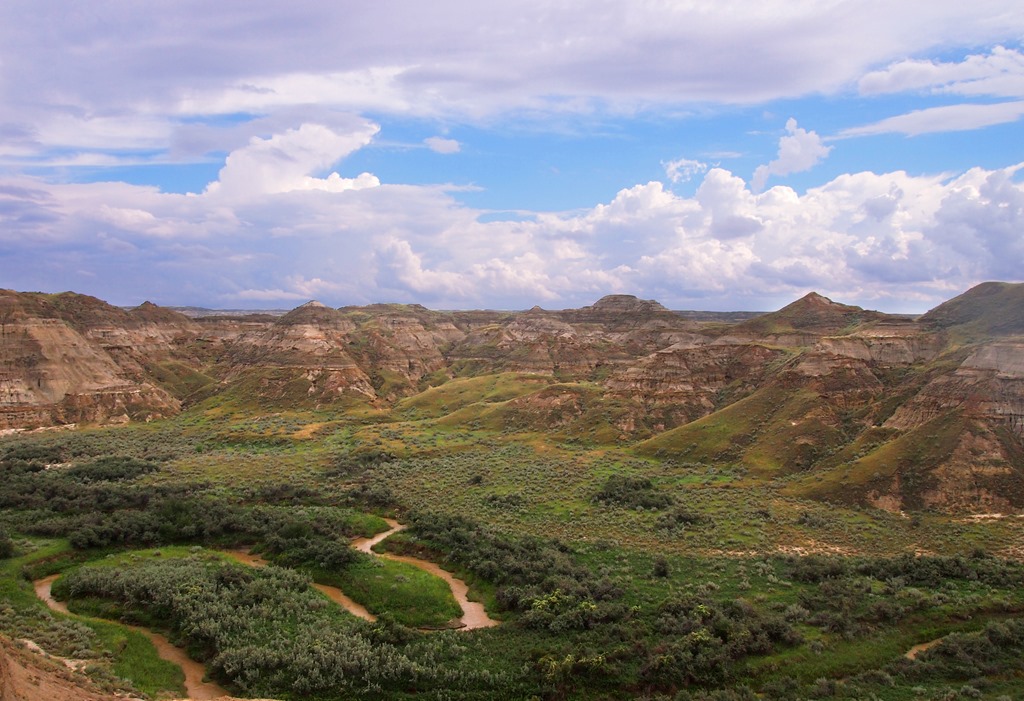
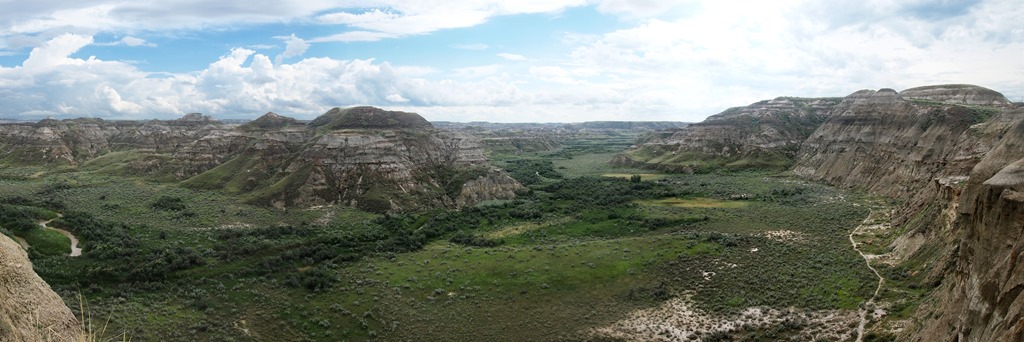
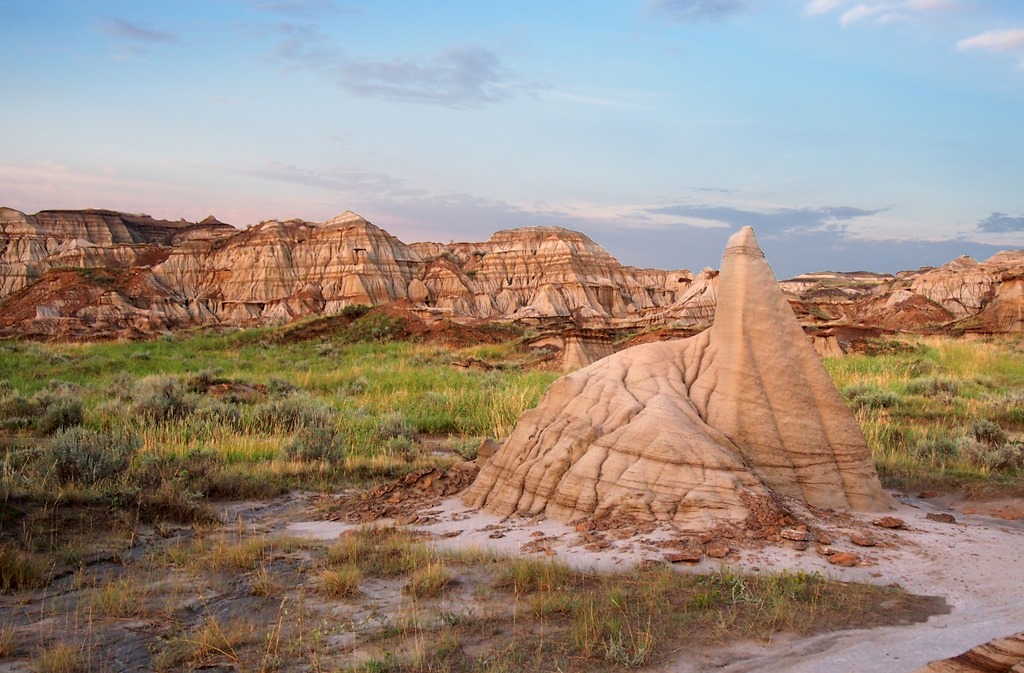
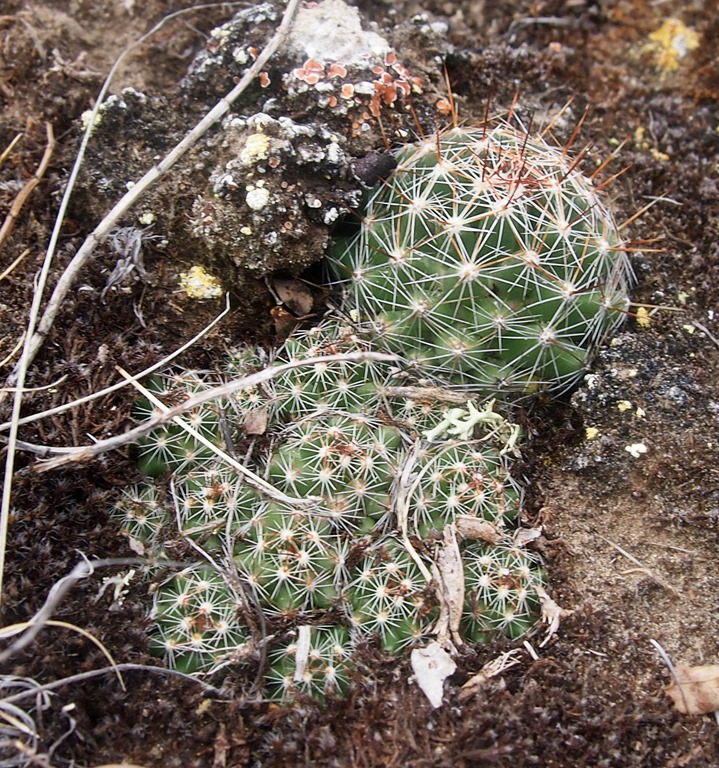
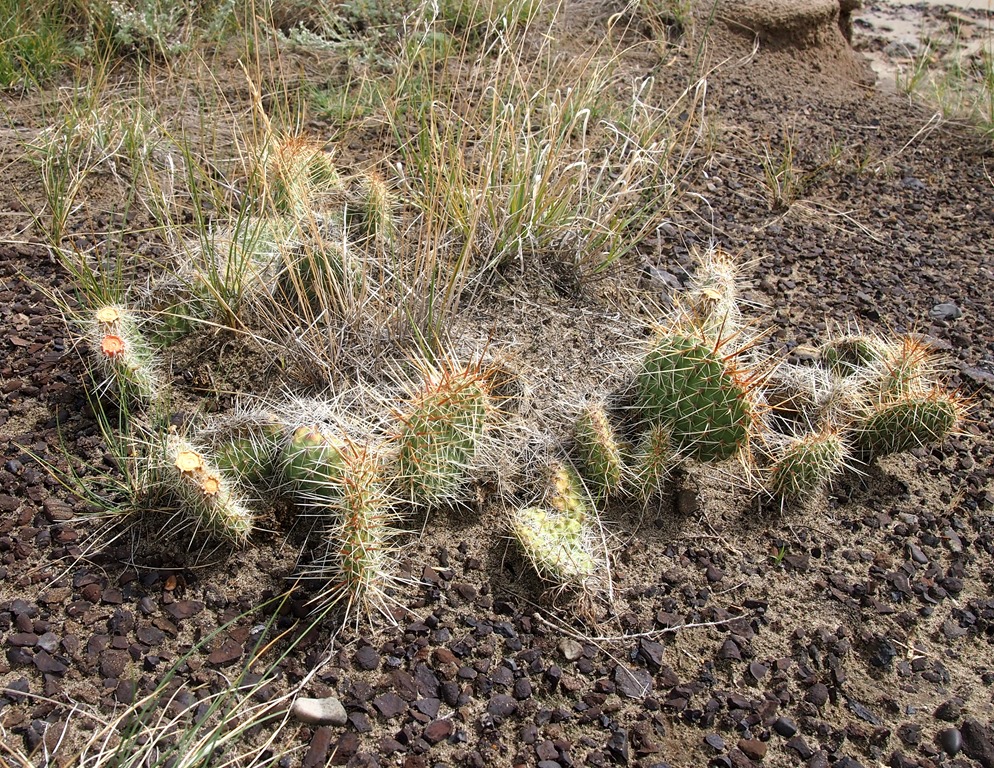
Some of the greener pictures are closer to the river, but most of that is the effect of three days of rain. Everything was noticeably greener, and some of the cactuses were even blooming.
The preserve was incredible. There are so many fossils everywhere. Anything of value to science was removed, which basically means:
- Juveniles and eggs
- Diseased bones
- Skulls
- Articulated skeletons
- Bones with bite marks
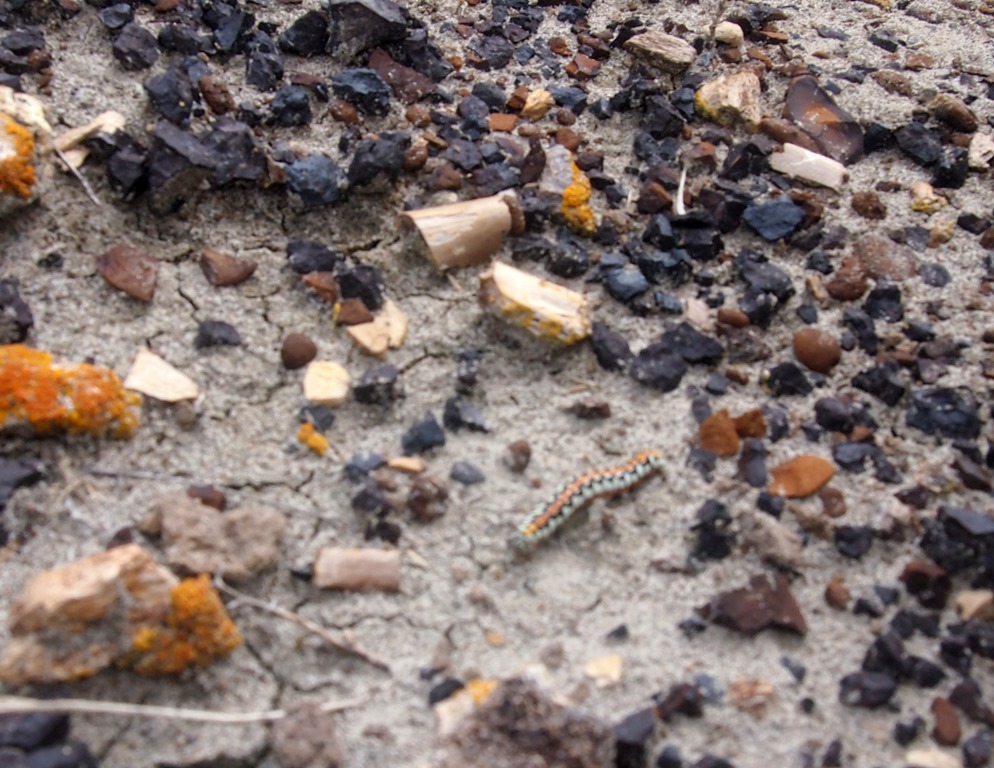
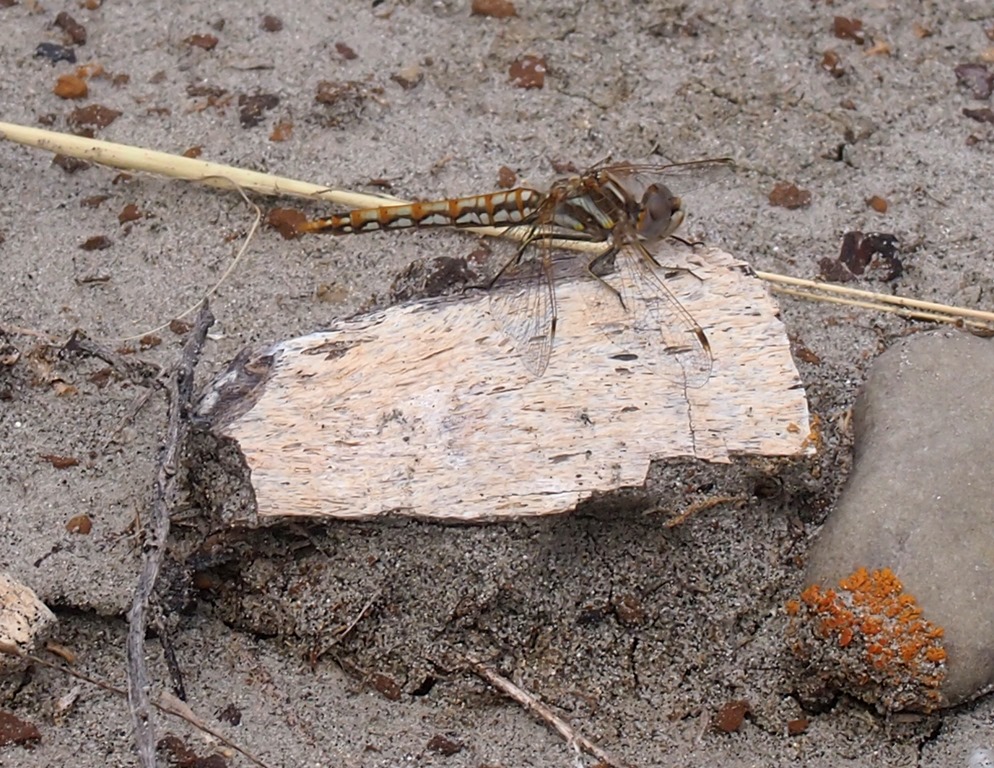
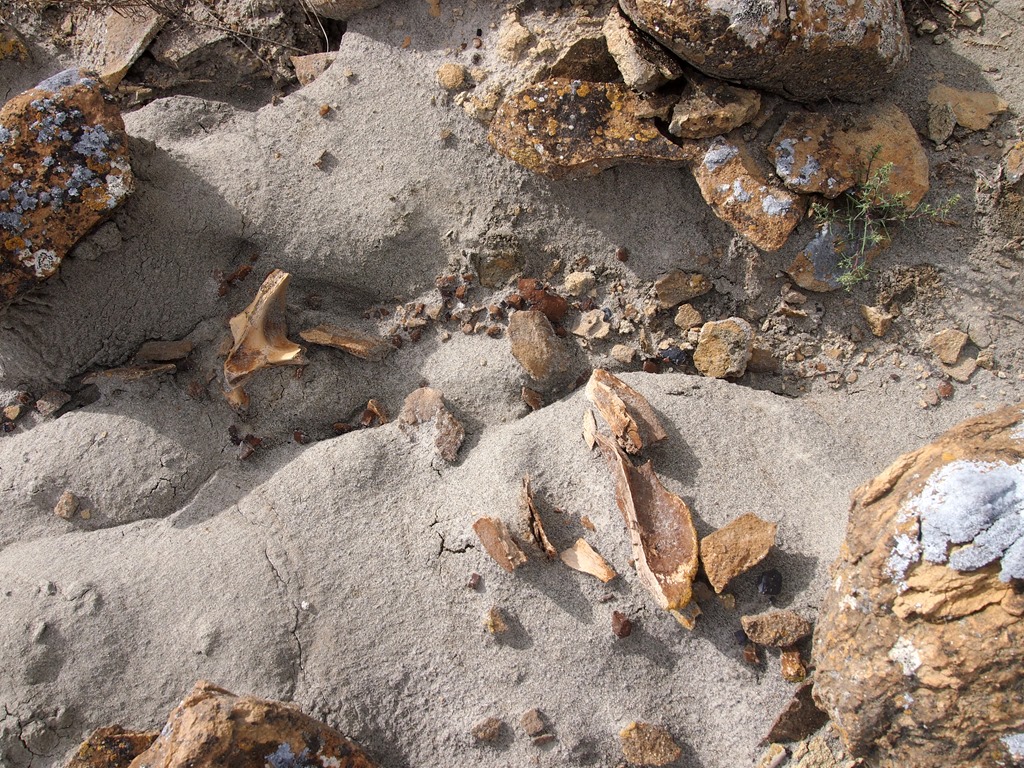
Everything else is basically just sitting there decaying. Which means that they let the tourists just come in and run all over, climbing the walls in search of fossils. There are 75 million year old bones everywhere, so many bones you can’t help but step on them.
This hadrosaur is buried inside a hoodoo. On one side you could see a leg, and on the other side is his jaw and hip.
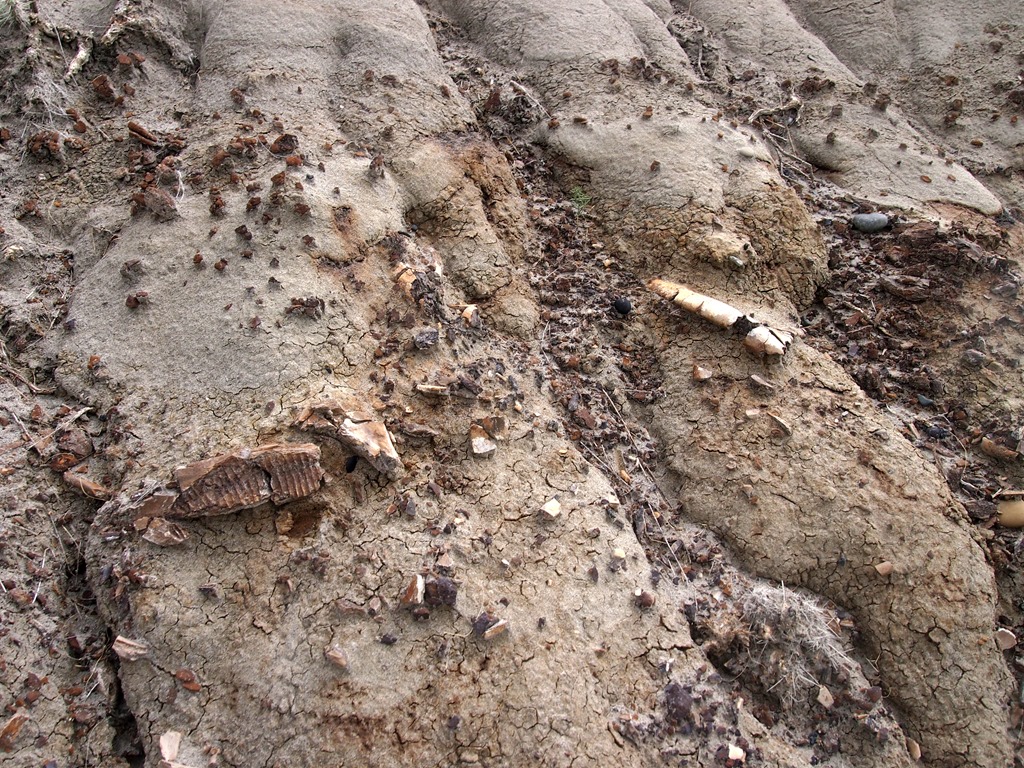
This is a Gorgosaurus tooth I found. It is a member of the tyrannosaurus family, but predated T-Rex by about 8 million years. It was also smaller and more agile than T-Rex. If you look closely you can see little serrations on the side of the tooth, which is how we identified it.
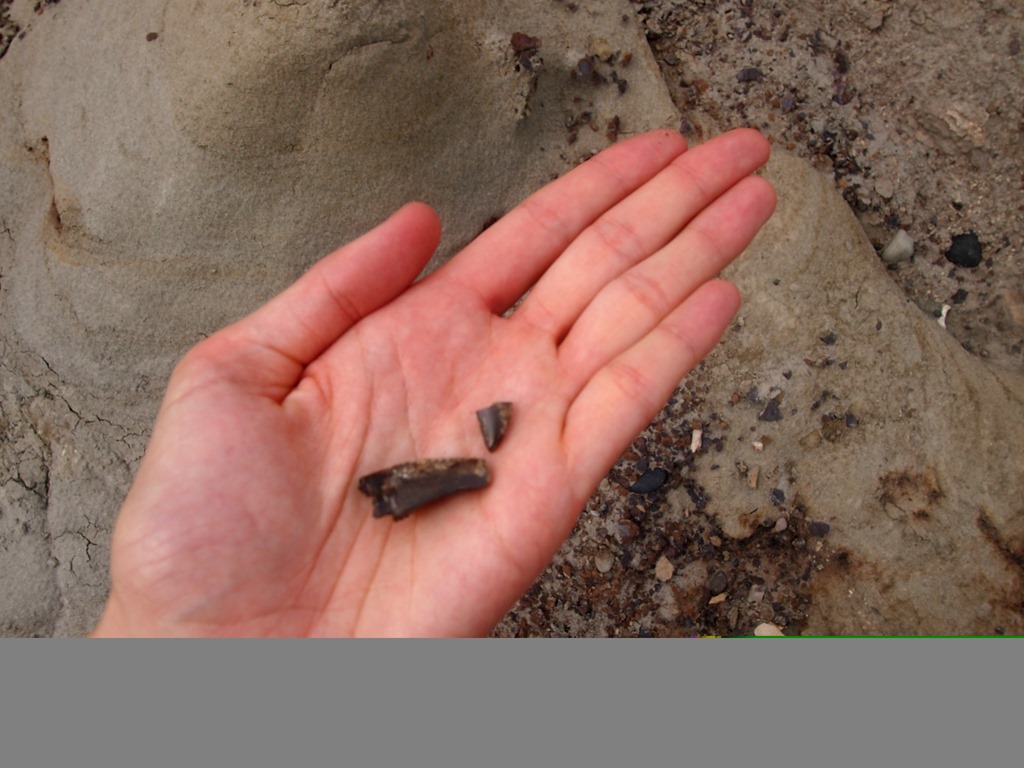
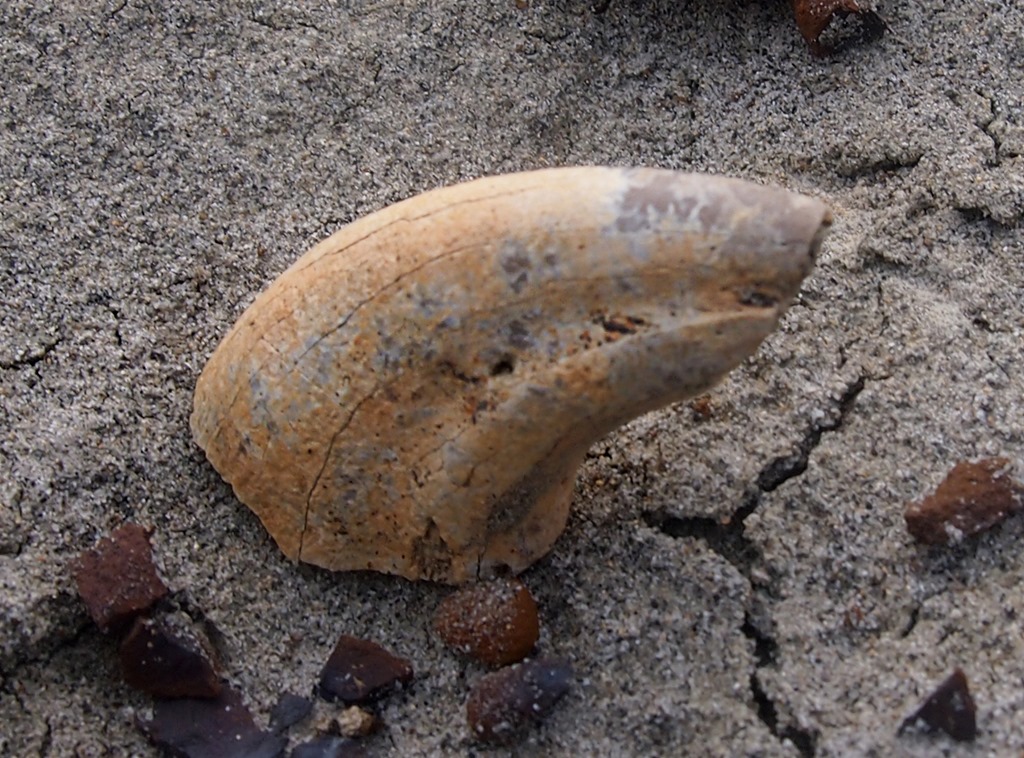
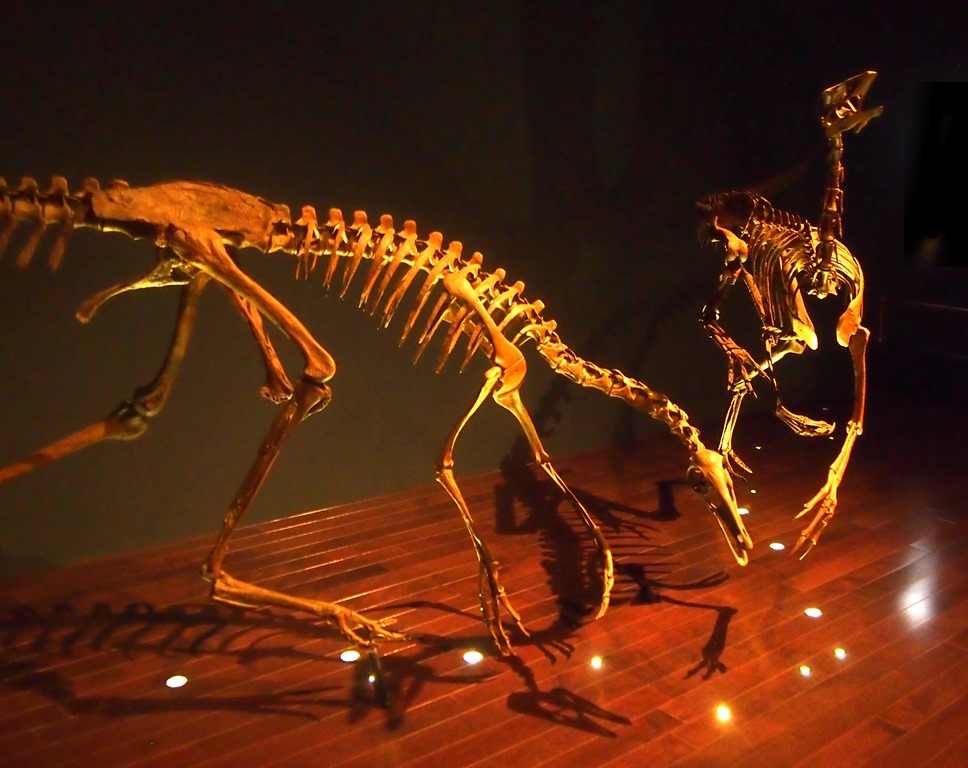
This is an ornithomimid claw I found. It was kind of like a big, carnivorous ostrich. The picture on the right shows ornithomimids one on display at the Tyrell. They think that the grooves in the claw allowed it to stab it’s prey and then pull the claw back out quickly without creating a vacuum.
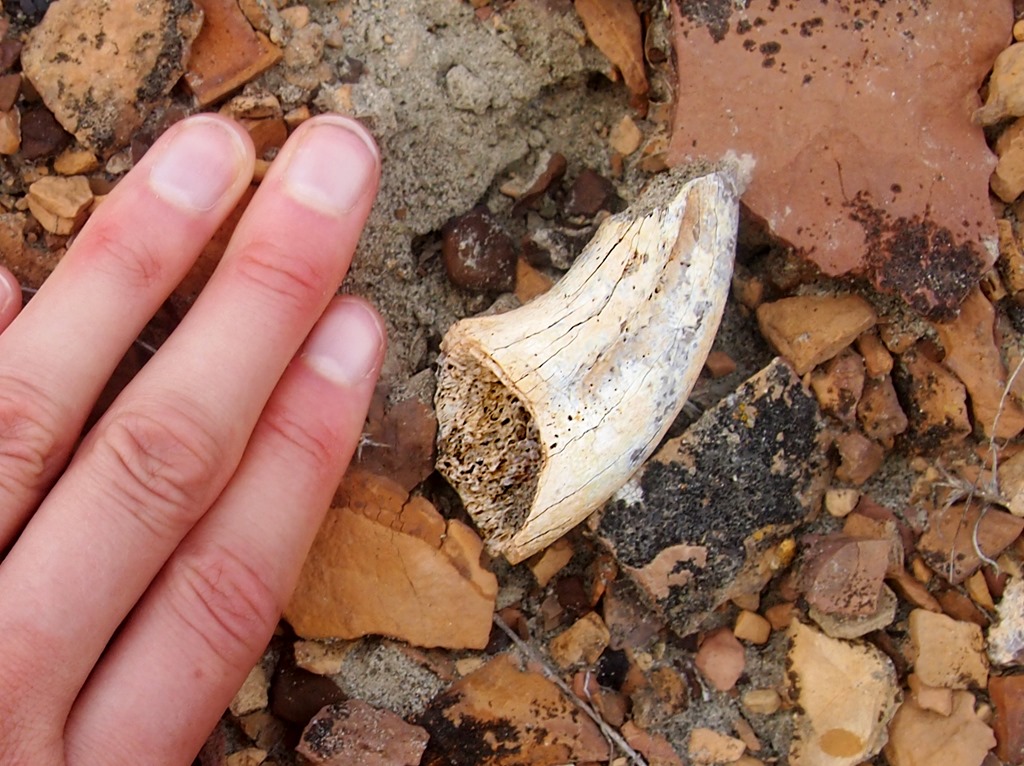
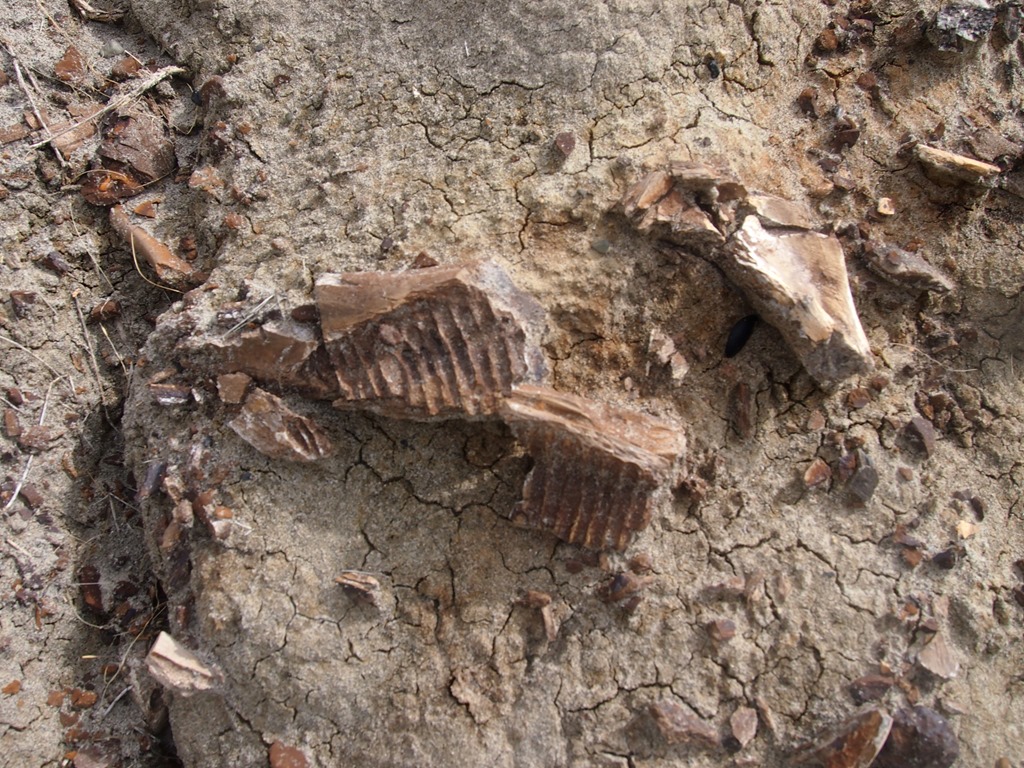
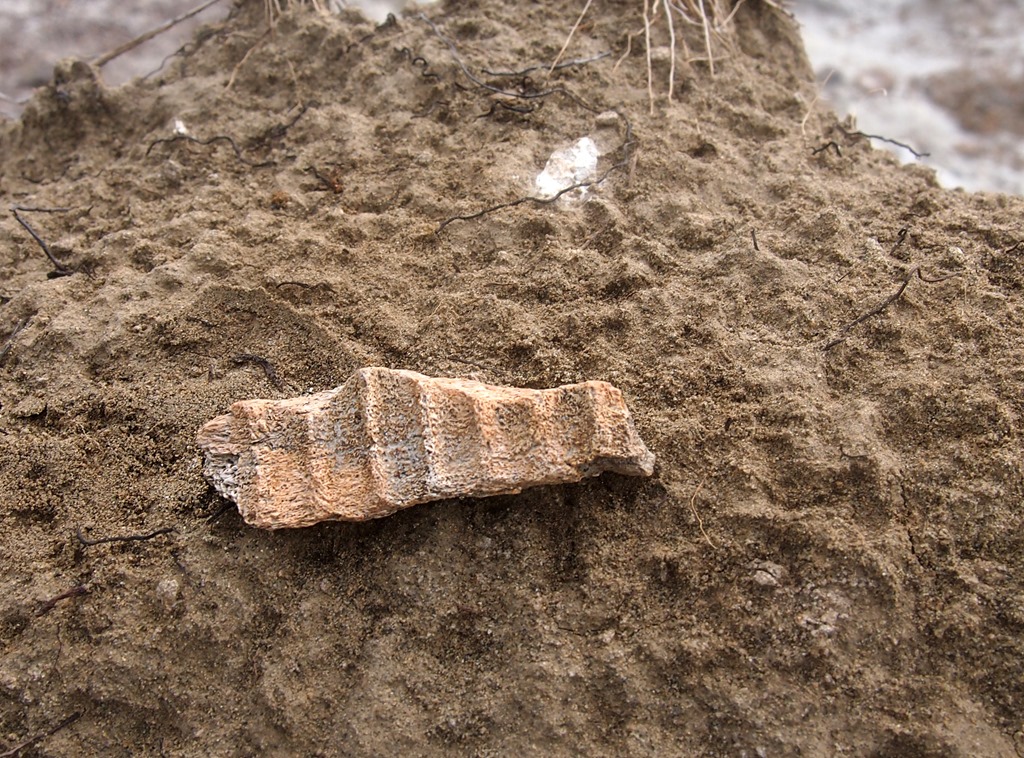
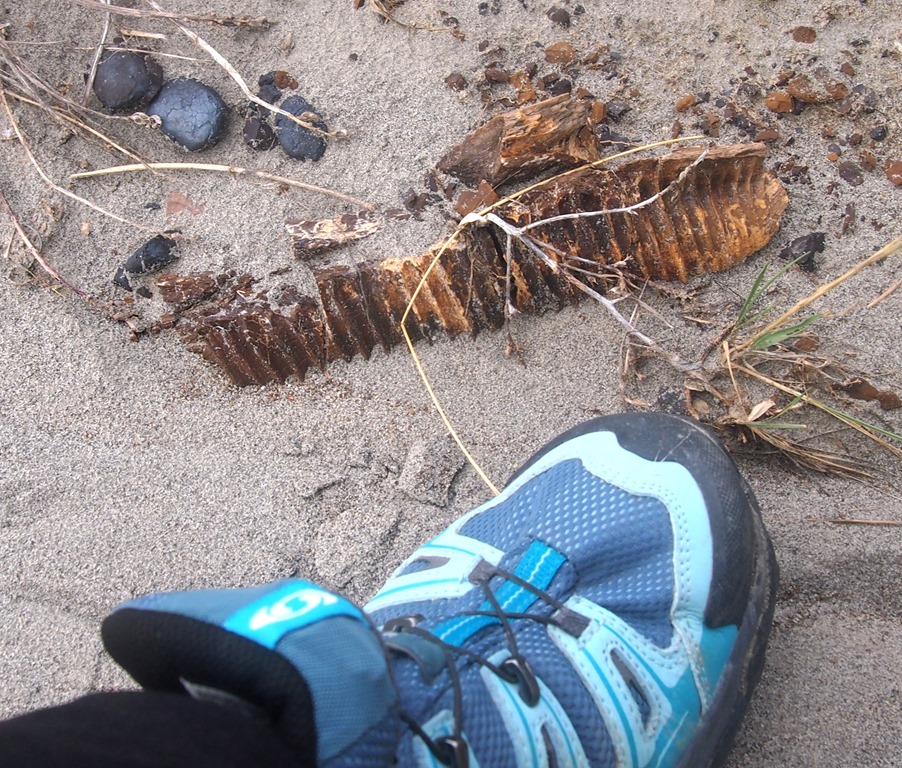
These are hadrosaur jaws. Their teeth grew out through the grooves, and were continually replaced.
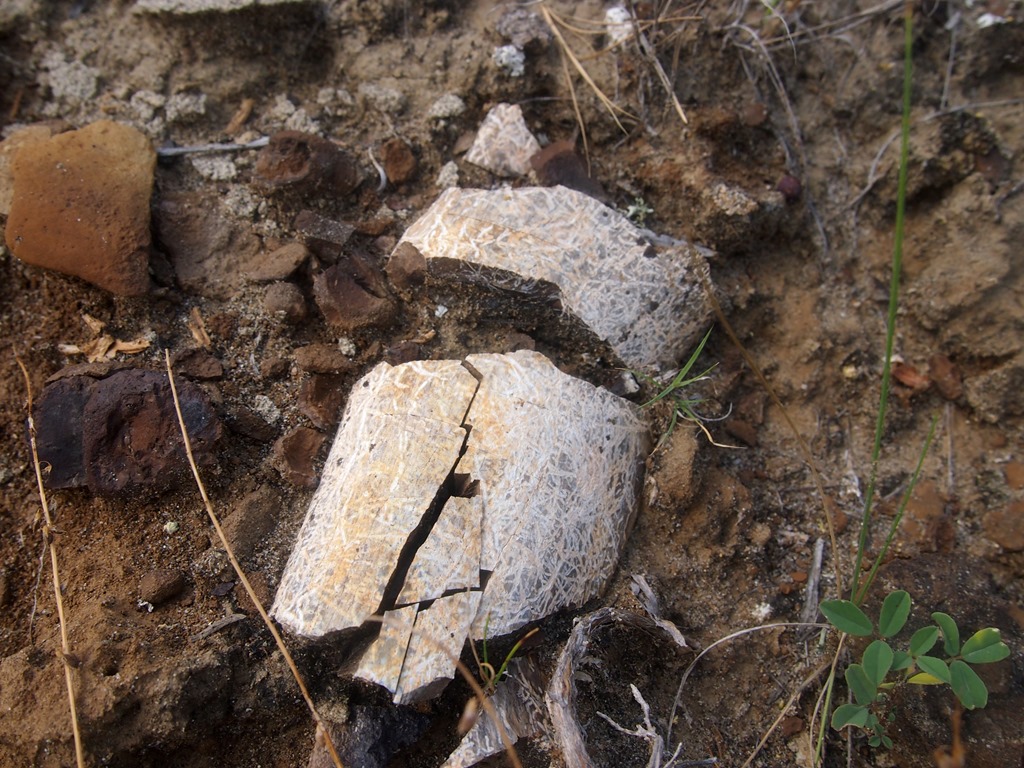
This is a piece of a fossilized turtle shell.
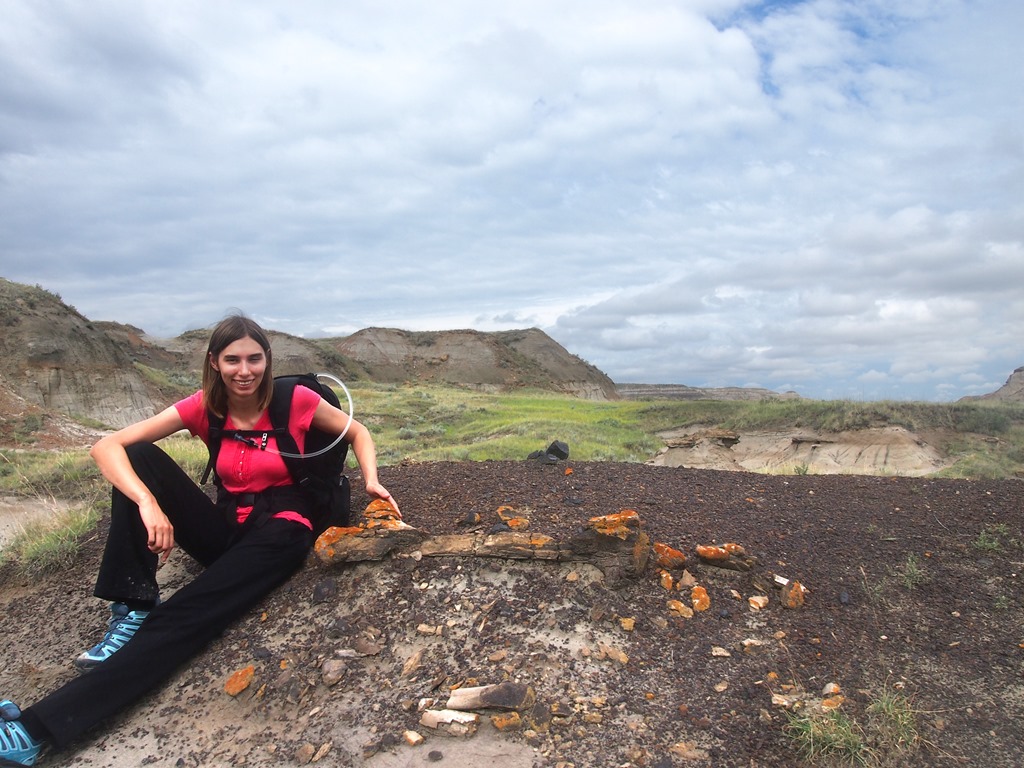
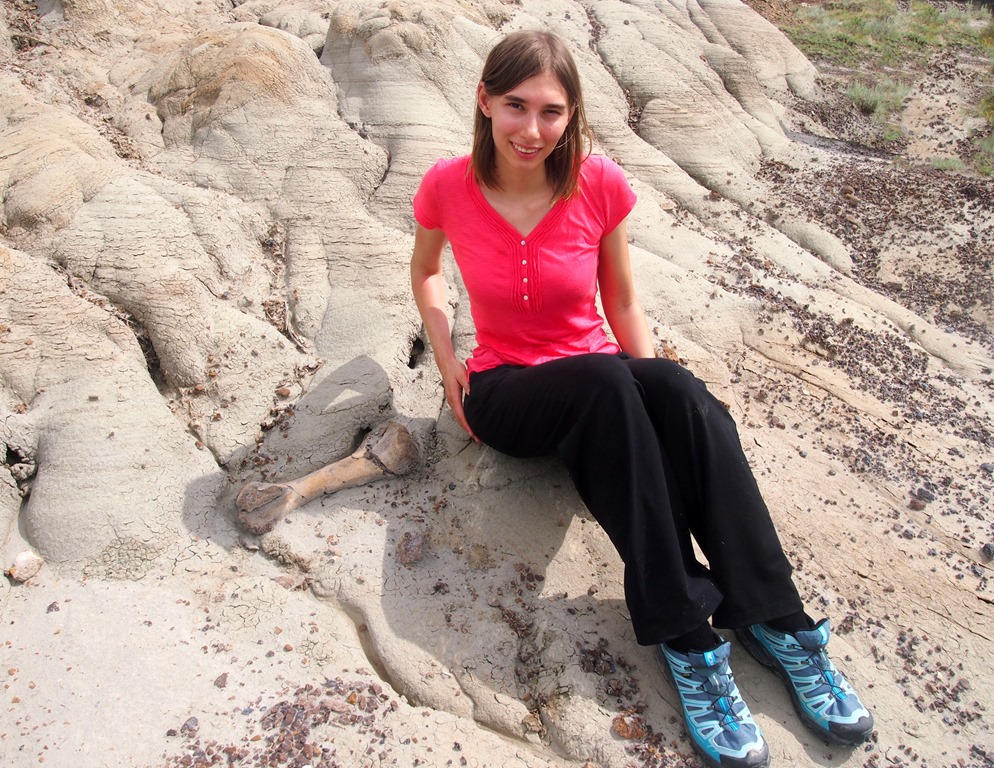
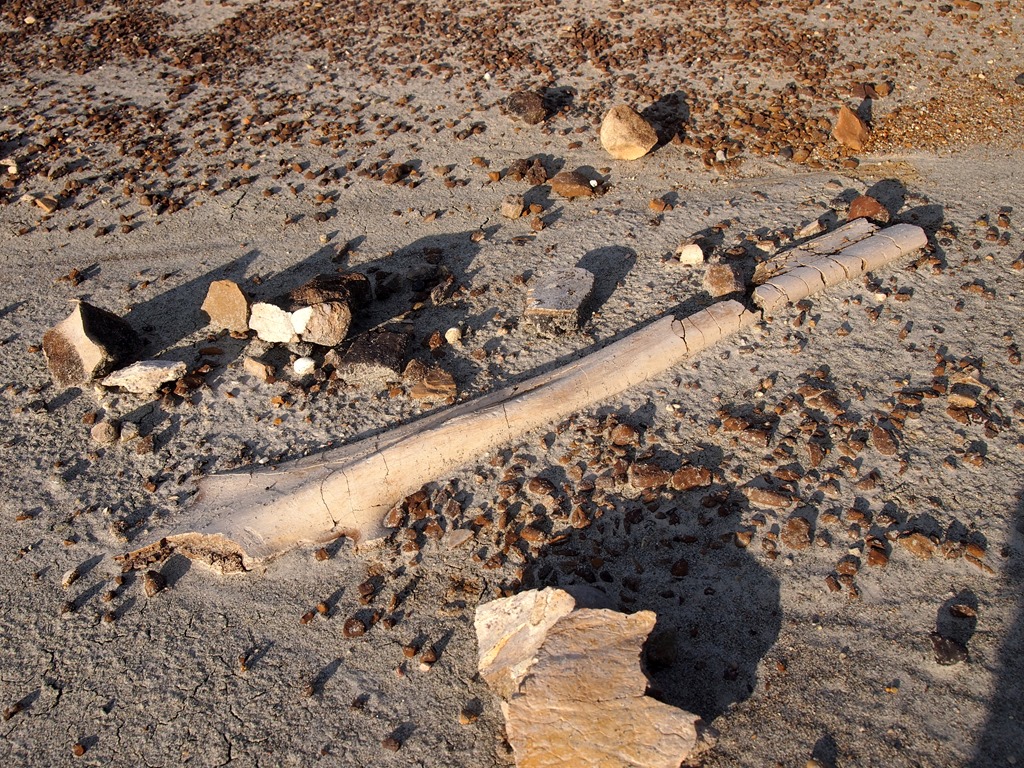
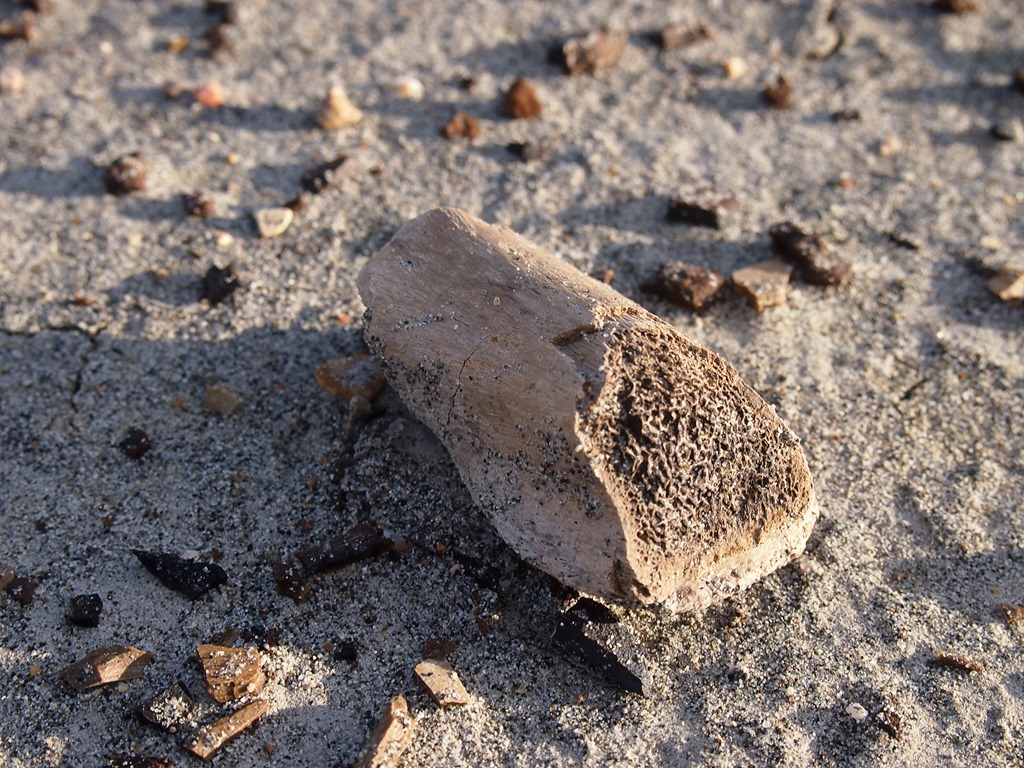
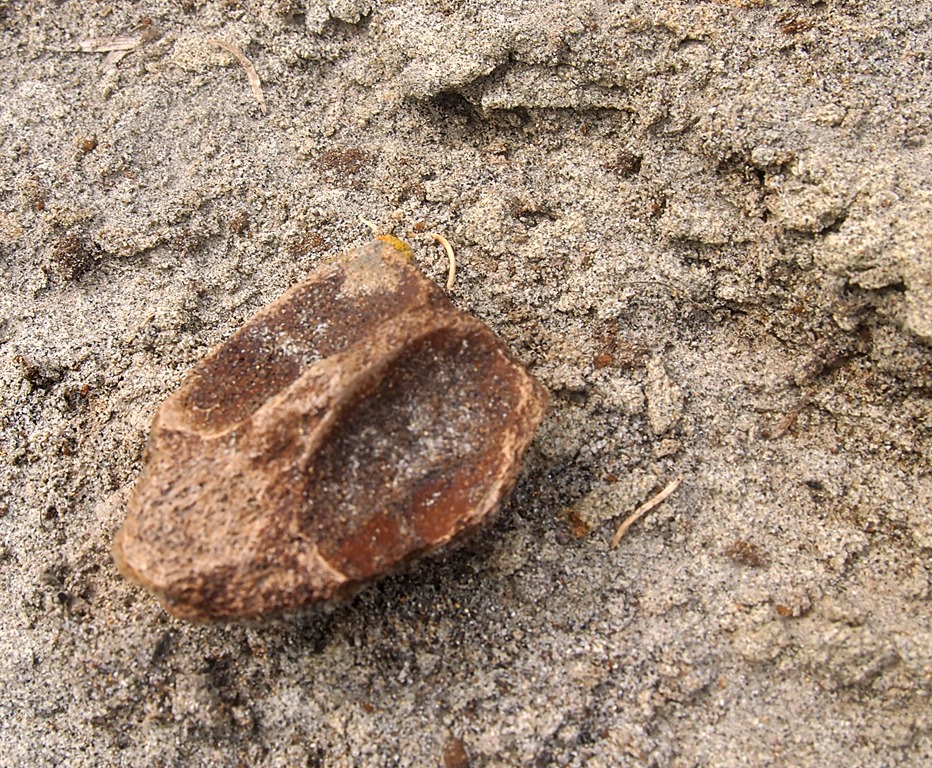
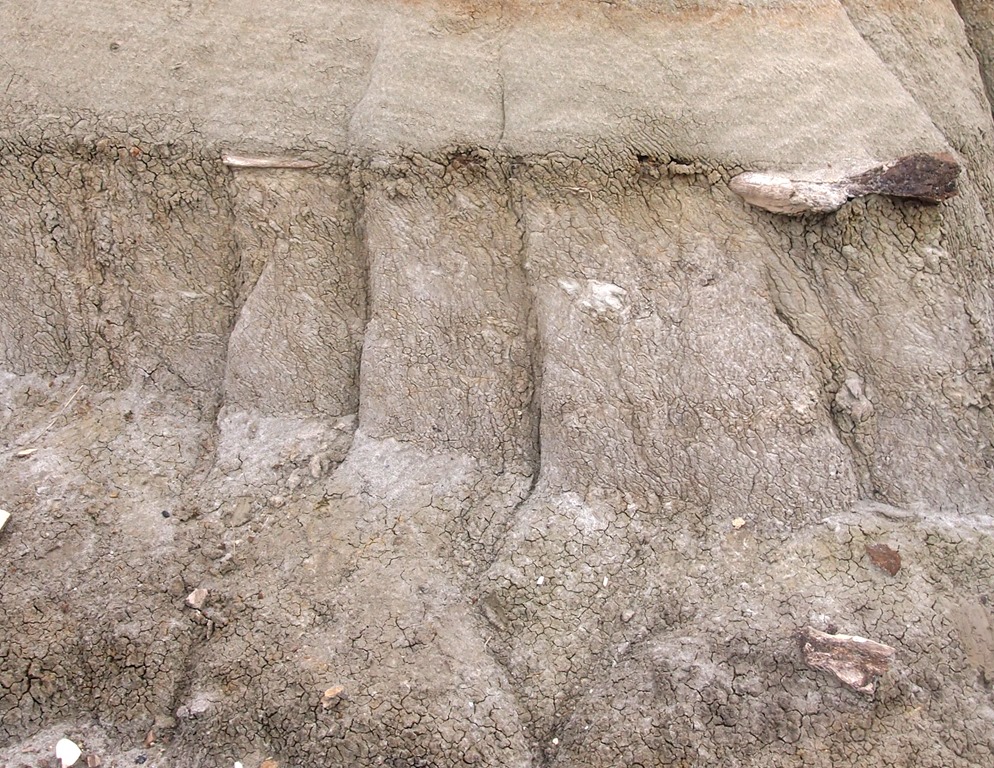
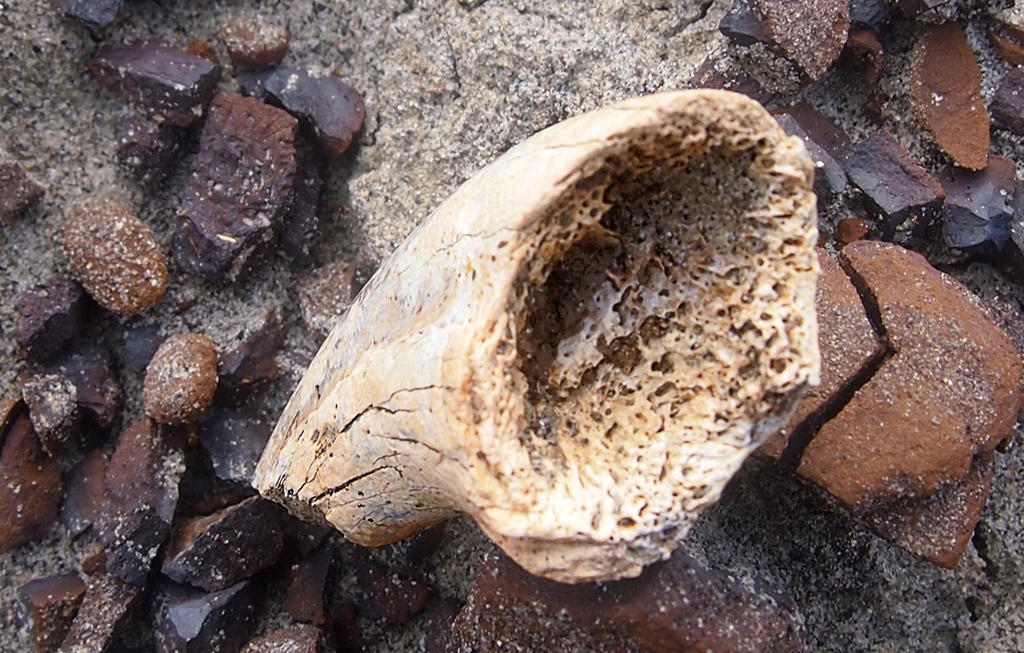
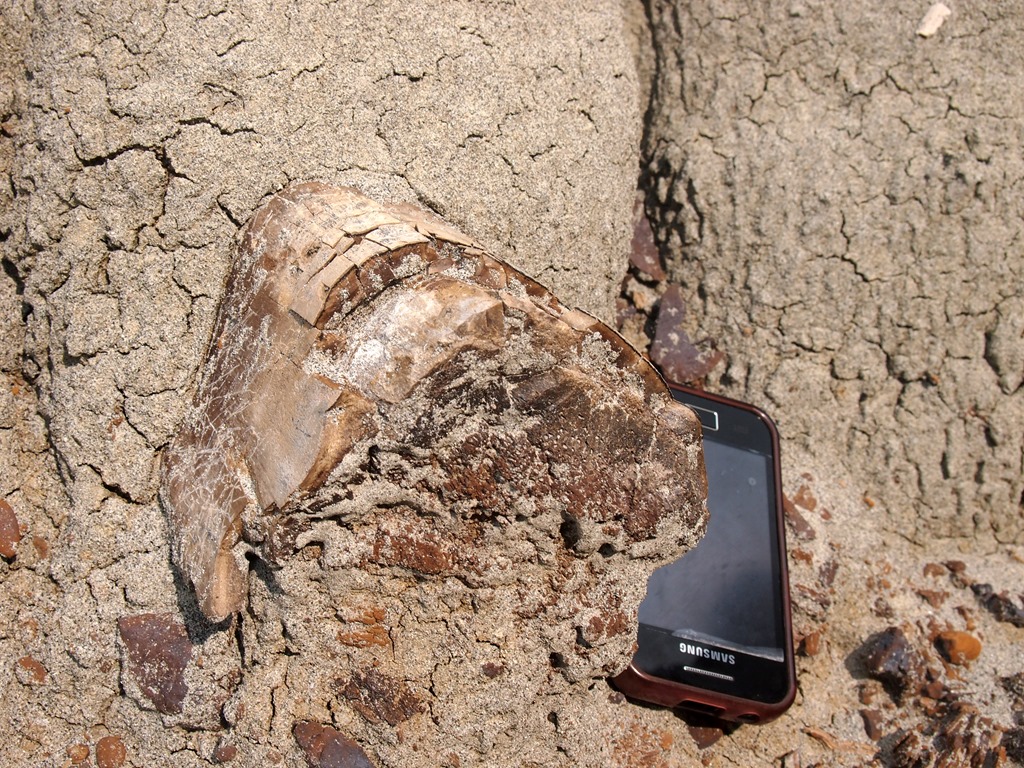
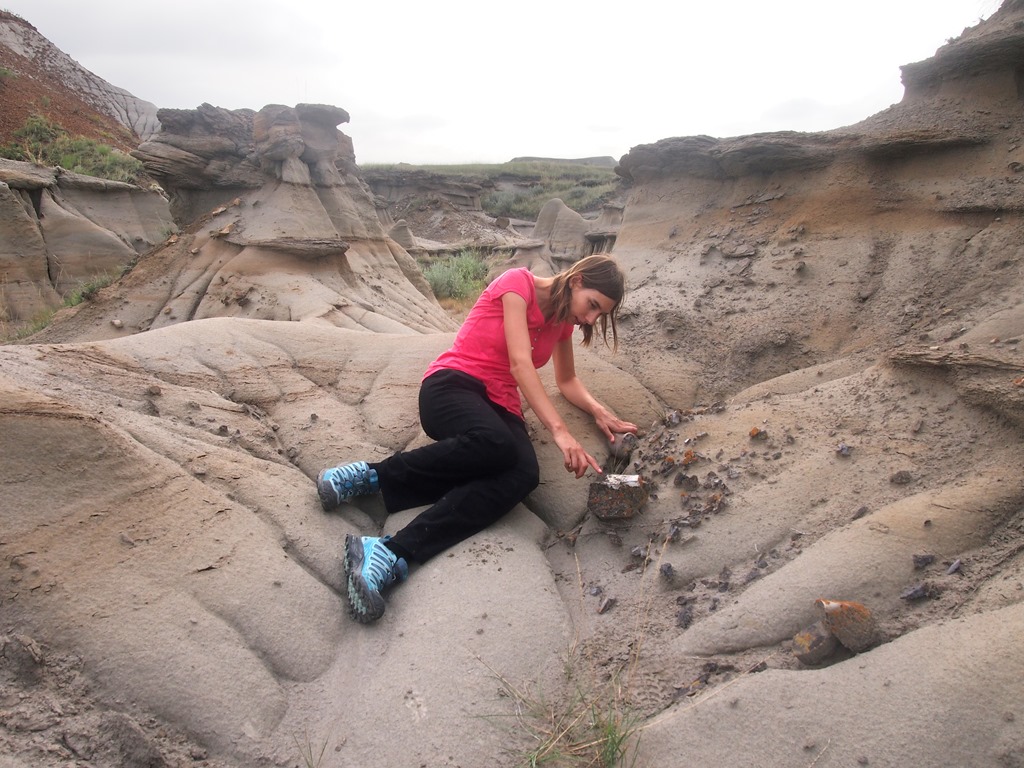
There were also lots of huge bones that were harder to identify. Most of them were just eroding out of the sides of the walls. The one in the middle is a closeup of the one on the left. My phone is there for scale, it is 11.5 cm long. If you look closely at the picture I’m in, you can see that in addition to the large bones in front of me there are more behind me. They were everywhere!
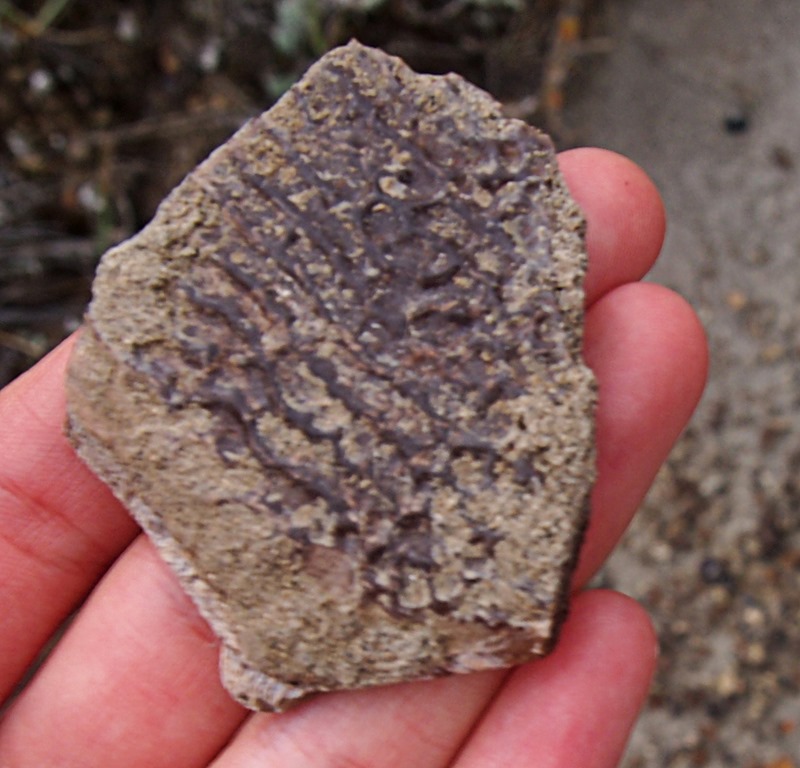
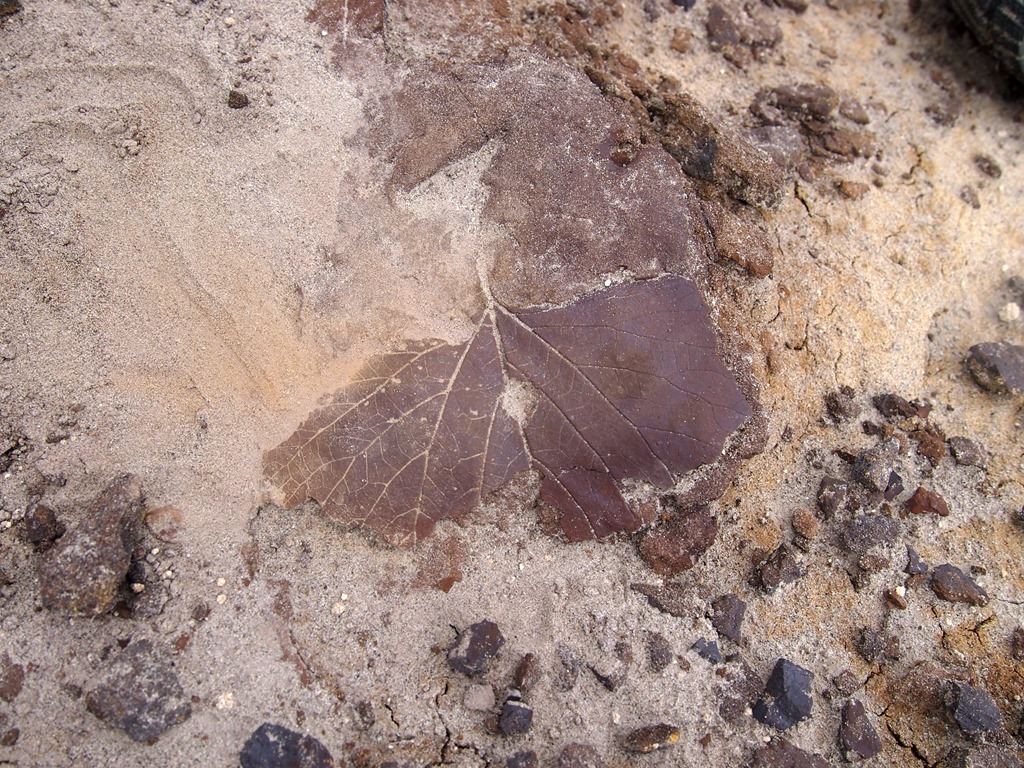
I also found one fossilized leaf impression, which are very rare in this area.
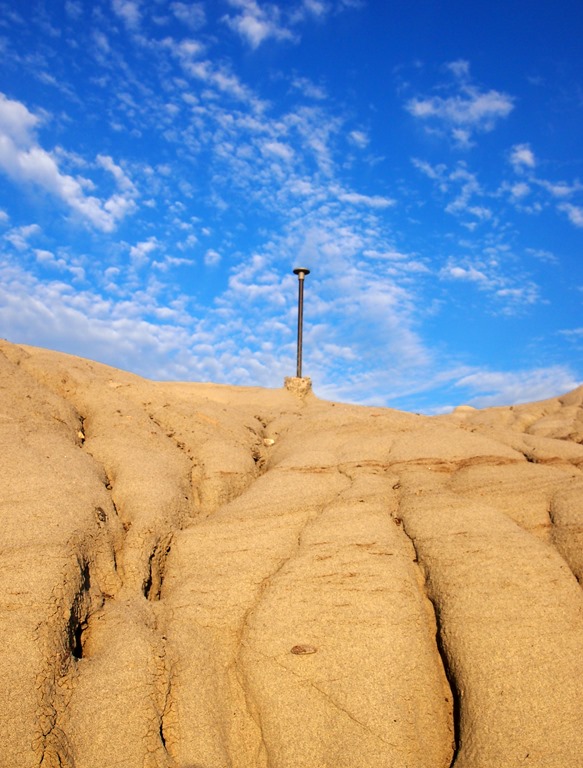
Old quarry sites where full skeletons have been removed are marked with stakes like this one.
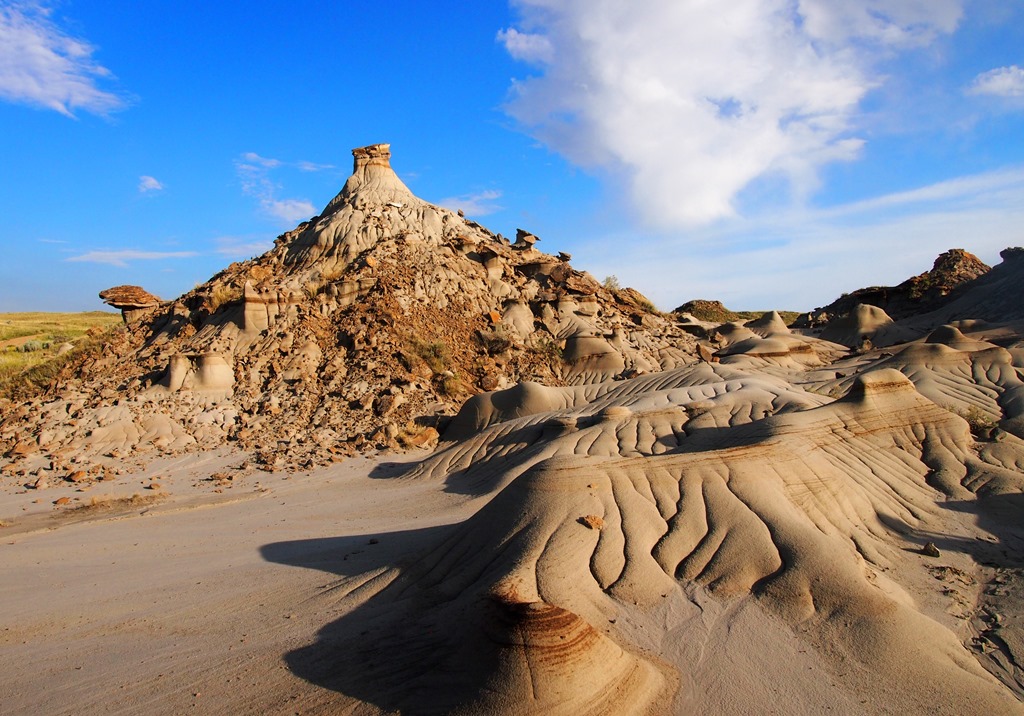
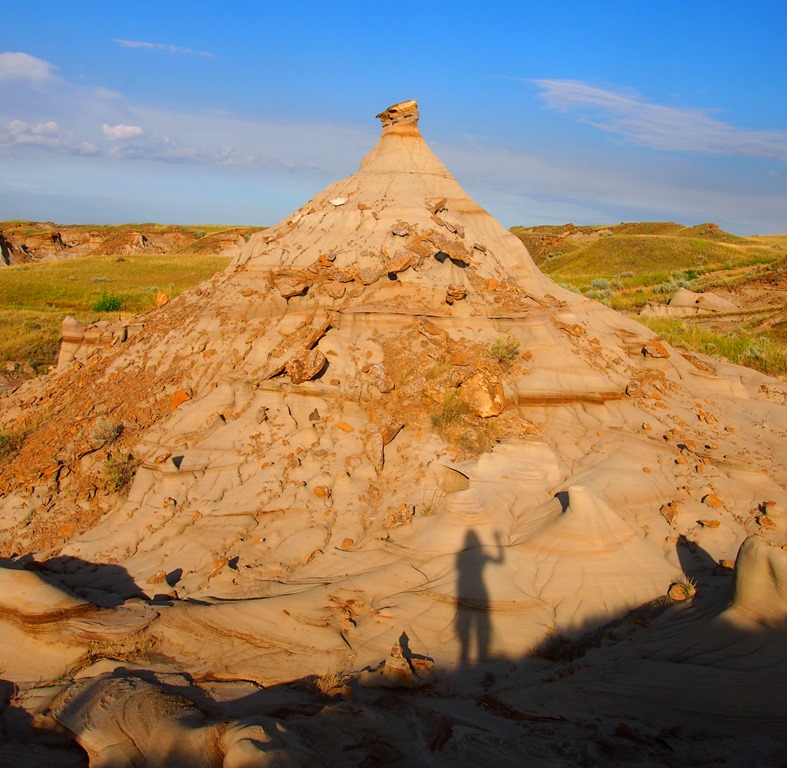
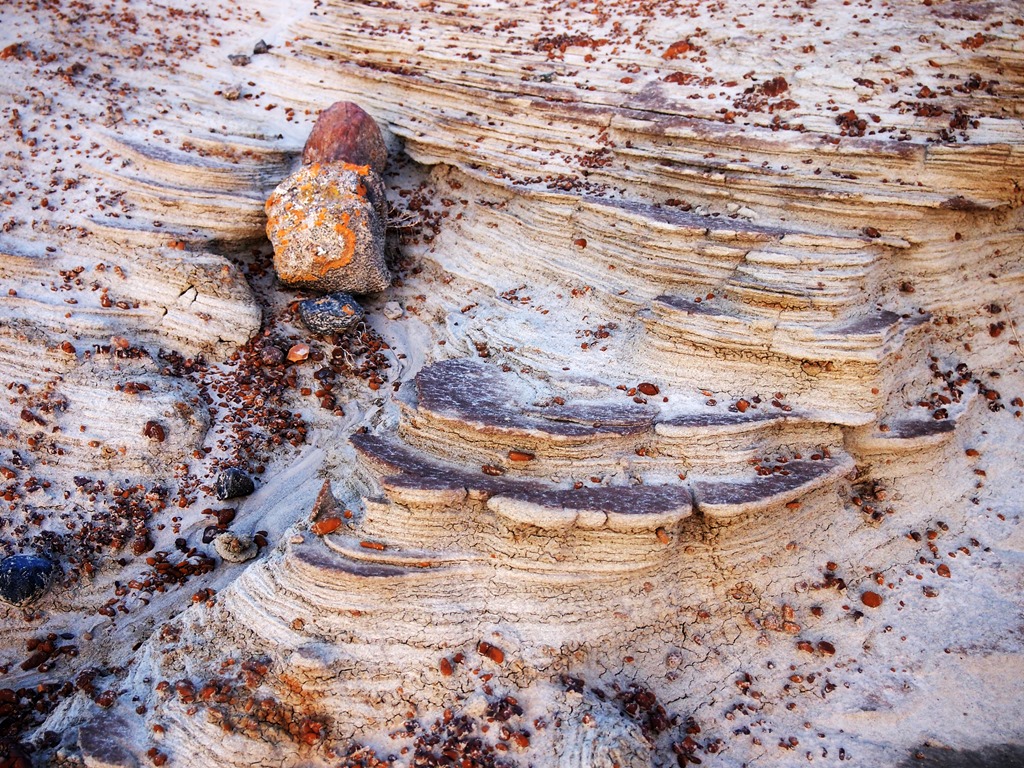
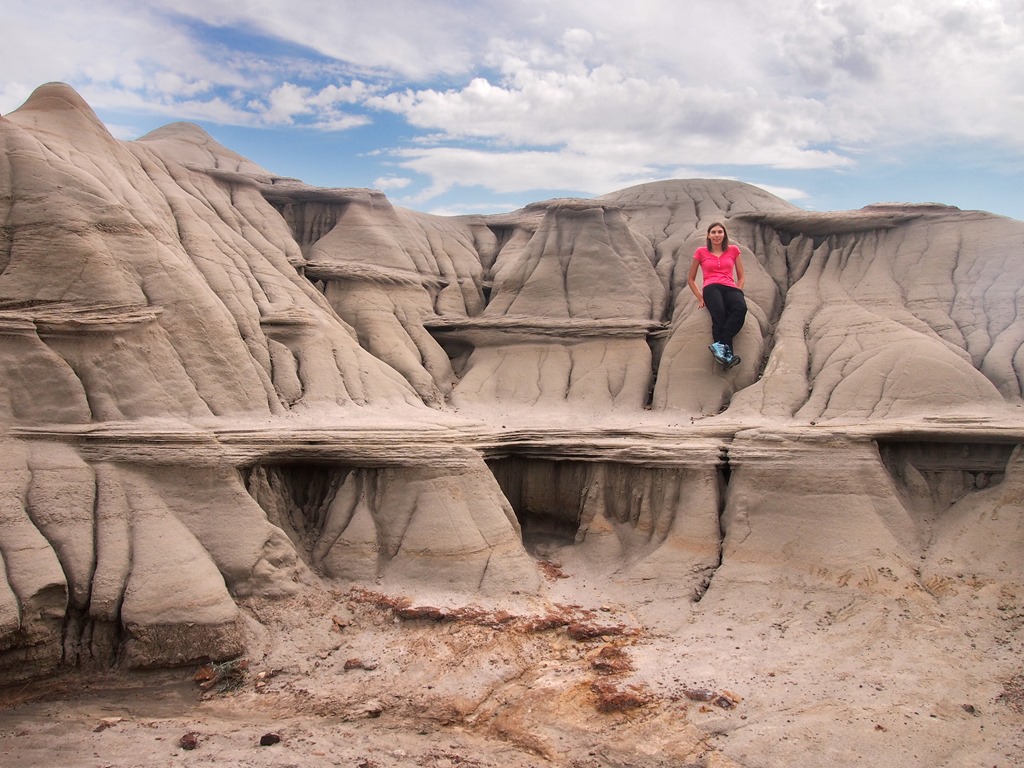
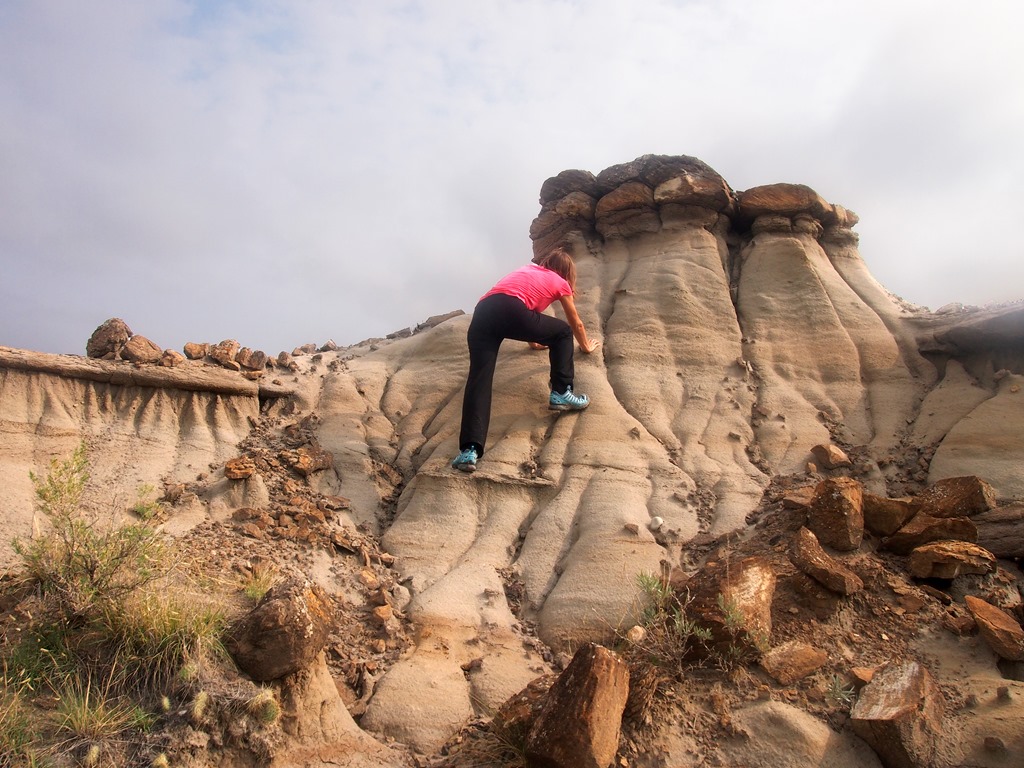
The landscape was also really neat and fun to climb. If you look closely at the sandstone, you can see most of the grains are the same size. The geologists use the size of the sand to calculate how fast the river was moving when the sand was laid down. It was not moving fast enough to carry heavier sand and pebbles, but it was moving fast enough that all of the silt and fine clay were carried away, leaving only a particular size of sand. From that they conclude that the river was flowing about 0.5 km/h. 75 million years ago!
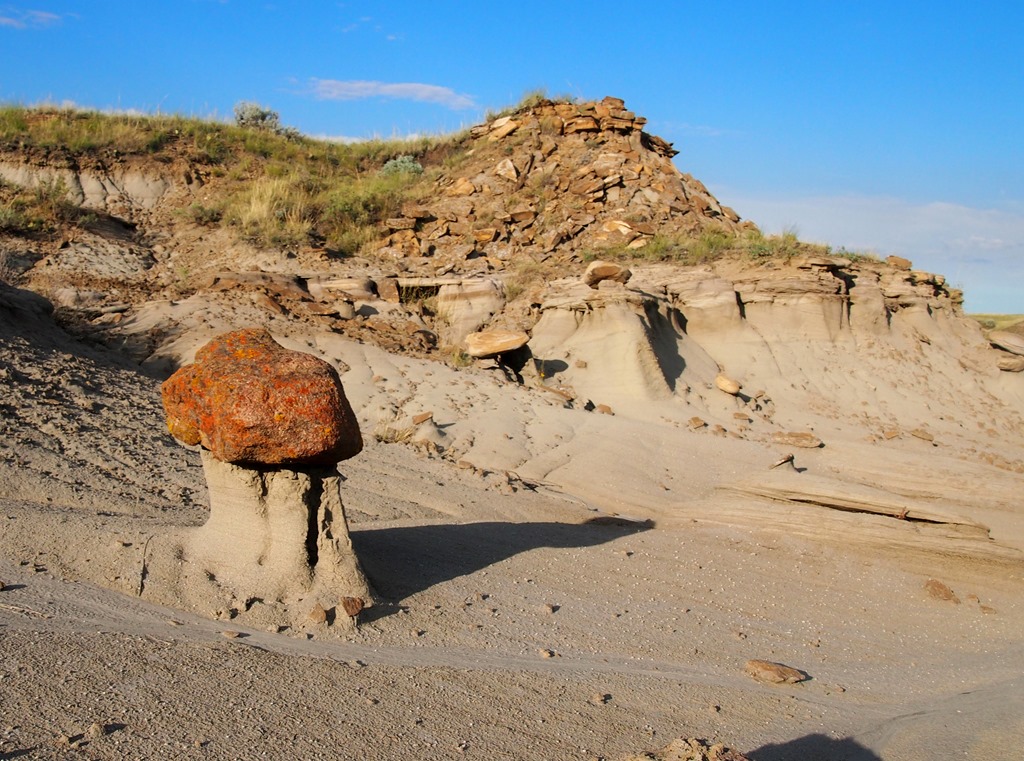
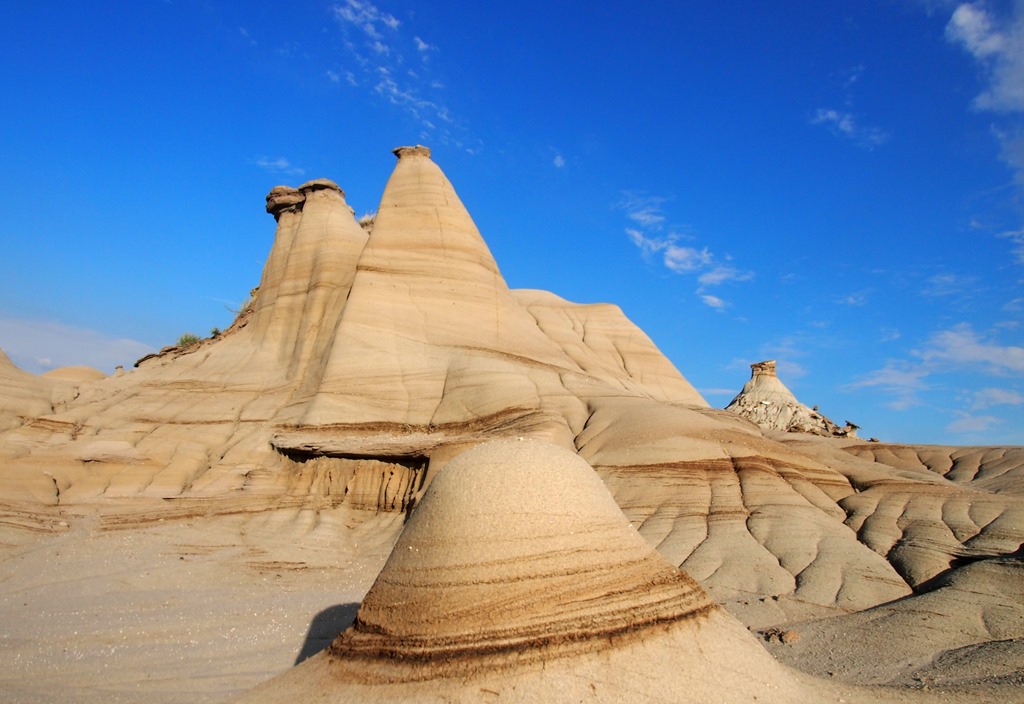
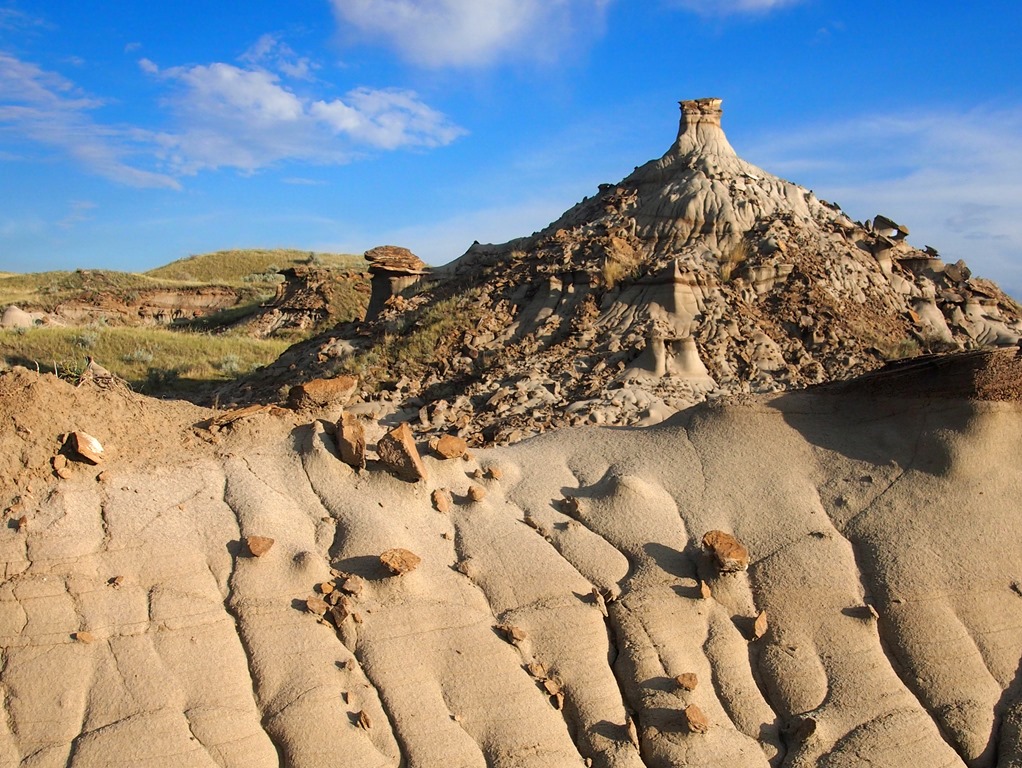
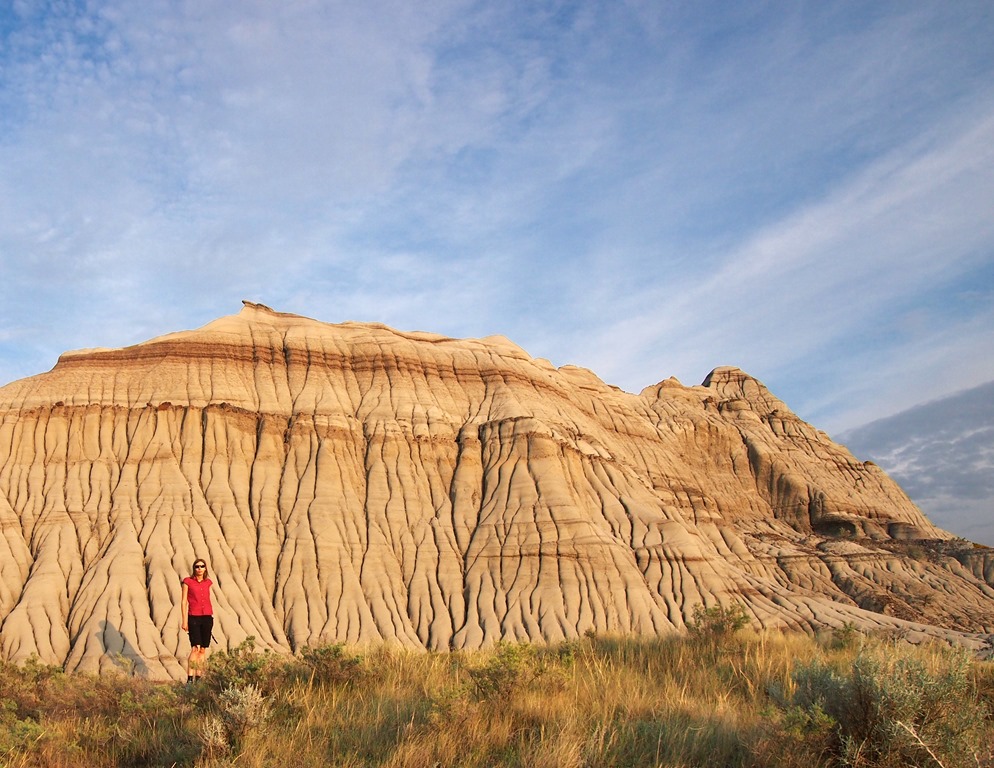
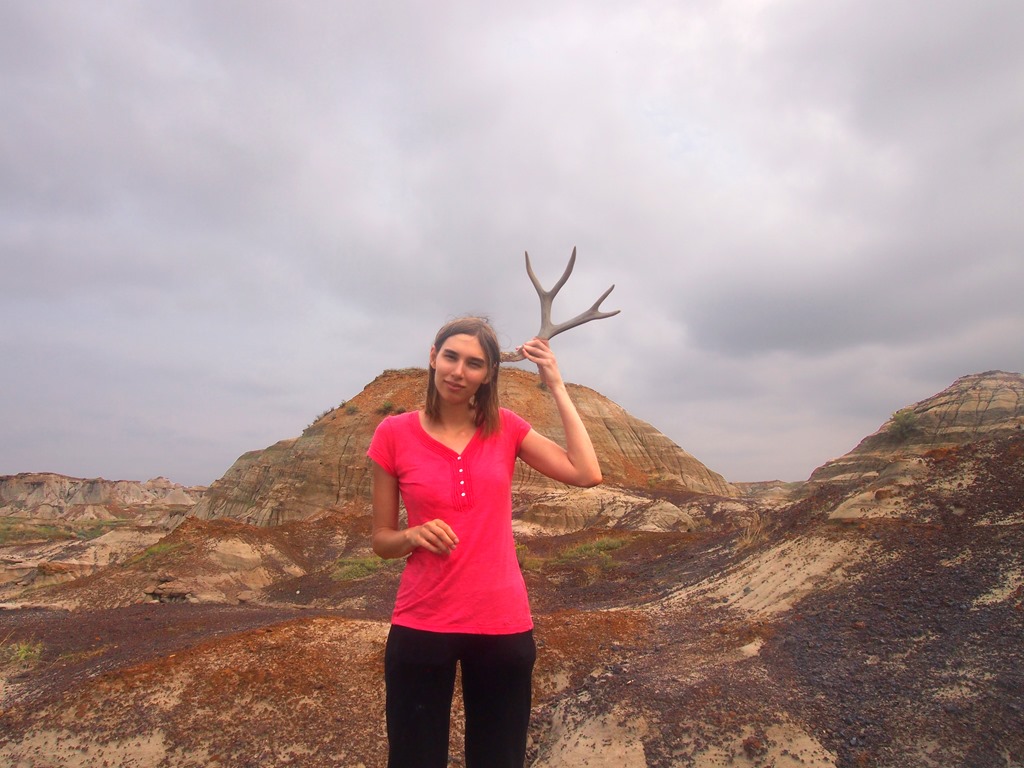
Newer, unfossilized bones were easy to identify because they were bright and shiny. They also don’t stick if you lick your finger and touch them.
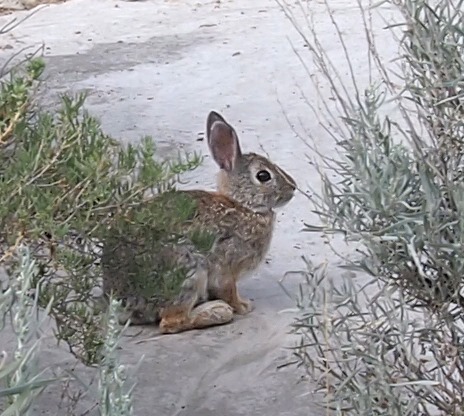
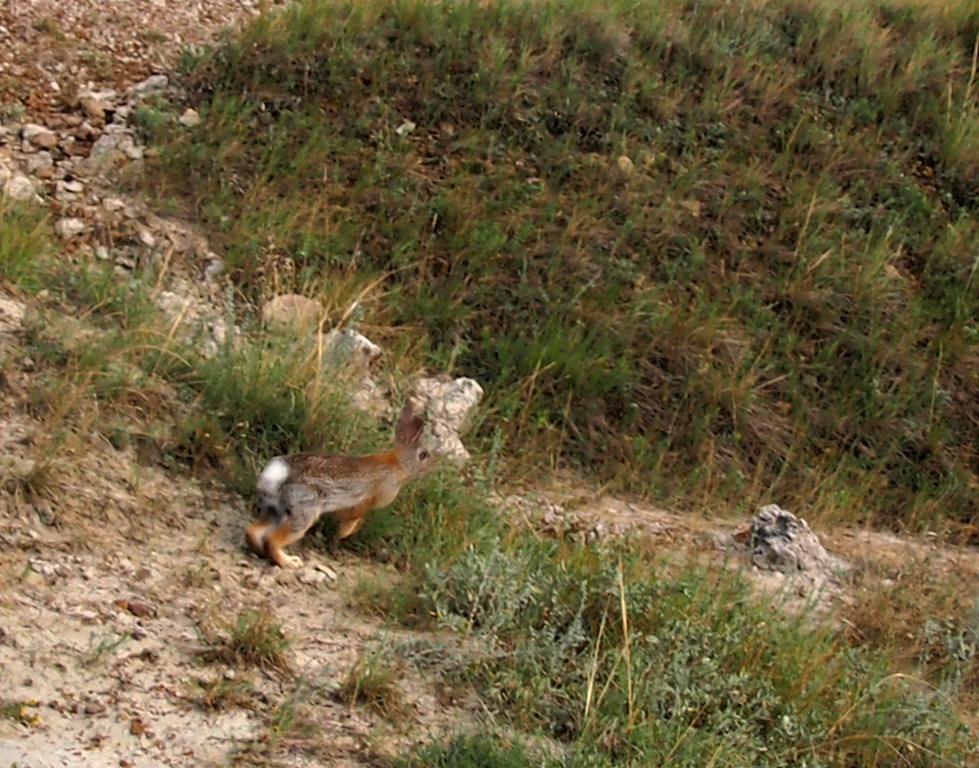
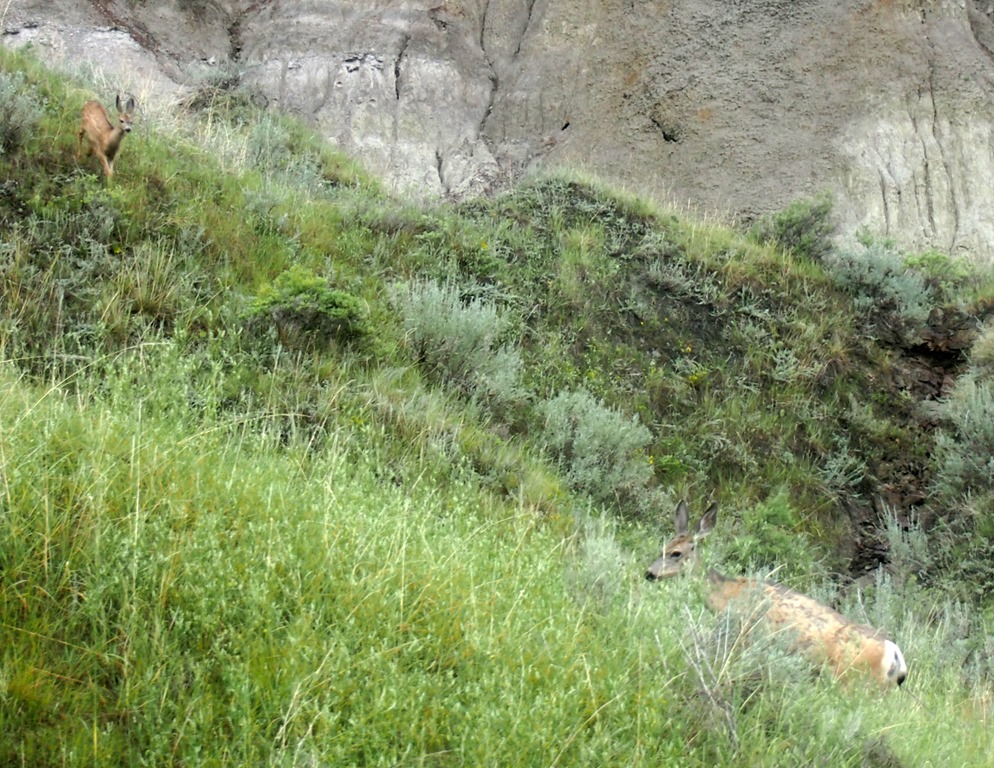
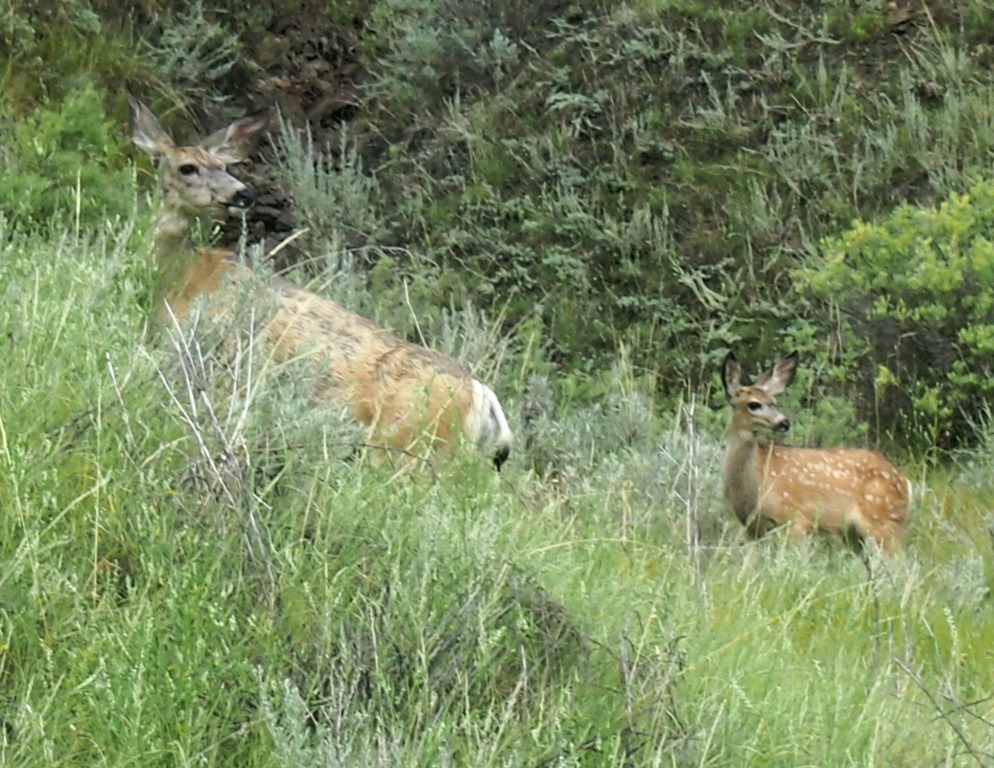
I didn’t see any snakes. The only wildlife was some deer and a cottontail.
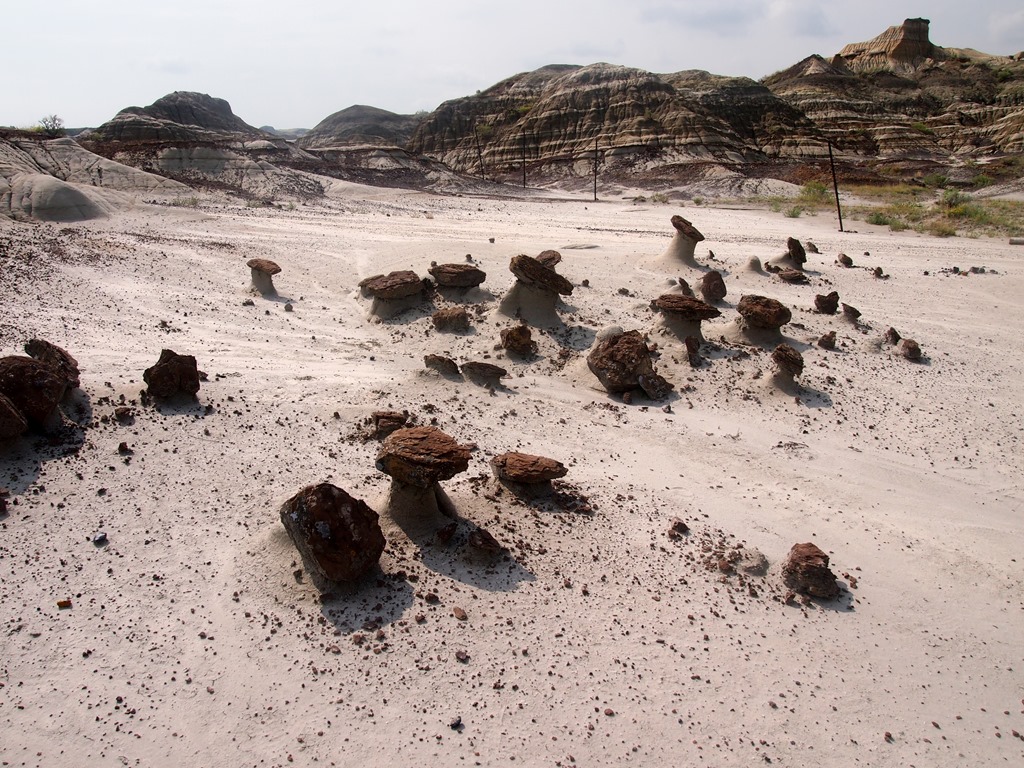
These tiny little hoodoos were supposedly used as a backdrop in the Tim Allen movie Galaxy Quest.
The second Great Badlands Hike was cut short by a thundershower. The guide gathered us to give us some rules:
- Stay away from the high levels, because with no trees you are a good target for lightning.
- But don’t get too far from the walls, because you’ll need to run up them if there is a flash flood.
- Be careful on the mudstone, a rock formed from ancient airbourne volcanic ash. It swells up when wet to form an incredibly slippery muck. I was quite familiar with it from my first trip to Drumheller with school when it rained all weekend and I came home with about double my weight in the stuff all over my clothing.
Shortly after he gave us those instructions it began to rain heavily, and half the tour group pulled out large umbrellas. I tried to explain to a German family that this wasn’t a great idea when trying to avoid lightning, but they told me it was OK because umbrellas are aluminum and don’t conduct electricity. I replied “so are power lines” but he just looked at me blankly.
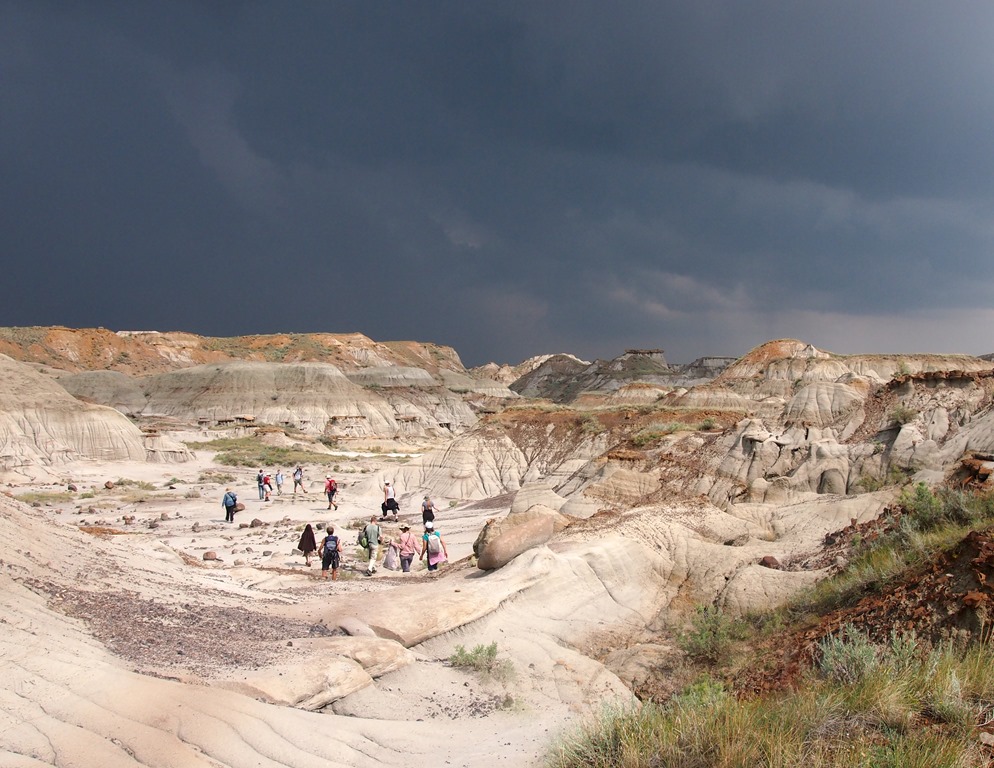
But we all made it out OK  .
.
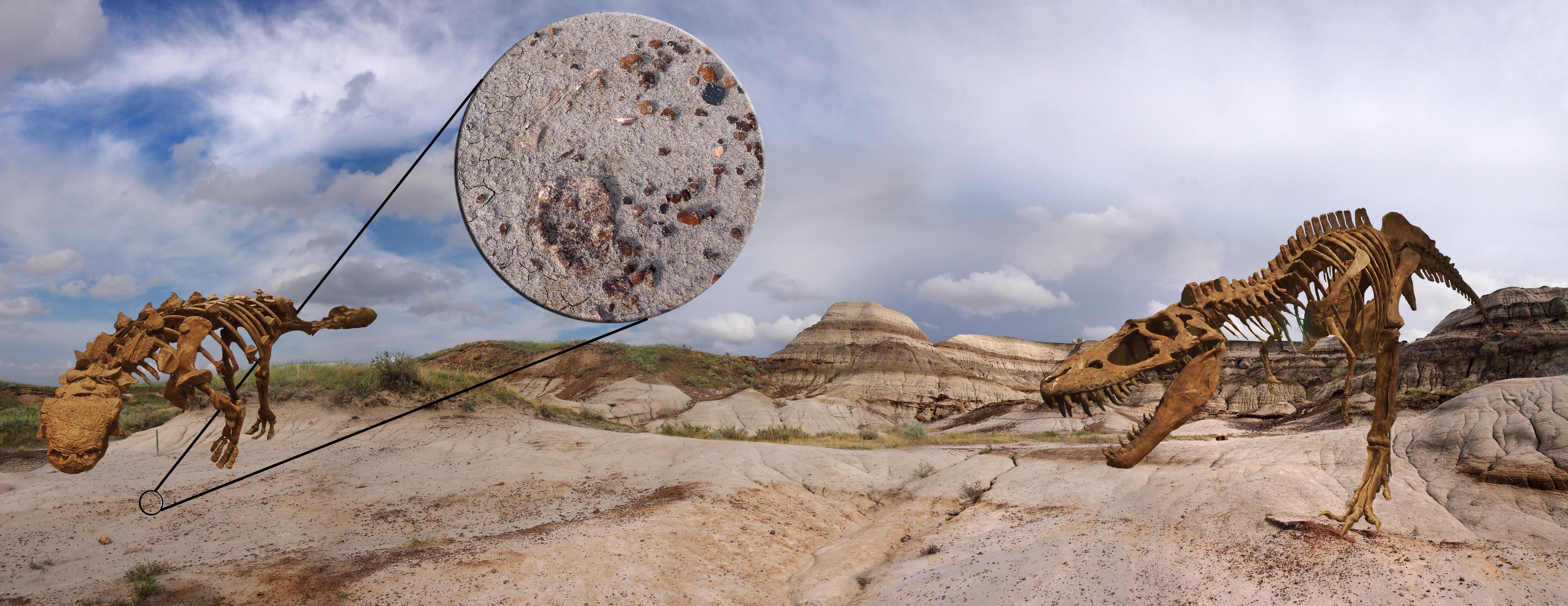
There were also some self-guided hikes outside the preserve. They give some good views of the landscape, but no fossils. One of them goes out to the quarry site of two of the dinosaurs displayed at the Tyrell. The one on the right is a Gorgosaurus, like the owner of the tooth above. and an Euoplocephalus, which is a type of ankylosaur, well equipped to fend off the Gorgosaurus. He was armoured from head to toe, and even had bony plates on his eyelids that flipped up and down like shutters. His 2.5m long tail was tipped with a 30kg club. He weighed 2 metric tons and grew up to 6 meters long.
This picture shows the area, with the skeletons from the Tyrell superimposed. And between them you can see the top of another bone, just starting to be exposed!
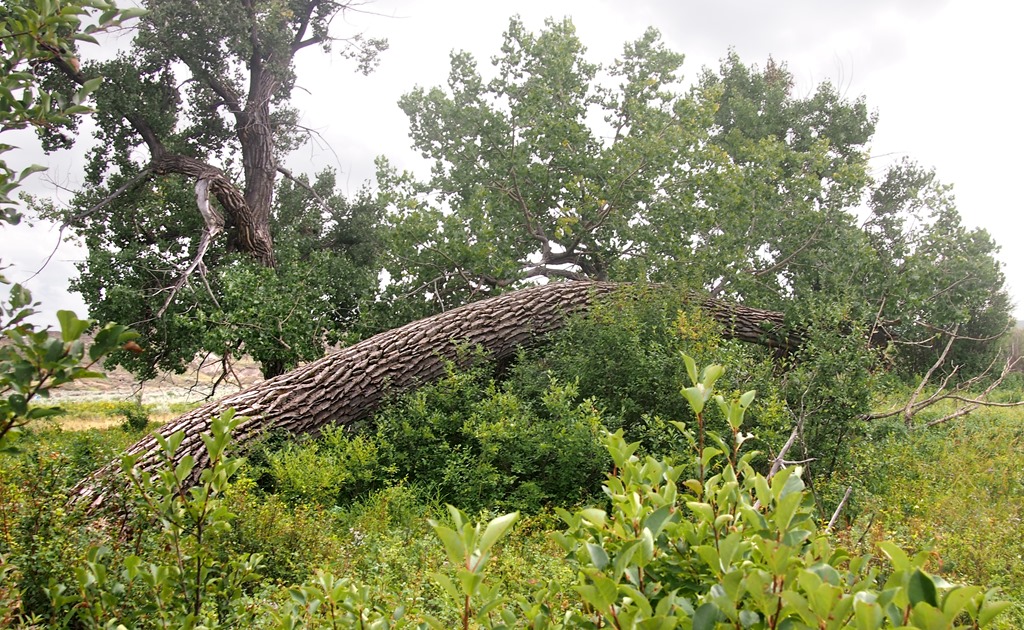
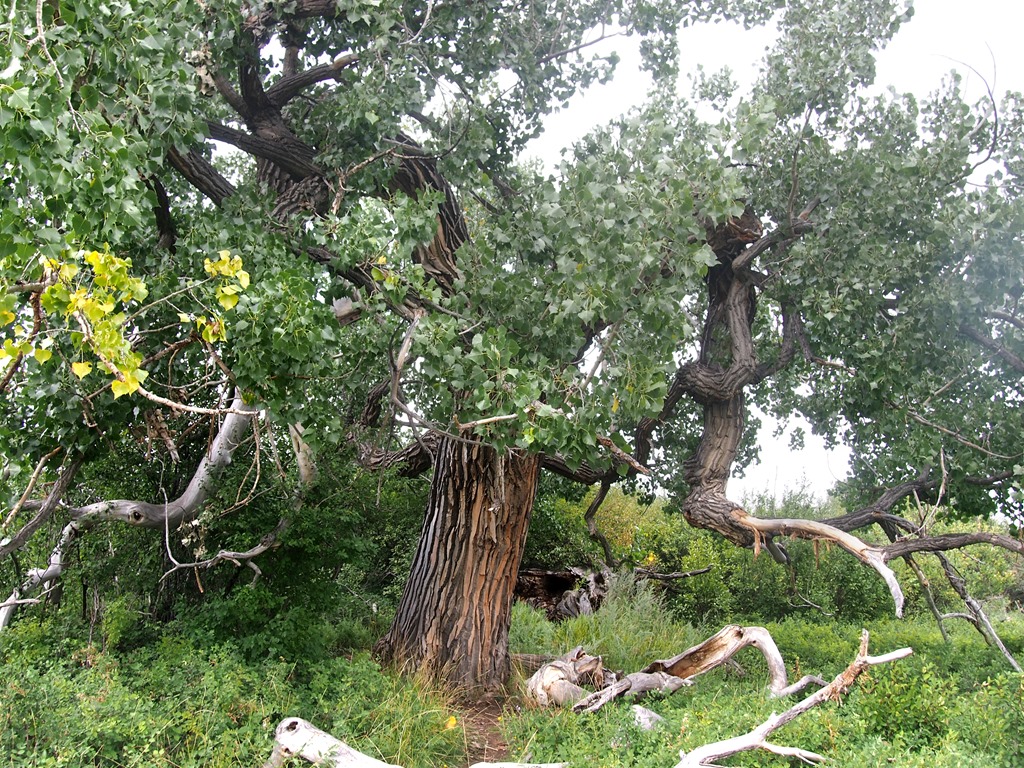
Another trail went down by the river through the giant cottonwood trees. It was supposed to be a good spot to see birds, so I went in the cooler evening, but all I found were mosquitos.
The other trails were pretty boring, but I did find proof that dinosaurs are still wandering the park! Look at this footprint:
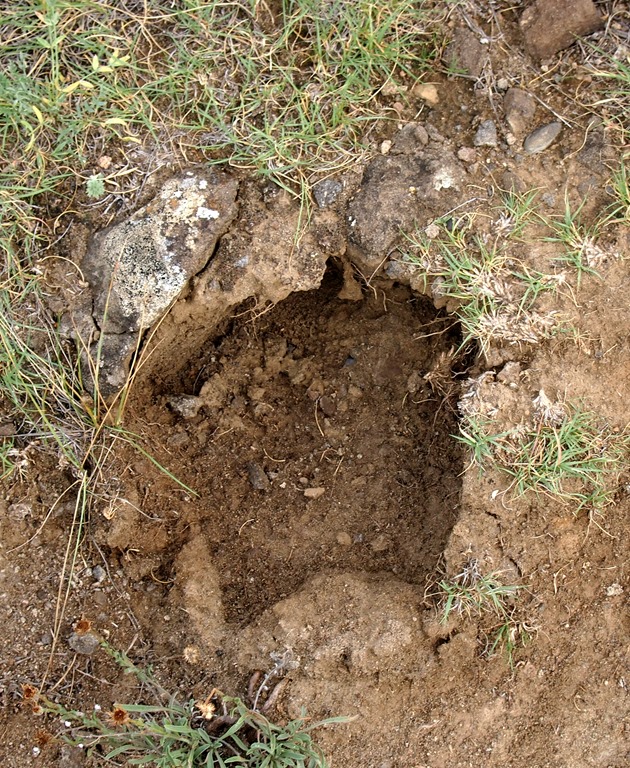
Matt says it’s just a hole left from a rock that moved, but I know the truth!