Warning: If you read this, you will see dead people.
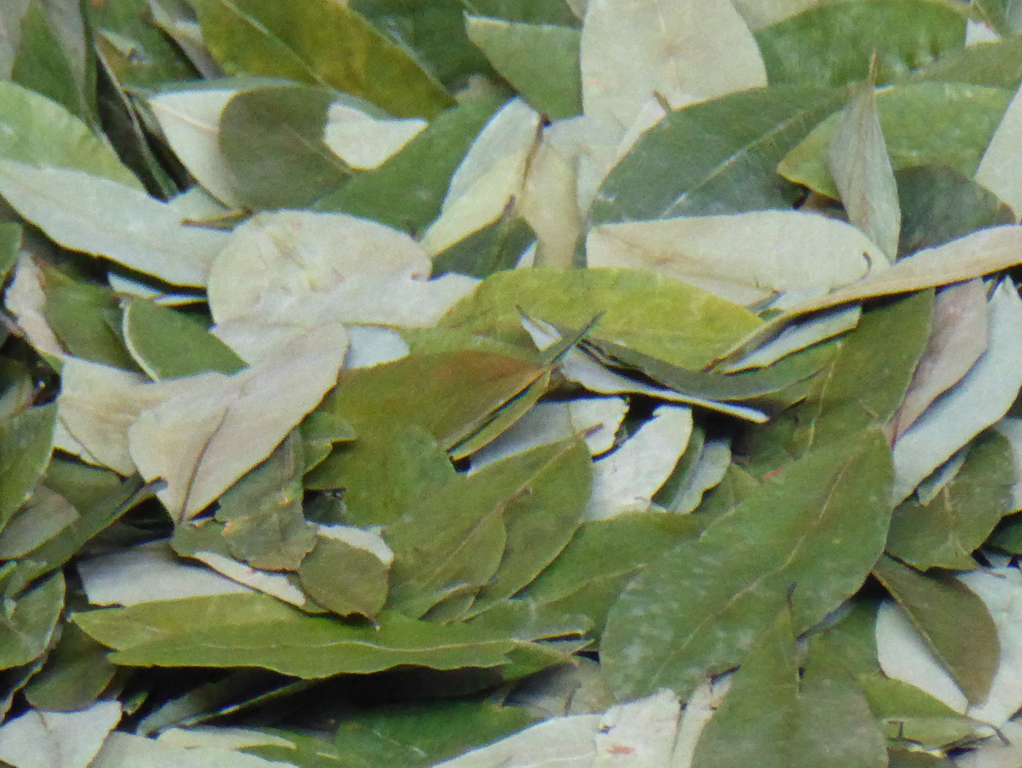
The coca museum is dedicated to teaching visitors about the history of the coca plant, which is legal in Peru, Ecuador and Bolivia but illegal everywhere else because it is used to make cocaine. They say that the leaves are an important traditional medicine and not an addictive drug.
The first section was on mythology, including the goddess Koka. She lived at the beginning of the Incan empire and had green skin and green hair. She wandered the empire seducing men, and whoever saw her fell in love. (Men clearly had strange tastes in those days…) But she never went back where she had already been, and the men she had visited obsessed over her and committed suicide. Eventually the empire got a bit annoyed at this and a priest ordered her to be killed and her body scattered throughout the empire. But wherever they buried her body a strange plant began to grow, the same green colour as her skin, with “leaves the shape of her eyes and the foliage a likeness of her hair”. The priest gets some of these leaves and feels and overwhelming desire to start chewing them. And then all of the men in the empire started chewing the leaves to soothe their grief at losing the beautiful goddess.
This story seems like a very strange way to start if your goal is to convince people coca leaves aren’t addictive…
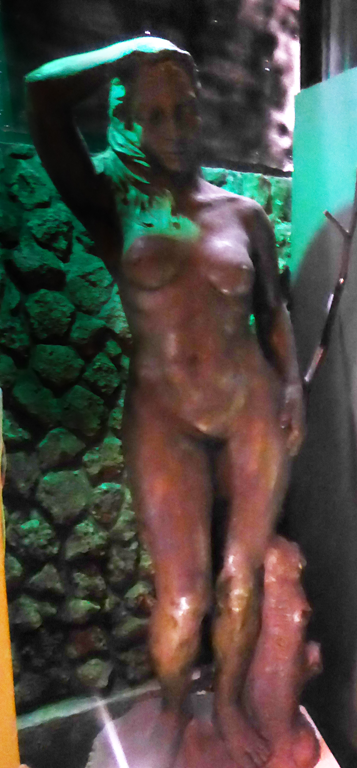
This is the statue of the goddess. It appears even the artist making the statue didn’t know how to make a green skinned goddess with hair that looks like coca foliage be irresistibly attractive, because it’s basically just a statue of a naked woman.
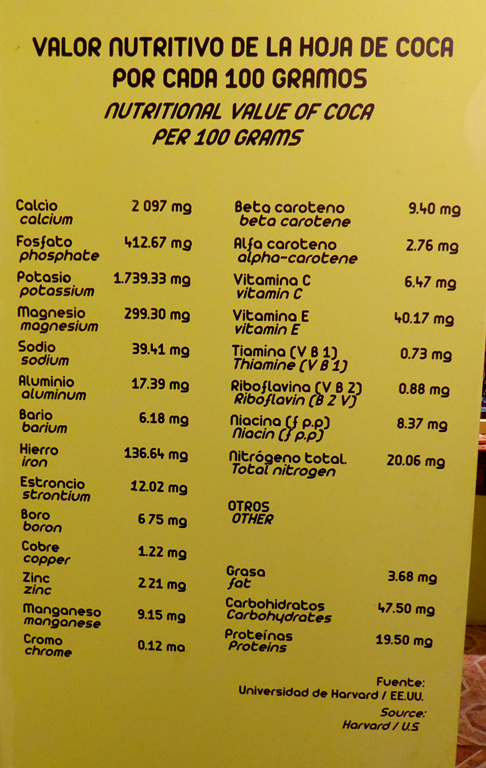
The next room was on the nutritional value of the coca leaves. It basically had these numbers repeated over and over in different displays (and recited by the guide). We’re not clear why, because they appear to be both:
a) About what you would expect for a leaf, and
b) Pretty irrelevant when you just chew the leaf and spit it back out again.
But this does not stop them from repeating over and over that it is an excellent source of calcium and protein.
Next was a section on fortune telling using the coca leaves, where you chew the leaves and spit them out, and a fortune teller reads them.
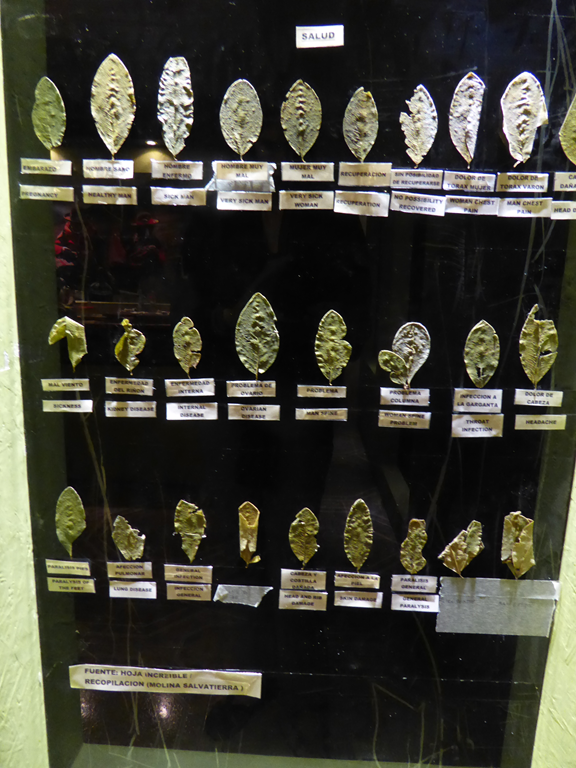
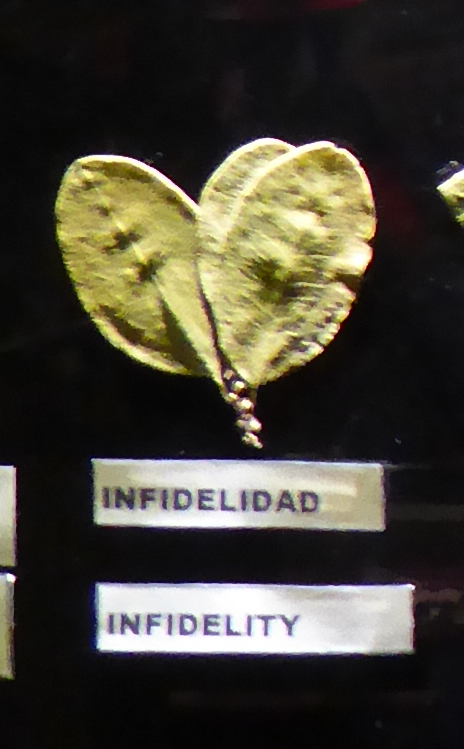
Oddly, almost all of the leaves were basically intact, and the shape of the leaf had the meaning. Which means that the fortune doesn’t come out of the random process of chewing the leaf, it’s determined by what shape the leaves were before you put them in your mouth in the first place.
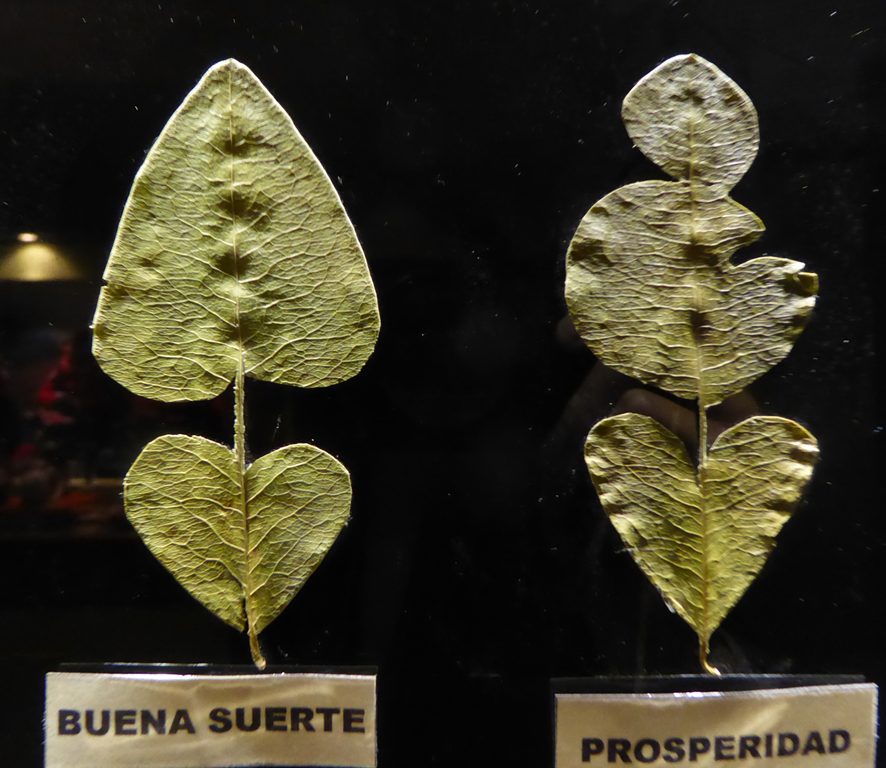
So a lazy coca leaf picker could wind up getting his clients in a lot of trouble.
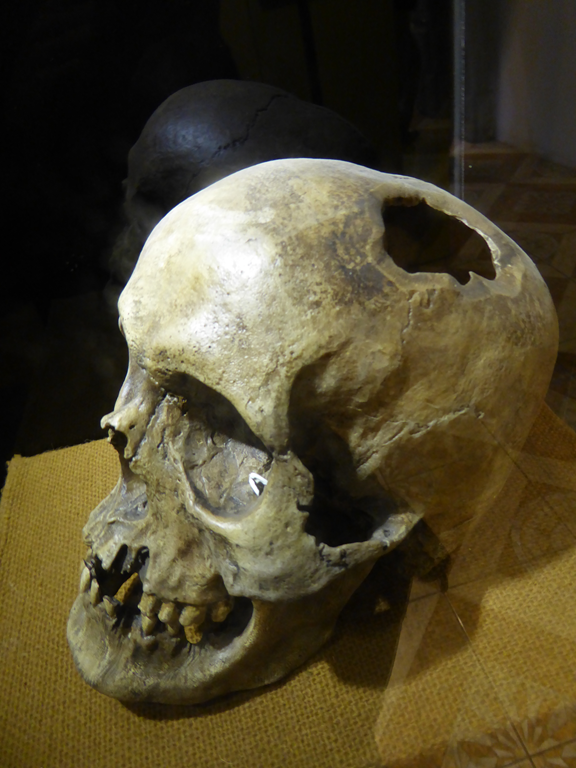
Upstairs they had sampled of trepanned skulls, where pre-Incan cultures had carved holes in people’s skulls. We don’t know exactly why they did it, but many of the skulls show healing afterward, which indicates that they survived, so it must have been friendly. Probably to let evil spirits out or relieve headaches or something. The relation to coca leaves is that they were used in the bandages, probably as a pain killer.
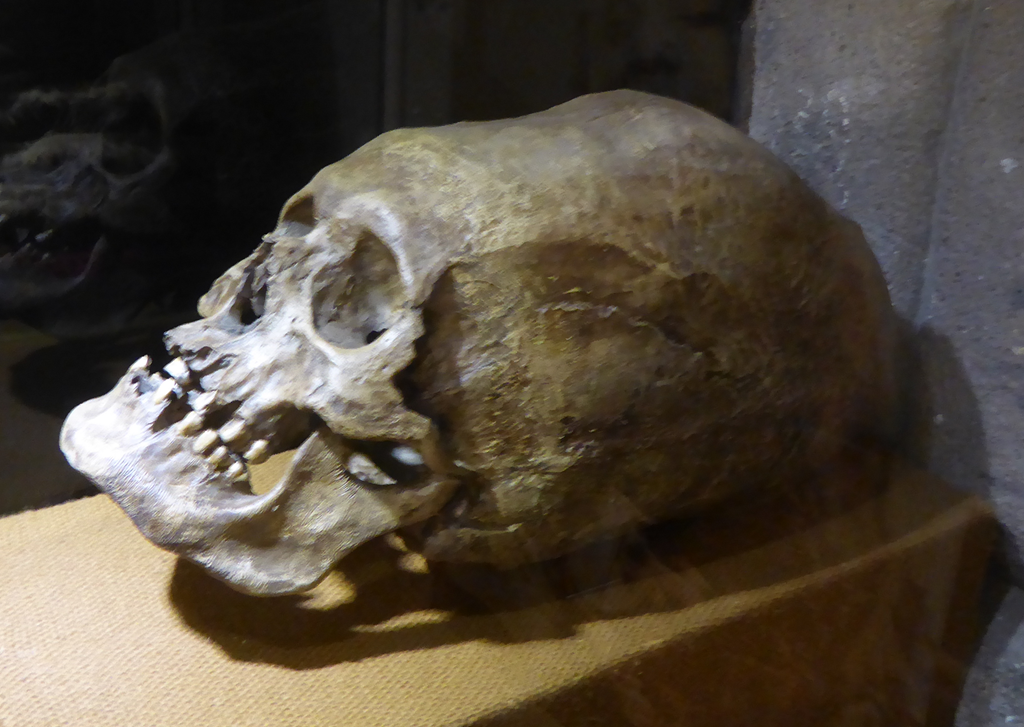
They also had deformed skulls. These were created by putting a cream, which included coca leaves, on an infant’s head while the skull was still soft, and tightly bandaging it to force it to grow the way they wanted. It was possibly used to identify people of different tribes, or royalty.
They also had the mummy of a boy that was sacrificed on a nearby volcano. Children were given coca leaves and beer as part of the ritual.
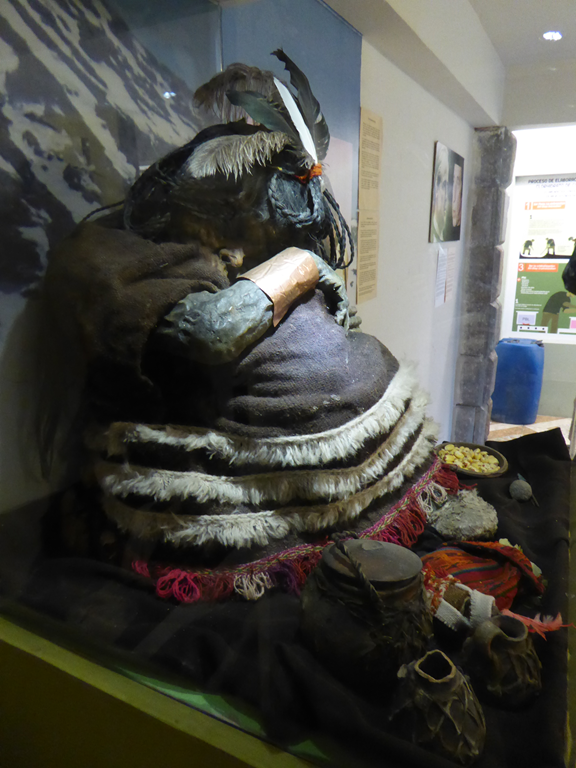
Next was a set of detailed, step by step instructions on how to turn 30kg of coca leaves into 100g of pure cocaine. Three different methods were described, with pictures. But you shouldn’t do that. Because you will wind up like this guy.

And that is why coca leaves are not evil.