SKU: 90205696879
wo bekomme ich sonnensegel

wo bekomme ich sonnensegel Sonnensegel STRANDURLAUB

Sale price$23.65 Regular price$26.28
Save 10%

Pay in installments of $6.57 with ShopPay, AfterPay and Klarna

Shipping Estimate
USA
  • USA
  • CAN

Ships within 48 hours · Estimated delivery Jul 23 - Jul 28

Promo Codes Available:

For Your Every Summer RSVP, with Code: SUMMER15

Description

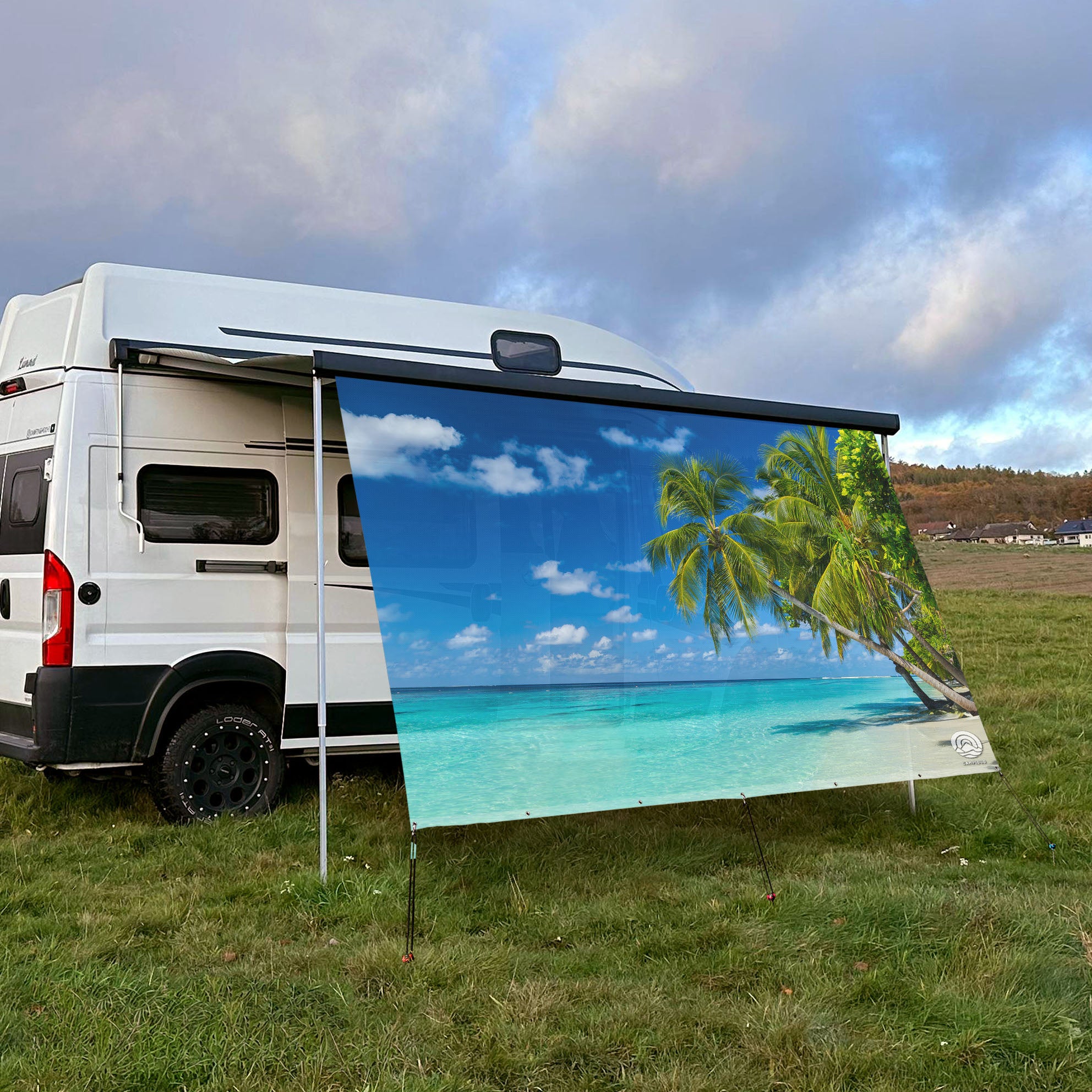
wo bekomme ich sonnensegel Sonnensegel STRANDURLAUBPremium campidoo Textil Sonnensegel Handgefertigt in Deutschland Dein stilvoller Sicht , Wetter & Sonnenschutz fr Wohnwagen, Wohnmobil oder Camper Van. Geniee entspannte Urlaubstage mit einem Sonnensegel, das nicht nur Schatten spendet, sondern auch deinen Stellplatz in einen Rckzugsort fr Hund und Kind verwandelt. Unser handgefertigtes Textil Sonnensegel verbindet Funktionalitt, Design und langlebige Qualitt. Warum unser Sonnensegel jeden Euro wert

Premium campidoo Textil-Sonnensegel – Handgefertigt in Deutschland

Dein stilvoller Sicht-, Wetter & Sonnenschutz für Wohnwagen, Wohnmobil oder Camper-Van.

Genieße entspannte Urlaubstage mit einem Sonnensegel, das nicht nur Schatten spendet, sondern auch deinen Stellplatz in einen Rückzugsort für Hund und Kind verwandelt. Unser handgefertigtes Textil-Sonnensegel verbindet Funktionalität, Design und langlebige Qualität.


Warum unser Sonnensegel jeden Euro wert ist

  • Robustes Premium-Material: Gefertigt aus hochwertigem Polyester-Gewebe (ca. 120 g/m²), reißfest, UV-beständig und wetterfest – hält Sonne, Regen und Wind stand. Ein Sonnensegel in 2x3m wiegt also rund 720g. Einen nachweisbaren UV Schutz bietet dieses Segel nicht.   

  • Beidseitiger Fotodruck: Das Motiv ist nicht nur auf der Vorderseite sichtbar – du siehst es auch von innen aber spiegelverkehrt.

  • Passender Keder: Wähle zwischen 5 mm oder 7 mm Keder und Ösen an der Oberseite, damit dein Sonnensegel in deine Markise passt oder auch Zuhause auf der heimischen Terrasse. Thule, Fiamma brauchen 5mm ist Standard für Thule Omnistor, Fiamma F Serien und 7mm für WIGO und Dometic Markisen,

  • Saubere Verarbeitung: Doppelt vernähte Kanten, vernickelte Metallösen und ein gleichmäßiger Saum sorgen für lange Lebensdauer – kein Ausfransen, kein Ausleiern.

  • Nachhaltig & fair: Produktion in Deutschland, kurze Lieferwege, keine Massenware – jedes Segel wird individuell angefertigt.

  • 2 Jahre Garantie: Bei uns kaufst du ohne Risiko – Qualität, auf die du dich verlassen kannst.

  • Tausende glückliche Käufer in ganz Europa (wir können es selber kaum glauben)


Die häufigsten Fragen kurz erklärt:


Welche Länge soll ich bestellen ?

  • möglichst kleiner als die Markise :) Ist deine Markise 350cm lang, sollte maximal 300cm bestellt werden, damit man Abstand zu den Aufstellbeinen halten kann und der Sturmbänder.

Hält das Material Regen ab ?

  • Jein. Einen Nieselregen ja. Einen heftigen Schlagregen im südlichen Urlaubsort mit Sturm eher nicht. 

Wie schwer ist ein Sonnensegel ?

  • Ein Sonnensegel in 200cm x 300cm wiegt rund 0,7kg

Welche Kedergrösse muss ich bestellen ?

  • Für Thule Omnistor und Fiamma Markisen liefern wir Standardmässig 5mm Keder. Für Dometic und Wigo Markisen einen 7mm Keder. Tip: ist die Nut 6-7mm gross, passt nur der 5mm Keder, denn dieser braucht etwas Luft zum einschieben. 


✨ Warum eigentlich ein Sonnensegel?

✅ nützlicher Wetterschutz wenn es Windig oder regnerisch ist

✅ Sichtschutz, wenn deine Parzelle nicht so ruhig wie geplant ist

✅ Sonnenschutz wenn dein Hund oder Kind(er) unter der Sonne leiden

✅ optimale Werbemassnahme für gewerbetreibende Camper

✅ optimal wenn Du Sonne nicht so gut verträgst aber trotzdem im Süden urlauben möchtest


✨ Deine Vorteile auf einen Blick:

✅ Sicht-, Wetter- und Sonnenschutz in Einem

✅ Halb-transparenter Stoff – Sichtschutz & Luftdurchlässig zugleich

✅ Einfache Montage: in Sekunden eingezogen & abgespannt

✅ Leicht zu reinigen, maschinenwaschbar bis 30 °C

✅Höhe immer 200 cm + Abspannung, Länge wählbar

✅ Hochwertige Verarbeitung


Lieferumfang:

  • 1x Textil-Sonnensegel mit gewähltem Motiv

  • Fest vernähter, passender Keder (5 mm für Thule & Fiamma) oder 7 mm (WIGO und oft Dometic))

  • Stabile Abspangummis und Heringe

  • Pflegehinweise für maximale Haltbarkeit


Unsere Lieferzeiten kurz erklärt:

Ein Sonnensegel wird meist nach Bestelleingang individuell für dich hergestellt, Die Auswahl, Grössen und verschiedenen Befestigungen lassen keine direkte Lagerhaltung zu. 

Bestseller und Dauerbrenner halten wir weitestegehend auf Lager und führen daher eine Lieferzeit von 2–4 Werktagen auf. Fertigen wir das Sonnensegel an, müssen  10–14 Werktage, geplant werden um dein Wunschmaß zu produzieren.

Du erkennst dies ganz einfach im Grössenauswahlfeld:

Grün: Lagerware, wird sofort versendet

Blau: wird angefertigt für Dich.


Unser Tipp

Kombiniere dieses Sonnensegel mit unseren passenden Vorzelt-Teppichen oder Seitenteilen für ein einheitliches Design an deinem Camper!


Warum unser Sonnensegel die beste Wahl ist:

Kriterium ⭐ Campidoo Sonnensegel 😬 Billiges Plastiksegel 🤣 Handtuch
Höhe 200 cm Zu kurz oder hängt schief 50×100 cm – keine Chance
Material Premium-Polyester (120 g/m²), UV- & wetterfest, waschbar Dünnes Plastik, bleicht schnell aus, reißt leicht Baumwolle – saugt sich mit Regen voll
Motiv Beidseitiger Fotodruck, farbecht & brillant Einfacher, oft einfarbiger Druck oder durchsichtig Egal was drauf ist – es ist ein Handtuch 😅
Passgenauigkeit 5 mm / 7 mm Keder – passt immer Nur Schlaufen, hängt schief, flattert Nur mit Wäscheklammern zu befestigen
Aufbau In < 2 Minuten eingezogen & abgespannt Fummelig, braucht extra Seile Zwei Personen nötig, um es irgendwie festzuklemmen
Langlebigkeit Viele Saisons, 2 Jahre Garantie Nach einer Saison spröde oder gerissen Nach dem 1. Regen muffig
Optik Stilvolles Motiv, macht deinen Stellplatz zur Wohlfühloase Sieht aus wie eine Baustellenplane Sieht aus wie… ein Handtuch
Preis-Leistung Einmal kaufen – jahrelang nutzen Billig kaufen, oft ersetzen Preiswert – aber völlig unbrauchbar
Shipping Notes
  • Free Standard Shipping on $100+ Orders to the USA.
  • Except Preorder products are shipped in 48 hours.
  • Delivery to the USA:
  1. Standard Shipping : 3-10 business days
  • If time is of the essence, please consider selecting expedited delivery for faster service.
Exchange/Return Notes
  • We offer a 30-day return/exchange service after receiving.
  • Final sale items are not eligible for returns or exchanges.
  • To process your return/exchange, please contact us at [email protected]
  • Please click here for more details>>> Return & Exchange Policy
SKU: 90205696879

Discover Niche Categories That Outsell wo bekomme ich sonnensegel

Top-Converting Item to Boost Your Average Order

4.5 ★★★★★
Based on 11 reviews
Sort
Highest Rating
Newest First
Oldest First
Product Reviews
P
Verified Purchase
Patrick S.
Bozeman, US
★★★★★ 5
A fun and fulfilling book - would love to own the series
Format: Paperback
I had a lot of fun with this book. About a year ago, I really came down on the side of presuppositionalism and have studied the approach, see if it was useful against two of the leading atheistic books (God Is Not Great and The God Delusion), and now I wanted to match it up against four other views of apologetics. I will try to not go into too much detail here as I think the book is an important read for developing an apologetic standpoint. The book follows the 1)"model of Approach X is presented" then 2) "Response from other 4 approaches to counter Approach X" and then move on to the next approach. The book allows final statements from each writer for a final opportunity. Steven Cowan has a good introduction and epilogue that bookends the book well. Craig (Classical Approach) really surprised me as he brings in the role of the Holy Spirit early into the conversation. I really thought I was going to just be reading the finer points of the Kalam argument he's known for. The role of the Holy Spirit is reflected in the other authors' approaches as well and that was nice to see. It's also nice to see Craig debating with Christians for once and it's here that you really get to see his thought process contrasting with other people with the same worldview. There are issues that Craig tries to bring up against the presuppositionist view point that could be applied for him. He doesn't seem to get that all foundations are, by definition, circular because if you can appeal to something more foundational, then your foundation isn't your foundation at all. Craig seems to bring in some higher concepts about probability to make some of his points and I think that's really a miss for anyone who's not a high level philosopher (and even some philosophers might have issues understand what he's talking about here). Habermas (Evidential Approach) seems to have an undue hatred for presuppositionalism. He's also another person who doesn't realize that the approach he uses isn't really the foundation he is starting from. I think he resents doing the hard work that the other approaches then build up to. Feinberg (Cumulative Case Approach) seems to miss the point of presuppositionalism entirely. He's got the approach of what I call the "shotgun approach" in the sense that he wants to use everything possible and sees what he hits. Frame (Presuppostional Approach) does an ok job with presenting the method. I don't think he would be my first choice in representing the approach. He doesn't do a good job of explaining the "problem of circularity" isn't a problem. He just does an "ok" job. Clark (Reformed Epistemological Approach) is one I was excited to read. I liked some of his points he made when talking about the other approaches. Then I read his approach and was extremely disappointed. The biggest flaw is that he states literally that his approach doesn't help to show the Christian God is real. I would say then your apologetic method is worthless and not a real method at all. I understand the R.E. approach but if I went only with Clark's explanation and argumentation, I wouldn't have even considered it a real area of focus. The book is well laid out, the footnotes are at the bottom of the pages (SO helpful!), Cowan does a good job of wrangling the writers and offering expanded reading and other authors for each area of focus. Myself and my mentor spent from January to August every other week going over and discussing the book. Finding flaws, comparing and contrasting, and seeing where points were made and where points were missed. I think the biggest deficit we found was that the writers tended to assume agreement on definitions of words that played a big role (for example - the word "evidence" NEEDED to be defined right off the bat by every author and it wasn't until Frame in his response to the objections raised did we even have one person define it). My suggestion for this book to maximize the fun is to pick a method and try and defend that method throughout; even with the writer arguing your side. My book is filled with notes and highlights that just made this book a great enjoyment to meet and discuss with a fellow Believer about. It does not settle all the issues, but it does help you focus on the fact that we still aren't done learning yet. Final Grade - A-
WAS THIS REVIEW HELPFUL?YesReportShare
Reviewed in the United States on November 13, 2013
L
Verified Purchase
Lyndon Unger
West Palm Beach, US
★★★★★ 4
Great Introduction to the Various Schools of Apologetics
Format: Paperback
In reading "Five Views on Apologetics", I first had to wonder why the book was called "Five Views" and not "Three Views", since the first three authors admittedly had so much in common with each other that it seemed that their positions were subcategories of a singular system of apologetics. In fact, Habermas claimed Craig as an evidentialist on multiple occasions and admitted they had relatively minor disagreements. Feinberg was also an evidentialist, but he differed from Habermas and Craig in supposing that any one argument could possibly be persuasive to a skeptic. All three individuals definitely agreed on so much though that their three essays proved to be slightly disappointing as in the end, I figured that any one of them practically utilized a combination of all three approaches (I've heard Craig make cumulative case presentations...). I wondered exactly why they were representing different apologetic camps. Don't get me wrong: I like Craig and Hambermas and Feinberg; they're brothers in the Lord. I just find that evidentialism's off-shoots are so similar to each other that taking three chapters for the various forms of evidentialism didn't seem that worthwhile. Ironically, it seemed that the other two views of were related by what seemed like a mutual distaste for the other, Frame wrote that he "was rather disappointed at Clark's treatment of the role of the Bible in determining apologetic principles" (310) and the suggestion that Clark might not have "tried hard enough to find out what the Bible says" (310) also seemed like a needless jab, but Frame still commended Clark on plenty and suggested that "presuppositionalists too are Reformed epistemologists" (312). On the other hand, Clark wrote that Frame's essay is "the best version of presuppositionalism I have ever read" but then went on to suggest that presuppositionalism (at least as presented by Van Til) was either too confusing for him or was "obviously false" (255). Clark parroted the often repeated gross misunderstanding of presuppositionalism that "non-christians cannot know anything" (256), suggested that Frame implied this concept (257) and then spent several paragraphs refuting an obviously silly postulate; it's strange how Clark would insinuate that Frame would be so plainly stupid and I got the idea that Clark thought that all presuppositional apologists were somehow mentally lacking. Even in my early reading of Van Til, I understood that he was writing about how unbelievers cannot account for how they know anything, not whether or not they can know anything. What was even more alarming was Clarks' confession that "anyone can find some support for his or her position in Scripture" (275), as if scripture lacks a clear meaning and is somehow malleable enough to consistently conform to anyone's presuppositions. I was left dissatisfied by how Clark didn't seem to exhibit reformed theology and I was also puzzled why Frame didn't present the Transcendental Argument for the Existence of God (the main positive argument of presuppositionalism). What was even more humerous was how Craig presented a fairly solid version of the transcendental argument and gave Frame a slight poke for not presenting the "main course" of presuppositionalism. On the whole, I found "Five Views" to be reflective of much of my general feelings of the current state of apologetics; too distracted, too unscriptural, and too confusing. It was a difficult read at times; William Lane Craig's constant scampering into symbolic logic was frustrating and made me wonder whether the publisher clearly communicated the target audience to the authors. I was disappointed that none of the authors attempted to establish any component of their case from scriptural exegesis but instead presented philosophical constructs aided by proof texts (i.e. Habermas referenced Romans 8:16 on page 97 as `proof' that the Holy Spirit may work through apologetics to bring "full assurance to believers", arguably not the meaning of Romans 8:16). I also found myself wondering if the authors were agreeing on theological points due to lack of clarity (i.e. Craig's writing about the inner witness of the Holy Spirit was general enough that it sounded Mormon...). The book was good, and it DID expose me to five (arguably) different apologetic systems, but I hesitate to give it 5 stars due to some of the weak/unclear presentations of the systems and the thought that this isn't the best that evangelicalism has to offer. It's still a worthwhile buy and I'm likely being too hard on it. I'd recommend it as an intro book for a college level Apologetics class, or for someone who's already familiar with theology and the concept of apologetics but isn't familiar with it in depth.
WAS THIS REVIEW HELPFUL?YesReportShare
Reviewed in the United States on November 4, 2009
J
Verified Purchase
J. E. Lindsey
Charlottesville, US
★★★★★ 5
Great Contrasts
Format: Paperback
Cowan tells us, "This is a book about apologetics methodology, not a book of apologetics per se. That is, it is not a book that seeks to do apologetics as much as a book that discusses how one ought to do apologetics" (8). Cowan has achieved the stated purposes of this book in many ways, but due to limited space I will stay focused on three examples; Glossary of Key Terms and Concepts, format, and conclusion by Cowan. Glossary of Key Terms and Concepts (21-24) in this initial section of the book provide a clear and useful starting place for persons who are not academically familiar or comfortable with many terms used in the book. The fact that the key terms section included and defined conceptual terms supports the stated purpose of the book being a methodological rather than an apologetic book with multiple views from various writers' specific understandings and preferred styles of apologetics. As a new person to formal apologetics, this section helped launch me smoothly into the methodological discussions. I returned to these pages a few times to reacquaint myself with meaningful concepts. The format of the discussion with proponents making a methodological case for their form of apologetic followed by critiques from supporters of other apologetic systems brought clarity to the five methods addressed in this book. This format help to highlight both strengths and weaknesses in methods. Cowan as the general editor achieved the goal of keeping the writers away from apologetics and on the goal of providing defense and critiques of these five methods. Each supporter had a unique "tee-up" to their sections. Craig starts by stating, "...methodology in Christian apologetics...raising the age-old issue of the relationship between faith and reason." He goes on further in his introduction to tell a story about his struggle at Wheaton College and why his methodology was helpful to his faith (26). Habermas clarifies that his form of evidential apologetics is, "...characterized as the one-step approach..." (92).This initial piece of information was insightful to me and a helpful clarification between classical and evidential methods. Feinberg on Cumulative Apologetics points out, "A good place to begin the discussion of apologetic methodology is to ask about the nature of the case for theism and Christianity" (148). Frame was probably the most direct in his initial statement by saying, "In apologetics, as in every aspect of the Christian life, the most important thing is to glorify God. Therefore, it is important for us to look in God's Word, the Bible, to see if our Lord gives us any directives relevant to the apologetic task" (208). In principle agree, but I will admit, I find his form of apologetics to be too circular in nature to be convincing to an unbelieving skeptic - as a standalone method. Christians I think would all say, well of course. Clark's section begins with stories meant to set the stage that it is reasonable have faith. Clark writes, "My suppose-this and suppose-that stories are intended to raise the problem of the relationship of our important beliefs to evidence" (267). Each of the five supporters of their method successfully introduced their unique method of apologetics. Cowan regarding to his conclusions says, "Hopefully, this will not only help you, the reader, make your own decisions regarding apologetic methodology, but will also provide a basis for further discussion of the topic among scholars. Cowan's conclusions assured that main points of agreement and disagreement were clear. Here as with the other sections, the textual comments were method focused. My criticism is pointed at the spirit of the debate. The writers did not draw enough contrasting between apologetic methods to clearly show that their individual method should be favored. I think the tone was a little too stilted in the direction of "playing" nice. In a book that purports to have five methods, there were times it seemed like only three or four methods. I guess this is inescapable give that each apologetic style can share some parts in common with another. Yet Craig shares my feeling here, I believe, based on his statement, "Pity our poor editor! Ideally he would like to find a wild-eyed fideist on one end of the spectrum and a hard-nosed theological rationalist on the other. Instead he winds up with a presuppositionalist who argues like an evidentialist..." (122). Overall Five Views on Apologetics provides a good compare and contrast resource for anyone interested in these five common methods of apologetics.
WAS THIS REVIEW HELPFUL?YesReportShare
Reviewed in the United States on March 18, 2011
M
Verified Purchase
Mimi
Pawtucket, US
★★★★★ 5
Condense Analysis of 5 of the most notable Apologist
Format: Paperback
Looking for a quick reference guide to the major theorist of Apologic study, this book is a great resource.
WAS THIS REVIEW HELPFUL?YesReportShare
Reviewed in the United States on October 12, 2024
W
Verified Purchase
Will L.
Whiting, US
★★★★★ 5
Not an Intro to Apologetics
Format: Paperback
This book is not for the first-time student of apologetics. It's deep and, at times, difficult. However, for anyone with a serious interest in apologetics, this is a great way to find out which method suits your apologetic style and why. It was eye-opening for me. I am confident that God can use most (if not all) of the five distinct methods covered in the book. But it was very helpful to me to consider pros and cons of each and decide which approach seemed appropriate for me. Great book, if you feel ready for it!
WAS THIS REVIEW HELPFUL?YesReportShare
Reviewed in the United States on July 25, 2006

recommand products