SKU: 98549366521
pineapple.plant

pineapple.plant Pineapple Plant ‘Sugarloaf'

Sale price$21.13 Regular price$23.48
Save 10%

Pay in installments of $5.87 with ShopPay, AfterPay and Klarna

Shipping Estimate
USA
  • USA
  • CAN

Ships within 48 hours · Estimated delivery Jul 19 - Jul 24

Promo Codes Available:

For Your Every Summer RSVP, with Code: SUMMER15

Description

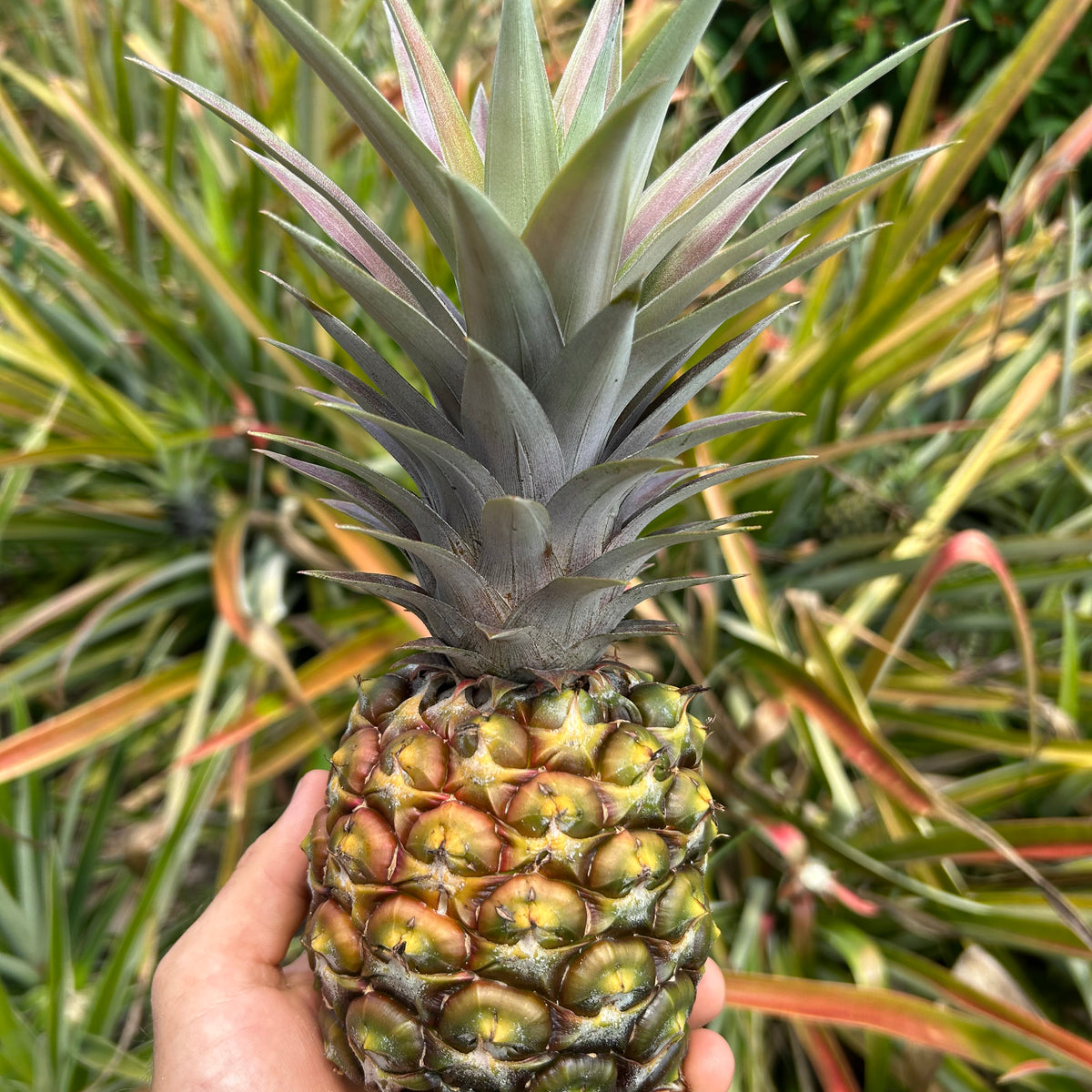
pineapple.plant Pineapple Plant ‘Sugarloaf'A large fruit with white flesh and edible core. Very sweet and a favored variety among growers. Common in Hawaii and sometimes referred to as Kona Sugarloaf. The plant has no spines on its leaves. ________________________________________________________________________________________ Latin name Ananas comosus Pineapple plants are one of the most ubiquitous tropical fruit plants. Surprisingly, these bromeliads are in the same family as tree dwelling

A large  fruit with white flesh and edible core. Very sweet and a favored variety among growers. Common in Hawaii and sometimes referred to as ‘Kona’ Sugarloaf.  The plant has no spines on its leaves.

________________________________________________________________________________________

Latin name - Ananas comosus

Pineapple plants are one of the most ubiquitous tropical fruit plants. Surprisingly, these bromeliads are in the same family as tree-dwelling epiphytes like Spanish moss.

The fruits are familiar, highly-palatable, and fun to grow. Pineapple plants prefer well-draining, sandy/loamy soil as their primary nemesis is root-rot. Container-growing your pineapples is absolutely acceptable and they take quite well to fruiting in a pot.

Pineapple plants, although fairly low-growers, create a wide footprint with their broad leaves. Feel free to cut leaves back out of your walking paths. Commercial growers practice this method regularly with no effect on fruit production.

After about 70-80 leaves have been produced (variety-dependent), a pineapple will begin to produce it’s flowering stem. Pineapples are seedless unless grown closely with other varieties or hand-pollinated for seed production. In the wild, pineapples are primarily pollinated by hummingbirds, but zero pollination is required to yield delicious fruits.

Pineapple fruits are high in water content (86%) and provide a rich source of manganese and Vitamin C. You’re likely well-aware that pineapples are widely used in drinks, confections, fruit salads, and straight up.

A little pineapple history…

Pineapples have been cultivated for centuries in their indigenous region of Central and South America, but were not introduced in Europe until the 17th century. It’s moniker is owed to the tendency of European explorers to name any novel round fruits “apples.” 

Explorer John Smith was one of the first to utter the term “pineapple” to describe this fruit in 1624. By the late 1700’s and early 1800’s, wealthy Europeans installed greenhouses or imported pineapples for display purposes, cycling them through use as centerpieces until they began to rot.

In the 1800’s, commercial production of select cultivars like ‘Smooth Cayenne’ began. The ‘Smooth Cayenne’ cultivar achieved worldwide diaspora as it was favored for commercial growth throughout Europe, Hawaii, Australia, and Africa.

How long until my pineapple fruits?

The time from planting to harvest depends on the part of the plant you are using to propagate the pineapple. Use the guide below to set your expectations regarding harvest timeline:

-Pineapple Crowns (the top of the fruit) can produce a new crop within 12-18 months.

-Pineapple Pups/Suckers (off-shoots from the side of the plant itself) can produce a new crop within 18-24 months.

-Pineapple Slips (baby plants taken from the bottom of a pineapple fruit) can produce a new crop after about 24+ months.

When to pick pineapples…

Pineapples typically mature in the warmest months. In South Florida, harvest season rolls from June through September. You can tell your fruit is ready to pick when color change begins and the fruit begins to emit scent. Some gardeners are able to leave their pineapples on the plant until full yellow coloration; Gardeners with rodent pests should pick their fruits as soon as yellow blush appears to avoid loss of your precious fruits.

Once in a while, you may experience the glory of an off-season pineapple at Thanksgiving or Christmas-time.

_____________________________________________________________________

Size - 4’ Wide x 3’ Tall 

Noteable Characteristics - Fruits year after year, and offers more plants (via slips, pups, and crowns) year over year.

Sunlight requirements - Full or Part Sun

Cold hardy temp - Damaged below 50 F; Killed at freezing temps

Harvest Season - June, July, August (an off-season fruit once in a while)


Shipping Notes
  • Free Standard Shipping on $100+ Orders to the USA.
  • Except Preorder products are shipped in 48 hours.
  • Delivery to the USA:
  1. Standard Shipping : 3-10 business days
  • If time is of the essence, please consider selecting expedited delivery for faster service.
Exchange/Return Notes
  • We offer a 30-day return/exchange service after receiving.
  • Final sale items are not eligible for returns or exchanges.
  • To process your return/exchange, please contact us at [email protected]
  • Please click here for more details>>> Return & Exchange Policy
SKU: 98549366521

Discover Niche Categories That Outsell pineapple.plant

Top-Converting Item to Boost Your Average Order

4.8 ★★★★★
Based on 22 reviews
Sort
Highest Rating
Newest First
Oldest First
Product Reviews
L
Verified Purchase
Luz collazo
Fort Morgan, US
★★★★★ 5
100% recommend, excellent product
Style: NEUTROGENA SHEER ZINC, Size: 1.5 Fl Oz (Pack of 1)
This sunscreen stick is perfect for kids and so easy to apply! It goes on smoothly without making a mess and provides great sun protection. I love that it’s gentle on sensitive skin and water resistant for outdoor activities. A must-have for beach days and everyday use!
WAS THIS REVIEW HELPFUL?YesReportShare
Reviewed in the United States on May 19, 2026
K
Verified Purchase
KikaBrazil
Phoenix, US
★★★★★ 5
Gentle protection for sensitive kids’ skin ☀️
Style: NEUTROGENA SHEER ZINC, Size: 3 Fl Oz (Pack of 1)
I’ve been trying to be more careful about what I use on my kids’ skin, and this sunscreen has been such a good find. It blends better than most mineral sunscreens I’ve tried, doesn’t have a strong smell, and feels gentle on sensitive skin. I also love that it gives solid sun protection without feeling too heavy or greasy. Perfect for beach days, playground time, or just everyday use outdoors. 😊
WAS THIS REVIEW HELPFUL?YesReportShare
Reviewed in the United States on May 15, 2026
N
Verified Purchase
new yorker
San Leandro, US
★★★★★ 5
Worth the price, ?sheer
Style: NEUTROGENA SHEER ZINC, Size: 1.5 Fl Oz (Pack of 1), Style: NEUTROGENA SHEER ZINC, Size: 1.5 Fl Oz (Pack of 1)
2021 update: My family has been using this formulation for many years now. I chose it for the high (>20%) mineral content of zinc oxide, because that is the substance responsible for the sunscreen effect of this product. Unfortunately that is also the substance responsible for the white cast on the skin. Other brands typically have mineral content in amounts around 8-12% of the product. So although you may not get as white of a cast with those brands, you are also not getting as much of the sunscreen ingredient either. Another way manufacturers combat the white cast problem is to grind the minerals into ultra-fine particles: nanoparticles. There are downsides to this however: loss of UVA blockage, potential lung damage from inhalation of both manufacturing workers and users, possible coral reef and aquatic life disturbance. So, I expect and accept a mild white cast when using this because it is related to its effectiveness and probable lack of nanotization. When I care about the white cast, I use a drop or two of foundation with it. Otherwise, I leave it alone because after rubbing gently in, it’s not very noticeable. No problems with stickiness or tackiness a minute or so after applying and I’ve never had it sting my or my kids eyes probably because it stays put unlike many liquid formulas. I can also attest to its effectiveness as a sunscreen. We use it in the summertime by the beach and at the lake. In the winter and spring time we use it at 10,000 feet elevation while skiing. If we are going to be outdoors in the sun for any significant period of time, we use it then too. Does the job every time. We are diligent about reapplying after swimming or sweating. The pics I posted for comparison of stick sizes. Now go have fun in the sun...after putting on your sunscreen. ----------------------------------------------- Original post: My kid's skin is sensitive to chemical sunscreens so I get only ones made with mineral sunscreens. Sticks are much easier to apply on the face; less mess and hassle. The price of this large stick was off putting at first, but I got it because of the value in price per product; see pics. Very happily, I find it easier to apply than the smaller sticks. Takes less time to swipe on the face and anyone who has ever tried applying sun screen on the face of a child knows, less time to apply is a huge bonus!!! Same effectiveness in preventing sun burns as the smaller versions. I'm buying another one now.
WAS THIS REVIEW HELPFUL?YesReportShare
Reviewed in the United States on October 26, 2020
R
Verified Purchase
Rae
Draper, US
★★★★★ 5
It works great
Style: NEUTROGENA SHEER ZINC, Size: 1.5 Fl Oz (Pack of 1)
Bought this numerous times for ease of use and how good it works. After countless summer days at the zoo, park or amusement park this is the best at staying on and protecting our kids skin. They do have sensitive skin and it does not irritate it either. Will continue to buy!
WAS THIS REVIEW HELPFUL?YesReportShare
Reviewed in the United States on February 1, 2026
B
Verified Purchase
BK2012
Los Angeles, US
★★★★★ 4
Keep it in a cool environment or else
Style: NEUTROGENA SHEER ZINC, Size: 1.5 Fl Oz (Pack of 1)
I think it’s great for kids and I’ve used it and rebought it for years but my only complaint which I’m surprised no one mentions is if it’s warm out, the sunscreen stick melts quite easily in your bag or car and then the stick softens and falls off the applicator making it pretty unusable. Also similarly, if a child pushes the stick out too far, it’ll fall off the applicator. So that wastes a lot for me every time!
WAS THIS REVIEW HELPFUL?YesReportShare
Reviewed in the United States on April 23, 2026

recommand products