Pay in installments of $5.37 with
 ,
,
 and
and

Shipping Estimate
USA
- USA
- CAN
- USA
- CAN
Ships within 48 hours · Estimated delivery Jul 19 - Jul 24
 Promo Codes Available:
For Your Every Summer RSVP, with Code: SUMMER15
Description
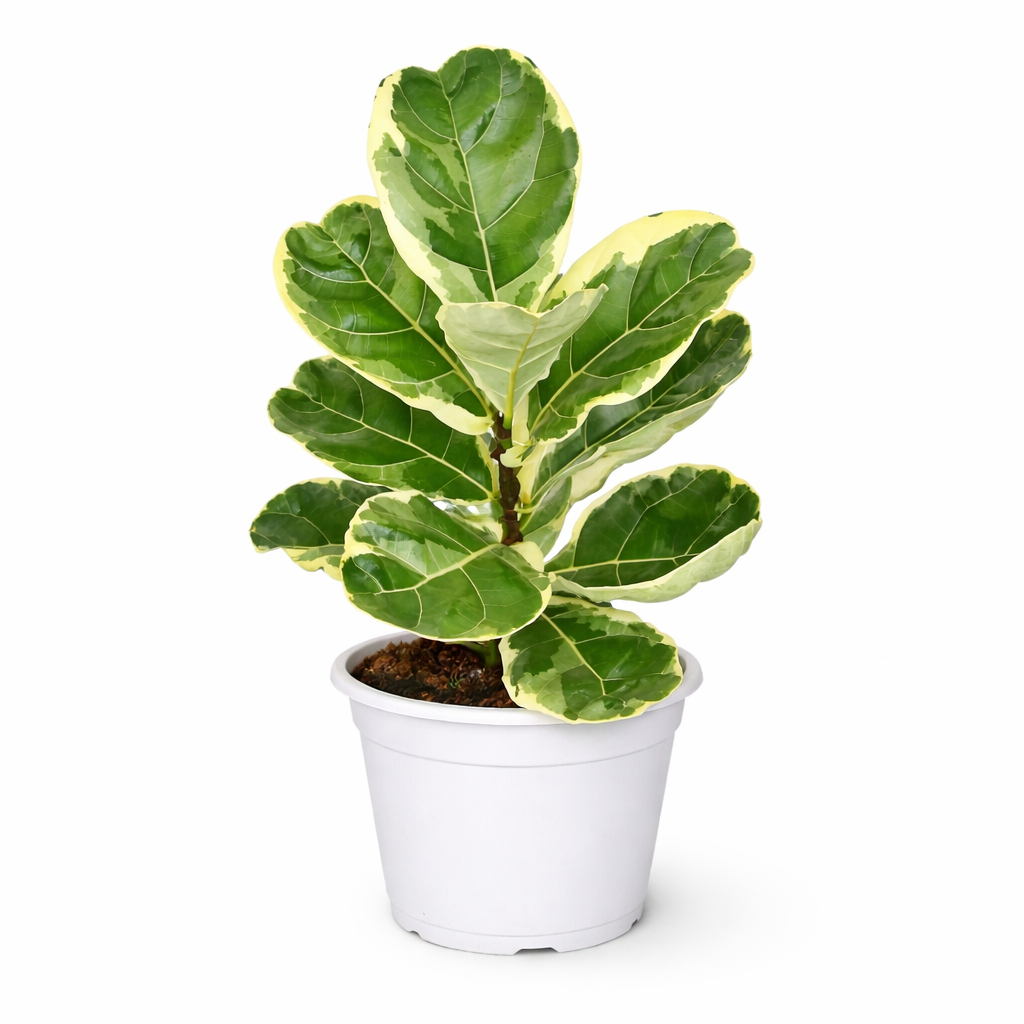
variegated fiddle leaf fig for sale Variegated Ficus Lyrata (Variegated Fiddle Leaf Fig)The Variegated Ficus Lyrata the Variegated Fiddle Leaf Fig is among the rarest houseplants in the world. The standard Fiddle Leaf Fig is already beloved for its enormous, lyre shaped leaves lyrata, Latin for lyre, the instrument its leaf silhouette resembles and the variegated form takes those same dramatic leaves and layers them in an irregular, tri tonal pattern of dark glossy green at the centre, soft olive green in between, and sweeping cream to
The Variegated Ficus Lyrata — the Variegated Fiddle Leaf Fig — is among the rarest houseplants in the world. The standard Fiddle Leaf Fig is already beloved for its enormous, lyre-shaped leaves — lyrata, Latin for lyre, the instrument its leaf silhouette resembles — and the variegated form takes those same dramatic leaves and layers them in an irregular, tri-tonal pattern of dark glossy green at the centre, soft olive-green in between, and sweeping cream-to-white margins and patches toward the edges. Native to the lowland rainforests of West Africa, it grows into a sculptural, upright tree of 1.5–3 m indoors. Commercially, it is produced by only a handful of specialist growers, primarily in Thailand. Owning one is a genuine statement of collection.
Light
▾
The brightest spot in your home — as close to a window as possible without direct sun touching the leaves. An east-facing window or a south/west-facing window with a sheer curtain is ideal. 6–8 hours of bright filtered light daily. Gentle morning or late afternoon sun can be tolerated once the plant is established. Never move the plant once settled — position it correctly from the start.
Watering
▾
Allow the top 50% of soil to dry before watering — roughly every 10–14 days. Water thoroughly with lukewarm filtered or rainwater until it drains freely, then empty the saucer. The variegated form is more sensitive to over and underwatering than the plain green — a moisture meter is a worthwhile investment. Maintain a consistent watering schedule; irregular watering triggers leaf drop.
Humidity
▾
50–70% preferred. A humidifier nearby is ideal — the cream sections show edge damage sooner than the green in dry air. Keep well away from AC vents, fans, radiators, and heating sources. Do not mist directly — water on the leaves promotes bacterial and fungal infections, to which Ficus lyrata is particularly susceptible.
Growing Media
▾
Light, fast-draining mix: 50% quality potting soil, 30% perlite, 20% orchid bark. pH 6.0–7.0. A pot with excellent drainage holes is non-negotiable — standing water at the roots is the primary cause of root rot. The plant prefers to be slightly root-bound; repot only when roots visibly emerge from drainage holes, moving up one pot size in spring.
Feeding
▾
Balanced liquid fertilizer at half strength every two weeks in spring and summer. Use lukewarm water. Stop feeding entirely in autumn and winter. Over-feeding causes leaf drop — less is more. Wipe the large leaves with a soft damp cloth monthly to remove dust, which impedes photosynthesis.
Leaf Drop
▾
The most common Ficus lyrata complaint — triggered by being moved, rotated, cold drafts, irregular watering, or low light. Identify and fix the cause, then leave the plant completely undisturbed. New leaves will emerge once conditions stabilise. Do not overwater in response to stress — this compounds the problem.
Brown Spots or Edges on Cream Sections
▾
Direct sun, dry air, or tap water minerals. Move to pure indirect light, boost humidity, and switch to filtered or rainwater. Do not mist — it causes bacterial spotting. Existing brown areas are permanent; new growth will be healthy once conditions improve.
Brown Spots with Yellow Halo — Bacterial Infection
▾
Bacterial leaf spot — the most serious Ficus lyrata disease. Caused by overwatering, misting, or poor drainage. Remove affected leaves immediately with clean scissors. Reduce watering significantly, improve drainage, stop all misting, and ensure good air circulation. Do not let water sit on the leaves.
White Raised Dots on Leaves
▾
Completely normal — these are cystolyths, natural calcium carbonate crystal deposits in the leaf cells. They cannot be wiped off and require no treatment. Do not mistake them for pests or disease.
Spider Mites or Scale
▾
Inspect leaf undersides and stems regularly. Wipe with a soft damp cloth then treat with diluted neem oil or insecticidal soap every 5–7 days for 3 weeks. Maintain humidity above 50% to deter spider mites. Do not spray neem oil in direct sunlight.
📋 Quick Plant Profile
| Botanical Name | Ficus lyrata Warb. 'Variegata' |
| Name Meaning | lyrata = Latin for lyre — the leaf silhouette resembles the ancient stringed instrument |
| Family | Moraceae (mulberry family) |
| Origin | West Africa; lowland tropical rainforest |
| Variegation Pattern | Tri-tonal: dark green centre, olive-green mid, cream-to-white margins and irregular patches |
| Rarity | Extremely rare — commercially produced by specialist growers primarily in Thailand |
| Golden Rule | Find its spot and do not move it — position changes trigger leaf drop |
| Light | Brightest spot available; bright filtered; no direct midday sun; do not rotate |
| Watering | Top 50% dry; lukewarm filtered water; consistent schedule; no saucer standing water |
| Humidity | 50–70%; humidifier preferred; no misting — causes bacterial leaf spot |
| Temperature | 18°C–27°C; stable and consistent; no cold drafts or sudden changes |
| Mature Height | 1.5–3 m indoors; up to 25 m in the wild |
| Pot Preference | Slightly root-bound; repot only when roots emerge from drainage holes |
| Do Not Mist | Water on leaves causes bacterial leaf spot — use humidifier instead |
| White Dots on Leaves | Cystolyths — natural; not pests; do not treat |
| Ideal For | Serious Collectors, Statement Indoor Trees, Bright Living Rooms |
| Care Level | Advanced — consistency and stability are the foundations of success |
Shipping Notes
- Free Standard Shipping on $100+ Orders to the USA.
- Except Preorder products are shipped in 48 hours.
- Delivery to the USA:
- Standard Shipping : 3-10 business days
- If time is of the essence, please consider selecting expedited delivery for faster service.
Exchange/Return Notes
- We offer a 30-day return/exchange service after receiving.
- Final sale items are not eligible for returns or exchanges.
- To process your return/exchange, please contact us at [email protected]
- Please click here for more details>>> Return & Exchange Policy