Pay in installments of $6.31 with
 ,
,
 and
and

Shipping Estimate
USA
- USA
- CAN
- USA
- CAN
Ships within 48 hours · Estimated delivery Jul 24 - Jul 29
 Promo Codes Available:
For Your Every Summer RSVP, with Code: SUMMER15
Description
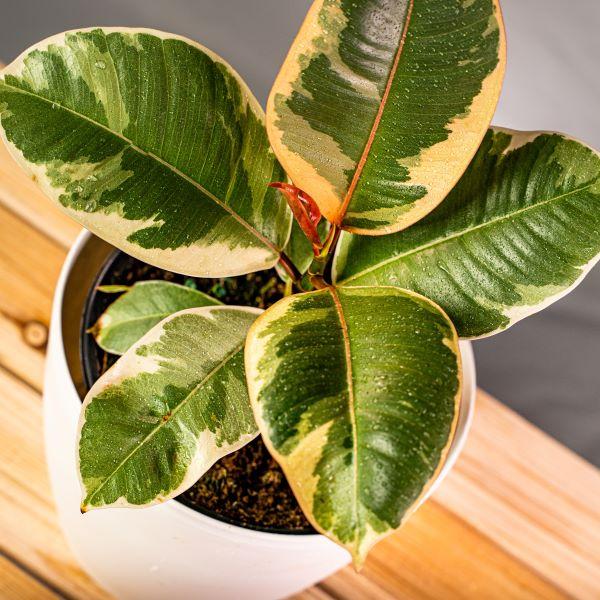
variegated rubber tree houseplant 6p! Ficus e Tineke Bush / Variegated RubberTree /TropicalCream, Green, and Blush Variegation That Pops Ficus Tineke is a variegated form of the classic rubber plant, featuring thick, glossy leaves streaked with swirls of cream, soft sage, and deep forest green, often edged with a faint pink blush along the margins and midrib. Each leaf appears hand painted, lending this plant a serious designer energy on a console table, in a bright corner, or flanking a picture window. Native to tropical regions of India
Cream, Green, and Blush Variegation That Pops
Ficus Tineke is a variegated form of the classic rubber plant, featuring thick, glossy leaves streaked with swirls of cream, soft sage, and deep forest green, often edged with a faint pink blush along the margins and midrib. Each leaf appears hand-painted, lending this plant a serious “designer” energy on a console table, in a bright corner, or flanking a picture window. Native to tropical regions of India and Southeast Asia, Ficus elastica has long been valued as a nearly bulletproof indoor tree—and Tineke brings that same toughness with a lot more color.
Upright, Tree-Like, and Space-Efficient
Indoors, Ficus Tineke typically grows as an upright, single- or multi-stemmed plant that can reach 4–8 feet in height over time, depending on the pot size, light, and pruning. Young plants are compact and bushy, but as they mature, they develop a more tree-like form, with leaves spiraling up sturdy stems. The growth rate is moderate; in good light and conditions, you’ll see several new leaves per year rather than explosive growth, which makes it easy to keep this rubber plant at a comfortable size for living rooms, bedrooms, or offices. Outdoors in frost-free climates, Ficus elastica can become a large tree, but as a container houseplant, Tineke stays happily within “statement plant” territory.
Bright Indirect Light, Fast-Draining Soil, and Measured Water
Because its leaves are variegated, Tineke needs brighter light than solid-green rubber plants to keep its creamy patches vibrant. Bright, indirect light near an east- or north-facing window, or a few feet back from a filtered south or west window, is ideal. Too little light results in stretched stems, smaller leaves, and dull variegation; excessive direct sun can scorch the pale leaf sections. Plant Ficus Tineke in a loose, well-draining mix—such as a quality houseplant soil amended with perlite and a bit of bark or cactus mix—so water moves through freely and roots never sit in a heavy, compacted medium.
Watering is where most rubber plant problems start. Let the top 1–2 inches of soil dry between waterings, then water deeply until excess water drains out. Slightly underwatering is safer than overwatering, as soggy soil quickly leads to root rot. In bright light and active growth, that often means watering every 1–2 weeks, with longer intervals in low light or winter. Tineke prefers typical indoor temperatures around 65–80°F and average household humidity, though very dry air can cause some browning on the cream portions of the leaves. Keep it away from cold drafts, heat vents, and sudden temperature swings.
Modern Focal Point with a Note on Toxicity
In the “indoor landscape,” Ficus Tineke shines as a modern focal plant that instantly elevates a space. Its upright, tree-like habit works beautifully beside sofas, anchoring reading nooks, or styling up home offices where you want a bold plant presence that isn’t fussy. It pairs well with trailing vines, ferns, and smaller tabletop plants, providing strong vertical structure behind softer textures. Like other rubber plants, however, Ficus Tineke’s sap contains latex and is considered mildly toxic to both pets and people if ingested. It can also irritate the skin and eyes, making it best suited for households where it can be kept out of reach of curious chewers and handled with care during pruning.
Shipping Notes
- Free Standard Shipping on $100+ Orders to the USA.
- Except Preorder products are shipped in 48 hours.
- Delivery to the USA:
- Standard Shipping : 3-10 business days
- If time is of the essence, please consider selecting expedited delivery for faster service.
Exchange/Return Notes
- We offer a 30-day return/exchange service after receiving.
- Final sale items are not eligible for returns or exchanges.
- To process your return/exchange, please contact us at [email protected]
- Please click here for more details>>> Return & Exchange Policy