SKU: 9105332836
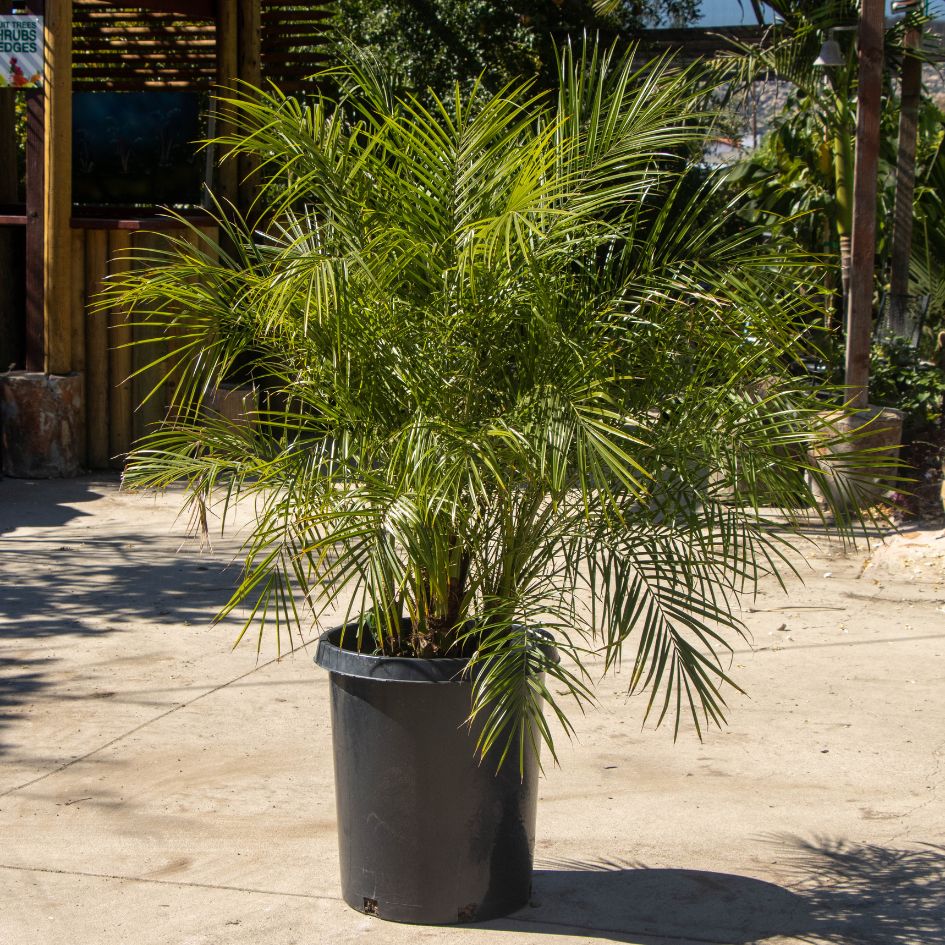
pygmy phoenix palm plant

pygmy phoenix palm plant Pygmy Date Palm - Phoenix Roebelenii

Sale price$22.79 Regular price$25.32
Save 10%

Pay in installments of $6.33 with ShopPay, AfterPay and Klarna

Shipping Estimate
USA
  • USA
  • CAN

Ships within 48 hours · Estimated delivery Jul 19 - Jul 24

Promo Codes Available:

For Your Every Summer RSVP, with Code: SUMMER15

Description

pygmy phoenix palm plant Pygmy Date Palm - Phoenix RoebeleniiPhoenix Roebelenii, commonly known as the Pygmy Date Palm, is a slow growing, small palm species that is popular for its ornamental value. Native to Southeast Asia, it typically reaches a height of 6 12 feet, making it a great choice for small landscapes or indoor planting. The palm has feathery, arching fronds with a fine texture that adds a tropical appeal to any garden or interior space. It is ideal for growing in containers or as a focal point in

Phoenix Roebelenii, commonly known as the Pygmy Date Palm, is a slow-growing, small palm species that is popular for its ornamental value. Native to Southeast Asia, it typically reaches a height of 6-12 feet, making it a great choice for small landscapes or indoor planting. The palm has feathery, arching fronds with a fine texture that adds a tropical appeal to any garden or interior space. It is ideal for growing in containers or as a focal point in the garden.

Growth and Planting Conditions

  • Sunlight: Pygmy Date Palms prefer partial shade but can tolerate full sun. When grown outdoors, plant them in areas that receive filtered sunlight or light shade to prevent leaf burn.
  • Soil: These palms thrive in well-draining, sandy soils. They are adaptable to a wide range of soil types, as long as the drainage is good.
  • Temperature: Phoenix Roebelenii is best suited for USDA Zones 8-11. It can tolerate mild frost but should be protected from extended freezing temperatures.
  • Spacing: When planting multiple Pygmy Date Palms, space them about 4-6 feet apart to allow for proper air circulation and root growth.

Watering and Irrigation

  • Watering Schedule: Pygmy Date Palms require regular watering, especially when young. Water deeply once a week, allowing the topsoil to dry out slightly between waterings.
  • Summer Watering: During hot summer months, increase watering frequency, ensuring that the soil remains moist but not waterlogged.
  • Mulching: Apply mulch around the base of the palm to retain moisture and regulate soil temperature. Keep the mulch a few inches away from the trunk to avoid rot.

Fertilization

  • Fertilizer Type: Use a slow-release palm fertilizer with a balanced NPK ratio (e.g., 8-2-12 or 10-5-15) that contains micronutrients such as magnesium and iron, which are essential for palm health.
  • Application: Fertilize the palm 3-4 times a year, starting in early spring and continuing through late summer. Avoid fertilizing in the fall to prevent new growth during colder months.

Pruning

  • Timing: Prune dead or damaged fronds in late winter or early spring before the growing season begins.
  • Method: Remove fronds that are yellow or brown to maintain the plant’s appearance and overall health. Be cautious when handling the base of the palm, as it may have sharp spines.

Pest and Disease Control

  • Common Pests: Phoenix Roebelenii is susceptible to pests such as spider mites, scale, and mealybugs. Use neem oil or insecticidal soap to manage infestations.
  • Disease Prevention: Ensure proper air circulation and avoid overwatering to prevent fungal infections such as root rot or leaf spot. Regular pruning and removing dead fronds will also help maintain the palm's health.

History of the Phoenix Roebelenii (Pygmy Date Palm)

The Pygmy Date Palm, native to Southeast Asia, was introduced to the Western world in the 19th century. It quickly gained popularity due to its compact size, making it an ideal choice for indoor and patio gardening. Its elegant fronds and manageable height have made it a staple in tropical landscaping and as an ornamental feature for homes and public spaces. Although it doesn't produce edible dates like its larger relatives, its graceful appearance has made it a beloved palm variety worldwide.

Shipping Notes
  • Free Standard Shipping on $100+ Orders to the USA.
  • Except Preorder products are shipped in 48 hours.
  • Delivery to the USA:
  1. Standard Shipping : 3-10 business days
  • If time is of the essence, please consider selecting expedited delivery for faster service.
Exchange/Return Notes
  • We offer a 30-day return/exchange service after receiving.
  • Final sale items are not eligible for returns or exchanges.
  • To process your return/exchange, please contact us at [email protected]
  • Please click here for more details>>> Return & Exchange Policy
SKU: 9105332836

Discover Niche Categories That Outsell pygmy phoenix palm plant

Top-Converting Item to Boost Your Average Order

4.6 ★★★★★
Based on 10 reviews
Sort
Highest Rating
Newest First
Oldest First
Product Reviews
B
Verified Purchase
B. Kirzner
Fort Morgan, US
★★★★★ 4
Lynchers Were Worse Than I Thought,
Format: Kindle
It was worth the time and effort to get through this book. It has opened my eyes to the scapegoating of Black victims’ as the evil ones and whites as the religious moral ones. That being said, this book was too detailed, making it slow reading. Overall, it still was and is worth reading to understand this massive projection of guilt and evil on victims, and the taking of justice into mob rule.
WAS THIS REVIEW HELPFUL?YesReportShare
Reviewed in the United States on November 8, 2021
V
Verified Purchase
V. Young
Alexandria, US
★★★★★ 5
great book
Format: Paperback
This book was insightful yet the stories was shocking but its a dose of reality. I like the product and its great for my library.
WAS THIS REVIEW HELPFUL?YesReportShare
Reviewed in the United States on June 3, 2014
M
Verified Purchase
mikeythereader
Phoenix, US
★★★★★ 5
Shocking
Format: Paperback
An informative read that will make you sick as the hanging death of people becomes a spectator sport. I knew going in I was going to be really angry about this and I was so right. It has been more than a month since I finished it and the horrific cruelty and lawlesness still makes my blood boil.And many times the "supposed law" were guilty of opening the jail or were complicit in letting this happen. It will make you think.
WAS THIS REVIEW HELPFUL?YesReportShare
Reviewed in the United States on November 13, 2013
R
Verified Purchase
R. B. Daytona
Whiting, US
★★★★★ 5
Great book
Format: Paperback
Interesting approach to the study of lynching. Thought- provoking and well reasoned thesis. The author adds a new dimension to the lynching literature
WAS THIS REVIEW HELPFUL?YesReportShare
Reviewed in the United States on September 7, 2013
J
Verified Purchase
Jerry Saperstein
Alexandria, US
★★★★★ 5
A valuable book for non-lawyers and lawyers
Why would non-lawyers want to read a book on persuading judges? For several reasons actually. First, many of us are involved in work that requires persuading others to adopt our views. While legal argument is substantially more formal and rule-driven than what most of us do, learning how to construct a logical argument as if it were to be delivered to the court, that Is governed by deadlines, restrictions on length, the need to adhere to established fact (or to establish those facts) and to be neither groveling nor inflammatory can be applied to selling your widgets. Perhaps more important is the fact that most people don't understand the impact of the court's decisions on our daily lives, our pocketbooks and our freedoms. Nine people sit on the Supreme Court. They cannot be removed except for the most grievous crimes and then only if Congress were to agree. More than one Justice has demonstrated that you can be senile and sit on the nation's highest court. Going down the food chain, the same applies to the federal appellate and trial courts. It is unlikely that one person in a hundred can even name a local federal district court judge and probably not one in a thousand could name the nine Supreme Court justices. Yet these men and women have tremendous impact on our lives, as do the thousands of state court justices. I am not a lawyer, but I consult to them and am not a stranger to the courtroom, writing drafts for legal briefs, doing legal research and the like. I have seen a lot of judges in action and have learned, in general, to fear them. They can - and do - cause tremendous harm through ill-considered decisions, making decisions with insufficient facts, assuming they know more than they do and myriad other reasons. They are gods in their courtrooms and if your lawyer fails to persuade them of the justness of your cause, you lose. Just how do these people reach their decisions? While justice is supposed to be blind (fat chance!), the justices are human and thus persuadable. Bryan Garner is a noted writer on legal writing. He is actually quite witty as he explains the use of the English language to lawyers who have had their understanding of words driven out of them in law school. Antonin Scalia is a hero to many for the courageousness of his decisions and dissents, his belief that the Constitution is to be strictly interpreted and his generally brilliant writing style. In 115, frequently witty, short chapters the two authors (who occasionally openly disagree) lay down their thoughts on how judges can be persuaded. It is not all about legal writing; e.g, advice to not chew your fingernails and dressing appropriately for court. They advise on giving your oral argument, which a lot of sales and marketing people would do well to read, especially the guidance to "never speak over a judge". In a sales situation, I am surprised at how often the sales person displays his or her contempt for me by not only not listening to me, but presuming they understand the point I was going to make before they spoke over me. I don't know about you, but a lot of salespeople have lost business with me for doing that. Some of the points the authors make are points of contention themselves: i.e., "swear off substantive footnotes - or not". None of the material in this book is truly new. Law students get elements of it in their first year as do some college students. A lot can be found in books on to be a better salesperson: i.e., don't chew your fingernails, etc. And a lot of it is plain commonsense. But that doesn't mean this book is unhelpful. First, it reveals in tiny part how Scalia evaluates the briefs he reads and arguments he hears, which in itself is a fascinating peek. The authors also put things many people may have forgotten through lack of use into perspective. Finally, they remind lawyers and non-lawyers alike that you often have only one shot at winning your argument so you had best put your best foot forward. Scalia and Garner show you how to do it. Overall, this is a fun, informative and helpful read. Jerry
WAS THIS REVIEW HELPFUL?YesReportShare
Reviewed in the United States on February 8, 2010

recommand products