Pay in installments of $5.36 with
 ,
,
 and
and

Shipping Estimate
USA
- USA
- CAN
- USA
- CAN
Ships within 48 hours · Estimated delivery Jul 18 - Jul 23
 Promo Codes Available:
For Your Every Summer RSVP, with Code: SUMMER15
Description
illustris elephant ear indoor plant ColocasiaGlamorous Accent Illustris Elephant's Ear Gigantic, Heart Shaped Leaves Add Tropical Look Dark Purple Black Foliage Decorated With Vivid Green Veins Dramatic Foliage Plant Stunning Downturned Leaves Three Feet Long Incredible Backdrop Allow to Play the Starring Role in a Focal Point Display Soften the Edges of Ponds, or In Rain Gardens Perfect Annual in Seasonal Containers in Zones 3 7 Can Lift and Bring Corms Indoors to Overwinter Thrives in Moist,
Glamorous Accent Illustris Elephant's Ear
- Gigantic, Heart-Shaped Leaves Add Tropical Look
- Dark Purple-Black Foliage Decorated With Vivid Green Veins
- Dramatic Foliage Plant
- Stunning Downturned Leaves Three Feet Long
- Incredible Backdrop
- Allow to Play the Starring Role in a Focal Point Display
- Soften the Edges of Ponds, or In Rain Gardens
- Perfect Annual in Seasonal Containers in Zones 3 - 7
- Can Lift and Bring Corms Indoors to Overwinter
- Thrives in Moist, Boggy Soils
- Grow in Full Sun or Partial Shade
We're excited to offer one of the world's most incredible accent plants. If you want a plant that effortlessly heightens the impact of your plantings and containers, place this on your "must have" list.
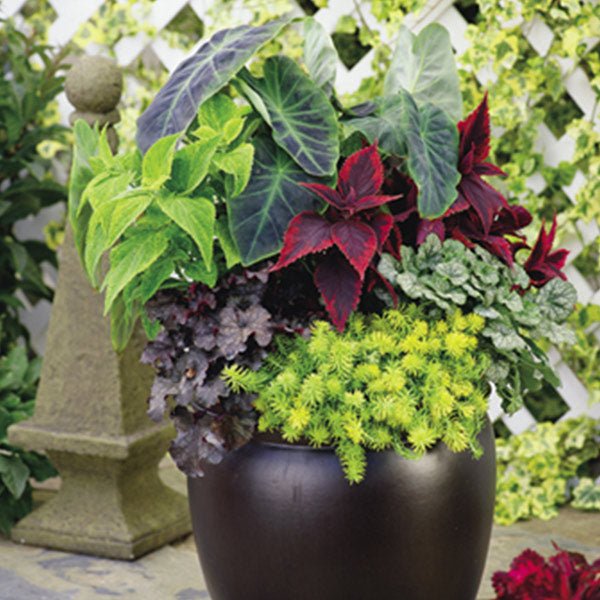
Also known as the Imperial Taro, Illustris Elephant's Ear (Colocasia esculenta 'Illustris') is a showy foliage plant with a lot of dynamic appeal. Huge leaves are nearly black, and pinstriped with neon green veins.
Each leaf can grow up to three feet long! They feature a slight romantic droop that adds to their appeal.
Feature them as a spectacular focal point in moist soils. They'll grow to create a significant impression as a garden feature.
They do best in soils that stay damp, and can even tolerate a few inches of standing water. Can you imagine how delightful Illustris Elephant Ear would look at the edge of a pond or water feature?
Hardy in the country's warmest Zones, all other avid gardeners can grow these tuberous annuals in seasonal containers. Keep them damp for best results!
Lush and lavish, but wildly easy-care, Illustris helps your landscape put its best foot forward. These plants deliver a tropical flair for residential or commercial properties.
Colocasia is one of many names for the Taro plant. Only a few varieties feature edible tuberous roots. Illustris Elephant's Ear are strictly ornamental, and should not be eaten.
Enjoy your summertime garden! Gain a marvelous display with these astounding plants from the plant experts at Nature Hills.
Please act quickly to place your order. We'll sell out of the sumptuous Illustris Elephant's Ear in no time.
How to Use Illustris Elephant's Ear in the Landscape/h3>
This opulent plant is more versatile than you might think. Grow it in the ground or in containers.
Areas with warm winters can leave them in place all year-round. Each plant will grow to the mature spread listed on the Plant Highlights.
Try several for a unique screen, planting the corms two to three feet apart. Add to a truly fabulous collection of Colocasia, highlighting the showy downturned drama of Illustris front and center.
In cold winter zones, you can also plant them in the ground as a single season annual. By the time the nights grow cooler, you'll have a terrific plant worthy of your neighbors' jealousy.
If you want to overwinter your plant, you can trim back the foliage, then lift the large corm out of the ground. Remove the roots and allow it to dry indoors. Store them in a cool, dark area and replant once all threat of frost has passed.
You can also appreciate their electrifying charm in outdoor containers across the country. Why not spice up your balcony for divaliscious apartment living?
In frosty winters, bring the pot indoors, and trim back for use as a temporary houseplant. Don't overwater your Illustris Elephant's Ear indoors.
Add them to the edge of ponds, or use on your patio or pool deck. Kids absolutely adore the huge leaves, so plant one by their play structure.
#ProPlantTips for Care
Illustris can be grown in either full sun or partial shade. They require consistent water, and frequent fertilization.
Potted Illustris should be planted at the same level it was growing in the pot. Dig down to eight inches and turn the soil over to loosen it.
Use a rich soil during planting, amending with handfuls of compost. Top dress with additional compost and mulch to a depth of three inches.
Use a slow-release organic fertilizer formula according to the label directions. These plants are heavy feeders.
Trim the spent leaves back as needed to tidy up your presentation. We recommend that you wear gloves, as you may be sensitive to the oxalates in the sap.
Enjoy your showy Illustris Elephant's Ear. You'll love all the compliments...order today!
Shipping Notes
- Free Standard Shipping on $100+ Orders to the USA.
- Except Preorder products are shipped in 48 hours.
- Delivery to the USA:
- Standard Shipping : 3-10 business days
- If time is of the essence, please consider selecting expedited delivery for faster service.
Exchange/Return Notes
- We offer a 30-day return/exchange service after receiving.
- Final sale items are not eligible for returns or exchanges.
- To process your return/exchange, please contact us at [email protected]
- Please click here for more details>>> Return & Exchange Policy