Pay in installments of $6.72 with
 ,
,
 and
and

Shipping Estimate
USA
- USA
- CAN
- USA
- CAN
Ships within 48 hours · Estimated delivery Jul 23 - Jul 28
 Promo Codes Available:
For Your Every Summer RSVP, with Code: SUMMER15
Description
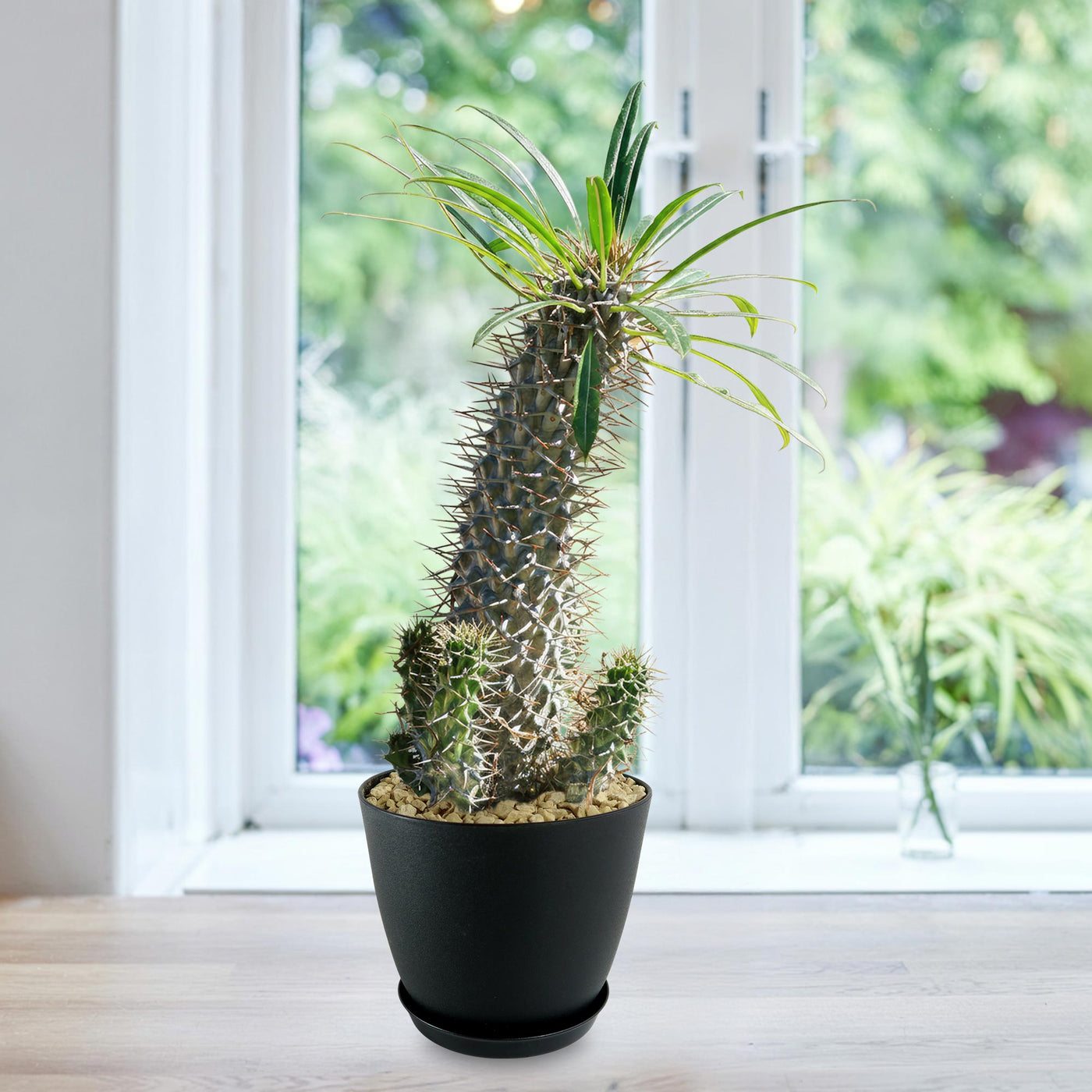
madagascar succulent plants Madagascar Palm PlantIntroducing the Madagascar palm, also known as Pachypodium lamerei. This unusual Pachypodium lamerei is sure to spark conversation with its adorable, grey green leaves and eye catching white flowers. Madagascar palm is actually a succulent, not a true palm, despite popular belief. Pachypodium, which means "thick foot," refers to the plant's thick, swollen stem, which stores water and provides structure and strength to the Madagascar Palm. There are
Introducing the Madagascar palm, also known as Pachypodium lamerei. This unusual Pachypodium lamerei is sure to spark conversation with its adorable, grey-green leaves and eye-catching white flowers. Madagascar palm is actually a succulent, not a true palm, despite popular belief.
Pachypodium, which means "thick foot," refers to the plant's thick, swollen stem, which stores water and provides structure and strength to the Madagascar Palm. There are several species, but the two most common are Pachypodium lamerei and Pachypodium geayi.
Native to Southwest Madagascar, your Pachypodium lamerei Madagascar Palms can reach 24 feet tall and 10 feet wide at maturity and are sure to make a statement wherever they're planted.
The trumpet-shaped flowers of the Madagascar Palm Pachypodium lamerei add a touch of exotic beauty to any space from late spring to summer.
During this bloom time, you can expect to see clusters of vibrant, white, yellow, red, pink, or cream-colored flowers with a delightful fragrance.
Outdoor Madagascar palms are more likely to produce flowers than indoor ones, so use NPK fertilizer in the early spring and prune damaged branches for better blooming.
When and How to Water Your Madagascar Palm
The Madagascar Palm is a drought-tolerant succulent, well-adapted to dry environments and capable of surviving extended periods without water. While it stores moisture in its thick trunk, this doesn’t mean it should be neglected entirely. Your Madagascar palm plant prefers watering once every 10-14 days during the active growing season, and once every 4-6 weeks during the dormant season.
From spring through early fall, during the active growing season, watering once every 10–14 days is sufficient. Allow the soil to dry out completely between waterings. Always check the top few inches of soil before watering. Consistent but sparse watering encourages healthy growth without risking oversaturation.
From late fall through winter, in the dormant season, the Madagascar Palm slows its growth and requires far less water, about once every 4–6 weeks, or only when the plant shows signs of slight shriveling. Overwatering during dormancy is one of the most common causes of decline, so it's best to err on the dry side until active growth resumes in spring.
Light Requirements - Where to Place Your Madagascar Palm
When growing your Madagascar palm, Pachypodium lamerei, indoors, it prefers bright, indirect light.
Placing it near a window where it can receive plenty of filtered sunlight is ideal. However, be cautious when placing it in direct sunlight, as it can scorch the leaves.
If you notice the leaves turning yellow or brown, it may be a sign that the plant is receiving too much direct sunlight. Consider moving the plant to a location with more shade to prevent further damage.
If you're growing your Madagascar palm outdoors, it is important to grow Pachypodium species in areas that receive at least 4-6 hours of bright, direct light every day to keep them happy. New plants can get burned in the full sun as they were probably grown in a greenhouse; therefore, gradually increase their exposure to sunlight.
Optimal Soil & Fertilizer Needs
The Madagascar Palm favors very airy, sandy soil that drains well, and should be fertilized once a year in spring. Planting them in ordinary soil will result in compacted roots, stunted growth, and most likely root rot. Instead, make or buy a well-draining potting mix, or ideally use our specialized potting mix that contains 5 natural substrates and mycorrhizae to promote the development of a strong root system that helps your palm plant to thrive.
A small amount of organic fertilizer once a year in the spring will do wonders for your plant's health and growth. Using organic fertilizers with an approximate blend of 5-10-5 (NPK) that is higher in phosphorus than nitrogen also ensures that other beneficial compounds and microbes are added to the soil without the use of harsh chemicals. Show your Madagascar palm some love with awesome natural fertilizer and watch it thrive.
Indoor Growing Madagascar Palm Requirements
If growing indoors, this Pachypodium lamerei prefers a warm environment, ideally between 65°F and 80°F. While it can tolerate brief dips in temperature, it's best to avoid cold drafts, sudden temperature changes, or temperatures below 50°F, which may cause leaf drop or dormancy. Place it near a bright, sunny window, preferably south- or west-facing, to ensure it receives at least 4 to 6 hours of direct sunlight daily. If natural light is limited, supplement with a grow light to maintain its health and compact form.
This plant enjoys moderate humidity, but it is adaptable to average indoor conditions. If your indoor air is especially dry (below 30% humidity), consider using a humidity tray or room humidifier, particularly during winter months when indoor heating reduces moisture in the air.
Hardiness Zone & More
In the United States, this is mostly an indoor plant, but if you live in southern Florida or Hawaii, then you can cultivate it outdoors in USDA zones 9-11.
These zones generally experience mild winters with temperatures ranging from 30°F to 40°F and above. However, if you live in a region with colder temperatures, you can still enjoy this plant by growing it in a container and bringing it indoors during the winter months.
Madagascar palms are hardy plants that can tolerate a wide range of temperatures and humidity levels. Native to the arid regions of Madagascar, in their natural habitat, they are well-suited to dry, desert-like conditions.
Wildlife - Madagascar Palm Attracts the Following Friendly Pollinators
The Pachypodium lamerei attracts a variety of friendly pollinators, such as butterflies, bees, and hummingbirds, which are drawn to the plant's vibrant flowers and sweet nectar. The presence of these pollinators helps to ensure the continued reproduction and survival of the Madagascar Palm in its natural habitat.
According to ASPCA, the Madagascar Palm Plant is mildly toxic to both humans and pets if ingested in large amounts. It contains toxic components, specifically calcium oxalate crystals, which can cause irritation and swelling upon ingestion or contact.
How to Propagate the Pachypodium lamerei Madagascar Palm
To propagate the Madagascar palm Pachypodium lamerei, one common method is by stem cuttings. You can take a stem cutting from a healthy, mature plant, let it dry for a few days to form a callus, and then plant it in well-draining soil.
Another method is propagation by seeds. You can collect the seeds from a mature Madagascar palm and sow them in a suitable potting mix. Keep the soil slightly moist and provide warmth and a bright, indirect, sunny spot for germination. Both methods require some patience and care, but with a little bit of love, you can successfully propagate your own Madagascar palms.
Key Takeaways
- The Madagascar Palm (Pachypodium lamerei) is a fascinating succulent plant native to Madagascar.
- It has a tall, slender trunk and spiky leaves, making it quite a unique addition to any succulent collection.
- It thrives outdoors in USDA zones 10–11, where temperatures range from 30°F to 40°F and above.
- This Pachypodium lamerei madagascar loves dry and warm climates, so it's important to provide it with plenty of sunlight and well-draining soil.
- Don't miss out on adding the Pachypodium lamerei Madagascar Palm to your garden! Order now, and you will be able to enjoy its beauty for many years to come.
The Bottom Line
Overall, the Madagascar Palm (Pachypodium lamerei) is a striking, low-maintenance plant that brings a bold, architectural element to both indoor and outdoor spaces. Though not a true palm, its thick, spiny trunk and upright growth habit give it a distinctly tropical look. With proper care—plenty of bright light, well-draining soil, and minimal watering—this resilient succulent can thrive for decades, even in less-than-ideal conditions. Whether grown as a statement houseplant or a container feature on a sunny patio, the Madagascar Palm rewards growers with both beauty and longevity, making it a standout choice for collectors and beginners alike.
Shipping Notes
- Free Standard Shipping on $100+ Orders to the USA.
- Except Preorder products are shipped in 48 hours.
- Delivery to the USA:
- Standard Shipping : 3-10 business days
- If time is of the essence, please consider selecting expedited delivery for faster service.
Exchange/Return Notes
- We offer a 30-day return/exchange service after receiving.
- Final sale items are not eligible for returns or exchanges.
- To process your return/exchange, please contact us at [email protected]
- Please click here for more details>>> Return & Exchange Policy