SKU: 84797016779
rock plant succulent

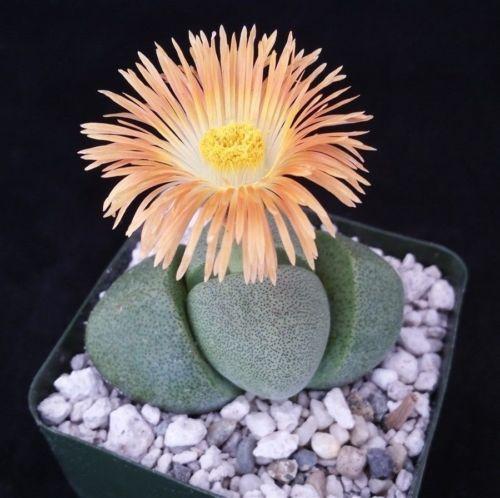
rock plant succulent Split Rock Succulent 'Pleiospilos nelii' mesembs 2.5" Pot

Sale price$18.05 Regular price$20.05
Save 10%

Shipping Estimate
USA
  • USA
  • CAN

Ships within 48 hours · Estimated delivery Jul 14 - Jul 19

Promo Codes Available:

For Your Every Summer RSVP, with Code: SUMMER15

Description

rock plant succulent Split Rock Succulent 'Pleiospilos nelii' mesembs 2.5" PotThe split rock succulent, known as Pleiospilos nelii mesembs, is an absolutely stunning succulent plant that belongs to the Mesembryanthemaceae family! "Mesembs" is a common term used to refer to plants in this family, which includes various succulents known for their unique adaptations to arid environments. The split rock succulent has several other common names, such as mimicry plant, cleft stone, or living rock cactus. It gets its name because its

The split rock succulent, known as Pleiospilos nelii mesembs, is an absolutely stunning succulent plant that belongs to the Mesembryanthemaceae family! "Mesembs" is a common term used to refer to plants in this family, which includes various succulents known for their unique adaptations to arid environments. The split rock succulent has several other common names, such as mimicry plant, cleft stone, or living rock cactus. It gets its name because its leaves split open, revealing a cleft in the center. It looks like a rock that has been split in half! 

The split rock plant and Lithops are often confused because of their striking similarities. The biggest distinction between the two is in how they blossom. Both plants bloom in the early fall, but Split Rocks produce multiple flowers in a single reproductive cycle, whereas Lithops only produces one flower at a time. The split rock succulent produces daisy-like flowers in a variety of colors, including orange, white, yellow, and magenta.

Native to South Africa, this egg-shaped succulent has two gray-green, thick, fleshy leaves that cleft down the center. New leaves grow at right angles to the split.It can typically grow up to 4 inches tall and 8 inches wide. This split rock plant also comes in the lovely Pleiospilos nelii "Royal flush" variety, which has deep purple to reddish foliage. 

In terms of propagation, split rock plants can be propagated through seeds or by dividing the offsets that grow from the base of the parent plant. Additionally, this split rock is a friendly plant for both humans and pets, making it a popular choice among plant enthusiasts. 

Watering Needs

When it comes to watering split rock succulents, it's important to remember that they have lower water needs than other succulents. These rock plants are adapted to arid environments, so they prefer infrequent watering. It's best to allow the soil to dry out completely between waterings to prevent overwatering, which can lead to root rot or bursting your concrete leaf plant. 

One helpful tip is to use the "soak and dry" method. This means thoroughly watering your split rock plant until water drains out of the bottom of the pot through drainage holes, and then waiting for the soil to dry out completely before watering again. This helps mimic the natural rainfall patterns these succulents are accustomed to. Remember, it's always better to go underwater than to overwater when it comes to split rock succulents! 

In addition to monitoring the soil moisture, it's also important to consider the environmental conditions. During the active growing season, which is typically spring and summer, split rock succulents may require more frequent watering. However, during the dormant period in fall and winter, they require less water. 

Remember, a healthy Split Rock typically has two sets of leaves. If it develops more than two sets or shows cracking on its epidermis, it's time to stop watering. Avoid watering for at least a week if you notice these signs. 

Light Requirements

When it comes to light requirements, split rock succulents thrive in partial shade to full sun. They prefer a sunny spot where they can receive ample sunlight, but it's important to protect them from intense, direct sunlight, especially during the hottest parts of the day. 

A great location for split rock succulents is near a south or east-facing window, where they can receive bright, filtered light throughout the day. Consider purchasing grow lights if your Split Rock can't get enough light from a south-facing window or any other location. These can provide the necessary light intensity and duration for healthy growth. Just make sure to position the lights at an appropriate distance from the plants to avoid burning or overheating. 

Remember, each plant is unique, so it's important to observe your split rock succulents and adjust the lighting conditions accordingly.

Optimal Soil & Fertilizer Needs 

When it comes to soil and fertilizer needs, split rock plants prefer a well-drained soil mix specifically formulated for succulents. This type of soil allows excess water to flow out easily, preventing root rot. You can find pre-made succulent soil mixes at your local garden center, or you can create your own by combining equal parts of potting soil, perlite, and coarse sand.

Here at Planet Desert, we have a specialty-formulated succulent potting mix that contains 5 natural substrates and organic mycorrhizae to promote the development of a strong root system that helps your succulent to thrive. 

As for fertilizing, Pleiospilos nelii split rock succulents have low nutrient requirements. It's best to use a balanced natural NPK fertilizer specifically formulated for succulents, and only apply once a year during the active growing season, which is typically early spring. Remember, it's better to under-fertilize than to over-fertilize, as excessive nutrients can harm these plants. 

In general, it's important to avoid overfeeding split rock succulents, as they are adapted to nutrient-poor environments. Too much fertilizer can lead to weak growth and other problems. Always monitor the health and growth of your plants and adjust the fertilization routine as needed. If the leaves start turning yellow or the rock plant appears stressed, it may be a sign of nutrient imbalance or over-fertilization. 

Hardiness Zone & More

Split rock succulents are typically indoor plants and generally hardy in USDA hardiness zones 9 to 11. They thrive in warm climates and can tolerate temperatures ranging from 50°F to 85°F. If you live in a region with extreme temperatures or higher humidity levels, you can still grow split rock succulents indoors or in a controlled environment, such as a greenhouse or terrarium, where you can maintain the ideal conditions for their growth. Just remember to monitor the temperature and humidity levels to ensure they stay within the recommended range. 

In terms of humidity, the rock plants are adapted to arid conditions and prefer low to moderate humidity levels. They can tolerate dry air and do not require high levels of humidity. In fact, excessive humidity can increase the risk of fungal diseases and rot. It's best to provide good air circulation around the split rock to prevent moisture buildup. 

Don't miss out on adding the Pleiospilos nelii - Split rock succulent to your garden! Order now and enjoy its beauty for years to come. 

Shipping Notes
  • Free Standard Shipping on $100+ Orders to the USA.
  • Except Preorder products are shipped in 48 hours.
  • Delivery to the USA:
  1. Standard Shipping : 3-10 business days
  • If time is of the essence, please consider selecting expedited delivery for faster service.
Exchange/Return Notes
  • We offer a 30-day return/exchange service after receiving.
  • Final sale items are not eligible for returns or exchanges.
  • To process your return/exchange, please contact us at [email protected]
  • Please click here for more details>>> Return & Exchange Policy
SKU: 84797016779

Discover Niche Categories That Outsell rock plant succulent

Top-Converting Item to Boost Your Average Order

4.7 ★★★★★
Based on 1720 reviews
Sort
Highest Rating
Newest First
Oldest First
Product Reviews
C
Verified Purchase
Chris Pavlovic
Chelsea, US
★★★★★ 5
Outstanding book!
Format: Paperback
“How we think about our suffering matters. How we situate our suffering in God’s larger story matters.” (p. 189) This is an incredible resource not only for those walking through suffering, but also for anyone supporting a loved one in a difficult season. The authors offer a Biblical perspective that reframes how we approach suffering, bringing great hope and purpose without ever minimizing or over-simplifying our difficult journeys or relying on shallow platitudes. This book digs much deeper into the “contours of the meaning God provides for our suffering.” The authors give many practical, immediately applicable tools for navigating hard seasons and new insights about meaning-making. I learned so much from this book, and throughout it I felt the compassion of the Lord (and the authors) reaching off the page. What an encouragement to remember that our Lord Jesus has entered into our pain, never leaves us alone in it, and often draws us into a deeper walk with Him through suffering than we might experience in easier seasons. I will gladly recommend this book to friends and family!
WAS THIS REVIEW HELPFUL?YesReportShare
Reviewed in the United States on May 24, 2026
K
Verified Purchase
Karen R.
Phoenix, US
★★★★★ 5
A must-read for all couples no matter how long (or little) they've been together!
I'm not all that big on self-help books, although I've also read some of Dr. Gray's Mars/Venus books to help me better understand how and why men and women are so different, and to embrace those differences and re-learn communication and conflict-resolution skills. This book by Dr. Chapman is entirely different and just as effective, in a different way. My boyfriend's son had sent it to him a year before we met, when he (my BF) and his wife were about to split up, hoping that it might help and maybe they'd reconcile. My BF read it cover-to-cover, loved it, learned from it, and, while it didn't save his marriage (his wife was leaving him for her new boyfriend no matter what), he highly recommended it to me and I bought it the next day. Wow, am I glad I did! It's an easy read and makes so much sense. We all have our own "love language" - and if our partner doesn't know it, and expresses his/her love a different way, it may not be the way that we need (and vice versa). My love language is Words of Affirmation (there are 5 major languages, and we all have one primary language that our partner should learn, and we should learn our partner’s). So when he tells me how much he appreciates me, loves me, tells me I look pretty, what a great mom I am, whatever, I positively glow. He also *shows* his love in so many ways, not just with words, so even if he doesn't say it, he shows it, and I appreciate him so much for that (and for so many other things). But because my "language" is Words of Affirmation (probably stemming from my childhood, when I got little to no positive feedback or encouragement), his loving words mean more to me than anything else, even though the other languages are important too. By the way, the 5 Love Languages, according to Dr. Chapman, are: Words of Affirmation, Quality Time, Receiving Gifts, Acts of Service, and Physical Touch (in a non-sexual way, such as spontaneously giving an affectionate hug or squeeze on the arm while passing by, bear hugs, sitting with my legs on his lap while we watch a movie, cuddling – yes, guys, cuddling is great and I’m lucky that my BF loves to do it too – and he’s as masculine as they come!). While the other languages are very important, I determined that my primary language is Words. We all have different primary languages. But I realized that, despite his showing me his love in so many ways, if he never again said "I love you" to me, or told me I'm pretty when we go out, or gives me an atta girl when I accomplish something important to me, etc., I'd feel that something major was missing (and in the book you'll read about how we all need our Love Tanks filled and the way to fill them is to speak our partner’s language regularly – that sounds silly maybe, but the book puts it into logical context). Quality time (one of the languages) doesn't mean simply being in the same room watching TV together; it means things like sitting down and talking (and listening) to each other without multi-tasking (texting, glancing at the score on TV, reading the paper, etc.), even if only 20 minutes a day. Important? Absolutely. Acts of Service: I’d bought a house last summer and when my BF was over the other day he saw an 8-foot extension ladder in my family room and asked me about it. I told him that the light bulb in the ceiling fan in my 2-story family room had burned out and I needed the ladder to reach it. The ladder was still there last night and the bulb not yet changed because when I’d climbed up and tried to remove the fixture cover, the screws were too tight so I gave it up that night, planning to go up again the next day with a wrench, pliers or other grip to loosen them, but I hadn’t had a chance to yet. So without a word last night, he got right up on the ladder and unscrewed it for me (I love a strong man!). I was grateful, absolutely, yet I also could have done it myself, so Acts of Service isn’t my primary language, though it’s still important. Receiving Gifts isn't my language either, although of course I appreciate them. Physical Touch: that comes naturally to both of us so it wasn't even a consideration since we both do it regularly. Therefore, Words are my primary language. As for my BF, turns out that's his language too, which doesn't always happen that way; most of us have different love languages. Anyway, sorry to go on and on, but I highly recommend this book, whether you're embarking on a new relationship or want to rekindle an existing one that may need a new spark. My grateful thanks to my BF's son, who sent him the book, otherwise I wouldn't have known about it. (By the way, just learning what each other's language is isn't enough. That's only the first step. From there, Dr. Chapman goes on to share how to actually speak the language, to put it into practice. My relationship was fantastic from the start, and knowing what I know now from reading this well-written book will help ensure it stays that way! So stop thinking about it: Add it to your cart! :) (And thank you, Dr. Chapman!)
WAS THIS REVIEW HELPFUL?YesReportShare
Reviewed in the United States on April 12, 2013
M
Verified Purchase
Michael D.
Natrona Heights, US
★★★★★ 5
Best
One of the best books on Love & happy relationships, along with Love by Leo Buscaglia, The five love languages, Men are from Mars, Women are from Venus, THe Romance Factor, The Practical Guide to Romantic Love by Callahan,
WAS THIS REVIEW HELPFUL?YesReportShare
Reviewed in the United States on April 1, 2026
S
Verified Purchase
SAmazonShopperS
Lake Worth, US
★★★★★ 5
The most impactful book on lasting love & relationships
Profound - highly recommend this book to EVERYBODY who has or wants to have a significant other. The different love languages really resonates with me and could save many relationships. This book initially a gift to me from my childhood best friend. It practically saved her marriage. I have since read it and purchased it for other loved ones. Dr. Chapman explains how important it is for couples to understand how each other and themselves both give and receive love. It is possible for couples to truly love each other, but to truly feel unloved because they don’t think the same about giving and receiving love. Everybody generally has their own primary love languages for receiving love and giving love. It may be the same for giving/receiving, and it may be different. If a husband does not meet the primary love language of his wife, she might not sense his true feelings and start to be unsatisfied with their relationship. Understanding your spouse’s love language and acting accordingly will fill their “Love Tank”. The “Love Tank” analogy is a great metaphor for describing how loved someone feels. Meeting people’s primary love language consistently will fill up their love tank and help them feel loved like they need. But if a spouse fails to meet this primary love language, it might leave their “Love Tank” empty, which leads to feelings of being unloved and issues in relationships. Secondary languages are also important, so it's critical to reflect and understand your own priorities and that of your spouses. The five love languages are: 1. Words of Affirmation: If this is your love language, you feel most cared for when your partner is open and expressive in telling you how wonderful they think you are, how much they appreciate you, etc. 2. Acts of Service: If your partner offering to watch the kids so you can go to the gym (or relieving you of some other task) gets your heart going, then this is your love language. 3. Affection: This love language is just as it sounds. A warm hug, a kiss, touch, and sexual intimacy make you feel most loved when this is your love language. 4. Quality Time: This love language is about being together, fully present and engaged in the activity at hand, no matter how trivial. 5. Gifts: Your partner taking the time to give you a gift can make you feel appreciated.
WAS THIS REVIEW HELPFUL?YesReportShare
Reviewed in the United States on July 7, 2014
C
Verified Purchase
Chevy Blue
Lowell, US
★★★★★ 5
Helped my marriage
First I must say I REALLY enjoyed this book. Me and my husband both. I heard about this book on Moody radio and decided to give it a try because I wanted a better marriage with less fighting and disagreements. I am soo happy I did. This book was right on point for me and my husband. I read it first, then got the audio version for him to listen to, which he did 4 times. It really gave me great insight into my self and my husband. It helped me to understand how to best express my love to my husband in the way he wants and understands most, and he was able to do the same for me. This hasn't been a cure all, but it helps to understand each other much more than we ever have before and we have been together for 18 years. The book is very well written, its an easy read and you should are able to get through it quickly. The change comes with investing time to apply the principles you have learned. I personally had to go through the material more than once to really let it sink it. This has been a small financial but HUGE emotional investment in one of my most important relationships. The knowledge in this book has really help my husband (his words) to better navigate personal relationships, not just with me, as it is intended, but also with his sister, friends and even stranger. I have found I can use this information is so many interactions and encounters with people throughout the day, it really opens you up to a new perspective. Gary Chapman did a great job explaining the details of the love languages. Anytime in conversation with someone complaining of relationship or even just communication issues I make sure to recommend this book. Can't say enough good things about it and we plan on checking out his other books as well.
WAS THIS REVIEW HELPFUL?YesReportShare
Reviewed in the United States on June 12, 2016

recommand products