SKU: 84437323346
large money trees

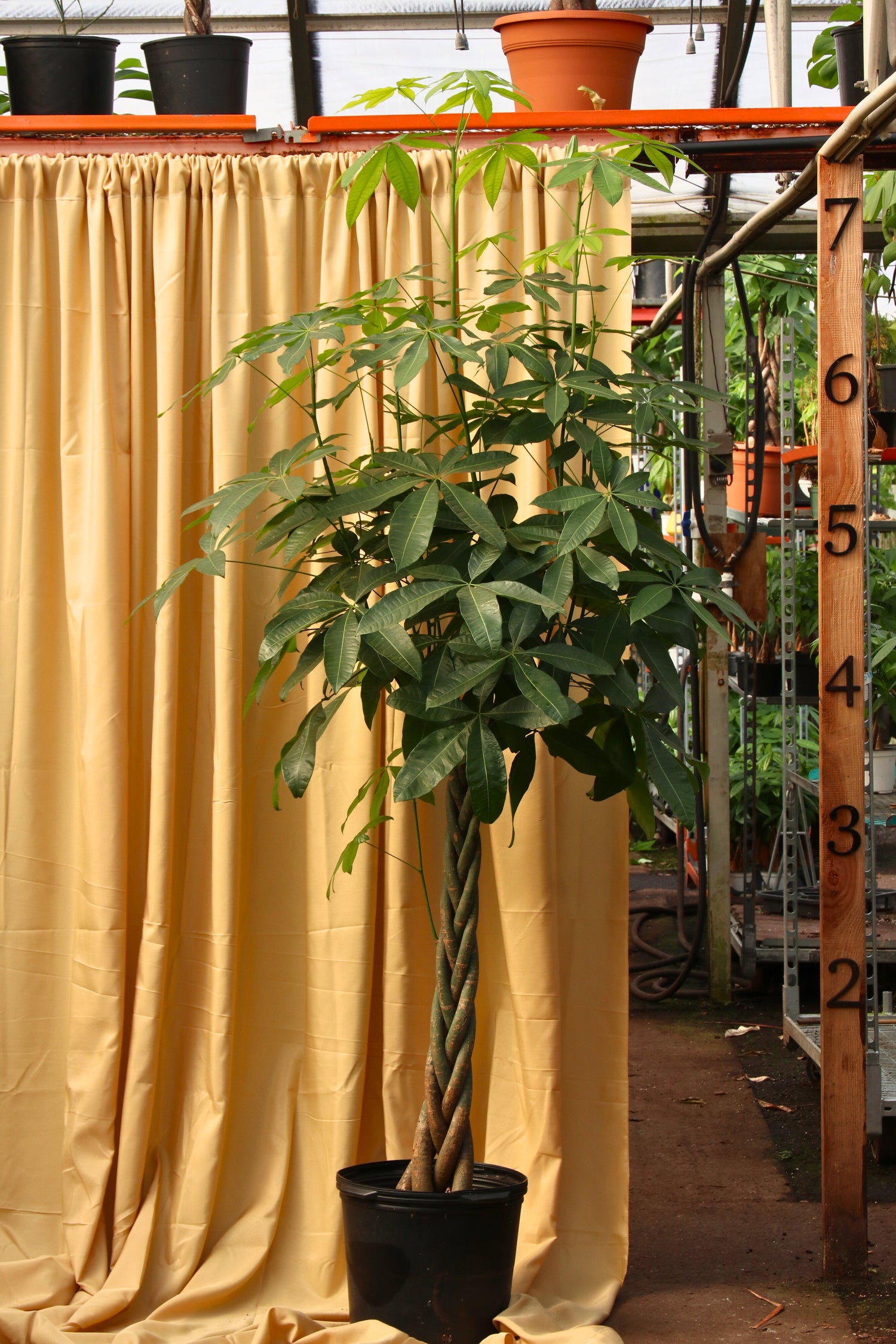
large money trees Huge Money Tree

Sale price$26.16 Regular price$29.07
Save 10%

Pay in installments of $7.27 with ShopPay, AfterPay and Klarna

Shipping Estimate
USA
  • USA
  • CAN

Ships within 48 hours · Estimated delivery Jul 18 - Jul 23

Promo Codes Available:

For Your Every Summer RSVP, with Code: SUMMER15

Description

large money trees Huge Money TreeIf youre looking for good luckand a large houseplantthen look no further. Mr. Money Trees beautifully braided, swirling trunk traps good fortune. Not just good luck, but also a good income. Its leaves grow in groups of six, possibly representing six figures. Plus, the whole thing just looks striking. Money Tree benefits Some say a Money Tree can even promote healthier sleep, reduce stress, and decrease conflict in the home. We cant confirm the science

If you’re looking for good luck—and a large houseplant—then look no further. Mr. Money Tree’s beautifully braided, swirling trunk traps good fortune. Not just good luck, but also a good income. Its leaves grow in groups of six, possibly representing six figures. Plus, the whole thing just looks striking.


Money Tree benefits

Some say a Money Tree can even promote healthier sleep, reduce stress, and decrease conflict in the home. We can’t confirm the science behind those beliefs, but research does suggest that the Money Tree is an effective air purifier.


Place this adorable plant beside your bed at night, and take a deep breath. You just might sleep better and feel at ease, and you’ll definitely be breathing in cleaner air!


The Money tree looks cool

Scientifically known as the Pachira Aquatica, the Money Tree is a wetland plant native to Central and South America. Each “Money tree” is actually made up of multiple Pachira Aquaticas, gently hand woven together as they grow to maturity. Thanks to the Money Tree’s umbrella-like foliage, the plant’s swirling trunks look like they’re dancing in the rain, adding whimsy and romance to your indoor garden.


The Money Tree is pet-friendly and non-toxic

Money Trees are non-toxic to cats and dogs. We can’t stop your pet from nibbling on your precious Money Tree, but it won’t end in their demise. (We’ll send all the good vibes to your devoured Money Tree, though).


Lighting

Money Trees love low-light spots, even really low light, and they’ll bring you joyful thoughts even from a shady corner—or in bright indirect light. Money can’t buy happiness, but it can buy plants, which is almost the same thing?


Watering

Most houseplants can’t tolerate much trial and error when it comes to watering. But the Money tree is flexible! Money trees kinda like damp soil (they’re native to swampland after all), so overenthusiastic watering generally won’t kill them.


Pick your exact Money tree 


Now that you're an expert with the Money Tree, order this plant by 7pm ET to get this plant shipped out of our greenhouse in New Jersey tomorrow. (Wondering when it will arrive? Check with the zip code validator on top of the “Add To Cart” button.) We’ll deliver your Money Tree in our sustainable, super-secure packaging system, no matter where you live in the U.S. Your plants will arrive safe and intact!


Hop on a video call to select your Money Tree, and we WILL send out the EXACT plant that you picked out, just like if you picked it up at a local nursery or garden center. Except we have more and fresher plants to choose from, and you can't find our PAFE fine ceramic planter options anywhere other than our website. :)


For any other questions or concerns, please don't hesitate to reach out to us at [email protected] or call/text (609)-968-7063! Or if you want to learn more about the Money Tree, keep scrolling!


Money tree benefits


What is a Money tree good for?

The Money tree looks awesome, purifies the air, brightens your home, and—maybe—brings good fortune. That’s a legend, but nobody said legends can’t be based on truth! You should probably test it out, to be on the safe side.


Does the Money tree clean the air or give oxygen?

The Money tree cleans carbon dioxide from the air and replaces it with nice fresh oxygen for us to breathe. It also sucks up chemicals like formaldehyde and benzene, plus other synthetic chemicals from cleaning products, leaving the air cleaner.


Are Money trees easy to keep alive?

Money trees are very low maintenance. They’re not too fussy about their watering schedules or their lighting. However, everyone has something, and Money trees do prefer a narrow range of temperatures (65-75). They also want some humidity. But that’s all.


Money tree care


How often should I water my Money tree?

Water your Money tree every week or two—more often during the spring and summer, and less often in the fall and winter. The Money tree tolerates overwatering better than underwatering, but make sure you’re using well-draining soil.


How do I keep my Money tree happy?

It’s pretty easy to keep a Money tree happy! Water every week or two. Put it anywhere indoors except in direct sun. And sing it a lullaby every night at bedtime. Even easy-care plants don’t mind a little pampering.


Where should a Money tree be placed in the house?

Most importantly, place the Money tree wherever it can get the right lighting—anywhere from bright indirect light to truly low light. But traditionally, for the best luck, the Money Tree is placed in the southeast section of your home.


Do I need to fertilize my Money tree?

Fertilize your Money tree once a month during spring and summer, when it’s really growing. You can use a general-purpose fertilizer—it’s not a picky eater—but dilute it to half-strength and make sure the soil is wet before applying.


What temperature do Money trees like?

The Money tree is a bit fussy, liking a narrow range of indoor temperatures: 65 to 75 degrees. So keep your home at moderate temps year-round. (Finally, you can tell your spouse or Dad to turn up the heat.)


Can Money trees grow without sunlight?

Money trees can live happily in a dark room with little natural light. So if you have a room with teeny tiny windows, or your neighbor’s way-too-close apartment blocks the sun always, it’s ok—Mr. Money tree will be fine.


Should I spray water on my Money tree?

The Money tree does enjoy humidity, and its leaves will get crinkly in low humidity. However, there’s some debate over whether misting helps or not. To be on the safe side, if you live in low humidity, get a humidifier.


Money tree factoids


Why does the Money tree have 6 leaves?

Some say the six leaves symbolize six figures—in other words, the luck from the Money tree might lead to your next promotion. (It’s us, we’re the ones who say that.) No promises, but work really hard just in case.


What is the superstition about Money trees?

Legend says that having a Money tree in your home will bring good luck and possibly even financial fortune. We prefer “legend” over “superstition” because it sounds fancier and makes us look cooler for believing in it.


Is there a difference between a Money tree and a Money plant?

Yes, the Money tree and the Money plant are totally different species. The Money tree is officially Pachira Aquatica, and the most common money plant, the Chinese Money plant, is Pilea Peperomioides—and it’s a small plant, not a tree.


Is the Money tree good for feng shui?

The Money tree is powerful and meaningful in feng shui, especially if you place it in the southeast area of your home. It symbolizes personal and professional growth and is said to bring good fortune to you and your family.


Do Money trees bloom?

In the wild, Money trees often boast glorious fluffy orange blossoms. But that only happens because they’re pollinated by bats. Assuming you don’t keep any bats inside (weirdo), your Money tree is very unlikely to bloom indoors.


How often do Money trees grow money?

Sadly, the legend that Money trees bring wealth and fortune is more of a metaphor than a practical promise. None of our Money trees have ever grown cash, and if they start, we won’t sell them to you anymore!


Why is it called a Money tree?

The Money tree gets its name from the legend, myth, or superstition that it brings financial luck to its owner or household. However, it’s not literal; Money trees don’t grow money (and no one will pay you to own one).


How long do Money trees live indoors?

Even indoors, a Money tree can live ten years or even longer. Of course, it requires TLC, but it’s an easy-care plant so that’s not a tall order. The Money tree will be your botanical companion for a decade.

Shipping Notes
  • Free Standard Shipping on $100+ Orders to the USA.
  • Except Preorder products are shipped in 48 hours.
  • Delivery to the USA:
  1. Standard Shipping : 3-10 business days
  • If time is of the essence, please consider selecting expedited delivery for faster service.
Exchange/Return Notes
  • We offer a 30-day return/exchange service after receiving.
  • Final sale items are not eligible for returns or exchanges.
  • To process your return/exchange, please contact us at [email protected]
  • Please click here for more details>>> Return & Exchange Policy
SKU: 84437323346

Discover Niche Categories That Outsell large money trees

Top-Converting Item to Boost Your Average Order

4.4 ★★★★★
Based on 27 reviews
Sort
Highest Rating
Newest First
Oldest First
Product Reviews
D
Verified Purchase
Dustin
Dallas, US
★★★★★ 5
Forgotten Civilization: An astounding book not easily forgotten
'Forgotten Civilization' is a paradigm-shattering book which won't be easily forgotten. Dr. Robert Schoch possesses a rare talent for writing and public speaking which is backed up by and informed with all the intellectual rigor of a true scientist, but easily comprehensible and accessible to the general public. His passion for the subject of ancient civilizations is inspiring, and his courage and dedication unquestionable. For those of you interested in the mysteries surrounding ancient civilizations, 'Forgotten Civilization' is one of the best books ever written about the subject. Like most everyone else, I first heard about Dr. Robert Schoch when I saw the television show "The Mysterious Origins of Man," where he presented persuasive evidence of weathering and erosion on the Sphinx, showing that it must have been built during a much earlier time than what most Egyptologists believed. Back then a lot of Egyptologists laughed and ridiculed the notion that the Sphinx could be any older than a couple of thousand years. Twenty years later, few of them are still laughing. In 'Forgotten Civilization,' Dr. Robert Schoch turns his attention to the paradigm-busting site of Gobekli Tepe, a sophisticated megalithic complex unearthed in southeast Turkey, which dates back more than 10,000 years ago. Nobody knows who built it, but its age and existence irrefutably points to the presence of a highly sophisticated yet unknown culture who obviously possessed a great deal of technological knowledge and social organization at a time when most archeologists believed the human race was little more than nomadic cave men, capable of nothing more interesting than eking out a primitive, subsistence mode of survival through hunting and foraging. The discovery of Gobleki Tepe has turned the world of ancient civilizations and human history on its head, forcing what will eventually amount to a complete rewriting of human history. 'Forgotten Civilization' is a ground-breaking book which is vastly entertaining to read. Through the course of the book, which unravels like a globe-trotting mystery adventure-thriller, Schoch also reveals credible scientific evidence which shows how a previous high civilization could have been completely destroyed by massive solar outbursts and coronal mass ejections from the Sun, which would have scorched the surface of the planet and touched off natural disasters all over the world, plunging humanity back into a dark age which would take thousands of years to recover from. More chillingly, he shows how the Sun goes through natural cycles of activity over the course of thousands of years--and how history could repeat itself and this same fate could happen again, and destroy much of our modern civilization. Dr. Robert Schoch's book 'Forgotten Civilization' is for anyone who has ever wondered about the origins of civilization, the questions it raises about both the past and the future will remain with you long after you read the last page.
WAS THIS REVIEW HELPFUL?YesReportShare
Reviewed in the United States on November 26, 2013
D
Verified Purchase
Drew B.
Bozeman, US
★★★★★ 5
Perhaps the most interesting book that I have ever read...
Format: Paperback
This book is perhaps the most fascinating piece of non-fiction that I have ever read. Dr. Schoch is a Yale educated professor at Boston University who presents information in a manner that is enjoyable and truly educational. If human history is a subject of interest for you, then you will recognize him immediately, as he has appeared on many television shows on the subject. When I bought his first book, I had the "oh, THAT guy" moment when I read the section about the author. He's the geologist/geophysicist who, back in the mid-1990's, studied the Sphinx enclosure and determined that it was condensation that smoothed the sides- rather than wind. This requires the dating of the construction of the Sphinx to draw back by many thousands of years due to the timeline of such rainfall. As such, he threw the discipline of human anthropology on it's ear. This met with much resistance from from anthropologists but, as he says, "I'm sorry if my findings contradict your theory but..." This book flows VERY smoothly and, without giving spoilers about his extensive research, provides more of an epiphany than anything that I have ever read before. Even when reading it for the second time, the book is very hard to put down. Schoch is a true educator and has a genuine talent for presenting his findings. As an author, he is clear and concise. He builds a powerful and enthralling case, the explanation of which incorporates the solving of the mysteries of the Rongorongo glyphs on Easter Island, the ancient vitrified stone castles in Scotland and the dating of the Sphinx into a plausible, scientifically supported timeline that is nothing less than completely fascinating. I have no question that my grandchildren will study human history that conforms to his research and discoveries. The irony is that he will be considered one of the "fathers of modern anthropology" for the next generation, and he's a GEOLOLOGIST! Get this book, you will NOT be disappointed!
WAS THIS REVIEW HELPFUL?YesReportShare
Reviewed in the United States on February 20, 2018
K
Verified Purchase
K. Ryan Kane
Draper, US
★★★★★ 4
I enjoyed this book immensely
Format: Paperback
A pioneering book! It breaks new ground and proposes new ideas that are plausible. I enjoyed this book immensely. But with every pioneering book comes beliefs that may not always be what they seem. I withheld one star because there are some ideas proposed that I found hard to believe entirely. I like the fact that Dr. Schoch includes Biblical passages but I don't agree with the majority of his interpretations. For example, Ezekiel's writings and visions are not about shapes he saw in the sky that Dr. Schoch thinks are from solar outbursts or auroral displays. Instead, most of those are visions he had of the "Last Days." But he didn't know exactly what he was seeing so he did his best to describe the things he saw. The other point I would like to make is that not all of the glyphs from thousands of years ago could be describing auroral displays or solar outbursts. I would imagine that if solar flares were racing toward Earth, (1) there wouldn't be enough time to look at them and study their shapes because you would be racing for cover, (2) they would be too bright whereas nobody could actually look at them long enough to study their shapes even if they had modern sunglasses, and (3) there would be a lot more evidence of scorched and burned areas of Earth so that it would be more obvious if solar activity was what had set society back thousands of years. But I don't recall Dr. Schoch theorizing about these things. Overall the book is great and I think he right about a lot of things. Highly recommended!
WAS THIS REVIEW HELPFUL?YesReportShare
Reviewed in the United States on October 1, 2014
C
Verified Purchase
Carol E.
Lowell, US
★★★★★ 5
WHY YOU SHOULD BUY THIS BOOK
Format: Paperback
Forgotten Civilization by Dr. Robert Schoch Why should you buy this book? 1) You're already looking at it so you must have some interest in this topic. 2) Dr. Schoch has a great ability to take his, or others, theories and support them with well researched scientific data. This is helpful to those of us who are curious about alternative explanations but are still dependent on the "scientific thinking" paradigm. (He doesn't make statements like "when humans bred with aliens in 20,823 BC..."). 3) He always makes you think about conventional wisdom in a new way. For instance, in this book - the age of Easter Island statues (moai). How DID they get buried so deeply when they (conventionally) only go back to a South Pacific Polynesian settlement times?? I have stood in front of the moais on Easter Island and read many books on it's history and it never occurred to me to question the timeline. It takes that unique geologist perspective which Dr Schoch brings to his writings. 4) He introduces you to other researchers or writers that you will want to know more about. Like Thomas Brophy, Anthony Peratt, Paul LaViolette and many others. 5) The Appendices. Some excellent information on multiple topics included at the end of the book. 6) Because Dr. Schoch has gone where many others SHOULD go - against conventional archeological/historical wisdom which makes no sense. His initial theories on the age of the Sphinx as a young academic were very daring and absolutely correct. The geological community had no problem with his ideas - but Egyptologists did, and they have been after him ever since. Choosing a controversial research path has meant some changes in his academic career I'm sure, as "Academics," for all it's spouting of tremendous support for new knowledge and research is very much mired in politically correct concrete. (Go to Egypt and look for yourself. Even a casual tourist will see how wrong standard academic theories are currently). 7) I guarantee you will learn new and interesting things that just may change your life - or at the very least, change the way you think about the future. -C. Engel
WAS THIS REVIEW HELPFUL?YesReportShare
Reviewed in the United States on September 27, 2012
K
Verified Purchase
Kindle Customer
New York, US
★★★★★ 3
A Book About Everything and Nothing
This was a great idea for a book and it's too bad that Mr. Schoch decided not to write it. Some of the ideas about solar events, the way the plasma manifested in the sky as it relates to ancient petroglyphs is fascinating. Mr. Schoch spent very little time in this space however (in spite of the book's title). Instead we got a brief, incomplete overview coupled with a survey of every piece of fringe science out there from the memory of water, to quantum entanglement to telepathy. There was the obligatory chapter on his work with the Sphinx of course. It always comes back to the Sphinx with this guy. Not an original thought in the book, but there was plenty of promotion of fringe science, especially the work of Paul LaViolette whose confusing and widely ignored and self-published work got several chapters. I gave the book 3 stars for its entertainment value and docked it two for not staying on point. This is still a great and fascinating subject. I wish Mr. Schoch thought so too.
WAS THIS REVIEW HELPFUL?YesReportShare
Reviewed in the United States on March 30, 2015

recommand products