SKU: 83985211557
sesame seed plant photo

sesame seed plant photo Benne (Sesame) – UJAMAA SEEDS

Sale price$18.64 Regular price$20.71
Save 10%

Pay in installments of $5.18 with ShopPay, AfterPay and Klarna

Shipping Estimate
USA
  • USA
  • CAN

Ships within 48 hours · Estimated delivery Jul 19 - Jul 24

Promo Codes Available:

For Your Every Summer RSVP, with Code: SUMMER15

Description

sesame seed plant photo Benne (Sesame) – UJAMAA SEEDSSesamum indicum Seeds per packet ~ 125 Germination: 94% Oct 2025, Packed for 2026 Origins and History Benne, also known as sesame (Sesamum indicum), is one of the worlds oldest oilseed crops, with domestication traced back over 3,000 years to Africa and India. Believed to have originated in India, and domesticated in Africa since at least the time of the Pharaohs. Even today, the east African nation of Sudan produces the largest crop of sesame seeds.

Sesamum indicum

Seeds per packet ~ 125

Germination: 94%  Oct 2025, Packed for 2026

Origins and History

Benne, also known as sesame (Sesamum indicum), is one of the world’s oldest oilseed crops, with domestication traced back over 3,000 years to Africa and India.  Believed to have originated in India, and domesticated in Africa since at least the time of the Pharaohs. Even today, the east African nation of Sudan produces the largest crop of sesame seeds. It traveled across trade routes into the Middle East and Asia, where it became an integral part of food and culture.

In the Americas, benne was brought through the transatlantic slave trade, particularly to the Carolinas, where African-descended people cultivated it and preserved traditional uses. Today, heirloom benne is celebrated as a culturally meaningful seed, especially in African American foodways and Southern heritage cuisine. The term "benne," comes from the Gullah-Geechee people (descendants of formerly enslaved people who developed a unique culture living in relative isolation on the Sea Islands of Georgia and South Carolina.

Appearance and Characteristics

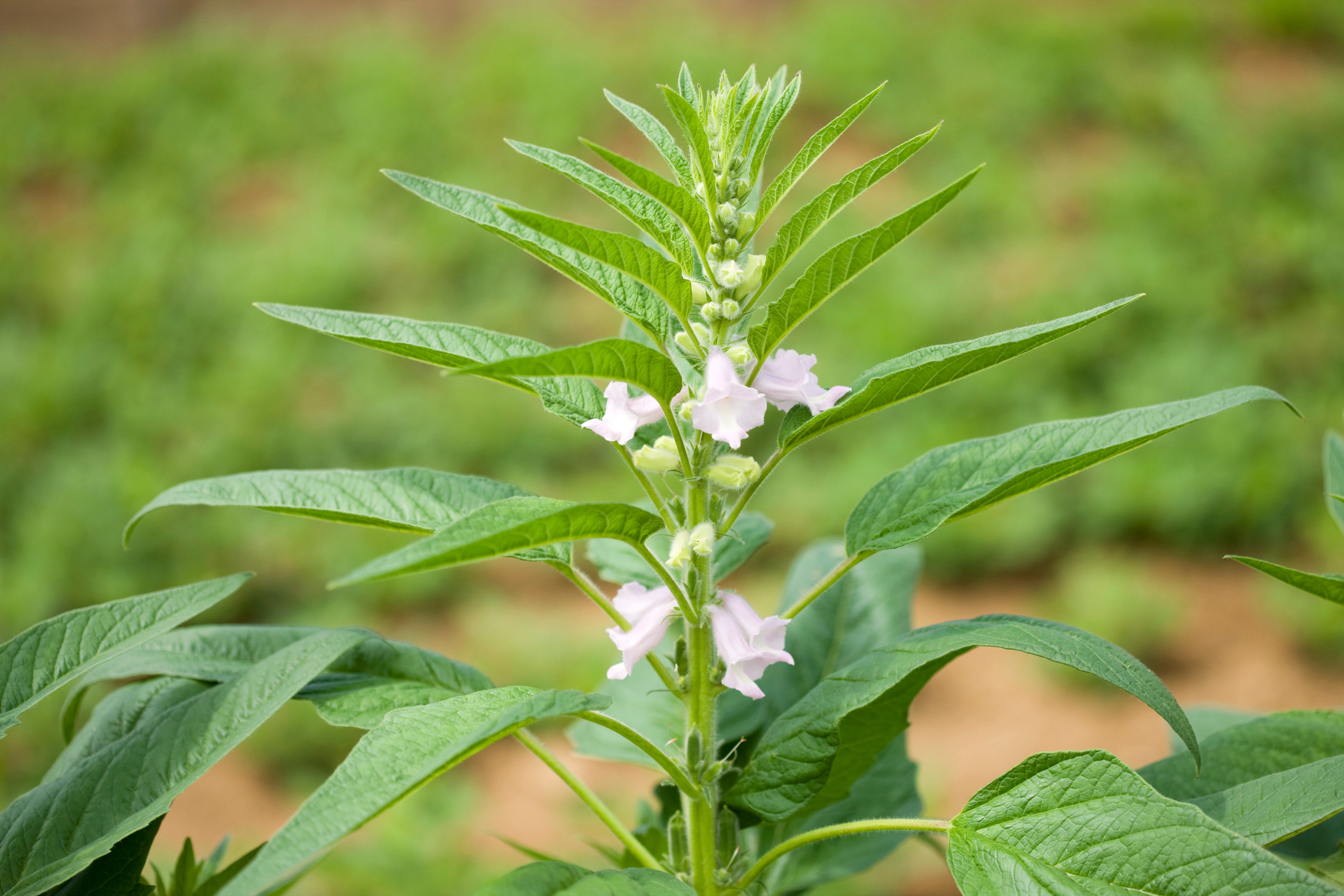
The benne plant is an upright annual reaching 2–4 feet tall, with lance-shaped green leaves and delicate tubular flowers that can be white to pale pink. After pollination, the plant produces slender, oblong pods filled with small, flat seeds that can range in color from ivory to tan, brown, or black. Seeds are highly aromatic, with heirloom benne often noted for its richer, more complex flavor compared to modern sesame.

Culinary Uses

Benne seeds are prized for their nutty taste and versatility. They can be eaten raw, toasted, or pressed for oil. In African American traditions, heirloom benne is used in breads, stews, rice dishes, and notably in “benne wafers,” a signature sweet of the Lowcountry. The seeds also enrich sauces, garnish vegetables, and add protein and depth to both savory and sweet dishes. Unlike some modern sesame, heirloom benne retains its bold aroma and flavor after cooking. Sesame benne seeds are a common ingredient in Southern cuisine, especially in dishes from the Lowcountry region. They are often toasted to enhance their flavor and used in a variety of recipes, such as: cookies, rice, grits, salads, and seasoning.

Growing Tips

Benne thrives in warm climates and performs well in USDA Zones 7–11, though it can be grown as a summer annual in cooler regions. Sow seeds directly into well-drained soil after danger of frost, at a depth of about ¼ inch, spacing plants 6–12 inches apart. The crop prefers full sun and tolerates drought once established, though consistent moisture during early growth ensures strong stands. It grows best in sandy or loamy soils with good drainage, making it suitable for many Southern gardens.

Harvesting Guidance

Benne is typically ready to harvest 90–120 days after sowing. As the pods mature, they dry and split open, releasing seeds—a process called “shattering.” To prevent loss, harvest just before pods fully split, cutting stems and allowing them to dry upside down in bundles over a cloth to catch the falling seeds. Once dry, seeds can be shaken or threshed free, cleaned, and stored in airtight containers in a cool, dry place. Properly stored, heirloom benne seeds retain their flavor and viability for several years.


Botanical Origins of Sesamun indicum

Sesamum indicum, commonly known as sesame, is one of the world’s oldest oilseed crops, belonging to the family Pedaliaceae. Its wild relatives are distributed primarily in sub-Saharan Africa and parts of the Indian subcontinent. The most probable center of origin is thought to be Africa, where several wild Sesamum species still grow, particularly in Ethiopia. However, genetic and archaeological evidence also points to an early secondary center of domestication in the Indian subcontinent, where the species has been cultivated for millennia. The crop’s drought tolerance and adaptability to marginal soils contributed to its early success as a dependable source of edible oil.

History of Domestication

Domestication of Sesamum indicum likely occurred over 3,000 years ago. Archaeological remains from the Indus Valley Civilization (around 2500–2000 BCE) suggest sesame was already under cultivation in ancient India, where it may have been domesticated from the wild species S. mulayanum. In ancient Mesopotamia, sesame oil was valued both for cooking and for ritual uses, indicating its early trade and cultural significance. The plant’s small seeds, high oil content (up to 60%), and relatively easy extraction process made it a vital early oilseed crop. Selective cultivation favored non-shattering seed pods, increased seed size, and improved oil quality.

Spread and Diversification

From its centers of domestication, sesame spread widely through early trade routes. It reached China by at least 2000 BCE, where it was used in traditional medicine and culinary preparations. Ancient Egyptian records also reference sesame as a food and medicinal oil, and the Greeks and Romans later adopted it into their diets. Over centuries, Sesamum indicum diversified into numerous landraces and varieties adapted to local climates—ranging from black and brown to white-seeded forms—each associated with distinct cultural and culinary uses. Today, sesame is cultivated in more than 70 countries, with major production centers in India, China, Sudan, Myanmar, and Nigeria. Its genetic diversity reflects centuries of human selection for flavor, seed color, oil content, and adaptability, making it both an ancient and continually evolving crop of global significance.

Shipping Notes
  • Free Standard Shipping on $100+ Orders to the USA.
  • Except Preorder products are shipped in 48 hours.
  • Delivery to the USA:
  1. Standard Shipping : 3-10 business days
  • If time is of the essence, please consider selecting expedited delivery for faster service.
Exchange/Return Notes
  • We offer a 30-day return/exchange service after receiving.
  • Final sale items are not eligible for returns or exchanges.
  • To process your return/exchange, please contact us at [email protected]
  • Please click here for more details>>> Return & Exchange Policy
SKU: 83985211557

Discover Niche Categories That Outsell sesame seed plant photo

Top-Converting Item to Boost Your Average Order

4.8 ★★★★★
Based on 16 reviews
Sort
Highest Rating
Newest First
Oldest First
Product Reviews
M
Verified Purchase
Marcella
Lake Worth, US
★★★★★ 4
Good product.
Color: Caviar PDRN
Good Product.
WAS THIS REVIEW HELPFUL?YesReportShare
Reviewed in the United States on June 7, 2026
S
Verified Purchase
Sarah Pettingill
Cuba, US
★★★★★ 5
🫶🏻
Color: Caviar PDRN
I love these. I put these on every morning when I’m getting ready. Sometimes I’ll even leave them on under sunglasses if I’m just doing school drop off 😆 They don’t slide off, they really help brighten and de-puff my under eyes, they have a cooling effect, unscented, and there’s no irritation. They also help concealer go on super smooth. I recommend!
WAS THIS REVIEW HELPFUL?YesReportShare
Reviewed in the United States on May 18, 2026
J
Verified Purchase
Jessica Martin
Charlottesville, US
★★★★★ 5
super hydrating
Color: Caviar PDRN
I love the full face mask but this is nice for a more frequent refresh. They are super convenient and work really well.
WAS THIS REVIEW HELPFUL?YesReportShare
Reviewed in the United States on June 4, 2026
Z
Verified Purchase
Zachary Bednar
Draper, US
★★★★★ 5
The Perpetual Joke
One of the best films I have ever seen is The Killing. It can boast a great many things. It can proudly say that it is the best heist film ever made and that it is the creme dela creme of film noir. Out of all the films in my top ten favorites, The Killing is easily the most watchable and purely entertaining. It doesn't try to be much more than a crime picture. A crime picture written by the legendary Jim Thompson of course. Thompson is one of the best American crime writers, well ever. And his work in The Killing is simply exemplary and total-classic Thompson. The film can also boast having a brilliant cast. Sterling Hayden, Elisha Cook Jr., and Marie Windsor soar, it can boast having possibly the strongest ensemble in all of the crime genre. It can boast having a pitch perfect tone and a distinctly unique and absorbing atmosphere. It can brag about the extraordinary tracking shots throughout or the lighting that startles and dazzles and vibes, melts. It can brag about being fun and devious and sly. It can brag about being unpredictable and clever. Smart. It can brag about being one the greatest films ever made. It's honestly that perfect. And did I mention that some guy named Stanley Kubrick directed the thing? The Killing is a film about a group of men who plan to knock off a racetrack, those who seek to thwart them, and how it all plays out. The characters are unforgettable. The Killing has in it's repertoire more than just a few of my favorite noir characters. What makes the players so special is that all of them are so sympathetic. Really. My heart goes out to each and every one of them, understanding and empathy seldom hits this hard within the parameters of the heist and noir genre. But here, the damn thing works every time. I've seen the film several times and I still physically act as if every time is my first. I cover my hands over my mouth in astonishment, I bite my nails in anticipation, I drum on my knees with rhythmic excitement, I laugh out loud, and I cheer relentlessly for everyone involved. I imagine myself as a member of the outfit. I have so much fun with this twisted picture that it's ridiculous. Okay. Lucien Ballard. Dick Tower. Earl Snyder. The men who walk the walk. One of the most dazzling things about The Killing is it's technical brilliance. The thing looks absolutely gorgeous and twisted and just right. Smokey and sexy and rough. There are shots in this film that your eyes can more than feast on, they can devour them. There are sequences of sight and sound and light that will make you fall in love with noir all over again. If that's not enough, Jim Thompson's dialogue will make your head spin it's so good. You'll find yourself quoting it to yourself without warrant or cause. The beats and the meter and time and scale of Thompson's writing will send you for a ride. Great dialogue and a truly complex and understated plot, the inner workings of which are not only of the heart-pounding variety but the very fabric that it is woven into is absolutely compelling. There is a subtext here as well. I don't think Kubrick ever really made a film just for the sake of doing so, he always had something deeper to communicate on top of it. The Killing communicates within the subtext the idea of the perpetual joke. Borderline Absurdism. Characters die literally howling about not being able to understand their own private punchline. Robberies take place by men in the guise of clowns. Think Hayden Sterling as Pagliacci The Clown. The Killing feels like a crime film written by Jim Thompson, directed by Stanley Kubrick, and dreamt up by Albert Camus. The idea that everything is absurd, that life is a frenzied haywire with a morbid sense of humor. I think Sterling's Johnny finally understood the great joke of life at the end of it all. And its pointless brand of mischief. It is fascinating seeing the great Stanley Kubrick, before he really was the GREAT Stanley Kubrick, working within the framework of the crime genre. Kubrick excels here, even if he was limited by boundaries of style and time. He is a filmmaker that mastered every genre he dabbled in. He is not only one of the greatest directors that ever lived but he is my personal favorite one. His films have a crazy power, an uncanny transcendental quality to them. The Killing possesses every bit as much magic that his post 2001 films do. The Killing has a little bit more than that as well. It has an incredible watchability factor. I could watch The Killing once a week for the rest of my life and still not get tired of it. I think I'll do just that. Why not? You only live once, right?
WAS THIS REVIEW HELPFUL?YesReportShare
Reviewed in the United States on July 17, 2014
T
Verified Purchase
Terry Seale
Cuba, US
★★★★★ 5
Worth viewing and studying.
First major Kubrick feature film noir. Nothing about Sterling Hayden's Communism here. Cool caper with a classic cast. The flick provides an impactful reminder to never skimp on low quality luggage, to use a double lock, and to take time whenever possible to bundle your cash with rubber bands. "While playing chess in Washington Square, Kubrick met producer James B. Harris, who considered Kubrick to be "the most intelligent, most creative person I have ever come in contact with", and the two formed the Harris-Kubrick Pictures Corporation in 1955.[52] Harris purchased the rights to Lionel White's novel Clean Break for $10,000,[g] and upon Kubrick's suggestion, they hired film noir novelist Jim Thompson to write the script for the film—which later became The Killing (1956)—about a meticulously planned racetrack robbery gone wrong. The film starred Sterling Hayden, with whom Kubrick had been impressed in The Asphalt Jungle (1950).[54] Kubrick and Harris moved to Los Angeles from New York and signed with the Jaffe Agency to shoot the picture, which became Kubrick's first full-length feature film shot with a professional cast and crew. The Union in Hollywood stated that Kubrick would not be permitted to be both the director and the cinematographer of the movie, so veteran cinematographer Lucien Ballard was hired for the shooting. Kubrick agreed to waive his fee for the production, which was shot in just 24 days on a budget of $330,000.[55] He clashed with Ballard during the shooting, and on one occasion Kubrick threatened to fire Ballard following a camera dispute, despite being only 27 years old at the time and 20 years Ballard's junior.[54] Hayden recalled that Kubrick was "cold and detached. Very mechanical, always confident. I've worked with few directors who are that good".[56] The Killing failed to secure a proper release across the United States; the film made little money, and was promoted only at the last minute, as a second feature to the Western movie Bandido! (1956). Several contemporary critics lauded the film, however, with a reviewer for TIME comparing its camerawork to that of Orson Welles.[57] Today, critics generally consider The Killing to be among the best films of Kubrick's early career; its nonlinear narrative and clinical execution also had a major influence on later directors of crime films, including Quentin Tarantino. Dore Schary of Metro-Goldwyn-Mayer was highly impressed as well, and offered Kubrick and Harris $75,000 to write, direct, and produce a film, which ultimately became Paths of Glory (1957)." [Wikipedia]
WAS THIS REVIEW HELPFUL?YesReportShare
Reviewed in the United States on February 21, 2016

recommand products