SKU: 8032262216
paddle plant succulent

paddle plant succulent Paddle Plant ‘Kalanchoe thyrsiflora’

Sale price$22.83 Regular price$25.37
Save 10%

Shipping Estimate
USA
  • USA
  • CAN

Ships within 48 hours · Estimated delivery Jul 15 - Jul 20

Promo Codes Available:

For Your Every Summer RSVP, with Code: SUMMER15

Description

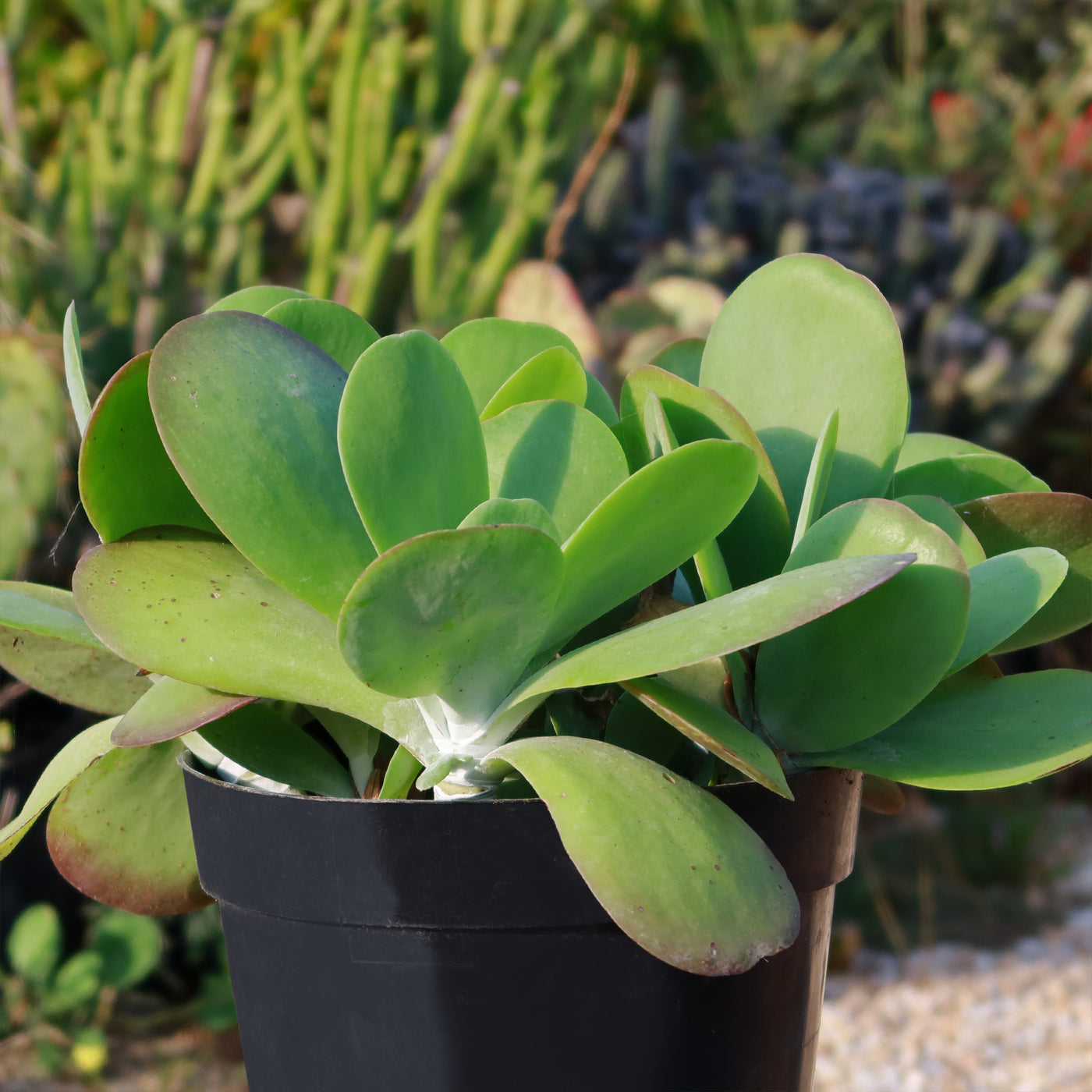
paddle plant succulent Paddle Plant ‘Kalanchoe thyrsiflora’The Paddle Plant, also known as Kalanchoe thyrsiflora, is a distinctive succulent admired for its compact rosette of thick, rounded, paddle shaped leaves. Its sculptural form and soft, powdery foliage make it a popular choice among succulent collectors, xeriscape gardens, and low maintenance houseplant enthusiasts. This species is especially valued for its ability to thrive in dry conditions with minimal care, making it highly suitable for arid and

The Paddle Plant, also known as Kalanchoe thyrsiflora, is a distinctive succulent admired for its compact rosette of thick, rounded, paddle-shaped leaves. Its sculptural form and soft, powdery foliage make it a popular choice among succulent collectors, xeriscape gardens, and low-maintenance houseplant enthusiasts. This species is especially valued for its ability to thrive in dry conditions with minimal care, making it highly suitable for arid and water-wise landscapes.

In addition to the common name Paddle Plant, this species is sometimes referred to as the dog tongue, desert cabbage, Flapjack Plant due to its flattened, overlapping leaves that resemble a stack of pancakes.  

Native to South Africa, this succulent features smooth, rounded leaves covered in a white, powdery coating (farina) that helps protect it from intense sunlight and reduces water loss. 

The foliage remains primarily light to medium green and may develop a faint reddish or pinkish blush under strong sun exposure, but it does not typically produce the deep red margins often seen in misidentified forms.

These Kalanchoe thyrsiflora maintain a compact, symmetrical rosette growth habit, making it ideal for container planting, rock gardens, and succulent arrangements. 

It is a slow-growing but highly resilient plant that can reach a moderate size while maintaining a neat, structured appearance. The Paddle Plant is a relatively small succulent that grows up to 18 inches tall and spreads up to 8 inches wide.

In late winter to early spring, mature plants produce a tall flower spike that can reach up to 3 feet in height. The blooms are tubular and yellow, attracting pollinators such as bees. 

After flowering, the main rosette may naturally decline, but the plant often continues its life cycle through offsets that develop around the base, ensuring ongoing growth and propagation.

When and How to Water Your Paddle Succulent 

The paddle succulent plant is a drought-tolerant succulent that prefers to dry out fully between waterings, making it far more forgiving if you forget to water than if you overdo it.

The paddle plant should be watered every 2 to 3 weeks during the growing season, with watering reduced to about once every 4 to 6 weeks during the dormant season, keeping moisture very light.

In the spring and summer, always allow the soil to dry out completely before watering again. This soak and dry approach helps prevent root rot, which is one of the most common issues with this plant.

In the fall and winter, your paddle plant needs even less water as growth slows down. Since cooler temperatures and lower light reduce evaporation, it is best to hold back on watering and only add a small amount when the soil is fully dry.

Related Product

Light Requirements – Where to Place Your Paddle Plant 

When growing indoors, your Paddle kalanchoe thrives in bright, indirect light, which is a key part of proper paddle plant care.

It should be placed near a sunny window, preferably one facing south or west, where it can receive at least 4 to 6 hours of bright light daily.

If natural sunlight is limited, supplement with a grow light to maintain healthy growth and prevent leggy, stretched stems.

Insufficient light can cause the plant to lose its vibrant red margins and slow down its overall growth. 

When growing outdoors, the Paddle Plant prefers the full sun to partial shade. Ideally, it should receive 6 to 8 hours of direct sunlight daily.

Morning sunlight is preferable to intense afternoon sun, which can scorch the leaves if temperatures are excessively high. If growing in hot climates, consider providing some afternoon shade to prevent sun damage, especially during heat waves. 

For both indoor and outdoor growth, it is essential to gradually acclimate the plant to increased sunlight exposure to avoid sunburn. When moving from indoors to outdoors, introduce it to direct sunlight over a week or two, starting with a few hours per day. 

Optimal Soil & Fertilizer Needs 

The Kalanchoe thyrsiflora prefers a very well-draining, sandy or gritty soil mix, along with light fertilization once a year in spring. Planting it in heavy or moisture-retaining soil can lead to compacted roots, poor growth, and eventually root rot, so it is best to use a specialized succulent potting mix with organic mycorrhizae can also support a stronger, healthier root system and help your plant grow more efficiently.

When it comes to fertilizing your kalanchoe plant, apply a balanced, low-strength NPK fertilizer once a year in spring to maintain steady and healthy growth. For best results, use a diluted fertilizer with an NPK ratio around 5-10-5, where slightly higher phosphorus supports stronger roots and fuller leaves.

During fall and winter, when the plant enters dormancy, fertilizing should be avoided completely. Growth slows down during this time, and adding nutrients can build up in the soil and damage the roots.

Hardiness Zones & More 

In the United States, this is mostly an indoor plant, but if you live in southern Florida or Hawaii, then you can cultivate it outdoors in USDA zones 9-11.

It prefers temperatures between 60-80°F and moderate humidity levels. 

Always provide full to partial sun exposure for the best growth and coloration. 

If you live in cooler regions, it is best grown in containers as it is not frost tolerant, and temperatures below 30°F can damage or even kill it. Even light frost can leave marks on the leaves or cause them to become soft and mushy.

How to Grow as a Houseplant

Growing your paddle plant indoors is easy as long as you give it the right environment. It prefers warm conditions, ideally between 60°F to 85°F. It does not handle cold well, so keep it away from drafts, air conditioners, or chilly windows during cooler months. In terms of humidity, it thrives in low to average indoor humidity, which makes it a great match for most homes since it does not need extra misting or moisture in the air.

Set your paddle plant succulent in a bright spot with plenty of indirect sunlight, like near a south or west-facing window.  If your space is a bit dim, you may notice slower growth and less vibrant color, so aim for the brightest area you have without exposing it to intense, prolonged direct rays.

Wildlife Paddle Plant Flowers Attract the Following Friendly Pollinators 

The Paddle plant produces tall, yellow, tubular flowers that attract friendly pollinators such as bees, butterflies, and hummingbirds. These flowers typically appear in late winter or early spring and provide an essential nectar source for beneficial insects. 

Butterflies
Bees
Hummingbirds
Lady Bugs
Multi Pollinators
Other Birds

According to the ASPCA, the Kalanchoe thyrsiflora is considered mildly toxic to cats, dogs, and birds. If ingested in a large amount, it can cause mild to moderate symptoms, including vomiting, drooling, and digestive upset. However, it is safe to touch and handle, making it a popular choice for indoor plants. 

How to Propagate Your Kalanchoe thyrsiflora 

The Paddle plant kalanchoe can be propagated through leaf cuttings or offsets. To propagate through leaf cuttings, simply remove a healthy leaf from the plant and allow it to callous before placing it in well-draining soil. The easiest method is separating offsets that naturally grow at the base of mature plants. Gently remove them, allow the cut ends to callous for 24-48 hours, then plant them in well-draining soil. Keep the soil lightly moist until roots establish.

Key Takeaways

  1. Kalanchoe thyrsiflora is a unique indoor houseplant with thick, paddle-shaped leaves that form a compact, low-growing rosette, making it ideal for bright windows and container displays.
  2. Unlike Kalanchoe luciae, the true Paddle Plant does not develop strong red margins, typically maintaining soft gray-green foliage even in bright light.
  3. As a drought-tolerant succulent, it stores water in its leaves and thrives with simple, low-maintenance care, making it a great choice for busy plant owners.
  4. When mature, it produces a 3-foot-tall flower stalk with fragrant, tubular yellow blooms that attract pollinators like bees and butterflies.
  5. It adapts well to indoor environments, especially when placed in bright, sunny spots where it can maintain its compact shape and healthy growth.

The Bottom Line 

Overall, the Paddle Plant (Kalanchoe thyrsiflora) is a visually stunning and low-maintenance succulent that adds a bold, modern aesthetic to any garden or home. Its stunning red-tinged leaves and attractive yellow flowers make it a popular choice for succulent lovers. With proper watering, light exposure, and temperature considerations, this plant can be grown successfully indoors and outdoors. Whether grown in a container, rock garden, or xeriscape landscape, the Paddle Plant is a resilient and rewarding addition that brings beauty and texture to any space. 
Shipping Notes
  • Free Standard Shipping on $100+ Orders to the USA.
  • Except Preorder products are shipped in 48 hours.
  • Delivery to the USA:
  1. Standard Shipping : 3-10 business days
  • If time is of the essence, please consider selecting expedited delivery for faster service.
Exchange/Return Notes
  • We offer a 30-day return/exchange service after receiving.
  • Final sale items are not eligible for returns or exchanges.
  • To process your return/exchange, please contact us at [email protected]
  • Please click here for more details>>> Return & Exchange Policy
SKU: 8032262216

Discover Niche Categories That Outsell paddle plant succulent

Top-Converting Item to Boost Your Average Order

4.8 ★★★★★
Based on 1990 reviews
Sort
Highest Rating
Newest First
Oldest First
Product Reviews
D
Verified Purchase
D. Clair Davis
Port Orchard, US
★★★★★ 5
” Not so long ago we were sure that such an amazing and beautiful reality must be way off in the ...
Format: Paperback
Eclectic Living? How are you relating right now to Jesus? Did you see the “you” and the “right now?” We’re all different and in different places in our lives, also in the ways we turn to Jesus and trust him. The gospel of Jesus is rich and varied, with so many facets meeting us in our so multiple needs. We have been thinking about our “union with Christ.” Not so long ago we were sure that such an amazing and beautiful reality must be way off in the future, at the end of the chain of our “way of salvation,” the ordo salutis. When we go to heaven without any remaining sin, then we’ll see how all Jesus has done for us comes together, that was how we used to think. Then John Murray and others began to show us how union isn’t at the far end but at the very beginning of new life in Jesus. That means that our forgiveness/justification and our godly growth/sanctification belong together, both gifts from the Jesus to whom we belong. For people who know our theological history that could be alarming though. Wasn’t that what the Reformation 500 years ago was all about? Before, people thought that the main thing was to do the best you can, and then it could be maybe that God would answer that with forgiveness and blessing. But how can you tell when you’re doing enough? The more spiritually alert you were, the less sure. Then came Martin Luther and that breakthrough insight: yes the Lord is holy and you aren’t, but Jesus is! It’s his righteousness that he gives you, and now you can be confident that God is on your side, that when things go wrong it isn’t because he’s mad at you, but probably he’s giving you some kind of “fatherly chastisement.” Isn’t that wonderful, that firm foundation of the Lord’s unfailing love for you! Being totally sure that what we so desperately need right now is right there in the gospel. Isn’t that all we’ll ever need? In some ways it is, but aren’t we still supposed to grow in our godliness? We’re called to love the Lord with all our hearts and our neighbors as ourselves—now that’s not easy, is it? Luther gave us a real start, but we have to add that now we give our hearts to respond to our Lord’s love with whole-hearted life-changing obedience, right? Lutherans tend to want to stick with #1, forgiveness, and we Reformed want the bigger package. But to do that means work, putting together the loving presence of your Jesus and doing those hard things in your life. That’s the history, but where are we right now? Way back when I became a believer, it was about “what if you were to die tonight?” That is, in the next six hours how much change can you pull off? Not much, so dying tonight was totally about forgiveness. Back then there was also a lot of teaching about the end of the world and the suffering that would happen then. Most believed Jesus would take us out of that before it got too bad. Interesting, but what if we haven’t arrived yet at the end? So our combo of “tonight” and “sometime way off,” wasn’t much for “what if I have to get up tomorrow morning,” which so far is what life is about. Sure, people became believers, and were decent afterwards. But did the Jesus gospel really have much to do with their lives? Even if they did their thing and read the Bible every day? Friend Rosemarie tells the world that I have “an eclectic fashion statement.” I really like my bright pink shirt and also my Navaho green bola—so I wear them together. If each is great, then together they have to be stunning, right? Well, they do leave people stunned, eclectically. So here’s a remarkable Biblical doctrine, say justification, and here’s someone struggling with loneliness. Justification has to be the answer, right? Both are important, so don’t they have to fit? Bone up on justification and watch what happens: not much. Loneliness is a lot about not having a clue about relating to people, how does you forgiveness fit that? Eclectic? John Leonard’s Get Real helps. When you’re getting to know a not-yet-believer, what do you talk about? Here’s John’s profound answer: it depends! It depends on what’s so hard for him, you learn that by Listening! Then you bring a piece of the gospel to him, one of the “many facets of the gospel!” That is, something out of your own hard life and how the Lord has been blessing you through it, from some part of what Jesus has done for you. I don’t believe John tells us how many facets there are, he’s still collecting them. John is mostly about not-yets. Now comes David Powlison’s How Does Sanctification Work? He’s about “you, yourself and I.” What’s so hard for you right now? Where is that piece of the Bible that helps you understand and go on to live? Look hard for it, don’t be satisfied with eclectic. That’s going to take prayer and trust in Jesus. Jack Miller taught us to have prayer answered right away: Lord, show me my sin. Now add a David one: show me where I am and how Jesus is there for me. Justification may not be it, don’t look for a cure-all, see how the Lord came in the Bible to people with different lives and gave them exactly what they needed. Talk to other believers too. I’m glad that biblical counseling came along, people and Bible together, Jay! I’m glad that urban ministry also arrived, now we can learn how to think like a missionary by going only a few miles: see how people different from you are blessed through the gospel in ways you never knew; Harvie! Manny! (Underneath all that comes from seeing the culture under the Bible, how it meets people in that mindset or mess or foolishness. Thank you Meredith Kline, Ray Dillard, Dan McCartney and Doug Green). Can we count on preachers to model that for us: they know where their people are, don’t they? They can’t preach to fit all those needs at once, but wouldn’t it work to show the basic How? We all can do better with giving them feedback, right? Those liberals just about invented Eclectic, they could see some need and make up a story about it, not bothering with the Bible. We have to watch that we’re not doing Eclectic the other way around though, doing the Bible right and mumbling about how it works. That’s why the Lord has raised up those questioning millennials for us, making clear that what we’re doing so far isn’t much help. As usual I’m better at spotting the problem than giving the answer. But at least I can give you the beginning: read David’s book!
WAS THIS REVIEW HELPFUL?YesReportShare
Reviewed in the United States on June 12, 2017
J
Verified Purchase
Joy S Frady
Louisville, US
★★★★★ 5
Great Little Book
Format: Paperback
The title of this book purports to explain to us how sanctification works in the life of a believer. Most people, in American culture at least, will look at this title and expect something of a "how-to" book, filled with bullet points and flowcharts and methods. But Powlison surprises readers by not pinpointing one way of sanctification or one method of growth in holiness but providing instead a broad range of ways God works to grow us into Christlikeness. Powlison is at his best here: succinct, personal, practical and powerful. This book is written as a counter to the "one way of sanctification" teaching we sometimes hear today. For example, some teach all we need to do to be sanctified is to focus on the gospel, rehearse it to ourselves, remember it. Others teach that sanctification comes through spiritual disciplines. But Powlison says there are a variety of ways God changes us and we need them all at different times. Powlison's teaching about Truth Unbalanced and Rebalanced in chapter 3 is worth the price of the book alone. God blessed me through this book. Thank you David Powlison for sharing God's sanctifying work in your life with us.
WAS THIS REVIEW HELPFUL?YesReportShare
Reviewed in the United States on June 18, 2017
A
Verified Purchase
Amazon Customer
Fort Morgan, US
★★★★★ 4
Well Written
Format: Paperback
A personal account of the author’s suffering paired with other important experiences and Biblical truths. Theologically sound and a quick read. It was not what I was looking for but it was well written, nonetheless.
WAS THIS REVIEW HELPFUL?YesReportShare
Reviewed in the United States on July 18, 2022
D
Verified Purchase
Danny Gallivan
Birmingham, US
★★★★★ 5
Good condition
Format: Paperback
Great item, great content!
WAS THIS REVIEW HELPFUL?YesReportShare
Reviewed in the United States on March 31, 2026
J
Verified Purchase
Jacob
Lexington, US
★★★★★ 5
Wonderful Little Book
Format: Paperback
I actually really love this book. It's short and to the point which takes away a little bit of the theological clutter that you can find in a text book which does limit its content. However, the few points it addresses, lovingly points out incredible truth that we need to hear when helping others, and provides stories which demonstrates his point. The most important passage, in my opinion is, "Ministry 'unbalances' truth for the sake of relevance; theology 'rebalances' truth for the sake of comprehensiveness." (pg.33) Sometimes we want to help people with phrases like, "the lord gives and the lord takes away" or "rejoice always" which is a true fact but could be a dagger in the heart of someone who just lost a wife/husband/child and is breaking down. Either of those statements could calm someone with grief but could also cause anger and bitterness. Some truth can provide immense hope to those in need, but not all truths will help each person the same way and they might respond poorly in a situation of pain. We do a disservice when we assume that all people need the same answers in the same way.
WAS THIS REVIEW HELPFUL?YesReportShare
Reviewed in the United States on September 23, 2017

recommand products