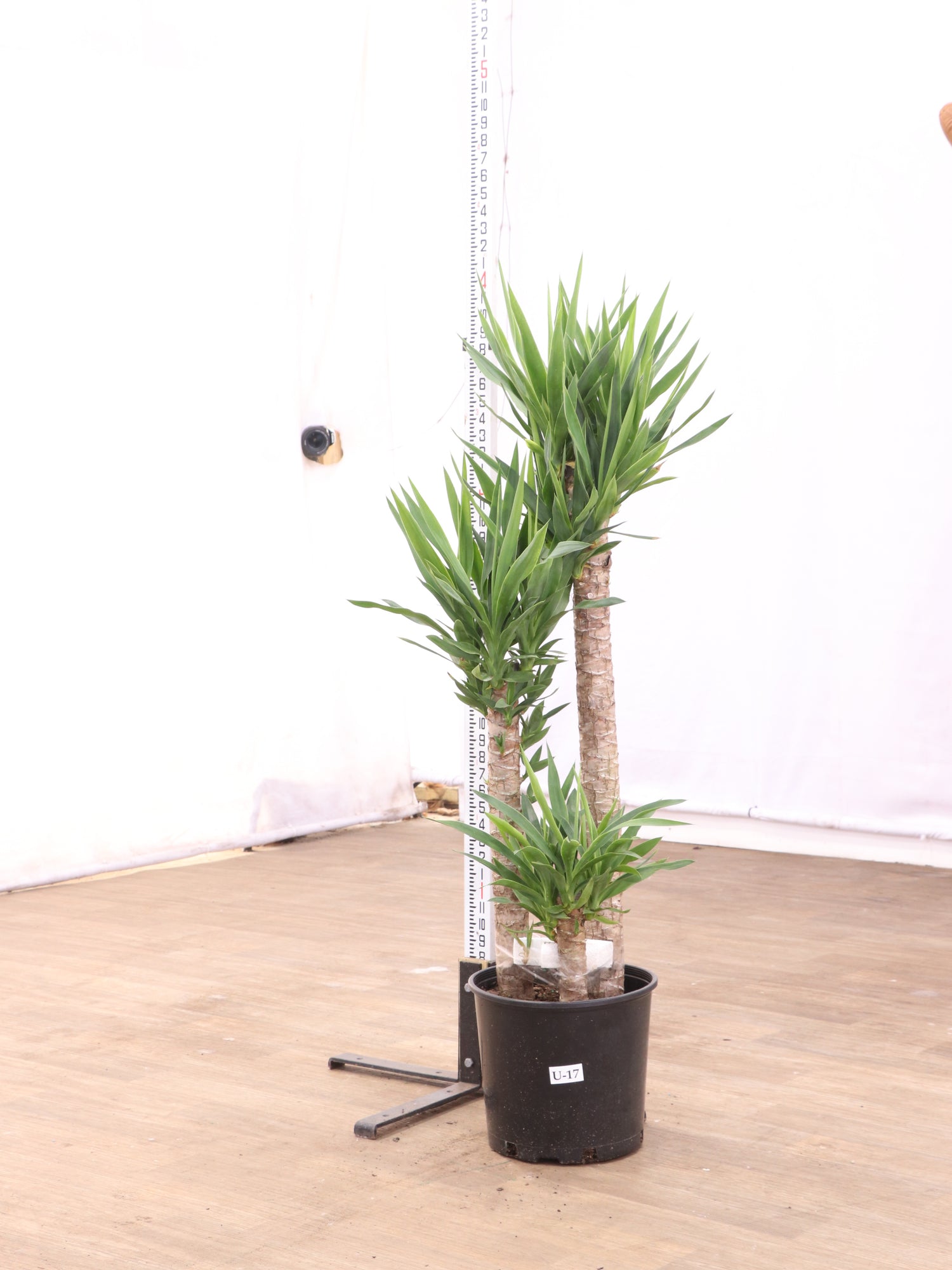
SKU: 78107452298
where can i buy yucca plants

where can i buy yucca plants Large Yucca Cane

Sale price$21.44 Regular price$23.82
Save 10%

Pay in installments of $5.96 with ShopPay, AfterPay and Klarna

Shipping Estimate
USA
  • USA
  • CAN

Ships within 48 hours · Estimated delivery Jul 21 - Jul 26

Promo Codes Available:

For Your Every Summer RSVP, with Code: SUMMER15

Description

where can i buy yucca plants Large Yucca CaneDescription The Yucca brings sculptural beauty and southwestern charm right into your home. With those distinctive sword shaped leaves arranged in perfect rosettes and the promise of towering Yucca flower spikes, this resilient beauty transforms any space into a desert inspired sanctuary. Native to the Americas and naturally adapted for easy living, your Yucca tree thrives with gentle care and understanding. We love how forgiving these plants are

Description

The Yucca brings sculptural beauty and southwestern charm right into your home. With those distinctive sword-shaped leaves arranged in perfect rosettes and the promise of towering Yucca flower spikes, this resilient beauty transforms any space into a desert-inspired sanctuary.

Native to the Americas and naturally adapted for easy living, your Yucca tree thrives with gentle care and understanding. We love how forgiving these plants are - they're wonderful companions for both new plant parents and experienced collectors who appreciate low-maintenance elegance. Whether you choose a smaller Yucca for your favorite corner or a statement-sized specimen for your living room, this plant will grow alongside you for decades, adding timeless beauty to your carefully curated space.

Care 

Are yuccas hard to care for?

Yuccas are wonderfully forgiving plants that make excellent choices for both beginners and experienced plant lovers. These resilient beauties adapt well to various conditions and don't mind if you occasionally forget to water them, requiring mainly bright light and patience.

We find that most plant parents quickly fall in love with how understanding these plants are. Think of your Yucca as that low-maintenance friend who always looks great - minimal fuss, maximum beauty, and always ready to brighten your day.


Do Yuccas like full sun or shade? 

Your Yucca absolutely thrives in bright light and loves soaking up full sun whenever possible, though it gracefully tolerates partial shade too. Indoors, we recommend placing it near your brightest window where it can enjoy optimal growing conditions.

The more sunshine your Yucca receives, the more likely you'll be rewarded with those spectacular sword-like leaves and potentially even those magnificent flower spikes that make these plants so special.


How often should you water yuccas?

Water your Yuccas every two to three weeks during spring and summer, allowing the top few inches of soil to dry completely between waterings. In winter, reduce watering to once monthly as these desert natives prefer staying dry.

When you do water, give it a thorough drink until water flows from the drainage holes, then let it rest. We always tell our customers that with Yucca plant care, it's better to underwater than overwater.


Where is the best place to keep a yucca plant?

The perfect home for your Yucca is near a bright, sunny window with good drainage and adequate air circulation. We love seeing them in entryways, living rooms, or anywhere their stunning silhouette can create a natural focal point.

Choose a spot where your plant can show off its striking beauty while staying safely away from cold drafts and heating vents. Your Yucca will reward you with steady, graceful growth in return.


What is the best fertilizer to use for yuccas?

Feed your Yucca with a balanced, all-purpose fertilizer diluted to half strength every few months during the spring and summer growing season. Skip fertilizing completely in fall and winter when your plant naturally rests and doesn't need extra nutrients.

We recommend keeping fertilizing simple and gentle. These plants evolved in nutrient-poor soils, so less is definitely more when it comes to feeding your beautiful Yucca.


Do yuccas need misting?

Yuccas don't need misting and actually prefer the dry indoor conditions that many other houseplants find challenging. These desert natives thrive in average home humidity and excessive moisture can sometimes lead to fungal issues on their leaves.

Save your spray bottle for other plants - your Yucca is perfectly content with the natural humidity levels in your home and will thank you for respecting its low-moisture preferences.


How long do yuccas live for?

Your Yucca can become a treasured long-term companion, often living for several decades with proper care and sometimes reaching fifty years or more. We love knowing that these plants can grow alongside families, becoming more beautiful with each passing year.

This makes them wonderful investments for anyone looking to create lasting beauty in their space. There's something deeply satisfying about nurturing a plant that can be part of your home for decades.


Are yuccas good indoor plants?

Yuccas make absolutely wonderful indoor plants thanks to their striking sculptural presence, remarkable resilience, and refreshingly low maintenance requirements. They bring that perfect combination of dramatic visual impact and easy-going personality that works beautifully in modern homes and offices.

We particularly appreciate how well they adapt to typical indoor conditions that challenge many other houseplants. Your Yucca will thrive in the dry air and bright light that most homes naturally provide.


Pet-friendly?

Yuccas are not pet friendly. They contain compounds called steroidal saponins that are harmful to pets if ingested. For the wellbeing of your furry family members, please keep these beautiful plants safely out of reach of curious paws and mouths.


Are yuccas poisonous to dogs?

Yuccas are toxic to dogs due to steroidal saponins found throughout the plant. If your pup decides to sample the foliage, they may experience drooling, vomiting, diarrhea, and weakness that requires immediate veterinary attention for their safety.

We always recommend positioning your Yucca where even the most curious dogs can't reach it - perhaps on a high plant stand or in a room that's typically off-limits to your four-legged friends.


Are yuccas toxic to cats?

Yuccas are definitely harmful to cats, potentially causing drooling, vomiting, diarrhea, and weakness if your feline friend decides to investigate with their teeth. Since cats are natural climbers and plant explorers, extra care is needed with placement.

Consider a high shelf or hanging arrangement where your kitty can admire your Yucca's beautiful form from a safe, non-nibbling distance. Your cat's safety is always worth the extra planning.


Factoids

What is a yucca plant?

A Yucca plant is a perennial evergreen with rosettes of sword-shaped leaves and occasional tall spikes of fragrant white or cream flowers. These beauties belong to the asparagus family and are native to arid regions throughout North and Central America.


Is a yucca a cactus?

A Yucca isn't actually a cactus, despite their shared appreciation for dry conditions and desert landscapes. While cacti belong to the Cactaceae family, Yuccas are proud members of the asparagus family, making them botanical cousins rather than siblings.


Is yucca a perennial or an annual?

Your Yucca is definitely a perennial plant, meaning it will grace your home for many years rather than completing its life cycle in just one season. This long-term commitment makes it such a rewarding choice for anyone wanting to build lasting relationships with their plants.


Are yuccas poisonous to humans?

Yuccas contain saponins that can cause stomach upset, vomiting, and diarrhea in humans if consumed in significant quantities. The naturally bitter taste usually prevents accidental consumption, but it's wise to keep them away from curious children and adults who might experiment.

We always recommend treating all houseplants as "look but don't taste" and washing hands after handling any plant, just to be safe and maintain good plant care habits.


Do yucca plants multiply?

Yucca plants naturally multiply by producing small offshoots or pups around the base of the mother plant. You can separate them when they're large enough. Many species spread through underground rhizomes, while others can grow from stem cuttings with patience.

This natural tendency to produce new plants makes them wonderful for sharing with friends or expanding your own collection over time. There's something magical about watching a single plant become many.


Can you eat yucca?

You cannot eat the Yucca plant root, which contains high levels of toxic saponins. It’s often confused with edible yuca or cassava. Some Yucca flower varieties are used in traditional Central American and Mexican cuisines when prepared by experienced cooks.

We always recommend leaving any food preparation involving plant materials to experts and treating your houseplant Yucca as purely ornamental for safety and peace of mind.


Do Yuccas purify the air?

Yuccas help improve your indoor air quality by naturally filtering toxins like formaldehyde and benzene from your environment, contributing to a healthier home atmosphere. Those broad leaves work quietly to process the air around them throughout the day and night.

While they're not the strongest air purifiers in the plant world, every little bit helps, and you get the added bonus of stunning architectural beauty alongside their air-cleaning benefits.


What part of yuccas are medicinal?

The root of certain Yucca species, particularly Yucca schidigera, contains beneficial compounds that have been studied for their anti-inflammatory properties. However, the raw root itself isn't safe for home consumption and requires professional preparation for any medicinal use.

We always recommend leaving medicinal plant preparation to qualified professionals and enjoying your beautiful houseplant Yucca purely for its ornamental qualities and air-purifying benefits.


Buy a Yucca

Your perfect Yucca is waiting to transform your space into something extraordinary. These remarkable plants bring decades of beauty with surprisingly little effort – exactly what busy plant lovers need.

We help you discover the Yucca that matches your vision perfectly. 

Our live video calls mean you'll actually see your chosen plant growing in our greenhouse before we carefully pack it for the journey to you. There's something wonderful about knowing exactly which plant will be arriving at your door. We believe the best plant relationships start with the right match, and we're excited to help you begin this beautiful, long-lasting partnership.

Shipping Notes
  • Free Standard Shipping on $100+ Orders to the USA.
  • Except Preorder products are shipped in 48 hours.
  • Delivery to the USA:
  1. Standard Shipping : 3-10 business days
  • If time is of the essence, please consider selecting expedited delivery for faster service.
Exchange/Return Notes
  • We offer a 30-day return/exchange service after receiving.
  • Final sale items are not eligible for returns or exchanges.
  • To process your return/exchange, please contact us at [email protected]
  • Please click here for more details>>> Return & Exchange Policy
SKU: 78107452298

Discover Niche Categories That Outsell where can i buy yucca plants

Top-Converting Item to Boost Your Average Order

4.3 ★★★★★
Based on 10 reviews
Sort
Highest Rating
Newest First
Oldest First
Product Reviews
T
Verified Purchase
Texas Teacher
Draper, US
★★★★★ 5
beautiful!
Format: Kindle
The Prophet is a loftily written expose of the governing universal laws of love, rhythm, correspondence, cause and effect, dualism and polarity. I absolutely loved it and would not have understood it should it have presented itself to me earlier than this present moment. Deeply grateful for the lessons it beholds.
WAS THIS REVIEW HELPFUL?YesReportShare
Reviewed in the United States on June 4, 2025
J
Verified Purchase
Jean Severine
Lexington, US
★★★★★ 5
CLASSIC WORKS BUT SIZE & FORMAT ALMOST TOO SMALL TO READ
Format: Hardcover
This work is classic literature. But sadly, the product presentation doesn't make it clear how small the edition is -- 5x7 inches -- and how terribly small the font size is -- like 14 pt. It's really not readable -- but more a way to possess a treasured piece.
WAS THIS REVIEW HELPFUL?YesReportShare
Reviewed in the United States on April 9, 2025
P
Verified Purchase
Preacher of Prose
Phoenix, US
★★★★★ 5
🏜️ Arrakis. Dune. Desert Planet.
Format: Paperback, Format: Paperback
Earlier this year, I decided to actively stop doom scrolling. With the help of Opal to limit my access to social media on my phone, I had a ton of time to kill. I didn't want to go back to playing video games, I have probably played enough video games for two lifetimes, and I could only spend so much time job hunting, so I decided to give reading a real shot. Truth is, I never enjoyed reading as a kid. It always felt like homework, like something forced, and that took all the fun out of it. So why did I pick Dune? I really enjoyed the movies by Denis Villeneuve, and something about the book pulled me in. At that point, I could not tell if I chose Dune or if Dune chose me. 📖 Now onto the actual review. 🚨 Spoiler Alert 🚨 “The mystery of Dune is not a problem to solve, but a reality to experience.” Dune feels less like a book and more like entering a world that already exists. Published in 1965 by Chilton, a company better known for auto repair manuals, it is packed with politics, philosophy, religion, ecology, prophecy, drugs, hallucinogenics, and deep world building. Following Paul Atreides (protagonist) from royal heir to outcast to leader of the Fremen to emperor felt like going through a transformation alongside him. I found myself learning about resilience, how to navigate a future you can see coming but cannot avoid, and what it really means to lead. Each chapter gave me something to think about. Even more, Dune feels very relevant today given our current political climate. Power, manipulation, religion, and control over resources are all central themes, and they hit differently when you look at the world around you. 💡 Pro tip for reading Dune Frank Herbert does not hold your hand. He drops you into a world filled with esoteric technology, unfamiliar terminology, and a culture with its own rules. It can feel overwhelming at first, but do not get discouraged if you do not understand everything right away. Let the world unfold as you go. I ended up reading the first three books in the series, Dune, Dune Messiah, and Children of Dune, and then went back to re-read Dune. This review is based on that second read, and it is amazing how much more you pick up the second time through. What also helped was reading the graphic novels alongside the book. They do not include every detail, but they stay faithful to the story and help bring the world to life visually. Also, if you have not watched the recent movies directed by Denis Villeneuve, they are worth checking out. I saw them before reading, and they helped me better understand the characters and major plot points.
WAS THIS REVIEW HELPFUL?YesReportShare
Reviewed in the United States on May 14, 2026
C
Verified Purchase
Chrissy
Bozeman, US
★★★★★ 5
I highly recommend it to all readers
Format: Mass Market Paperback
Dune A book review by Nathan Poulson Written by Frank Herbert in 1959, “Dune” is an epic adventure of political betrayal, ecological brinkmanship, and messianic deliverance. It won science fiction’s highest awards—the Hugo and the Nebula—and went on to sell more than twelve million copies during Herbert’s lifetime. The mantel piece of sci-fi, Star Wars, owes many of its’ widely popular ideas to Dune. To this day, it is still acclaimed by readers and critics alike as a “science-fiction masterpiece”. I highly recommend it to all readers, as I believe it will put a new perspective on things, deepen your understanding, and excite you to the edge of your seat. Dune follows the 15 year old boy Paul Atriedies and his mother, Jessica Atriedies in the very distant future. He is an only child of the duke of the Royal house of Atriedies. The house is given the stewardship over the desert planet of Arrakis or “Dune”, which controls the most valuable resource in the universe, the spice. On the planet where water is more valuable than gold, desert sand worms that are bigger than spaceships, life is lived to the extreme. With the spice comes a longer life span, increased perception, and in some cases prediction of the future, but at the cost of being highly addictive. The Harkonens, a noble house that previously owned the planet is intent on revenge and recapturing the spice. The spacing guild, which relies on the spice for navigating their spacecraft, is also intent on preventing anyone restricting or destroying their monopoly on space travel. Paul finds himself thrown into the mystery of Dune and its fierce natives, the Fremen. They think he is the savior their prophecy speaks of - is he destined to be the great preserver of their world or a false prophet to be purged? With multiple factions fighting, deceiving, and pulling strings, you never know quite what to expect in this awesome futuristic battleground. One side I really like about Dune is that it is not just a distant sci-fi to be enjoyed, but a book to learn and understand from. I really enjoy the themes Herbert establishes in the plot; one of them including the danger of entrusting too much power to a super being. Although his themes might be very serious and almost depressing, I admire that he has the courage to end the story based in reality, instead of a unrealistic Hollywood ending with no depth. Although the plot was very engaging, at some times the writing style really dragged things down. This can be a real turn off for even patient readers as Frank ambles around in unimportant details describing made up words and the very boring thought process of the characters. This is the one thing that made this otherwise a perfect book. Even though I thought the plot was almost pulling me down, somehow I still enjoyed it through the few sparks of almost perfect harmony when the style actually worked for the story. What makes Dune so special is the pure atmosphere. You can really tell that Frank put in a lot of effort into his fictional world and society. Even though the story is set in another universe, the planets, the characters, and the motives seem very real. He had the worlds built before he set the plot on them; you can see he studied Greek and Near East history extensively to make this book really come to life. Most books have characters that you can easily relate to. With Dune, it is a little bit harder to do that. In it, you have a story that instead of a personal account, it is more like a “retelling” and it is sometimes a little harder to relate to the feelings and values of the characters. My favorite character Paul is the most distant character for most of the book. Most of this isolation comes from the fact that people look to him as an idol, even though he still has human flaws. Throughout the book Paul is the character with the most burdens, and in constant pressure that he doesn’t measure up to other’s expectation of him. “They think they have a God, but I am only a man”. In reality he is a character we can all reflect from, he just has some layers in his personality that you have to peel away to really get to the core. This book is near from perfect, but it still hits home. Frank Herbert has done a difficult thing that combines ancient myths and stories with laser guns and mind control. He was the first one to do it, and the last to do it so well. Even without its deeper meanings, this is still a great read to just casually absorb. I cannot explain to you how amazing this book really is; so experience it yourself and pick up a copy, you will be surprised to what it has to offer.
WAS THIS REVIEW HELPFUL?YesReportShare
Reviewed in the United States on December 15, 2015
A
Verified Purchase
Amazon Customer
Pawtucket, US
★★★★★ 4
‘Dune’ Paved the Way for Surfer Proverbs and ‘Star Wars’ Alike
Format: Kindle
A Bene Gesserit proverb: “When religion and politics travel in the same cart, the riders believe nothing can stand in their way.” I have to be honest, as a contemporary consumer of sci-fi film, small screen works and books, Frank Herbert’s 1965 Dune starts out slow. To be clear, I’m talking about the first half of some 800 pages. The reason why I stuck it out, though, is because I know the saga gets better as it continues (with Children of Dune being arguably the favorite). Known as one of the original sci-fi novels, I approached it like I would any classic piece of literature. And you know what? I’d put Dune in my personal cannon of classic lit because of it’s heavy influence on sci-fi … everything. That’s right, not even Star Wars would exist without Dune. Herbert, a (sometimes struggling) freelance writer with a passion for ecology and a streak of utopian futurism, wrote Dune when he was almost 40 years old. At the time, sci-fi readers generally liked their stories short but this paperback was almost 900 pages. Not surprising, Dune wasn’t an overnight success but it’s popularity grew in the 1970s and 1980s. Dune is set in a dry, distant future, where warring noble houses are kept in line by an interstellar empire. The noble duke Leto (heir apparent Paul Atreides’ father), head of the House Atreides, is forced to move his household from their perfectly good home planet to the desert planet of Arrakis (also known as Dune). The climate on Dune is practically inhabitable to the layman. Water is so scarce that whenever its inhabitants go outside, they must wear stillsuits, which capture body moisture and recycle it for drinking (it’s beyond nasty). In a nutshell, the whole thing is a classic you killed my father and I’m going to get revenge coming of age story. Everything else revolves around the hot commodity on Arrakis, which is basically a very powerful and desired drug: Spice (melange). This cinnamon-scented substance is made from excretions of killer 1,000-foot sand worms (yes, I had a lot of Tremors flashbacks reading this book), gas, then exposure to the sun — but to mine it is very dangerous because said worms don’t like noise. At all. The drug is crazy addictive but it’s also everywhere in small doses, so everyone that lives on or visits the planet has to stay, or else suffer fatal dopesickness. For empathic people, it helps explore the limits of personal identity and the mind’s relationship to the body. Daily use extends the lifespan by hundreds of years. Paul’s intellectual state (already Jedi-like due to his Bene Gesserit training) is heightened by the spice, causing some pretty spot-on nuggets of wisdom. Fear is a mind-killer. “Fear is the little death that brings total obliteration. I will face my fear I will permit it to pass over me and through me. And when it has gone past me I will turn to see fear’s path. Where the fear has gone there will be nothing. Only I will remain,” Paul reminds his mother at one point. While commentary on fear is serious and quite important to ponder, I’m reminded of the advice from the late Patrick Swayze’s character in Point Break: “Fear causes hesitation. And hesitation causes your greatest fear to come true.” By 1984 we had our very own Dune movie, directed by David Lynch (I’ve yet to see it but to be fair Lynch didn’t even like the cut that was released). Critics say an even better Dune movie came out later: Star Wars. Desert planets, evil emperors, a boy with a destiny, warring noble houses and a princess guarding spice — all things borrowed from Dune. There are mental Jedi powers like the Bene Gesserit, and even moisture farming like the Freman. Academics have written entire doctoral thesis on the topic. What’s next? Well, I’m waiting for the new Dune feature film to come out (prob not until late 2020), directed by Dennis Villeneuve. A feat that’s proven difficult today due to the original book’s heavy influence on so many well-established sci-fi classics like Star Wars. Consequently, it’s been rumored difficult to get the screenplay right. But in July 2019, Herbert’s son Brian (who co-wrote prequels to the Dune saga after his father’s death) said he’s seen and is pleased with draft four of the screenplay … in the meantime, I’m reading Dune Messiah. And drinking a tall glass of ice water.
WAS THIS REVIEW HELPFUL?YesReportShare
Reviewed in the United States on April 13, 2020

recommand products