SKU: 77956347118
curly palm plant

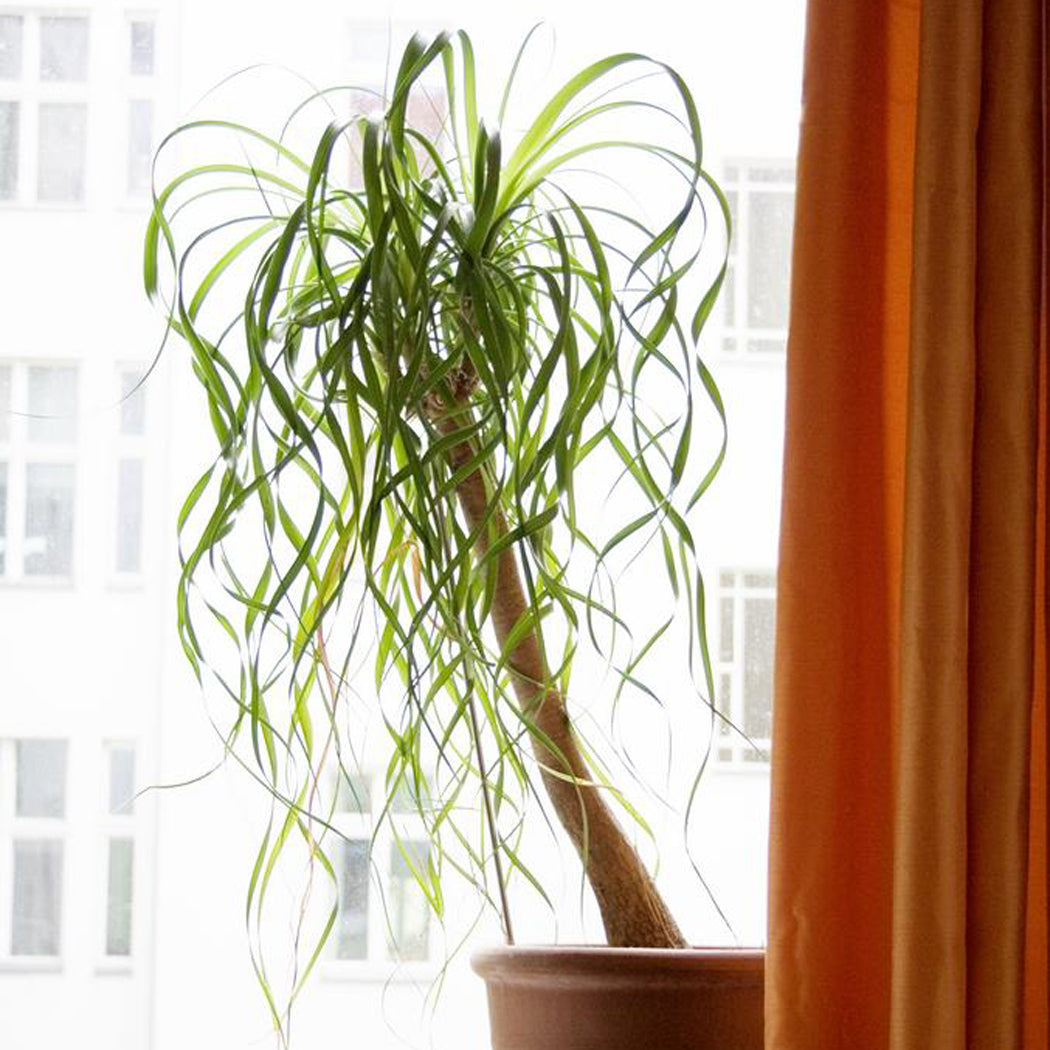
curly palm plant Ponytail Palm Beaucarnea recurvata Houseplant Seeds

Sale price$20.68 Regular price$22.98
Save 10%

Pay in installments of $5.75 with ShopPay, AfterPay and Klarna

Shipping Estimate
USA
  • USA
  • CAN

Ships within 48 hours · Estimated delivery Jul 21 - Jul 26

Promo Codes Available:

For Your Every Summer RSVP, with Code: SUMMER15

Description

curly palm plant Ponytail Palm Beaucarnea recurvata Houseplant Seeds15 Ponytail Palm seeds. The Ponytail Palm, also known as Beaucarnea Recurvata, or Elephant's Foot is a distinctive looking houseplant with a swollen thick brown stem at its base that stores water. The long narrow curly, dark green leaves flow up from this base much like a plume of water in a fountain. Despite it's name and appearance, the Ponytail Palm is in fact a succulent! These seeds come with an option of Eco Packaging Find out more. Sow Inside

15 Ponytail Palm seeds. The Ponytail Palm, also known as Beaucarnea Recurvata, or Elephant's Foot is a distinctive looking houseplant with a swollen thick brown stem at its base that stores water. The long narrow curly, dark green leaves flow up from this base much like a plume of water in a fountain.

Despite it's name and appearance, the Ponytail Palm is in fact a succulent!

These seeds come with an option of Eco Packaging - Find out more. 

Sow Inside Anytime


Growing Instructions

Propagating ponytail palm seeds is the surest way to grow these fun plants. While division is quicker, offsets do not always root. Growing ponytail palms from their seed results in a surer propagation method and seeds germinate rapidly if soaked overnight or gently scarified. The tough seed coating needs to be softened or damaged slightly to allow the sprout to emerge. Ponytail palms prefer light gritty soil. A good mixture for seed is 4 parts sand, 2 parts peat, and 1 part each sterile soil and perlite. Sow seeds in 3-inch (7.5 cm.) containers so you don’t need to disturb seedlings for quite some time. Moisten the medium and sow seed on the surface of the soil, pressing it in lightly. Top off with a light dusting of sand.

Keep the container lightly moist by misting and place in an area with a temperature of at least 68 degrees Fahrenheit (20 C.). Heat under the container can speed germination. Cover the container with plastic until germination. Remove the plastic once per day to allow excess moisture to escape. Keep the container in a brightly lit area but with some shelter from noonday sun, which may burn new leaves. You can expect sprouts in 1 to 3 months depending upon the time of year and amount of light and heat the plant experiences. Remove the heating mat and plastic once you see sprouts. Continue to mist your little ponytail palms and keep them in a bright, warm area. Once the seedlings have several pairs of true leaves, water deeply but infrequently in summer and reduce to half in winter. Use a good liquid plant food diluted in spring and again in summer.
Shipping Notes
  • Free Standard Shipping on $100+ Orders to the USA.
  • Except Preorder products are shipped in 48 hours.
  • Delivery to the USA:
  1. Standard Shipping : 3-10 business days
  • If time is of the essence, please consider selecting expedited delivery for faster service.
Exchange/Return Notes
  • We offer a 30-day return/exchange service after receiving.
  • Final sale items are not eligible for returns or exchanges.
  • To process your return/exchange, please contact us at [email protected]
  • Please click here for more details>>> Return & Exchange Policy
SKU: 77956347118

Discover Niche Categories That Outsell curly palm plant

Top-Converting Item to Boost Your Average Order

4.3 ★★★★★
Based on 14 reviews
Sort
Highest Rating
Newest First
Oldest First
Product Reviews
J
John Matlock
Houston, US
★★★★★ 5
It's How Wars End That Become Important Afterward
Format: Paperback
The twentiety century taught us a lot about wars and how they end. World War I showed us that making strong demands on the defeated (who didn't admit defeat to their own people) set the stage for the next big war. World War II was fought until the Unconditional Surrender of the Germans and Japanese. Something that thinkers still debate as having made them fight all that harder. VietNam was fought with no clear end in sight, and "another VietNam" entered our language. The first Gulf War was ended when Colin Powell and Bush II debated how to end the war. They stopped before they had to go in and see what the Sunni's, Shiite's and Kurds made of the power vacuum left by the removal of Saddam would have created. Bush II is learning about this now. This is the second revised edition of this book, originally published in 1971 and then updated in 1991 and now 2005 to reflect happenings in new wars. Still some of the old wars had interesting insights that I didn't know before, such as how Finland, originally on Germany's side against Russia, made a peace with Russia and kicked the Germans out before they became a Russian province. Great Book.
WAS THIS REVIEW HELPFUL?YesReportShare
Reviewed in the United States on April 6, 2005
C
César González Rouco
Los Angeles, US
★★★★★ 3
Complementary readings
Format: Paperback
There are already three good reviews so I will only suggest reading the following books instead of, or in addition to, this peculiar work: a) "War in human civilization" by Azar Gat; b) "War before Civilization. The Myth of the Peaceful Savage", by Lawrence Keeley; c) "How War Began" by Keith F. Otterbein; d) "War and Peace and War: The Rise and Fall of Empires" by Peter Turchin; and e) "War and the Law of Nations: A General History" by Stephen Neff.
WAS THIS REVIEW HELPFUL?YesReportShare
Reviewed in the United States on August 8, 2009
B
bjcefola
Massapequa, US
★★★★★ 5
Excellent short-book analysis
Format: Paperback
This short book is an outstanding analysis of how nations end wars, or accept peace. Ikle shows how governments often prefer obviously self-destructive courses rather then compromise peace terms. The problem is most acute when factional interests dominate strategy rather then a rational unitary interest. In such a circumstance, factions that benefit from continuing the war will accuse those pursuing peace of treason. Sadly, there is no equivalent derogatory word in English for those who pursue war to the detriment of their country. The book was first written in 1971, and most of the examples are from the two world wars. The work is still extremely relevant, and at 130 pages it's well worth the time. Highly recommended as a first book to read on ending war.
WAS THIS REVIEW HELPFUL?YesReportShare
Reviewed in the United States on May 4, 2007
N
Verified Purchase
Nick
Belleville, US
★★★★★ 5
eye-opener
Format: Paperback
Great book
WAS THIS REVIEW HELPFUL?YesReportShare
Reviewed in the United States on April 23, 2026
A
Verified Purchase
Atiqullah
Cuba, US
★★★★★ 5
Excellent everyday strategies
Format: Paperback
This helped me to get whatever I want
WAS THIS REVIEW HELPFUL?YesReportShare
Reviewed in the United States on September 5, 2024

recommand products