SKU: 77803100701
where to buy cinnamon plants

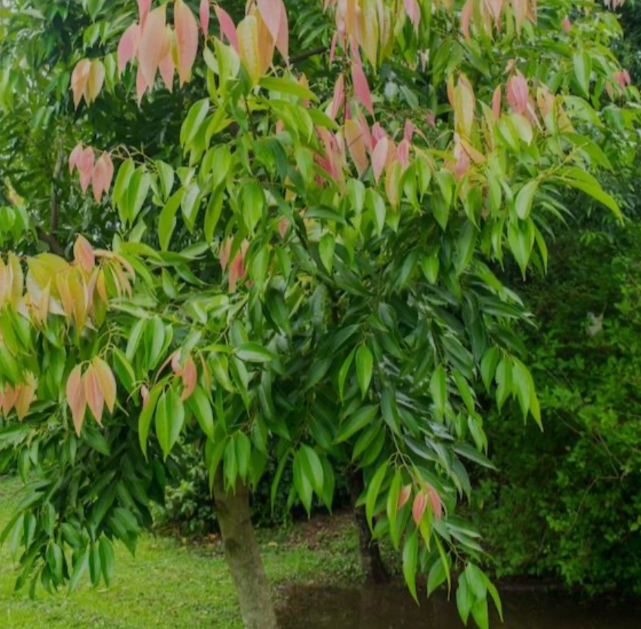
where to buy cinnamon plants Cinnamon Tree — Jolly Green Nursery

Sale price$20.48 Regular price$22.76
Save 10%

Pay in installments of $5.69 with ShopPay, AfterPay and Klarna

Shipping Estimate
USA
  • USA
  • CAN

Ships within 48 hours · Estimated delivery Jul 19 - Jul 24

Promo Codes Available:

For Your Every Summer RSVP, with Code: SUMMER15

Description

where to buy cinnamon plants Cinnamon Tree — Jolly Green NurseryCinnamon Tree (Cinnamomum zeylanicum) Overview The Cinnamon Tree, scientifically known as Cinnamomum zeylanicum, is a tropical evergreen tree native to Sri Lanka, India, and other parts of Southeast Asia. It is best known for the spice cinnamon, which comes from the bark of the tree. The tree has aromatic leaves and produces small, yellowish flowers, which are followed by small berries. The taste of cinnamon derived from this tree is sweet, warm, and

Cinnamon Tree (Cinnamomum zeylanicum) Overview

The Cinnamon Tree, scientifically known as Cinnamomum zeylanicum, is a tropical evergreen tree native to Sri Lanka, India, and other parts of Southeast Asia. It is best known for the spice cinnamon, which comes from the bark of the tree. The tree has aromatic leaves and produces small, yellowish flowers, which are followed by small berries. The taste of cinnamon derived from this tree is sweet, warm, and slightly spicy, with a distinct, fragrant aroma that is unmistakable in both culinary and medicinal applications.

Taste Profile

The flavor of cinnamon from Cinnamomum zeylanicum, also called "true cinnamon," is generally more delicate and sweet compared to its more common counterpart, Cinnamomum cassia. True cinnamon has a mild, complex flavor profile with subtle hints of citrus and clove. This makes it a popular choice for both sweet and savory dishes, as well as for use in traditional medicine. The texture of the bark, which is typically thinner and softer than cassia, also contributes to its superior culinary reputation.

Best Growing Environment

Cinnamon trees thrive in warm, humid environments with rich, well-drained soils. They prefer areas that provide consistent temperatures between 65F and 95F (18°C - 35°C), and they require high humidity to mimic their native tropical climates. The trees are not cold-tolerant, making them unsuitable for regions with frost or freezing temperatures. Ideally, cinnamon trees grow in sheltered, partly shaded locations to protect them from the harsh midday sun, though they can tolerate full sun if grown in tropical or subtropical areas.

Common Names

  • True Cinnamon
  • Cinnamomum verum
  • Cinnamomum zeylanicum (historically used, though this is a synonym)

Average Height and Growth Rate

Cinnamon trees can grow to a height of 30 to 40 feet (9 to 12 meters) in their natural environment, though they can be pruned to maintain a more manageable size for cultivation or ornamental purposes. In ideal conditions, these trees have a relatively fast growth rate, typically gaining 1 to 2 feet (30 to 60 cm) of height per year during the growing season, especially when young.

Sun Requirements

Cinnamon trees generally prefer partial shade in areas with intense sun, though they will tolerate full sun if grown in regions where high humidity and sufficient water are available. When grown indoors, it is essential to provide bright, indirect light or place the tree in a location that receives filtered sunlight.

Cold Hardiness

Cinnamon trees are highly sensitive to cold. They grow best in USDA zones 9b-12 and cannot survive freezing temperatures. A drop in temperature below 50F (10°C) can cause significant damage, and frost will kill the tree, so it requires frost protection in the Tampa Bay area. In non-tropical climates, cinnamon trees can be grown indoors or in greenhouses, where temperatures can be regulated.

Water Requirements

Cinnamon trees require consistent moisture and thrive in humid environments. The soil should be kept moist but not soggy. Overwatering can lead to root rot, so good drainage is essential. During the growing season, water the tree regularly, especially during dry spells. In winter, when the tree's growth slows, reduce watering but ensure the soil doesn't dry out completely. If grown indoors, maintaining humidity through misting or a humidity tray can help the tree stay healthy.

Planting Guide

When planting a cinnamon tree, choose a well-drained, fertile soil. If planting in the ground, ensure the site is free from frost and provides adequate space for the tree’s roots to spread. If growing in a container, use a large pot with drainage holes, and select a soil mix that retains moisture but doesn't become waterlogged.

  1. Planting Location: Choose a sunny location or partial shade, preferably with protection from harsh winds.
  2. Soil Requirements: The soil should be slightly acidic to neutral (pH 6.0-7.0) and rich in organic matter.
  3. Planting Depth: Dig a hole large enough to accommodate the root ball, and ensure the top of the root ball is level with the ground. If growing in a container, place the tree in a pot that is 2-3 inches (5-8 cm) larger in diameter than the root ball.
  4. Spacing: If planting multiple trees, space them at least 10 feet (3 meters) apart to allow for mature growth.

Fertilization Schedule and Recommendations

Cinnamon trees require a balanced fertilizer to promote healthy growth and bark production. Fertilizing should be done in early spring, when the tree starts actively growing, and continued through mid-summer. Here’s a recommended fertilization schedule:

  • Spring (March - April): Apply a balanced fertilizer like 10-10-10 (NPK) or a slow-release organic fertilizer to promote overall growth.
  • Summer (June - July): Apply a second round of fertilizer to support the ongoing growth cycle, particularly if the tree shows signs of nutrient deficiency (e.g., yellowing leaves).
  • Fall (September): If necessary, apply a light dose of a potassium-rich fertilizer to help the tree prepare for the cooler months and promote strong bark formation.
  • Winter (December - February): No fertilizing is needed during the winter months, as the tree's growth slows down significantly.

It is essential not to over-fertilize cinnamon trees, as this can lead to excessive leaf growth at the expense of bark production.

USDA Hardiness Zones

The cinnamon tree is best suited to USDA hardiness zones 9b through 12. In these zones, the temperatures remain warm year-round, with minimal risk of frost or freezing temperatures. For gardeners in colder climates, cinnamon trees can be grown in pots and moved indoors during the winter months.

Shipping Notes
  • Free Standard Shipping on $100+ Orders to the USA.
  • Except Preorder products are shipped in 48 hours.
  • Delivery to the USA:
  1. Standard Shipping : 3-10 business days
  • If time is of the essence, please consider selecting expedited delivery for faster service.
Exchange/Return Notes
  • We offer a 30-day return/exchange service after receiving.
  • Final sale items are not eligible for returns or exchanges.
  • To process your return/exchange, please contact us at [email protected]
  • Please click here for more details>>> Return & Exchange Policy
SKU: 77803100701

Discover Niche Categories That Outsell where to buy cinnamon plants

Top-Converting Item to Boost Your Average Order

4.5 ★★★★★
Based on 16 reviews
Sort
Highest Rating
Newest First
Oldest First
Product Reviews
R
Verified Purchase
ralversity
Carnegie, US
★★★★★ 3
Does the job, but assembling by yourself is a nightmare
Size: 4 Panel-88'', Color: Black
Does it do the job? Yes, although as others said there are small gaps but it's not a huge deal. The price is also good. But the reason I'm giving it a 3/5 is simply because the assembly for this was a complete nightmare. I honestly don't think I would recommend this to anyone unless they have another person to help them assemble it, because doing it by myself was terrible. I don't think I'd buy this again, I think I'd opt to just spend a bit more money and save myself the trouble personally.
WAS THIS REVIEW HELPFUL?YesReportShare
Reviewed in the United States on May 29, 2026
T
Verified Purchase
Talagand
Lowell, US
★★★★★ 4
Reasonably adequate room divider
Size: 4 Panel-88'', Color: Beige
I'm reviewing this as I assemble it. Couple things: 1. I didn't expect as much assembly. I've ordered dividers before and they more-or-less came as one unit. Sometimes the panels needed screwing together. These require complete assembly and come largely as three rods: two make up vertical columns and snap together. Another one (called part "C") makes the horizontal columns and you have two of these per panel (one attaches to part "A" and the other part "B"). These parts are metal with a plastic shim. Using the wood screws to attach to part "C" is a real pain in the neck. There's not much holding the panel in place so it's a little tricky. One tactic I've found while I'm assembling that works for the initial connections from parts A and B to their respective "C" rods is to hold the screw in place with a screw driver and then rotating the rod around the screw. This will do a number on your hands if you aren't wearing gloves. This obviously doesn't work when completing the connection. Using a driller driver on this is really near impossible because there isn't anything you can use to secure it in place. You can use it on the first panel, but as it gets longer, it becomes increasingly difficult and because it isn't wood, it's really tight. I considered drilling larger pilot holes but since there are only 4x4=16 screws I need to screw in, I just decided to use my screw driver to complete it. 2. Also related to assembly. When completing the panels (attaching parts "A" and "B" to parts "C" that have the cloth cover on it), you have to be careful that when you tighten that side that it isn't loosening the other side. Because the pilot holes are so tight, you can end up rotating the rod, which rotates it in the same direction as looser on the original side. Having someone hold the "C" rod in place while you screw it in is probably the easiest approach. I didn't have a 2nd person, so I just had to keep flipping back and forth and tightening both sides as I screwed it in. Not the worlds biggest deal, but annoying nonetheless. 3. The way the instructions are written, they seem to suggest building this thing progressively; that is, you do panel 1, then 2, connect them together, then do 3 and connect it, etc. I took a different route that I suspect saved me quite a bit of trouble, and I assembled all four panels first and THEN connected everything together. 4. For the love of God make sure you check that the plastic tip is on the same side for every panel. Otherwise, you have to take one side apart again and reverse it. On the bright side, if this happens, you've essentially bored out the pilot holes to be the correct size... which is having me question if I shouldn't have just bored them out to the appropriate width in the first place. 5. Attaching all of the panels together is also an enormous pain in the ass unless you happen to have an 88" long elevated surface. Attaching the legs either requires you to elevate one side, which will invariably twist the inexplicably cheap material in the bottom connectors... or you can attach them sideways... or you can put this thing upright, having two people hold the panels in place while you use the allen wrench to tighten the bolts on the underside. None of those are particularly great options. NOW on to the utility itself. 1. The panels do let some light through (I didn't believe their advertising, and that was one of the reasons that I bought beige, is that I wanted it to not be too dark). They aren't transparent though, so it isn't that far off from their description. They functionally work great, and keep the mess of wires hidden and when I'm sitting at my desk, actually reflect quite a bit of light into my office. Great! 2. My wife has described these as "the most hideous piece of furniture ever conceived of by man." So it does not have spouse approval factor. Granted, she will seldom be in my office area, so that isn't the end of the world. 3. These are really hard to align in a way that doesn't look a little tacky. There are some plastic connectors but they don't do a bang up job of keeping these in place. Each panel is slightly tilted and it's... quite obvious. I may at some point make my own improvements to these to help make them more level. It's not a particularly expensive product so I wasn't expecting much so it's fine and I'm not going to ding them on the rating because of it. All said, would I buy this product again? Probably not. It's assembly was ~90 minutes which is about 75 minutes longer than I was anticipating spending on this (not including the 5 minute writeup that I'm doing here). But am I going to return it? Also no, if for no other reason I'd be just as annoyed taking it apart and putting it in the original box to return it.
WAS THIS REVIEW HELPFUL?YesReportShare
Reviewed in the United States on October 31, 2023
B
Verified Purchase
Barbara McCloud
Pawtucket, US
★★★★★ 5
Nice and strong
Color: Black, Size: Wheel-6 Panel
Nice and strong, tedious, putting together, but very good quality
WAS THIS REVIEW HELPFUL?YesReportShare
Reviewed in the United States on March 17, 2026
A
Verified Purchase
Al Tompkins
Port Orchard, US
★★★★★ 5
if you are going to be moving them a lot, buy something more sturdy.
Color: Black, Size: Wheel-6 Panel
I use these at our churchc. They are pretty good, not terribly study and the screw that hold the faabric have pulled out in a couple of places. But they wqould work especially well if you were not constantly moving them as we do. They are a bit of a pain to assemble.
WAS THIS REVIEW HELPFUL?YesReportShare
Reviewed in the United States on January 20, 2026
J
Verified Purchase
Julie Lincoln
Alexandria, US
★★★★★ 4
Easy to put together , decent quality
Color: Black, Size: Wheel-6 Panel
Purchased for office, easy to put together , durable quality , exactly what we needed to partition a small space
WAS THIS REVIEW HELPFUL?YesReportShare
Reviewed in the United States on November 15, 2025

recommand products