Pay in installments of $5.67 with
 ,
,
 and
and

Shipping Estimate
USA
- USA
- CAN
- USA
- CAN
Ships within 48 hours · Estimated delivery Jul 19 - Jul 24
 Promo Codes Available:
For Your Every Summer RSVP, with Code: SUMMER15
Description
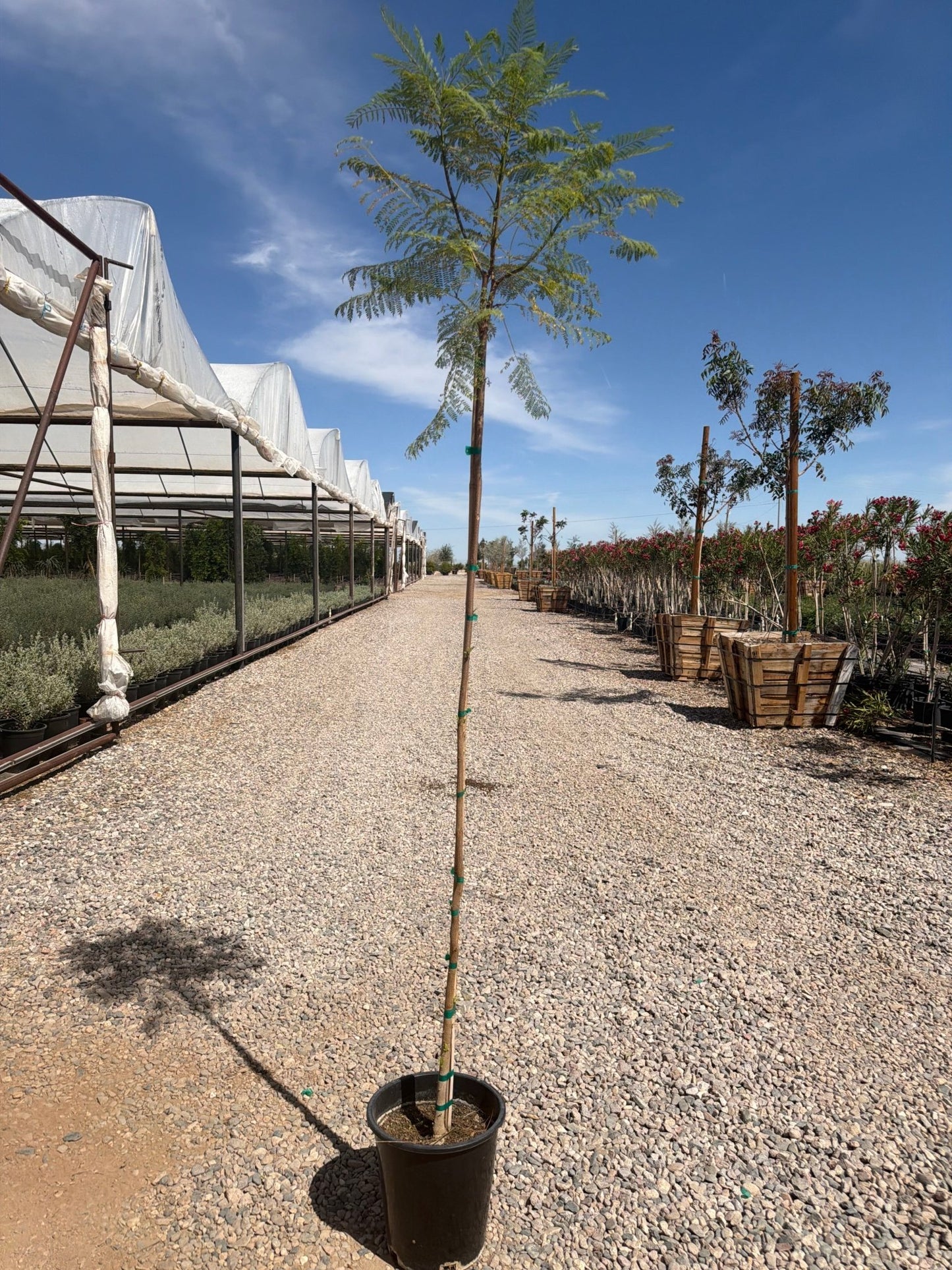
jacaranda house plant Buy Jacaranda Phoenix, AZ | Jacaranda mimosifoliaStunning Purple Blooms The Best Flowering Shade Tree for Phoenix Jacaranda Tree (Jacaranda mimosifolia) is one of the most breathtaking flowering trees you can plant in the Phoenix Valley. Known for its spectacular canopy of lavender purple trumpet shaped blooms every spring, this fast growing deciduous tree reaches 2550 feet tall and provides dappled shade through the hottest months. Whether you're creating a stunning street side canopy in
Stunning Purple Blooms — The Best Flowering Shade Tree for Phoenix
Jacaranda Tree (Jacaranda mimosifolia) is one of the most breathtaking flowering trees you can plant in the Phoenix Valley. Known for its spectacular canopy of lavender-purple trumpet-shaped blooms every spring, this fast-growing deciduous tree reaches 25–50 feet tall and provides dappled shade through the hottest months. Whether you're creating a stunning street-side canopy in Scottsdale, adding jaw-dropping spring color to a Mesa front yard, or planting a shade tree that doubles as a showpiece in Chandler — the Jacaranda Tree delivers season after season.
Jacaranda Tree Plant Details
| Attribute | Detail |
|---|---|
| Scientific Name | Jacaranda mimosifolia |
| Common Names | Jacaranda, Blue Jacaranda, Black Poui |
| Mature Height | 25–50 feet |
| Mature Width | 15–30 feet |
| Growth Rate | Fast — 3–5 feet per year in Phoenix |
| Sun | Full sun (6+ hrs). Performs best with some afternoon protection in hottest inland areas. |
| Water | Low to moderate once established. Tolerates drought but blooms best with regular deep watering. |
| USDA Zones | 9–11 (Phoenix is Zone 9b–10a) |
| Soil | Well-draining. Adapts to Arizona caliche soils with proper planting hole preparation. |
| Foliage | Deciduous — drops leaves briefly in late winter; fern-like foliage returns with blooms in spring |
| Bloom Color | Lavender-purple trumpet-shaped flowers, spring through early summer |
Jacaranda Tree Uses in Phoenix Landscapes
Statement Shade Tree
Jacaranda's broad, spreading canopy makes it one of the best shade trees for Phoenix patios, driveways, and outdoor living spaces. The fern-like foliage filters light beautifully while the spring bloom display stops traffic. Plant one as a centerpiece in a front yard or courtyard for maximum visual impact.
Street and Driveway Lining
Few trees create the dramatic effect of a row of Jacarandas in full bloom. Space them 20–25 feet apart along a driveway or property line to create a purple-canopied corridor. For a 60-foot driveway, plan on 3 trees per side. Pair with low-water groundcovers like Trailing Lantana or Yellow Bells from Three Timbers.
Color Accent for Desert Landscapes
In a landscape dominated by greens and earth tones, the Jacaranda's purple bloom is a show-stopper. Plant one near a pool, outdoor dining area, or visible from a main window to enjoy the spring color display. The flowers carpet the ground beneath the tree in a layer of purple — dramatic and easy to clean up.
Best Time to Plant Jacaranda Tree in Phoenix
Fall (October–November) is the ideal planting window. The soil stays warm enough for root establishment while cooler air temperatures reduce transplant stress. Your Jacaranda gets 6–8 months of root growth before its first Phoenix summer. Spring (February–April) is the second-best option — just plan for more frequent watering through the first summer.
How to Plant Jacaranda Tree
- Dig wide, not deep — 2–3x the root ball width, same depth as the container.
- Check for caliche — Break through any hardpan layer to ensure proper drainage.
- Backfill with native soil — A light 20% organic amendment is fine but not required.
- Spacing — 20–25 ft apart for a canopy row; 30+ ft from structures for a single specimen.
- Water basin — Build a 3–4 inch soil ring around the root zone to direct water to the roots.
- Mulch — 2–3 inches of bark or gravel mulch around the base to retain moisture and insulate roots.
Watering Jacaranda Tree in Phoenix
First Year Watering Schedule
- Weeks 1–2: Every 1–2 days, deep and slow (20–30 minutes per session)
- Months 1–2: Every 3–4 days
- Months 3–6: Every 7–10 days (every 5–7 days during peak summer)
- After Year 1: Every 10–14 days in summer; every 3–4 weeks in winter
Drip Irrigation
Place 2–4 emitters 18–24 inches from the trunk, each delivering 2–4 GPH. As the tree grows, extend the emitter ring outward to match the canopy drip line. Established Jacarandas need very little supplemental water but bloom more generously with consistent deep irrigation during spring.
How fast does a Jacaranda Tree grow in Phoenix?
Jacarandas are fast growers in the Phoenix Valley, adding 3–5 feet per year with proper watering. A 15-gallon nursery tree can reach 15+ feet within 3–4 years of planting.
When does a Jacaranda bloom in Arizona?
Jacarandas typically bloom from late April through June in the Phoenix area. The exact timing depends on winter temperatures — a mild winter often brings earlier, heavier blooms.
Can a Jacaranda handle full Phoenix summer sun?
Yes. Jacarandas thrive in full sun and handle Phoenix summers well once established. Young trees benefit from extra water during their first summer but are not heat-sensitive.
Are Jacaranda Trees messy?
Jacarandas do drop flowers and seed pods, which some homeowners consider messy. The purple flower carpet is part of the charm for most people. Regular cleanup is minimal — a leaf blower handles it in minutes.
Is Jacaranda a good pool tree?
Jacarandas work near pools if planted at least 15–20 feet away. The flowers do drop, so a pool skimmer helps during bloom season. Many Scottsdale and Paradise Valley homeowners consider the bloom display worth the minor maintenance.
You May Also Like
- Desert Museum Palo Verde — Another fast-growing shade tree with yellow spring blooms and no thorns.
- Purple Orchid Tree — A smaller flowering tree with stunning purple blooms, perfect for tighter spaces.
- Texas Redbud — A compact ornamental tree with pink spring flowers and heart-shaped leaves.
- Magnolia Tree — A lush evergreen option with large fragrant white blooms for a different look.
How Many Jacaranda Trees Do I Need?
Jacaranda is a broad, spreading shade tree (15 to 30 feet wide at maturity), so it is planted as a single specimen or in a generously spaced canopy row, not a tight hedge. For a street or driveway corridor, set trees 22 to 25 feet on center so the canopies meet without crowding. Use this guide:
| Planting Goal | Spacing & Count |
|---|---|
| Single focal specimen | 1 tree, 30+ ft from structures and pools |
| Matched front-yard pair | 2 trees, 20 ft apart |
| 50 ft driveway row | 3 trees at 22-25 ft on center |
| 100 ft canopy corridor | 5 trees at 22-25 ft on center |
Give each tree room to spread. Crowding Jacarandas shades out their lower canopy and cuts the bloom display you planted them for.
Jacaranda Season-by-Season in Phoenix
- Spring (Feb-Apr): Fern-like foliage leafs back out, and by late April the lavender-purple bloom canopy begins. This is also a good second planting window once frost danger has passed.
- Summer (May-Sep): Bloom peaks into early summer, then the tree settles into providing filtered shade through the heat. Established trees take full Valley sun; give young trees deep water and a little afternoon relief their first summer. Monsoon rain supports strong canopy growth.
- Fall (Oct-Nov): Prime planting season. Warm soil and mild air let roots establish before winter, setting up next spring's growth and flowering.
- Winter (Dec-Jan): Briefly deciduous, dropping its leaves in the coolest weeks. It is frost-sensitive: young trees can show tip damage below about 25°F, so cover small trees on hard frost nights until they are established.
At a Glance
✔ Pollinator-Friendly ✔ Drought-Tolerant ✔ Shade-Providing ✔ Low-Maintenance
Plant It With
- Desert Museum Palo Verde: thornless fast shade tree with yellow spring bloom that pairs as a companion canopy.
- Purple Orchid Tree: smaller flowering tree echoing the purple bloom in tighter spaces.
- Texas Redbud: compact ornamental with pink spring flowers for a layered bloom sequence.
- Hong Kong Orchid Tree: another showy flowering shade tree to extend the color season nearby.
Is Jacaranda Right for Your Yard?
Jacaranda thrives in full sun with room to spread, in well-draining soil where the caliche layer has been broken through at planting. It is a superb choice for a large front yard, courtyard, or driveway where you want fast filtered shade plus a spectacular spring bloom. It is not a fit for tight spaces, for planting right at the edge of a pool (it drops flowers and seed pods), or for the coldest frost-pocket yards, since young trees are frost-tender below about 25°F.
Shipping Notes
- Free Standard Shipping on $100+ Orders to the USA.
- Except Preorder products are shipped in 48 hours.
- Delivery to the USA:
- Standard Shipping : 3-10 business days
- If time is of the essence, please consider selecting expedited delivery for faster service.
Exchange/Return Notes
- We offer a 30-day return/exchange service after receiving.
- Final sale items are not eligible for returns or exchanges.
- To process your return/exchange, please contact us at [email protected]
- Please click here for more details>>> Return & Exchange Policy