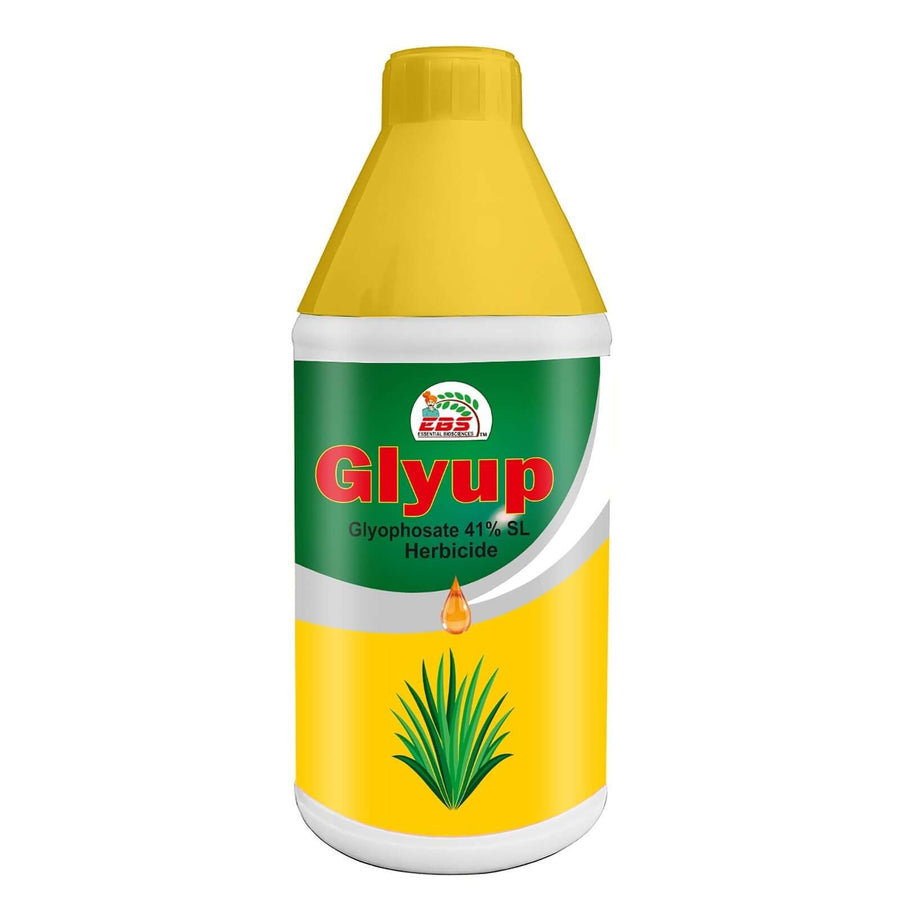
SKU: 74387492601
paraquat herbicides

paraquat herbicides Paraquat Dichloride 24% SL Herbicide

Sale price$23.67 Regular price$26.30
Save 10%

Shipping Estimate
USA
  • USA
  • CAN

Ships within 48 hours · Estimated delivery Jul 13 - Jul 18

Promo Codes Available:

For Your Every Summer RSVP, with Code: SUMMER15

Description

paraquat herbicides Paraquat Dichloride 24% SL HerbicideKrishikranti SUMAX (Paraquat Dichloride 24% SL) is a fast acting, non selective contact herbicide. It kills annual grasses, broadleaf weeds, and small weeds within 24 to 48 hours of spray. Visible wilting starts in just 2 to 3 hours. Rain fast in 15 to 30 minutes. Best for tea, rubber, cotton (pre sowing), aquatic weeds, and orchards (directed spray). Faster knockdown than glyphosate. A proven, value priced alternative to Gramoxone and Cydus. TypeNon

Krishikranti SUMAX (Paraquat Dichloride 24% SL) is a fast-acting, non-selective contact herbicide. It kills annual grasses, broadleaf weeds, and small weeds within 24 to 48 hours of spray. Visible wilting starts in just 2 to 3 hours. Rain-fast in 15 to 30 minutes. Best for tea, rubber, cotton (pre-sowing), aquatic weeds, and orchards (directed spray). Faster knockdown than glyphosate. A proven, value-priced alternative to Gramoxone and Cydus.
TypeNon-Selective Contact Herbicide
FormSoluble Liquid (24% SL)
Best ForFast Knockdown of Annual Weeds
Mode of ActionPSI Disruptor (HRAC Group D)
Visible EffectWilting in 2 – 3 Hours
Rain-Fast15 – 30 Minutes

 Benefits of Paraquat Dichloride 24% Sl

  • Fastest knockdown weedicide: Visible wilting starts in 2 – 3 hours, full kill in 24 – 48 hours  fastest action of any weedicide in India
  • Rain-fast in 15 – 30 minutes: Best choice for monsoon spraying when sudden rain is a risk
  • Wide crop approval: CIB-approved for tea, rubber, cotton, aquatic weeds, coffee, potato, apple, grapes
  • Soil-safe: Binds tightly to soil on contact  does not leach down, safe to plant new crop after 1 to 2 days
  • Inter-crop friendly: Safe directed spray in orchards and plantations  does not enter through tree bark
  • Cost-effective per acre: Lower dose than glyphosate, faster results, lower per-acre cost
  • Works in cool weather: Effective even in winter when glyphosate becomes slow

How Does SUMAX Work?

Paraquat is a contact herbicide  it works very differently from glyphosate:

  • Sprays on weed leaves: Paraquat enters the leaf surface in minutes
  • Disrupts photosynthesis (PSI): Blocks the photosystem I in the plant cell
  • Creates damaging free radicals: These oxygen radicals burst the leaf cells from inside
  • Plant dries and dies: Wilting starts in hours, full death in 24 – 48 hours

Important: Paraquat is a contact killer only  it does NOT travel to roots. Perennial weeds (Doob, Motha, Kans grass) will regrow from roots. For root-level kill on perennials, use Glyphosate 41% SL instead.

 Paraquat (SUMAX) vs Glyphosate — When to Use Which? SUMAX (Paraquat) = fast knockdown in 24 – 48 hours, rain-fast in 15 minutes, best for tea, rubber, cotton pre-sowing, aquatic weeds, and inter-crop spray where you need quick visible results. Glyphosate = slow but kills roots also, best for tough perennial weeds (Motha, Doob, Kans) and pre-sowing fields where you need full root kill. Many farmers tank-mix a low dose of glyphosate + paraquat for both fast knockdown and root kill.

SUMAX Dose Table

Use Area Dose Water Volume
Tea (general weed control)
CIB-approved
1.5 – 2.5 L/ha
(600 ml – 1 L/acre)
400 – 500 L/ha
Rubber, Coffee, Plantation (directed)
CIB-approved
2.0 – 2.5 L/ha
(800 ml – 1 L/acre)
400 – 500 L/ha
Cotton (pre-sowing field prep)
CIB-approved
1.5 – 2.5 L/ha
(600 ml – 1 L/acre)
300 – 400 L/ha
Aquatic weeds
CIB-approved
2.5 L/ha
(1 L/acre)
500 L/ha
Apple, Grapes (directed)
CIB-approved
1.5 – 2.5 L/ha
(600 ml – 1 L/acre)
500 L/ha
Potato (pre-harvest desiccation)
CIB-approved
1.5 L/ha
(600 ml/acre)
400 L/ha
Knapsack Pump (15 L) 100 – 125 ml per pump 15 L per pump
Per litre water (dosage) 6 – 8 ml per litre water
Quick Dose Reference: Per acre: 800 ml – 1 L • Per hectare: 2 – 2.5 L • Per 15 L pump: 100 – 125 ml • Per litre water: 6 – 8 ml • Water volume: 300 – 500 L/ha • Spray on sunny day for fastest action
SAFETY FIRST  Paraquat Toxicity Information (Read Carefully):

Paraquat Dichloride is a highly toxic herbicide. There is NO antidote if swallowed. Even a small amount taken by mouth can be fatal. Use with extreme care.

  • Always wear: Full sleeve shirt, long pants, rubber boots, rubber gloves, face mask, and goggles during mixing and spraying
  • Do NOT eat, drink, or smoke during spray
  • Do NOT spray against wind or in strong wind
  • Keep away from children, animals, food, and drinking water at all times
  • Wash thoroughly with soap and water after spray  bathe and change clothes
  • Store in original sealed container never transfer to soft drink bottles or other unmarked containers (most poisoning cases happen this way)
  • Lock the storage area  away from children
  • Dispose of empty container safely  never reuse

In case of accidental swallowing or poisoning: Take the person to the nearest hospital IMMEDIATELY. Carry the product label/container to show the doctor. Do NOT wait for symptoms. Paraquat poisoning is a medical emergency  every minute matters. There is no home treatment. Time is the only thing that can help.

How to Use SUMAX  Simple Steps

  1. Wear full safety gear  gloves, mask, goggles, full clothes, boots
  2. Mix the right dose in clean water (see dose table)
  3. Pour into spray pump, shake well
  4. Spray fully on weed leaves  wet them completely
  5. Spray on bright sunny day for fastest kill
  6. Avoid windy conditions  risk of drift to other crops
  7. Do not spray on crop leaves non-selective, will kill them
  8. Wash sprayer, body, and clothes thoroughly after use

Why Farmers Choose Krishikranti SUMAX

  • Fastest knockdown in the market: Wilting in 2 – 3 hours, full kill in 24 – 48 hours
  • Rain-fast in 15 – 30 minutes: Best monsoon herbicide  no spray failure due to rain
  • Soil-safe: Binds to soil immediately, plant new crop in 1 – 2 days
  • Wide crop label: Tea, rubber, cotton, coffee, apple, grapes, potato, aquatic weeds
  • Works in cool weather: Better than glyphosate in winter
  • Value alternative to Gramoxone and Cydus: Same molecule, same dose, better price

Frequently Asked Questions

Q. What is Paraquat Dichloride 24% SL used for? SUMAX (Paraquat Dichloride 24% SL) is a non-selective contact herbicide. It controls annual grasses and broadleaf weeds in tea, rubber, coffee, cotton (pre-sowing), aquatic weeds, apple, grapes, and potato (pre-harvest desiccation). Visible weed wilting in 2 to 3 hours.
Q. What is the dose of Paraquat Dichloride 24% SL per acre? The standard dose is 800 ml to 1 L per acre dissolved in 150 to 200 litres of water. For knapsack pump, mix 100 to 125 ml in 15 litres of water. Per hectare: 2 to 2.5 L.
Q. What is Paraquat Dichloride 24% SL dosage per litre of water? 6 to 8 ml of Paraquat Dichloride 24% SL per litre of water. For a 15-litre knapsack pump, this works out to 100 to 125 ml.
Q. How fast does Paraquat 24% SL kill weeds? Visible wilting starts in 2 to 3 hours after spray. Full weed death in 24 to 48 hours on a sunny day. This is the fastest weedicide action available in the Indian market.
Q. Is Paraquat 24% SL safe for crops? No. Paraquat is non-selective  it kills any green plant it touches. Use only as directed spray in orchards and plantations (do not touch crop leaves), or before sowing the main crop. Safe to plant new crop 1 to 2 days after spray.
Q. Paraquat vs Glyphosate  which is better? Paraquat is faster (24 – 48 hours vs 14 – 21 days) but does not kill roots. Glyphosate is slower but kills roots and rhizomes  better for perennial weeds. Use paraquat for fast knockdown of annual weeds. Use glyphosate for tough perennials like Motha, Doob, Kans.
Q. SUMAX vs Cydus Paraquat Dichloride 24% SL  what is the difference? Both contain the same active ingredient: Paraquat Dichloride 24% SL. Cydus (UPL) is a well-known brand. Krishikranti SUMAX offers the same molecule, same efficacy, same CIB-approved dose at better farmer value.
Q. What is Paraquat Dichloride 24% SL poisoning? How to handle it? Paraquat is highly toxic if swallowed  even a small amount can be fatal. There is no antidote. If anyone accidentally swallows or has serious exposure, take them to the nearest hospital IMMEDIATELY and carry the product container/label to show the doctor. Do not wait for symptoms. To prevent poisoning: always store in the original sealed container, lock away from children, wear full protective gear during use, never transfer to drink bottles, and wash thoroughly after spraying.
Q. Is Paraquat banned in India? No. Paraquat Dichloride 24% SL is approved and registered with CIB & RC in India for use in tea, rubber, coffee, cotton, aquatic weeds, apple, grapes, and potato. However, it is restricted-use in many countries due to high toxicity. Indian farmers must use it strictly per CIB-approved crops and with full safety precautions.
Q. Is SUMAX rain-fast? Yes. SUMAX is rain-fast within 15 to 30 minutes of spray  the fastest rain-fast time of any herbicide in India. This makes it the best choice for monsoon spraying when sudden rain is a risk.
Shipping Notes
  • Free Standard Shipping on $100+ Orders to the USA.
  • Except Preorder products are shipped in 48 hours.
  • Delivery to the USA:
  1. Standard Shipping : 3-10 business days
  • If time is of the essence, please consider selecting expedited delivery for faster service.
Exchange/Return Notes
  • We offer a 30-day return/exchange service after receiving.
  • Final sale items are not eligible for returns or exchanges.
  • To process your return/exchange, please contact us at [email protected]
  • Please click here for more details>>> Return & Exchange Policy
SKU: 74387492601

Discover Niche Categories That Outsell paraquat herbicides

Top-Converting Item to Boost Your Average Order

4.1 ★★★★★
Based on 258 reviews
Sort
Highest Rating
Newest First
Oldest First
Product Reviews
T
Verified Purchase
TH
Battle Creek, US
★★★★★ 5
The destruction of racism
Format: Paperback
This is a very open and candid view of racism in the early 19th century
WAS THIS REVIEW HELPFUL?YesReportShare
Reviewed in the United States on May 22, 2026
B
Verified Purchase
Benguet Bill
Draper, US
★★★★★ 5
good read
Format: Paperback
classic work on imperialism
WAS THIS REVIEW HELPFUL?YesReportShare
Reviewed in the United States on January 11, 2026
A
Verified Purchase
A. Kassahun
Dallas, US
★★★★★ 5
Must read book on African colonial sociology and politics
Fanon describes the character of (European) colonialists, the colonised Africans (the "masses" - rural and urban, the elites, the nationalists, the tribalists) wonderfully. The book is wonderfully written - Fanon must have been a good writer. Fanon is a psychiatrist, and worked in Algeria as psychiatrist, but he many have travelled other African countries too. His book shows his deep knowledge of both African and European sociology, psychology and politics. The book is still relevant; his analysis as to what will happen after the liberation of African countries is amazingly valid. He is in a way one of the most important African (though he is born in Latin America) sociologist and political scientist. Fanon's book starts on "violence", he doesn't shy away from prescribing violence in the struggle for liberation. Some find Fanon advocating violence, but that is not the case. He puts in perspective the violence perpetrated by colonists against the resulting reaction that culminates in the violence of the colonised. His clear analysis demystifies the violence that still grips Africa. Unfortunately Fanon seems to put all European in Africa as colonists. Many cases from South Africa show that that should not be the case. But his views may be due to the brutal repression he has to witness and experience in Algeria by the French government and French citizens there.
WAS THIS REVIEW HELPFUL?YesReportShare
Reviewed in the United States on March 13, 2010
R
Verified Purchase
Roman P.
New York, US
★★★★★ 5
Colonialism not dead yet
This is a review of the 2004 Grove paperback edition of Frantz Fanon’s The Wretched of the Earth The Wretched of the Earth is the most famous work of Algerian revolutionary Franz Fanon (1925-1961) finished and published shortly before his death (he died of leukemia). Fanon is known above all as a theorist of revolutionary violence and a champion of its therapeutic good for the oppressed. However, this book is not about armed struggle only; it covers many other topics: theory of class conflict in colonies, revolutionary process and subjects of social change in the Third World, the future of new independent states (former colonies), strategies of building Third World—First World relations in a right way, the relationship between the struggle for national culture and national liberation struggles, consequences of colonialism for both the colonizer and the colonized, etc. It’s a book of an angry man; the author's revolutionary pathos and standing with the oppressed (‘the wretched of the earth’) are noticeable. Though Fanon wrote his book drawing on the experience of the Africa of the 1950s an acute reader can easily notice similarities and parallels with what’s going on in the underdeveloped countries all over the world. The book can be of particular use for anthropologists, historians, philosophers, sociologists, as well as for those interested in cultural studies. I prefer Richard Philcox’s translation to the one published in 1963. Citizens of the global South can skip Jean-Paul Sartre’s preface; let the author speak for himself.
WAS THIS REVIEW HELPFUL?YesReportShare
Reviewed in the United States on September 17, 2019
R
Verified Purchase
R. Schwenk
Whiting, US
★★★★★ 4
Influential and Insightful
Frantz Fanon's The Wretched of the Earth is an important document in the history of imperialism capturing the state of the Algerian revolution and the struggle for independence in the Third World at a crucial time. The year was 1961, and the book was published just before Fanon's premature death. Algeria was a year away from independence. The Congo had just achieved a travesty of independence. The Cuban revolution was still fresh. Fanon was born in Martinique but was fully committed to the Algerian cause by the end of his life. His insights into the pitfalls threatening newly-independent nations have proved to be uncannily accurate. His voice is of his time and ahead of his time. I would recommend this book to those wanting to learn more about the Algerian War and to those curious about the huge effect of this book on the leftists of the 1960s.
WAS THIS REVIEW HELPFUL?YesReportShare
Reviewed in the United States on September 28, 2013

recommand products