SKU: 72922758788
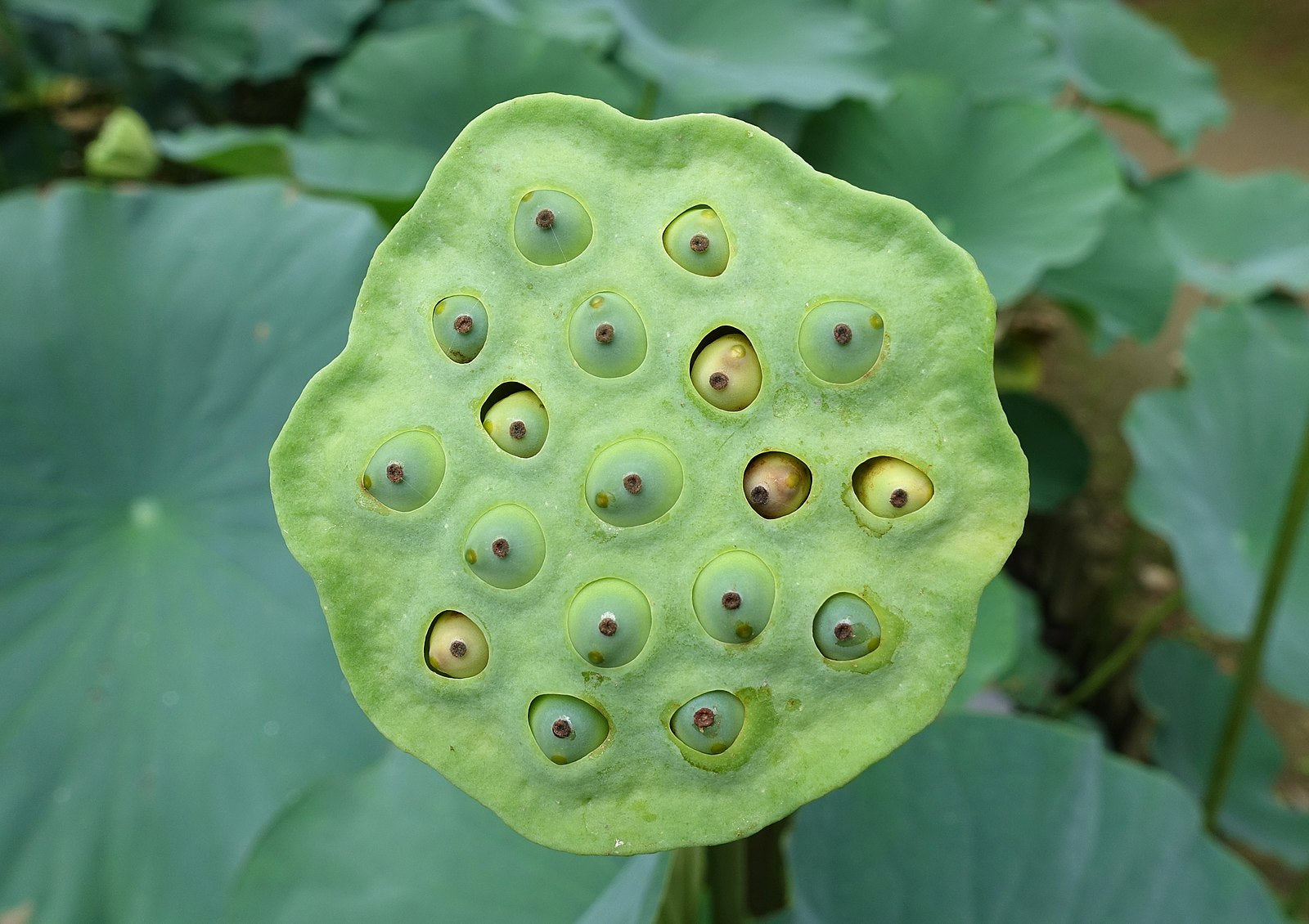
plant lotus seeds

plant lotus seeds Sacred Lotus – Experimental Farm Network Seed Store

Sale price$23.15 Regular price$25.72
Save 10%

Pay in installments of $6.43 with ShopPay, AfterPay and Klarna

Shipping Estimate
USA
  • USA
  • CAN

Ships within 48 hours · Estimated delivery Jul 21 - Jul 26

Promo Codes Available:

For Your Every Summer RSVP, with Code: SUMMER15

Description

plant lotus seeds Sacred Lotus – Experimental Farm Network Seed StoreNelumbo nucifera Origin: India Improvement status: Unknown Seeds per packet: ~10 BOTANICAL SAMPLE NOT GERMINATION TESTED Life cycle: Perennial Sacred lotus, also called Laxmi lotus, Indian lotus, or just lotus, is a spectacular aquatic perennial often cultivated for its serene beauty, but it is also a nutritional powerhouse with delicious and enormous roots and seeds. The leaves, stems, and flowers are also consumed, though to a lesser extent. Seeds

Nelumbo nucifera

Origin: India

Improvement status: Unknown

Seeds per packet: ~10

BOTANICAL SAMPLE - NOT GERMINATION TESTED

Life cycle: Perennial

Sacred lotus, also called Laxmi lotus, Indian lotus, or just lotus, is a spectacular aquatic perennial often cultivated for its serene beauty, but it is also a nutritional powerhouse with delicious and enormous roots and seeds. The leaves, stems, and flowers are also consumed, though to a lesser extent. Seeds can remain viable for an unbelievably long time — one seed from a dry lakebed in China germinated at the age of 1,300 years! — so many Chinese people consider it a symbol of longevity. It also has the rare capability (among plants) of regulating the temperature of its flowers within a narrow range. One study in Australia found that lotus flowers maintained a temperature of 86-95 °F even as the surrounding air temperature dropped to 50 degrees! Scientists suspect this trait may have evolved to attract cold-blooded insect pollinators (the eastern North American native skunk cabbage is one of few other plants with a similar thermoregulatory ability).

Humans have cultivated sacred lotus for its edible seeds and roots for at least 3,000 years, and cultivars have been developed specifically for seed production, rhizome production, and beauty, so there's a huge amount of diversity across the species. Some ornamental varieties have been bred to have thousands of petals per flower (in fact, one Japanese variety called "ohmi myoren," which means "strange lotus," can have up to 5,000 petals, a world record for any flower). As of 2005, China had 740,000 acres of lotus production, most of it taking place in managed farming systems with ponds or flooded paddies, as with rice. It is often grown in rotation with rice and vegetables, or cultivated with a form of aquaculture in which aquatic animals like fish, shrimp, crayfish, or crabs, are also produced, an efficient use of water and a good way to fertilize the lotus plants.

A unique and fine fabric called lotus silk can be made from the plant's fibers, but this is only done on a large scale at Inle Lake in Burma and at Siem Reap in Cambodia. A weaver near Hanoi, Vietnam, introduced the practice there in 2017. The thread is used for weaving special monastic robes for Buddhist statuary. It's believed the lotus silk weaving practice was invented by an ethnic Intha woman named Sa Oo in the Burmese village of Kyaingkhan in the early 1900s. While the practice went briefly extinct with her death, relatives Tun Yee and Ohn Kyi revived it and started a cooperative to modernize and systematize the tiny industry.

The species has a massive range, believed to be due at least in part to historic human introductions, but it is nevertheless considered native to these areas at this point. It is found in India and Sri Lanka, across East Asia north to Russia's Amur region, and across Southeast Asia to New Guinea as well as eastern Australia; there are even isolated populations around the Caspian Sea. While often confused with water lilies (Nymphaeaceae), it is a distinct family (Nelumbonaceae) with only one other extant member, Nelumbo lutea, which is a smaller, yellow-flowering species native to North America (it was once widely used by indigenous people as a food source, and is believed to have spread similarly, but there seems to have been less domestication or selection for larger seed size and root size, unlike in Nelumbo nucifera).

There's so much more to say about this miraculous plant, but we'll leave it to you to do your own research. Suffice it to say: this is one extraordinary being.

Our seed was imported from India by the good folks at Sheffield's Seed Company in Locke, NY.

GROWING NOTES: The crowd-writers of Wikipedia have done an excellent job summarizing some key information about sacred lotus cultivation, which we will reproduce below. The one key fact it doesn't mention is that when attempting to start seed, you'll need to carefully file through the seed coat so water can reach the seed. Soak in warm water, changing the water twice a day, and continuing this until the seed begins to sprout. Sow in pots 1/2" deep and then submerge completely in fresh water, Allow water to just cover the pod, and raise water level as the plants grow. Change water often to ensure it doesn't go stagnant.

From Wikipedia:

The sacred lotus grows in water up to 2.5 m (8 ft) deep. The minimum water depth is about 30 cm (12 in). In colder climates, such a low water level, which heats up more quickly, is helpful for better growth and flowering. Lotus germinates at temperatures above 13 °C (55 °F). Most varieties are not cold-hardy [though some are hardy down to USDA Zone 5!]. In the growing season from April to September (northern hemisphere), the average daytime temperature needed is 23 to 27 °C (73 to 81 °F). In regions with low light levels in winter, the sacred lotus has a period of dormancy. The tubers are not cold-resistant but can resist temperatures below 0 °C (32 °F) if they are covered with an insulating cover of water or soil. During winter time, the roots have to be stored at a frost-free place.

The sacred lotus requires a nutrient-rich loamy soil. In the beginning of the summer period (from March until May in the northern hemisphere), a small part of rhizome with at least one eye is either planted in ponds or directly into a flooded field. There are several other propagation ways via seeds or buds. Furthermore, tissue culture is a promising propagation method for the future to produce high volumes of uniform, true-to-type, disease-free materials.

The first step of the cultivation is to plough the dry field. One round of manure is applied after ten days, before flooding the field. To support a quick initial growth, the water level is relatively low and increases when plants grow. Then a maximum of approximately 4,000 per hectare (1,600/acre) with grid spacing of 1.2 by 2 metres (3 ft 11 in × 6 ft 7 in) are used to plant directly into the mud 10–15 cm (3+7⁄8–5+7⁄8 in) below the soil surface.

The stolon is ready to harvest two to three months after planting. It must be harvested before flowering. Harvesting the stolon is done by manual labor. For this step, the field is not drained. The stolon is pulled out of the water by pulling and shaking the young leaves in the shallow water.

The first leaves and flowers can be harvested three months after planting. Flowers can be picked every two days during summer and every three days during the colder season. Four months after planting, the production of flowers has its climax. The harvest of flowers is usually done by hand for three to four months.

Seeds and seed pods can be harvested when they turn black four to eight months after planting. After sun drying for two to three days, they are processed by mechanical tools to separate seed coats and embryos.

The rhizomes mature to a suitable stage for eating in approximately six to nine months. Early varieties are harvested in July until September and late varieties from October until March, after the ponds or fields are drained. The large, starch rich rhizomes are easy to dig out of the drained soil. In small-scale production, they are harvested by hand using fork-like tools. In Japan and on bigger farms manual labour harvesting is fully replaced by machines.


Shipping Notes
  • Free Standard Shipping on $100+ Orders to the USA.
  • Except Preorder products are shipped in 48 hours.
  • Delivery to the USA:
  1. Standard Shipping : 3-10 business days
  • If time is of the essence, please consider selecting expedited delivery for faster service.
Exchange/Return Notes
  • We offer a 30-day return/exchange service after receiving.
  • Final sale items are not eligible for returns or exchanges.
  • To process your return/exchange, please contact us at [email protected]
  • Please click here for more details>>> Return & Exchange Policy
SKU: 72922758788

Discover Niche Categories That Outsell plant lotus seeds

Top-Converting Item to Boost Your Average Order

4.1 ★★★★★
Based on 13 reviews
Sort
Highest Rating
Newest First
Oldest First
Product Reviews
A
Verified Purchase
Amazon Customer
Waukegan, US
★★★★★ 5
Craigslist
Format: Kindle
This story brings love and part together and create something out of the ordinary. It shows the love for the world and how the world can bring two people close. I really think it shows that our future will be better. I would definitely read this book if you are into romance and New York City. Maybe this can happen to you!
WAS THIS REVIEW HELPFUL?YesReportShare
Reviewed in the United States on May 26, 2026
E
Verified Purchase
Ethan
Lowell, US
★★★★★ 5
"I just think you're meant to meet some people. I think the universe nudges them into your path."
Format: Hardcover, Format: Hardcover
There is something magical about this time of year. I spent the last couple of days eating way too much food, shopping for gifts, and decorating the house for the holidays. And though this year required us to do things differently than we have in years past, those holiday traditions still bring the same amount of magic that they always have. One of my favorite things to do this time of year is to curl up next to the fire with a good book. The Texas weather finally brought us winter this weekend, so I decided to take full advantage and finish reading What If It's Us. This cute love story was the perfect way to kick off the holiday season. Arthur is soaking up every moment of his summer internship in New York. The soon-to-be high school senior is completely committed to taking in all of the sights and sounds of the city life, even if that means neglecting the duties of his job. Today though, his internship has sent him on a mission that allows him to fulfill both of his desires. Today, he's been tasked with dropping off work documents at the post office. Yes, this is just a simple errand, but the city is ripe with adventure and opportunity. Ben is at the post office for an entirely different reason. He's got a box full of stuff that belongs to his ex-boyfriend. The breakup is still so fresh and difficult that Ben can't bear to even see his ex. Having all of this stuff that reminds him of the relationship isn't helping either. It makes sense to just mail it all back to him and rid himself of that part of his life for good. As you can imagine, fate has other plans. Ben and Arthur meet in line at the post office and have a really cute conversation. The spark between the two is undeniable, but then they are separated. Was this just a chance encounter meant to fill that small moment of time, or is this something more? You'll have to read to find out. I was so drawn into the story and characters that it is almost impossible for me to objectively comment on this book. In What If It's Us co-authors Becky Albertalli (of Simon vs the Homo Sapiens Agenda fame) and Adam Silvera deliver the kind of meet-cute YA romance that you'll have a hard time putting down. I don't normally read this genre, so I was a bit apprehensive at first. As I started reading, I couldn't help but find little pieces of myself in each of the characters. There's something about navigating the final years as a teenager that is universally relatable. Take away the fact that the main characters are gay (this story could have been equally effective with a heterosexual couple), and you are still left with a story that is just too compelling to not read. Is this a great work of literature that will be touted for its prose and structure? Of course not. But there's so much about What If It's Us to like about that you won't mind the little things that would normally detract from a novel. A sequel has recently been announced, and I really can't wait to read more about these characters.
WAS THIS REVIEW HELPFUL?YesReportShare
Reviewed in the United States on November 30, 2020
B
Verified Purchase
Berto C
Whiting, US
★★★★★ 3
Felt like Harry Potter was shoved into my face way tooo much.
Format: Hardcover
3.5/5 Sigh, I really wanted to love this book but there were just many aspects that I did not like. The story itself is really cute. I honestly was so close to loving this book! The good: I love the representation is this book! Ben is a gay 17 year old Puerto Rican. He does not do school, and he just recently got his heart broken. Arthur is a gay 16-17 year old Jewish teenager who has ADHD and is new to the whole dating thing. The side characters were so lovable, more than one of the protagonist.. I would honestly say that Dylan is one of my top favorite characters! I would honestly love a spin-off about him. I love that they brought up topic that are not usually brought up in LGBT lit. Such as: first time sex, dealing with exes, being nervous to be in a relationship, etc. The overall story was cute and quirky. The bad: I felt like Harry Potter was being shoved down my throat! This is honestly one of the main reasons why I did not like this story that much. I honestly do not care about HP. There was seriously a HP reference in every chapter. It. Was. Overkill. The love story felt really dramatic and desperate, it was stalkerish and even the characters mention it. Like Arthur just met Ben a few seconds ago, Arthur sneaked off on him and he was devastated because he'll "never get to kiss him on his Emma Watson mouth." I totally understand that Arthur has ADHD but his character was somewhat annoying and desperate. He needed for everyone to like him. And the ending.. I did not like the ending at all. I seriously wanted them to make it work but they didn't.. They deserved the world! All in all, I loved the story, I loved the romance, I loved the characters. But the stuff I did not enjoy really impacted how I felt about the story at the end.
WAS THIS REVIEW HELPFUL?YesReportShare
Reviewed in the United States on January 2, 2019
A
Verified Purchase
Amber Garabrandt
Lexington, US
★★★★★ 5
I loved this book!!
Format: Kindle
I have a love/ hate relationship with Albertalli. I really liked Simon VS The Homo Sapiens Agenda and The Upside of Unrequited with their adorable characters and charming/ hilarious/ sometimes heartbreaking plots. I soared through these books and would recommend them to anyone- especially John Green fans. Then there was Leah On the Off Beat, which mostly angered me. I didn’t like her, or the way she acted toward her friends, how the love interest played itself out…. the book just pissed me off most of the time, with just barely enough good to keep me moving forward. What If It’s Us Brings out the best of this author- maybe due to the collab? The characters are purely magical even as they are each incredibly messy and neurotic in their own ways. I think it’s their imperfections that made them so fabulous. The premise was fantastic, the play between characters was perfect, and you saw a lot of character growth which is always a plus for me. My favorite character was definitely Dylan, the over the top best friend. I felt like he was the perfect foil for Ben. For me, this was the best book of the author’s to date. I loved it! My only objection, and it’s purely personal, I felt like the ending was too open. I want closure! And I want it to be EPIC. Still, five stars all the way. On the adult content scale, there’s some language, drinking, sexual innuendo and light sexual content. It’s not too crazy, and I would still give this one to a youngish teen. I give it a three.
WAS THIS REVIEW HELPFUL?YesReportShare
Reviewed in the United States on October 16, 2018
T
Verified Purchase
Thebookbella
Chelsea, US
★★★★★ 4
A very fluffy read.
Format: Hardcover
3.5* This story is told from alternating perspectives, Arthur (who had ADHD) and Ben (who is Puerto Rican). Arthur is spending the summer in New York as an intern for his mother's law firm when he follows a very handsome boy (Ben) into the post office. Ben is trying to mail a box full of his ex-boyfriends stuff when he meets Arthur. Ben gets Arthur's name but Arthur doesn't get Ben's name and so when a flash mob breaks out at the post office, they get separated. The first 150 pages of this book is how Ben and Arthur are trying to find each other in the big city. So this book was a bit slow to start. But when they do finally meet up this dosen't become an instalove kind of thing. They do ease into. Being a collaborative effort between Becky Abertalli and Adam Silvera, I wasn't sure if this was going to rip my heart out or give me warm fuzzies, but truthfully it was a great blend of both. It had a lot of bittersweet moments mixed with moments that were just sweet. Having read a few other books by these authors, I was sorry to see that this didn't feel like it had the same kind of depth that "Simon Versus the Homosapian Agenda" and "They Both Die At the End" had. I felt like those two books had a lot more depth to them and a bit more deep emotionality and not just a ton of surface level fluffiness. The vast majority of "What If It's Us" was a lot of surface level fluffiness and I did not find myself loving this as much as the other two previously mention books I read by them. Overall this book was cute and enjoyable, but the characters felt a bit flat to me.
WAS THIS REVIEW HELPFUL?YesReportShare
Reviewed in the United States on October 14, 2018

recommand products