SKU: 68306099136
lowe's succulent pots

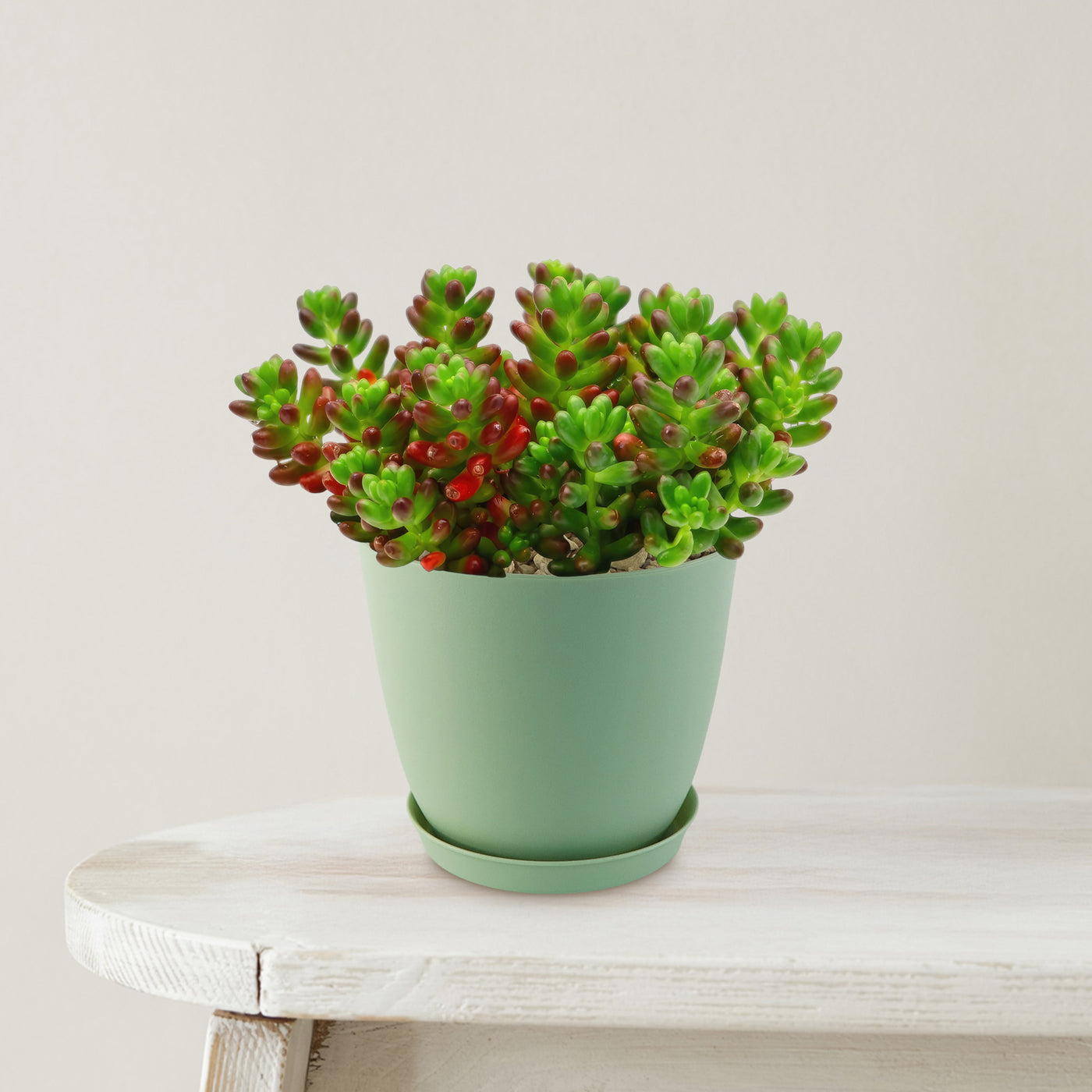
lowe's succulent pots Jelly Bean Succulent 'Sedum rubrotinctum' 6" Pot / Light Green / With Pot

Sale price$18.49 Regular price$20.54
Save 10%

Shipping Estimate
USA
  • USA
  • CAN

Ships within 48 hours · Estimated delivery Jul 9 - Jul 14

Promo Codes Available:

For Your Every Summer RSVP, with Code: SUMMER15

Description

lowe's succulent pots Jelly Bean Succulent 'Sedum rubrotinctum' 6" Pot / Light Green / With PotIntroducing the Jelly Bean Plant, botanically known as Sedum rubrotinctum, is a charming, low growing succulent admired for its colorful, bead like foliage. Its cascading stems make it an excellent choice for hanging baskets, window boxes, and container arrangements, where its colorful foliage can spill over the edges beautifully. Native to Mexico, this evergreen perennial is commonly called pork and beans or banana cactus due to its plump, jelly bean

Introducing the Jelly Bean Plant, botanically known as Sedum rubrotinctum, is a charming, low-growing succulent admired for its colorful, bead-like foliage. Its cascading stems make it an excellent choice for hanging baskets, window boxes, and container arrangements, where its colorful foliage can spill over the edges beautifully.

Native to Mexico, this evergreen perennial is commonly called pork and beans or banana cactus due to its plump, jelly bean-shaped leaves that give it a playful and unique appearance.

This hybrid jelly bean succulent has small, fleshy leaves that start out green but develop vibrant shades of red, orange, or bronze when exposed to bright sunlight, making it a standout in any succulent collection.

It is often used as a ground cover in rock gardens or featured in decorative containers and dish gardens.

As the plant matures, Sedum rubrotinctum typically reaches about 8 inches tall and up to 24 inches wide, forming a spreading, trailing habit.

Jelly bean succulent flowers are yellow, small, and star-shaped, blooming in clusters at the tips of their stems.

While the blooms are subtle, they provide a delicate contrast to the bold foliage and usually appear in spring to early summer.

Related Product

What truly makes the jelly bean succulent so popular is its combination of low-maintenance care and vibrant color transformation. It is drought-tolerant, easy to grow, and adapts well to both indoor and outdoor environments with proper light. Its ability to change color with sunlight adds dynamic beauty throughout the year.

When and How to Water Your Sedum rubrotinctum Plant

This jelly bean succulent is highly drought-tolerant and prefers drying out between waterings, making it more resilient to underwatering than overwatering.

The Sedum rubrotinctum should be watered once every 1-2 weeks during the growing season, with light soaking and minimal watering once every 3-4 weeks during the dormant season, with very light moisture.

During the active growing season, allow the soil to dry out completely between waterings. This helps prevent overwatering, which can cause the Sedum rubrotinctum roots to rot.

During the dormant season, your jelly bean requires even less water. It's important to remember that succulents like the jelly bean plant are more tolerant of underwatering than overwatering.

Light Requirements - Where to Place Your Jelly Bean Succulent

When growing indoors, you can grow it in the areas where it can receive atleast at least 6 hours of bright, direct light to maintain their vibrant red coloring and compact, healthy growth. 

Place it near a window that receives plenty of sunlight, but make sure to protect your jelly bean plants from direct exposure to intense sunlight, especially during the hottest parts of the day.

A south or west facing window works best, but protect it from harsh midday sun. If natural light is limited, you can use grow lights. 

When growing outdoors, it loves basking in the full sun, so find a location in your garden or patio that receives at least 6 hours of direct sunlight each day. 

When grown in direct sunlight, the color ranges from bright green leaves to red-tipped leaves, with the brightest hues.  However, it's important to note that the jelly bean plant can also tolerate partially shaded areas, especially in regions with intense summer heat. 

Newly purchased jelly bean succulent may burn if placed in full sun right away, so increase exposure gradually.

  1. If the leaves stretch or turn pale, it needs more light.
  2. If they become scorched or develop brown spots, it is getting too much sun.

Optimal Soil & Fertilizer Needs 

The Sedum rubrotinctum favors very airy, sandy soil that drains well, and NPK fertilizers once a year in spring. Planting your Sedum rubrotinctum in ordinary wet soil will result in compacted roots, stunted growth, and, most likely, root rot. Instead, make or buy a well-draining potting mix, or ideally, use our Go to Soil cactus mix blend 1 gal 4 qt cacti succulent dirt compost growing media that contains organic mycorrhizae to promote the development of a strong root system that helps your jelly bean plants and other succulents to thrive. 

A balanced, low-strength fertilizer works best for your Jelly bean succulent plant, ideally with an NPK ratio around 5-10-5, where phosphorus is slightly higher than nitrogen to support healthy growth. Apply fertilizer once in spring at the start of the growing season to give it a gentle boost to support stronger roots and better nutrient absorption. 

Hardiness Zones & More 

In the United States, this jelly bean succulent is mostly an indoor plant, but if you live in southern Florida or Hawaii, then you can cultivate it outdoors in USDA zones 9-11.

If you live in a colder climate, it's best to bring the jelly bean plant indoors or provide some protection during the winter months.

As for humidity, the jelly bean plant can handle a range of humidity levels, from drier to more humid environments. Just ensure that the soil has good drainage to prevent waterlogged conditions. 

How to Grow as a Houseplant 

Your jelly bean succulent grows best indoors in temperatures between 60°F and 75°F. It can tolerate slightly cooler temperatures during the winter months, but it's best to keep it away from drafts or extreme temperature fluctuations. As for humidity, the Sedum rubrotinctum jelly bean plant can handle average indoor humidity levels, so you don't need to worry too much about providing extra humidity. Just make sure the air isn't too dry, especially during the winter when indoor heating can cause dryness. 

Wildlife - Jelly Bean Succulent Flowers Attract the Following Friendly Pollinators 

Jelly Bean Succulent 'Sedum rubrotinctum' can attract friendly pollinators such as bees, butterflies, hummingbirds, and other beneficial insects. These pollinators play a crucial role in the ecosystem by aiding in the reproduction of plants and ensuring biodiversity.

Butterflies
Bees
Hummingbirds
Lady Bugs
Multi Pollinators
Other Birds

According to ASPCA, the Sedum rubrotinctum is mildly toxic to humans or pets if ingested in large amounts. However, it is safe to touch and handle, making it a popular choice for indoor gardens or landscaping due to its vibrant colors and low maintenance requirements.

How to Propagate Your Sedum rubrotinctum Plant 

To propagate your jelly bean plants, stem or leaf cuttings can be used. Both are simple and have a high success rate. Keep the cutting in a spot with bright, indirect light instead of direct sunlight, and give it some time until you begin to see new growth. 

Key Takeaways

  1. Jelly bean succulents are low-maintenance and drought-tolerant. They prefer infrequent watering and can handle dry conditions better than excess moisture, making them beginner-friendly plants.
  2. 'Sedum rubrotinctum' is known as pork and beans succulent or banana cactus, because of their jelly bean-shaped leaves.
  3. These succulents thrive in airy, sandy soil, and keeping roots from sitting in moisture is key to maintaining plant health.
  4. Jelly bean succulents' leaves shift from green to vibrant red or bronze, in bright sunlight.

Final Thoughts

Overall, the jelly bean succulents (Sedum rubrotinctumm) are captivating succulents with their bean-shaped leaves and trailing growth habit. With their vibrant green foliage and occasional bursts of colorful flowers, they add a touch of whimsy to any space. A succulent tends to live for many years and grows slowly. Plant them in the spring after the weather warms up. Propagating these succulents is relatively easy, whether through stem cuttings or fallen leaves. Jelly bean succulents are a delightful addition to any succulent collection, bringing charm and beauty to both indoor and outdoor settings. If you're looking for a unique and low-maintenance plant, the jelly bean succulent is definitely worth considering!

Don't miss out on this opportunity to add something truly exceptional to your garden. Order your very own jelly bean Sedum rubrotinctum today!
Shipping Notes
  • Free Standard Shipping on $100+ Orders to the USA.
  • Except Preorder products are shipped in 48 hours.
  • Delivery to the USA:
  1. Standard Shipping : 3-10 business days
  • If time is of the essence, please consider selecting expedited delivery for faster service.
Exchange/Return Notes
  • We offer a 30-day return/exchange service after receiving.
  • Final sale items are not eligible for returns or exchanges.
  • To process your return/exchange, please contact us at [email protected]
  • Please click here for more details>>> Return & Exchange Policy
SKU: 68306099136

Discover Niche Categories That Outsell lowe's succulent pots

Top-Converting Item to Boost Your Average Order

4.2 ★★★★★
Based on 561 reviews
Sort
Highest Rating
Newest First
Oldest First
Product Reviews
K
Verified Purchase
Kweagle
Houston, US
★★★★★ 4
I was glad I bought it until four or five months later...
Color: Black
I am now about a week and a half into using this keyboard. It is the first time I have used an ergonomic split keyboard. I am a medical transcriptionist and type for a living. At first I found it awkward, I kept reaching too far for some keys, and it seemed that I was always missing the right-sided home row by one key. Now I find that I'm not thinking about the keyboard at all, which means it is working well for me. I find the key "touch" to be a little on the firm side, which means that I occasionally miss a letter because I didn't push hard enough, but I think over time I will adjust to that, too. This keyboard does not "click" when you type, which means it is generally quiet. Personally, I prefer the clicking, but for work, I wear a headset and don't hear the keyboard at all, so this is not an issue. Of course, with the need to press the keys harder, there is more thumping than I think I would normally hear when I type. As far as the alignment, it seems excellent. I have rheumatoid arthritis, which is well controlled, but I still have some stiffness and loss of range of motion in my fingers and wrists, and the angles of the keyboard seem to be perfect for me, and I don't feel as much strain as I used to in my wrists after working all day. There is one thing I wish was included, and that is a lighted keyboard. I have never had one, but I have worn the letters off the keys of several keyboards, plus it would just be helpful to be able to see the keys more easily for those times when you don't have bright light or so your eyes don't have to adjust to dim lighting after staring at your bright monitor screen for a long period of time. After less than two weeks, I can already see shiny spots on the space bar and some of the most-used keys, so I know the letters will start wearing off soon. Not a big deal, but a lighted keyboard would be a really nice feature, perhaps an option that could be offered in the future. If you are considering this type of keyboard, I think it is worth the minor aggravation of needing some time to get used to it. My impression is that my hands and wrists will be thankful I made this purchase. UPDATE JULY 22, 2015: The keyboard started acting strangely yesterday morning, some keys not working at all, some keys creating the wrong letter or digit, and the period key seemed to be stuck. I tried to file a claim using the extended warranty, but because it was still under the manufacturer's warranty, they told me to contact Microsoft, and they gave me the wrong phone number for Microsoft. Microsoft wanted the keyboard to be shipped back to them in California, and they would send a replacement AFTER they received this one. I use the keyboard for work, and I don't have a week or more to wait for a replacement. I asked for my money back, which they agreed to do, BUT they then sent me on a wild goose chase trying to make that happen. It seemed that no one with Microsoft had any idea of how to help me and they didn't seem interested at all in helping me, although one person I spoke to at one of the wrong numbers I was given was very kind and helpful in spite of my anger and frustration (thanks, Sachin!), but he couldn't help me either, and he said I needed to contact Amazon. This was definitely NOT Amazon's problem, but you know what? They made it right. No arguments, no questions, no lengthy explanations, no making me feel like I was trying to take advantage of them. I asked for their help, and they apologized for the troubles I had experienced and sent a new keyboard. I have heard people complain about Amazon, but as far as I'm concerned, they are AWESOME. Microsoft and Square Trade Warranties not so much. This keyboard should have lasted longer than a few months, and Microsoft's customer service was horrible when I needed help, so when I have to purchase another keyboard, I probably won't buy another Microsoft product. That said, I have been very happy with the layout of the keyboard and I wish it hadn't malfunctioned so quickly.
WAS THIS REVIEW HELPFUL?YesReportShare
Reviewed in the United States on March 25, 2015
I
Verified Purchase
Infinity
Alexandria, US
★★★★★ 5
Wonderful keyboard, VERYuseful programmable buttons aplenty. Only problem: Intermittent connectivity problem with wireless unit.
Color: Black
I really love this keyboard, having used "ergonomic" keyboards for a great many years now, and using nothing else. The design is really nice, with the split keyboard being an increasingly rare thing to find these days. Almost no models made by anyone offer such a design, but even if there was more competition of this type, I still think this keyboard is great. The programmable buttons (MANY of them) are a huge plus. You can program most of them to do all kinds of things, including opening often-used documents or websites for you, or running macros you write. The buttons that are intended for specific purposes, though, are so well thought-out that I leave most of the button assignments as they are. For example, the buttons dedicated for increasing, decreasing, or muting the speaker/headphone volume are VERY useful very often. And the calculator button also gets a lot of use. Others are the same: very well-thought-out standard assignments doing things I do often (and that presumably most people do often), and once you get used to the fact that now you have a button that does what you want (at first, you'll do it the slower way requiring many more button presses &/or mouse pointer clicks), this keyboards full functionality really shines through for you, and you can't imagine how you could use anything else! The removable palm rest is another great feature, by the way. Since I use this on my lap, and the bottom of that thing isn't comfortable at all that way, I'm very happy it comes off. And it goes on and off very quickly and easily, in case you want to move it back and forth between a non-organic surface and your lap. The only problem I have with this keyboard in its wireless version (I have both cabled and wireless ones) is that with many positions I get in, even when the keyboard is VERY close to the receiver plugged into the USB jack on the front of my computer, it won't work at all many times. But when the keyboard is in other positions that have NO line of sight to the receiver, it works fine. It's very particular that way, with some orientations that seem like they'd make for very easy connectivity being impossible to use, while other orientations/distances that seem like they wouldn't work work just fine. Go figure. But once you learn its oddities, you can work around that by moving the keyboard and/or the receiver plugged into the computer so that it works. I do still find it annoying that it seems like the most comfortable positions I want to be in often seem impossible to make work, even with very close proximity. Using the wired version, of course, removes this problem entirely. But I think that the connectivity of the wireless version should not be so touchy and idiosyncratic, and would describe it as a "design flaw." I would have to say that, overall, this isn't enough to warrant deducting a star, though. Overall, though, I'd say it's a great keyboard, and highly recommend it.
WAS THIS REVIEW HELPFUL?YesReportShare
Reviewed in the United States on November 16, 2013
A
Verified Purchase
Amazon Customer
Dallas, US
★★★★★ 5
Good all around design with plenty of functionality; best design especially for this price. Very comfortable ergonomics.
Color: Black
The ergonomics of this keyboard are very helpful. I've purchased this same keyboard many times over the years (they wear out). It takes some getting used to, but I love it. It's a more natural position. I'd like it better if there was more space between the two sections of keys, but I would assume they were trying to keep the footprint similar to a regular keyboard for space reasons. This made a big difference in my neck and shoulder pain and I don't experience any wrist pain like I do when using other keyboards. I don't know if they still make the wireless version, but I can't recommend that as it wears out even faster than the wired keyboard. And that leads me to the one real drawback - they wear out too quickly. Usually the letters on the keys wear off first, which usually isn't a big issue since I don't look at the keyboard much, but when I do, it's a pain that the keys no longer show the some of the letters. The keys themselves begin to wear out. It seems to me it happens faster than it did years ago. They used to last a few years before they keys stopped responding well (nothing happens when you hit the key and then suddenly you get a jumbled mess), but in recent years, it seems like I need a new keyboard every two years. I suppose that's one way to make sure your product continues to sell. Also, initially the keys are fairly quiet, but it doesn't take long before they're quite noisy. In comparison to other ergonomic keyboards, this one has the best design in the lower price range. Others with better designs run into the hundreds. I highly recommend this keyboard.
WAS THIS REVIEW HELPFUL?YesReportShare
Reviewed in the United States on July 13, 2017
M
Verified Purchase
Mike Cueva
Lexington, US
★★★★★ 5
1 Year Later....Still going Great
Color: Black
Ok, I have had this keyboard since June 28, 2015 and today is July 4th, 2016. Having thought about this keyboard over the last year and then swapping it out for a standard Dell (non ergonomic) keyboard for the last two weeks has made me realize a few and not so few obvious things: 1) Footprint of ergonomic keyboard on desk is larger than most that I can recall. Not a con but keep that in mind if your computer desk is on the smaller side 2) Build Quality. You buy a top tier (Microsoft, Dell, Lenovo, HP, etc) business OR retail keyboard for a decent price, one EXPECTS minimal issues. There are two issues that have cropped up over the course of the last year: a couple of the tabs holding the snap on palm rest have broken off. The palm rest/riser plastic piece is still firmly attached. My guess is that these plastic clips were put in high stress areas. No loss in functionality. The CAPS LOCK LED light that is in the middle doesn't really work anymore. If I hit the caps lock with my left pinkie finger, the light doesn't come on. If I smash the same caps lock with my thumb or index finger, the light comes on and then goes out. Windows 10 always tells me via the popup message if my caps lock is on. No loss in functionality. 3) Key labels have not worn off. The letters are a bit faded but are still clear. The number row above the keys are virtually pristine (and by extension are used for the comparison of the letter keys). 4) This is a very good ergonomic keyboard. Within a couple of days of the swap, my wrist and left finger were starting to have that familiar hurt. I could go on and on about the specifics that some have posted in other reviews, but I feel that this is relevant to my use after a full year
WAS THIS REVIEW HELPFUL?YesReportShare
Reviewed in the United States on July 4, 2016
A
Verified Purchase
An Alexandria music lover
Omaha, US
★★★★★ 1
IMHO: Expensive torture for thumb, hand, and arm
Color: Black
I should have paid more attention to the clearly reasoned (and IMHO *accurate*) negative reviews. After about one week of not-very-intense use I had to stop using this apparently well made but horribly designed keyboard. The use of my right hand and arm became painful. There were three main problems: #1 The amount of thumb pressure required to actually register the "space" key was way too much to type with any comfort or confidence. Even if I concentrated on always striking the space key so that a space would be inserted into the text or computer code where needed, I found that about 1-in-12 or 1-in-14 attempted spaces would not be inserted. It is terrible that part of one's brain must focus on striking the space key with heavy force; it is even worse that one must proof read each page of text or code to ensure that spaces have been inserted where needed. #2 The space key is intrinsically badly designed anyway, because one wants this key to be equally welcoming to both the left and right thumbs. It isn't. I found that my right thumb worked best, requiring unnatural contortions to ensure spaces were inserted where needed. #3 In general, I found that the $10 keyboard Dell included with my latest XPS desktop requires a more comfortable amount of force for ALL of the keys, not just the space key. This could be because the Microsoft Ergonomic Keyboard 4000 for Business requires greater downward movement of the keys for a stroke to be registered. Problems #1 and #2 are so severe that I found this keyboard simply unusable. This is quite an indictment for a way-above-average-cost keyboard that is allegedly designed and built with proper ergonomics in mind. I am astounded that so many users find this a comfortable keyboard. By the way, during more than half of my PC and computer keyboard use, which dates back to the late 1970s, I have actually used (and preferred) Logitech and especially Microsoft ergonomic keyboards. This is the first ergonomic keyboard I have ever used that I have found to be a thinly disguised implement of torture for thumb, hand, and arm. I now have some appreciation for the feelings of the other one-star and two-star reviewers when they read the patronizing remarks of the many keyboarders who find this device comfortable. Some seem to pooh-pooh (usually in patronizing terms) those of us who find this one of the most wretched keyboards we have ever encountered. It is a little hard to believe we sufferers happened to receive slightly defective devices. The complaint I offer can be found too often in the reviews for our complaint to occur as a result of a minor or rare manufacturing defect. On the plus side, the build quality appears to be terrific.
WAS THIS REVIEW HELPFUL?YesReportShare
Reviewed in the United States on November 10, 2013

recommand products