Shipping Estimate
USA
- USA
- CAN
- USA
- CAN
Ships within 48 hours · Estimated delivery Jul 12 - Jul 17
 Promo Codes Available:
For Your Every Summer RSVP, with Code: SUMMER15
Description
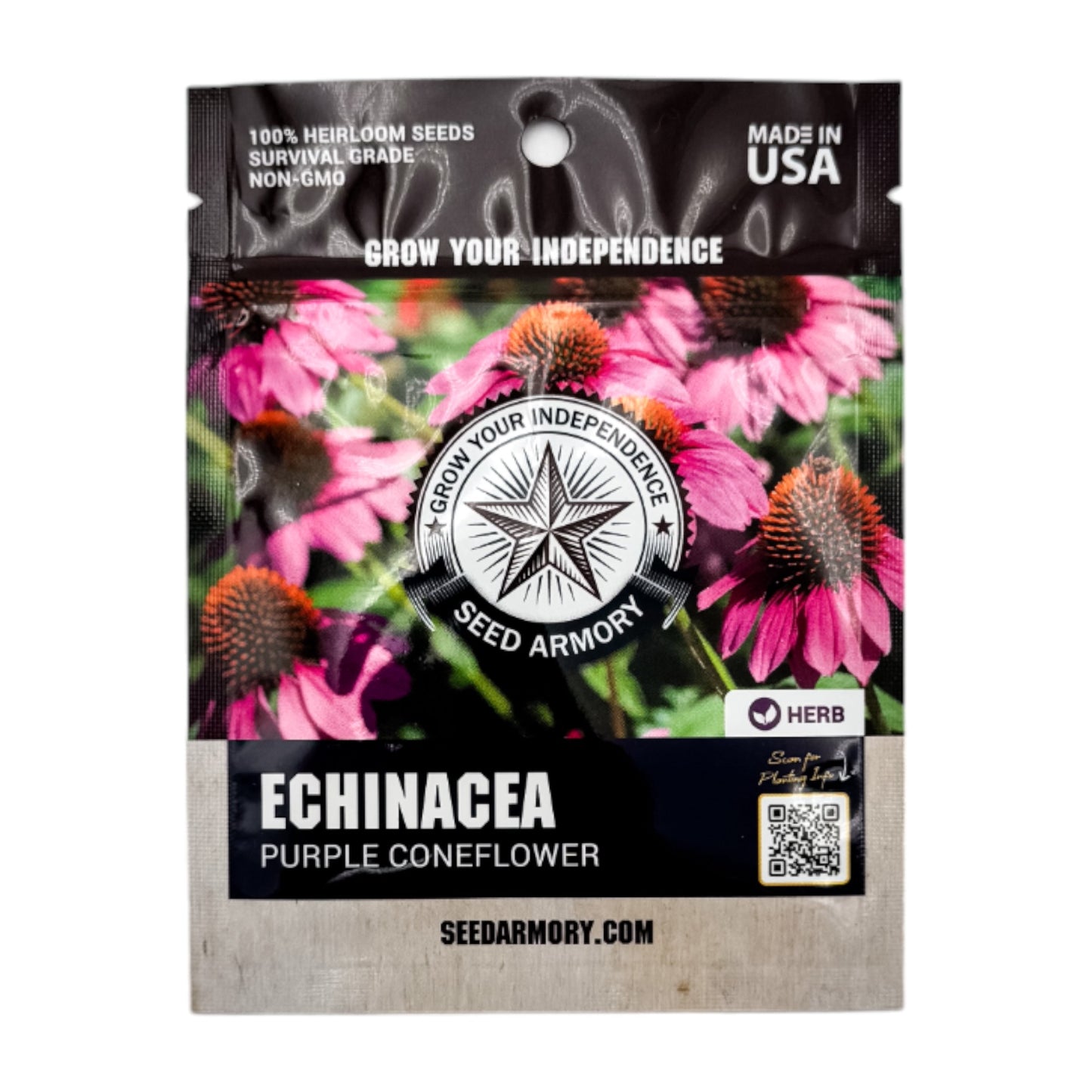
echinacea seeds for sale Echinacea - Purple Coneflower | Mylar PackagedPacked in Resealable Long Life Mylar Moisture Proof Packets 10+ Year Survival Seed Viability Category: Herb Type: Echinacea Variety: Purple Coneflower Family: Asteraceae Botanical Name: Echinacea purpurea Hardiness Zones: 3,4,5,6,7,8,9 Growing Difficulty: 3 Soil PH: 6. 0 to 7. 0 Fertilizer Requirements: None Soil Type: Normal, Sandy or Clay Germination (days): 10 to 30 Soil Temp for Germination: 65 70F Lighting Conditions: FULL SUN Days to Maturity:
Packed in Resealable Long Life Mylar
Moisture Proof Packets
10+ Year Survival Seed Viability
- Category: Herb
- Type: Echinacea
- Variety: Purple Coneflower
- Family: Asteraceae
- Botanical Name: Echinacea purpurea
- Hardiness Zones: 3,4,5,6,7,8,9
- Growing Difficulty: 3
- Soil PH: 6.0 to 7.0
- Fertilizer Requirements: None
- Soil Type: Normal, Sandy or Clay
- Germination (days): 10 to 30
- Soil Temp for Germination: 65-70°F
- Lighting Conditions: FULL SUN
- Days to Maturity: 90 - 120
- Planting Depth: 1/8-1/4”
- Distance Apart (in row): 12-24"
- Row Spacing: 12-24"
Sowing Instructions
DIRECT SOW IN FULL SUN IN FALL (Cold Stratification Required)
Starting Indoors
START INDOORS 6-8 WEEKS BEFORE LAST FROST (Cold Stratification Required)
Growing Tips
Echinacea seeds require cold stratification prior to germination. This can be done one of two ways (depending on your planting method).
When Planting Outdoors, plant the echinacea seeds in the fall to allow the seeds to overwinter. Seeds will germinate when soil temperatures reach around 65-70°F. Germination should occur within a couple of weeks but could take up to 4 weeks to fully sprout.
When Planting Indoors, soak the seeds in water overnight then place the damp seeds in a sealed container in the refrigerator for 8 to 10 weeks. Plant in your seed trays and warm the soil to 65°. Seeds should germinate within 10 to 14 days.
These plants are drought-tolerant and do not like soggy feet, so make sure to only water when the surface of the soil is dry to the touch. They do best in a sandy, well-draining soil.
Medicinal Uses
Echinacea has been used throughout history as an immune-stimulating herb. Medicinally, the leaves, root, and flowers can be used.
People have used Echinacea as a natural painkiller for thousands of years. It is also thought to alleviate stomach aches, headaches, sore throats, prevent the common cold, flu, and many respiratory ailments. In addition, echinacea may help to fight rheumatoid arthritis, ulcers, Crohn’s disease, malaria, herpes, typhoid, vaginal yeast, and many other ailments.
When used as a tea, echinacea is believed to reduce anxiety and stress. It may also help to control blood sugar levels and is used in many diabetic diets.
The list of health benefits from the echinacea plant is ongoing, we recommend harvesting and storing the entire plant for future uses as the need arises.
Harvesting Crops
Echinacea flowers and leaves can be harvested in as little as three months but may not reach full maturity until 4 months of solid growth.
If you plan to use the roots in medicinal recipes, most commercial productions wait until the third year of growth to harvest the entire root ball for use. This allows the roots to develop to absolute maturity. Although, the rest of the plant can be selectively harvested until this point.
Harvesting Seed
Save some of your strongest echinacea plants to use as seed stock in the first year. These will provide the best prospects for germinating from seed.
When the flowers have reached full maturity (around 3-4 months), the petals will begin to die off and turn brown. Once the seed heads begin to die and turn a dark brown color, your seeds are ready to harvest.
Snip the stems just below the seed heads and use a bucket or bowl to collect the seeds as you brush them out of the seed head with your fingers. Echinacea seeds are incredibly small, so be careful when removing them.
Make sure your seeds are completely dry by storing them in a cool, dry area for a couple of weeks before safely storing them for next growing season.
Shipping Notes
- Free Standard Shipping on $100+ Orders to the USA.
- Except Preorder products are shipped in 48 hours.
- Delivery to the USA:
- Standard Shipping : 3-10 business days
- If time is of the essence, please consider selecting expedited delivery for faster service.
Exchange/Return Notes
- We offer a 30-day return/exchange service after receiving.
- Final sale items are not eligible for returns or exchanges.
- To process your return/exchange, please contact us at [email protected]
- Please click here for more details>>> Return & Exchange Policy