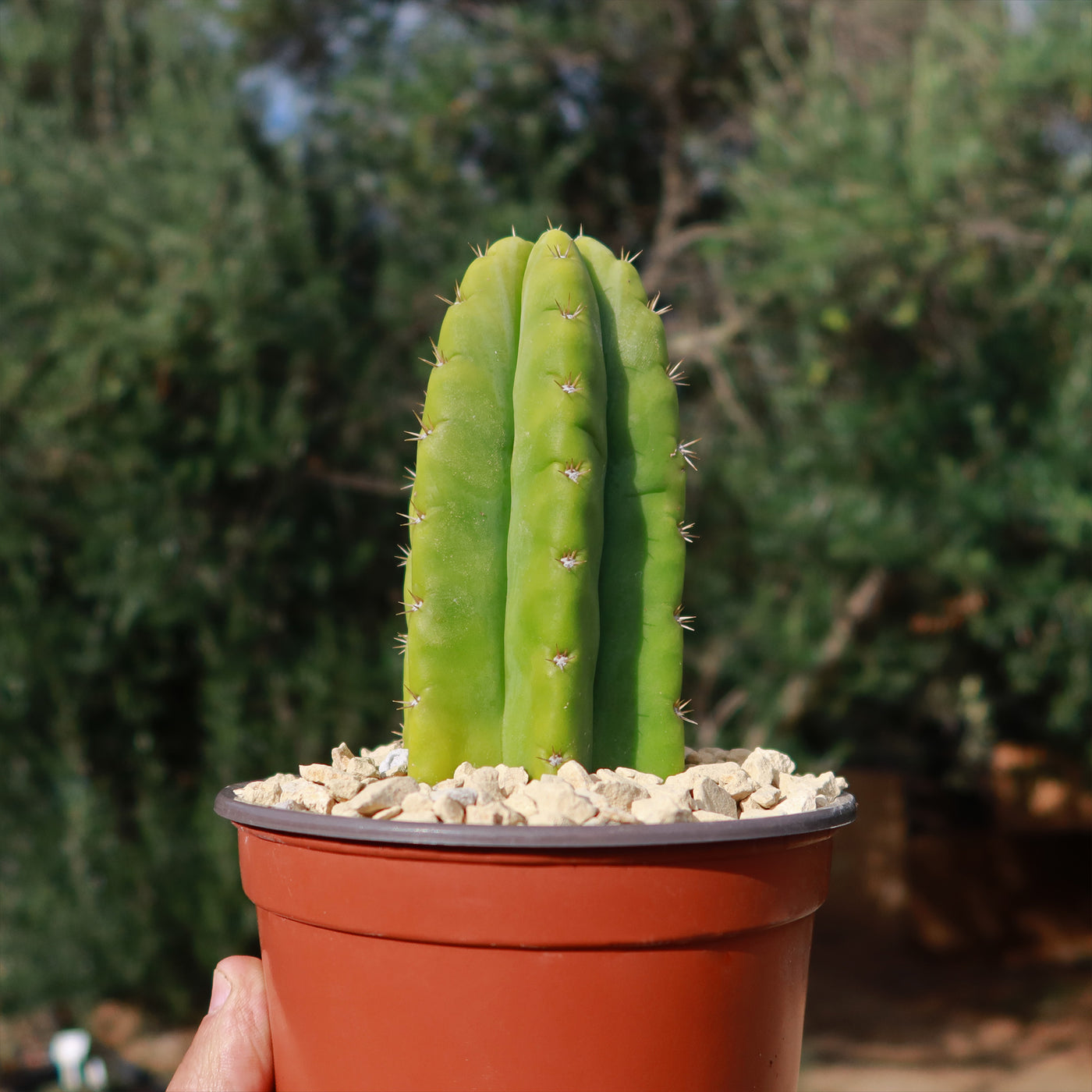
SKU: 61099880825
san pedro cactus recipe

san pedro cactus recipe Shop 'San Pedro Cactus - Echinopsis pachanoi' Care and Growing Guide

Sale price$21.48 Regular price$23.87
Save 10%

Pay in installments of $5.97 with ShopPay, AfterPay and Klarna

Shipping Estimate
USA
  • USA
  • CAN

Ships within 48 hours · Estimated delivery Jul 23 - Jul 28

Promo Codes Available:

For Your Every Summer RSVP, with Code: SUMMER15

Description

san pedro cactus recipe Shop 'San Pedro Cactus - Echinopsis pachanoi' Care and Growing GuideIntroducing the San Pedro cactus, also known as Echinopsis pachanoi (Syn. Trichocereus pachanoi) or Trichocereus Echinopsis pachanoi, which is among the superstars of the cactus world. This fast growing columnar cactus is also known as the Wachuma and Huachuma. Standing tall and proud, this magnificent San Pedro cactus columnar beauty can reach heights of up to 20 feet and spread its branches wide, up to six feet! With stems that range from vibrant

Introducing the San Pedro cactus, also known as Echinopsis pachanoi (Syn. Trichocereus pachanoi) or Trichocereus Echinopsis pachanoi, which is among the superstars of the cactus world. This fast-growing columnar cactus is also known as the Wachuma and Huachuma. 

Standing tall and proud, this magnificent San Pedro cactus columnar beauty can reach heights of up to 20 feet and spread its branches wide, up to six feet! With stems that range from vibrant green to mesmerizing blue-green shades, San Pedro is a true showstopper in any landscape. As your San Pedro cactus plant matures, its colors deepen and intensify, adding even more charm to its already captivating presence.  


When the San Pedro cactus flowers bloom, they emit a sweet fragrance that attracts pollinators like bees and butterflies.

The flowers are usually large and trumpet-shaped and come in various colors, including white, cream, and yellow. The petals have a delicate texture and often have a waxy appearance.

The fragrant flowers usually open during the day and close at night. They have a short blooming period, typically lasting for a day or two.

During the blooming season, which usually occurs in late spring or early summer, multiple flowers can bloom at once, creating a captivating sight.

The San Pedro cactus flowers are not only visually appealing but also have cultural significance. In some indigenous cultures, the flowers are used in traditional ceremonies and rituals. They are believed to have spiritual and healing properties.

The San Pedro cactus also has Pitahaya red San Pedro cactus fruits. These fruits are known for their sweet and refreshing flavor, making them a popular choice for consumption. Additionally, they are rich in antioxidants and vitamins, providing numerous health benefits.  

When and How to Water Your San Pedro Cactus 

San Pedro cactus is a drought-tolerant plant that can survive in dry conditions for long periods of time. However, regular watering is still needed to stay healthy. Generally, the San Pedro needs to be watered once every two weeks. During the summer months, when temperatures are high and the plant is actively growing, it may need to be watered more frequently.  

When watering your Trichocereus Echinopsis pachanoi, be sure to soak the soil thoroughly and allow it to drain completely. To prevent root rot and other issues, avoid overwatering.The leaves may become dry and brittle, and the cactus may stop growing if it is underwater. Over time, the San Pedro cacti may start to lose their shape and become misshapen.  

In addition to these physical symptoms, underwatering can also make the cactus more susceptible to pests and diseases. To keep your San Pedro cactus healthy and thriving, it is important to water it regularly and provide it with the right growing conditions. 

Light Requirements - Where to Place Your San Pedro Cactus

When grown indoors, your San Pedro cactus should be placed in a bright, sunny location where it can receive at least six hours of direct sunlight each day.

For outdoor cultivation, the San Pedro cactus requires a lot of sunlight to grow and thrive.

In its natural habitat, this cactus is exposed to direct sunlight for 4-6 hours each day.

If you live in an area with a lot of cloud cover or limited sunlight, you may need to supplement your cactus's light with artificial grow lights.

So, let's give your San Pedro cactus plant what it deserves—just the right amount of light to bloom into the ultimate showstopper! 

But beware; too much sun can lead to burns, so make sure you gradually increase exposure or bring it indoors during a heatwave. And if your Echinopsis pachanoi isn't getting enough light, it'll start stretching toward its source.

Optimal Soil & Fertilizer Needs 

Use well-drained soil that is designed specifically for your Echinopsis pachanoi cactus. These specialty soil mixes have been precisely developed to imitate well-draining desert soils. Commercial cactus soil is affordable and available online or at Home Depot.

Planet Desert specializes in cacti and has a specialty cactus potting mix that contains 5 natural substrates and organic mycorrhizae to promote the development of a strong root system that helps your San Pedro cactus thrive. 

When it comes to fertilizing your San Pedro cactus plant, it only needs a small amount of fertilizer applied once a year in the spring. Cacti prefer fertilizer with lower doses of NPK, with a maximum ratio of 5-10-5 which is higher in phosphorus than nitrogen. Remember, overfertilization can lead to root rot or even the death of the plant, so be cautious! 

Hardiness Zones & More 

San Pedro cactus is a hardy plant that can grow in a variety of different climates. It is native to the Andes Mountains, where it can be found growing at high altitudes in a range of temperatures. In the United States, San Pedro cactus is typically grown in warm, dry climates such as those found in the southwestern states. 

When growing indoors, the San Pedro cactus prefers a warm and dry environment. It thrives in temperatures ranging from 55°F to 75°F. Aim for a humidity level of around 40% to 50% to create an ideal indoor environment for your San Pedro cactus.

For outdoor cultivation, this cactus is hardy in USDA zones 8–11, which means that it can tolerate temperatures as low as 20 degrees Fahrenheit.

If you live in an area with extreme temperatures, you may need to take extra precautions to ensure that your San Pedro cactus Echinopsis pachanoi, stays healthy. 

In addition to its hardiness zone, it is also important to consider the humidity requirements of the San Pedro cactus. This cactus is adapted to dry, arid environments and does not require a lot of humidity to grow. In fact, high levels of humidity can be detrimental to the health of the plant, as they can promote the growth of mold and fungal diseases. 

When growing San Pedro cactus, it is important to provide good air circulation and avoid overwatering to prevent the buildup of excess moisture around the base of the plant.

Wildlife - San Pedro Cactus Attracts the Following Friendly Pollinators

The San Pedro Cactus flowers attract several friendly pollinators such as bees, butterflies, and hummingbirds. These pollinators are essential for the reproduction of the cactus and play a crucial role in maintaining the ecosystem's biodiversity.

Butterflies
Bees
Hummingbirds
Lady Bugs
Multi Pollinators
Other Birds

According to ASPCA, the San Pedro Cactus is safe for humans but can be mildly toxic to cats and dogs if ingested in a large amount. However, it is safe to touch and handle, making it a popular choice for ornamental cactus gardens. However, it is important to keep San Pedro Cactus out of reach of pets to prevent accidental ingestion.

How to Propagate Your San Pedro Cactus

Propagating the San Pedro cactus can be done through seeds or cuttings, but each method has its pros and cons. While cuttings are a quicker option, this method involves cutting off the top of the plant, which permanently alters its tall, elegant columnar form. For this reason, propagation by cuttings is only recommended if the plant has already broken or been damaged. In such cases, you can take a healthy segment, allow it to be callous for about a week, and plant it in well-draining soil to root. However, this approach is less ideal for those who wish to maintain the plant's natural aesthetics.

Seed propagation is a method for cultivating new cacti plants, and preserving their beauty. Harvested from mature cacti's fruit, seeds are cleaned, dried, and sown onto a well-draining soil mix. Despite the patience required, this method allows for healthy plants without compromising the parent cactus's appearance, despite the need for indirect sunlight or grow light.

Key Takeaways

  1. Unlike many other cacti, the San Pedro grows quickly, often reaching heights of 10–20 feet under ideal conditions, making it a popular choice for ornamental gardens.
  2. This cactus is highly adaptable, thriving in a variety of climates and requiring minimal care. It is drought-tolerant, hardy in USDA zones 8–11, and grows well in nutrient-rich, well-draining soil.
  3. San Pedro Cactus is a drought-tolerant that thrives in arid conditions and requires minimal watering. It is a popular choice for xeriscaping and landscaping in dry climates due to its ability to store water in its fleshy stems.

Final Thoughts

Overall, the San Pedro cactus (Echinopsis pachanoi) is a remarkable plant with unique features. It is characterized by its tall, columnar shape and beautiful white or yellow flowers. The cactus can grow to impressive heights, reaching up to 20 feet in optimal conditions. Its spines are relatively short and are arranged in clusters along the ridges of the cactus. The San Pedro cactus is a low-maintenance plant that thrives in well-draining potting soil and enjoys ample sunlight. It prefers a dry environment and can tolerate drought, so it should be watered sparingly, allowing the soil to dry out between waterings.

Don't miss out on this opportunity to add something truly exceptional to your garden. Buy San Pedro cactus for sale today to enhance your collection! 

Shipping Notes
  • Free Standard Shipping on $100+ Orders to the USA.
  • Except Preorder products are shipped in 48 hours.
  • Delivery to the USA:
  1. Standard Shipping : 3-10 business days
  • If time is of the essence, please consider selecting expedited delivery for faster service.
Exchange/Return Notes
  • We offer a 30-day return/exchange service after receiving.
  • Final sale items are not eligible for returns or exchanges.
  • To process your return/exchange, please contact us at [email protected]
  • Please click here for more details>>> Return & Exchange Policy
SKU: 61099880825

Discover Niche Categories That Outsell san pedro cactus recipe

Top-Converting Item to Boost Your Average Order

4.3 ★★★★★
Based on 28 reviews
Sort
Highest Rating
Newest First
Oldest First
Product Reviews
A
Verified Purchase
Arturo Brillembourg
Massapequa, US
★★★★★ 5
Understand the past to shape our future
Format: Kindle
I’m grateful Ray Dalio has shared his world view and his access to leading thinkers and valuable sources of data, to make me more aware and better prepared for what’s coming. I am also friends with Ray, and I trust him. This book offers at least two major contributions. First, the synthesis and integration of economic, social, and geopolitical history that presents a holistic view of how countries rise and fall. Leveraging his relationships with leading thinkers and historians, Ray gives us a way to understand the major forces, cycles, and paradigm shifts that can dramatically change the world around us. You would have to read dozens of well-chosen books to gain such an understanding, and you still may not have a comprehensive theory. Second, the quantification of each major nation’s economic, cultural, and geopolitical health. With the support of Bridgewater’s multi-hundred-million-dollar research budget and team, Ray presents the key determinants of a country’s strengths and weaknesses through time, and relative to other countries. Seeing the most important long-term trends in charts provide useful perspectives that are unavailable elsewhere. Here are some of my biggest take-aways. Disorderly conflict is the pre-cursor to destructive conflict that is likely to be devastating for all of us. Both the winners and the losers of destructive actions are worse off relative to compromise, mutual understanding, and respect. As an American, I should not take for granted that I live in the most powerful country that has seen one of the longest periods of peace, economic growth, and innovation in global history. It’s not the norm, and if we aren’t careful, things could get a lot worse. Invest in innovation. Both as an investor and as a citizen, innovation has been a powerful force for improving lives and driving economic growth. We are likely in for a period of high inflation. The easiest way for the government to deal with high levels of debt is by printing money, using stimulus to spur economic growth, and keeping interest rates lower than nominal GDP growth. That is, to inflate their way out of debt. As an investor, he suggests avoiding long term holdings of cash and bonds. Instead, he recommends diversifying with assets that can do well in an inflationary environment, like highly dependable cash generating stocks, some gold (possibly a little cryptocurrency), and other scarce inflation-protected assets. This book is a major contribution. I strongly recommend reading or listening to it. If you don’t have the time, at least read the first few pages of the introduction, the first chapter “The Big Cycle in a Tiny Nutshell”, chapter 8 "The Last 500 Years in a Tiny Nutshell", and the final chapter called “The Future”. I hope you found this helpful.
WAS THIS REVIEW HELPFUL?YesReportShare
Reviewed in the United States on December 5, 2021
M
Verified Purchase
Mike Dillemuth
Charlottesville, US
★★★★★ 5
A Captivating Look at Empires and America’s Future
Format: Kindle
This is an extraordinary book. Although it’s written by an economist, it is anything but boring. The author does an outstanding job of examining multiple empires across hundreds of years. He analyzes the rise and fall of each empire by segmenting their respective histories into different cycles. He then identifies the various cycles that each empire goes through, from its initial rise to its eventually fall. Each cycle is sub divided into key indicators such as military strength, budget deficits, wealth gaps, education, etc. In the end, the author looks at the United States using this same cyclical methodology. Mr. Dalio’s arguments and analysis are sound and make good sense. His interpretation and description of various historical events, especially those pertaining to the British and Dutch empires, are right on target. Throughout the book, he is consistent in the application of his analytic model. This is noteworthy as I felt his analysis of China to be slightly flawed. The author appears to have omitted certain elements of modern-day China; most notably is the pending population time bomb caused by their previous one child policy. China’s population is now shrinking. In addition, and unlike America, the Chinese seem culturally incapable of using immigration to solve their problem. This opposing view of China, however, does not detract from the author’s overall analysis. He is consistent in his analysis and cites other data which support counter arguments. Bottom line, this book was far more interesting than I anticipated. Even though the author’s analysis is complex, the book is well written and easy to understand. The narrative is both captivating and entertaining. Overall, this is just a great book.
WAS THIS REVIEW HELPFUL?YesReportShare
Reviewed in the United States on December 17, 2023
L
Verified Purchase
LenZen
Los Angeles, US
★★★★★ 4
Is the United States Getting Close to Multiple Simultaneous Crises?
Format: Hardcover
In this book, Dalio presents his model of the rise and fall of "empires". The closer it gets to the present day the more interesting the book is. The last three chapters of the book which deal with the rise of China, the current tensions between China and the US, the United States's alleged decline and Dalio's conjectures regarding the future are five stars. The build up to the final three chapters is decent, although only occasionally riveting: The book is only three stars before the strong close. It is hard to evaluate the merits of Dalio's historical model given that he is only presenting it at moderate depths so as to introduce it all in one volume. The model says that empires rise and fall, no surprise, and talks about the interplay of economic, internal, and external factors that take an empire through the cycle. Dalio also mentions that inside the Big Cycle there are other cycles, and inside those cycles other cycles. He does not, however, go into much detail regarding the sub-cycles. This sounds reminiscent of Robert Prechter's Elliot Waves or perhaps, even, pre-Copernican astrology. Is this a model so loose, like Elliot Waves, that it can be found to fit anything that could happen? Is it falsifiable? Along the way was the validity tested by approaching an empire that there was little prior knowledge of to make "forward predictions" regarding what would happen? Has Dalio merely cherry picked the three examples which best seem to demonstrate the soundness of the model while omitting more problematic cases? There is not enough in this book to do a rigorous analysis. The United States Civil War is a good example of something I had trouble thinking about in terms of the model. According to the model the final stage in an empire's breakdown is civil war or revolution. In the case of the United States, however, the Civil War occurred while the United States was still ascendant: in stage 2 out of 6 with stage 3 being the peak. Certainly there was no debt crisis which caused the Civil War and the United States had little going on in terms of external conflict at the time. So perhaps that could have been taken as a "prediction" that the United States would almost certainly have survived the Civil War in tact? The truth, however, is that the South came very close to winning the Civil War, in the sense of being recognized as independent, according to McPherson's Battle Cry of Freedom. Another thing that I am not sure how to evaluate using the model is the United States after the Civil War and after the Revolution. Although these were periods of rebuilding they do not seem to fit well into Dalio's model. After victory in these conflicts Americans were very magnanimous (as it was later after World War II). Far from being purged those who were on the wrong side of history ended up facing rather little in the way of consequences. So how does this fit into the model? Obviously, there will be some "rebuilding" after a Revolution or Civil War so is the model just saying there will be something which could not not happen? Indeed although the United States was vibrant after the Revolution, the period after the Civil War as described in Richard White's The Republic for Which it Standards seems in decline compared to the Antebellum period. According to Dalio's model, however, the United States was stage 2 rising into stage 3 during this period. Regardless of the merits of the model, which would probably require many in depth books to evaluate fully, there is definitely some good high level overviews of Chinese, European, and American history. There are many interesting charts and statistics thrown in. As mentioned, the close of the book is far and away the best part of it. Dalio describes the cultural differences between Americans and Chinese people and their different outlooks toward governing. Dalio does not seem to be pushing any political agenda, at least not too hard, but rather what he has carefully measured to be objectively true. Although clearly an admirer of much about China, he is also willing to criticize some aspects of China. At the same time, his criticism omits its surveillance state. Looking forward Dalio presents some very interesting charts and statistics regarding America's growing internal conflicts. He even has a graph to show how bad it is now compared to early points in history. Dalio is willing to stick his neck out and quantify what his model is predicting as the probability of civil war in the United States and the probability of military war with China in the next decade. Although very thought provoking overall, one particularly persistent problem throughout the book is that many of the charts are very hard to read. There are graphs with eight different lines with some of the colors very hard to distinguish between. The book also almost never references its sources. Indeed, given how much history Dalio has obviously studied, a bibliography, or at least a list of recommendations, would be very nice. Dalio is very repetitive regarding the inevitable death of fiat currencies through money printing. At the same time he also does provide concrete advise of how to prepare. He gives some definite timelines and the dates are very close. To qualify this, somewhat, however, his company Bridgewater Associates has basically had a "lost decade" using his models to generate any kinds of returns since his departure around 2012. Nevertheless it is interesting to think about whether or the US is on the verge of multiple simultaneous crises.
WAS THIS REVIEW HELPFUL?YesReportShare
Reviewed in the United States on February 1, 2022
D
Verified Purchase
Desmond Yuen
New York, US
★★★★★ 5
The past is the future? Focus on the big picture
Format: Hardcover
This book isn’t just about economics; it also takes a captivating look at history. Written in a style similar to his previous book, "Big Debt Crises," Ray presents history in cycles. To make things easier to grasp, he added some helpful features: passages are bolded for a quick read, and a red dot marks principles that are considered timeless and universal truths. I really appreciate the QUICK-READ option. It’s so easy to overlook key points in a long book, but the bolded sections help me focus. For example, one universal truth is, "Throughout time, the formula for success has been a system in which well-educated people operating civilly with each other, come up with innovations, receive funding through capital markets, and own the means by which their innovation..." The book is divided into three parts: How the world works, How it has worked over the last 500 years, and the Future. The first part explores the rise and fall of empires. The second offers an in-depth look at the Dutch Empire, the British Empire, the United States, and China. The last part looks ahead at what’s to come. The appendix even includes a computer-generated power score for 11 world-leading countries. I haven’t finished the entire book yet, but after reading some chapters, I can say Ray did a fantastic job condensing 500 years of history into an accessible, engaging format. The graphs also help clarify his points. It answered many questions I had, like how pandemics have impacted the world. Instead of flipping through multiple books to find answers, I can find everything I need here. What I also really appreciate is Ray’s honesty. He doesn’t shy away from tough issues. If he's not an expert on something, he clearly states where he learned it from. He’s straightforward, sincere, and speaks his mind. Even if you do not believe that history will repeat itself, you will still enjoy reading this book.
WAS THIS REVIEW HELPFUL?YesReportShare
Reviewed in the United States on December 1, 2021
K
Verified Purchase
Kindle Customer
Houston, US
★★★★★ 5
Phenomenal book, one major criticism
Format: Kindle
Great book. Dalio does a remarkable job seeing the bigger picture and providing confidence through historical events/ever repeating cycles that you can predict at a high level what is coming next for a given country or the world and plan accordingly. The corkscrew of evolution analogy is a perfect one, where the human race has up and down cycles but always trends up longer term thanks to technological innovation. My one criticism is he speaks out of both sides of his mouth in one instance, presumably because he doesn’t want to upset any high ranking politicians or leaders he may be friends with, which I found to be disappointing. On the one hand, he notes at the start of the book that no two democracies have waged war with each other, wars have only been fought between dictators/police states and democracies or just dictators/police states. Then later on when discussing China, he all but excuses and rationalizes their increasingly authoritarian state, as seen by Xi crowning himself leader until death and abolishing the precedent of 2 5 year term limits as of 2018. He blesses the Chinese approach of a few rulers knowing what’s best for all, as if those rulers are acting in the broader interest of Chinese people, and that’s an acceptable alternative to democratic rule. He cites the recent video game ban as having merit or at least being understandable, suggesting that he thinks the ends can justify the means. All the while there’s no mention of the atrocities of Mao under this authoritarian type of rule, no mention of the Muslim genocide going on now, the suppression of free speech and jailings and beating and murders of those that oppose the current regime, no mention of internet censorship, etc. To bring the criticism full circle, he doesn’t link his first point on wars and authoritarians always being involved in them, with the fact that China is an authoritarian state and therefore it’s rise threatens the free world and human progress. Ironically, he does correctly acknowledge China’s opening up to market and establishment of capitalist principles for rocketing them toward the US in terms of power, while refuses to critique the political system despite its history of failings, violence and pain. Russia invading Ukraine couldn’t drive this point (ie the civil or political system being as important as the economic system to the long term success of a country and world peace) home any harder.
WAS THIS REVIEW HELPFUL?YesReportShare
Reviewed in the United States on March 12, 2022

recommand products