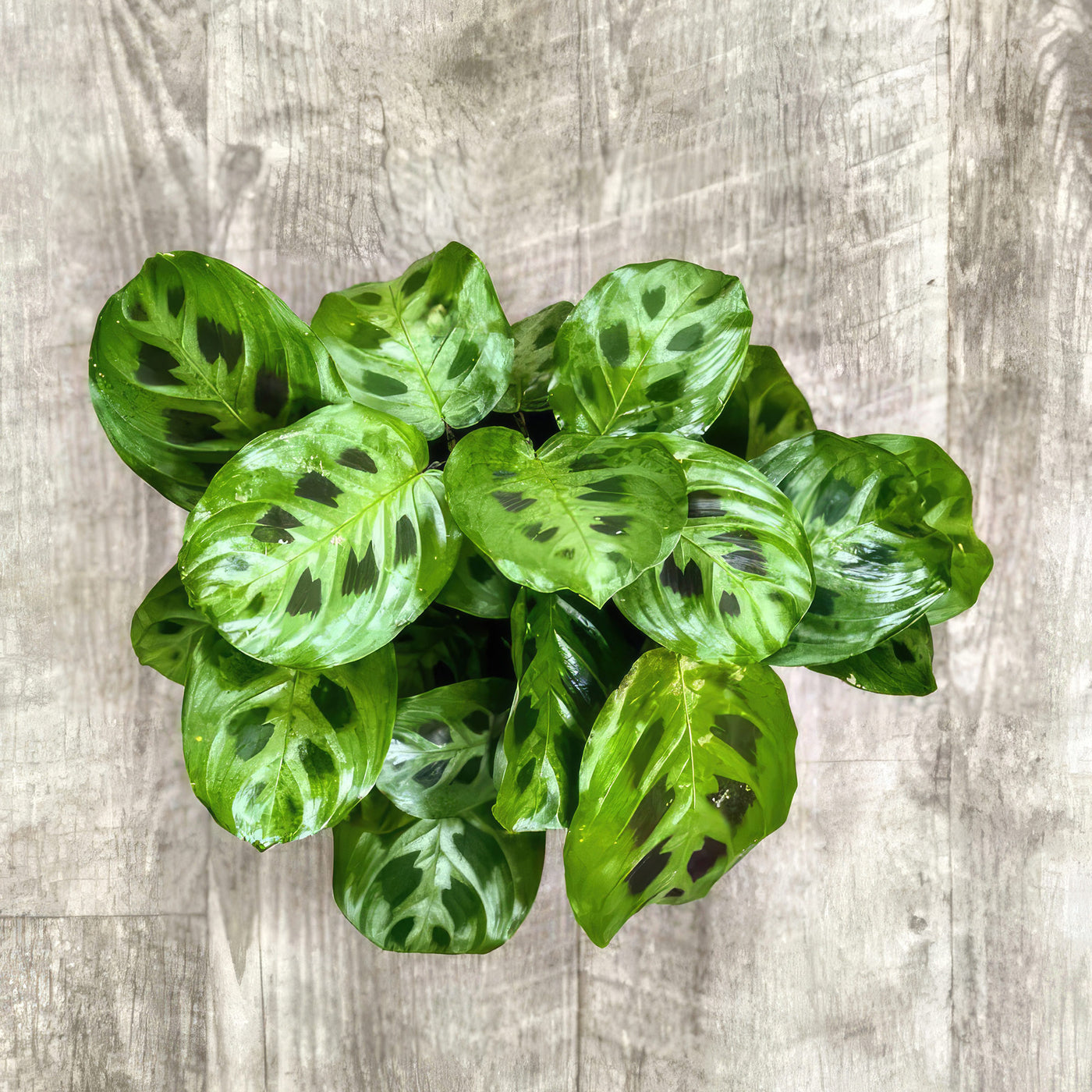
SKU: 60617191227
white prayer plant

white prayer plant Prayer Plant ‘Maranta leuconeura’ 6" Pot / Light Green / With Pot

Sale price$20.14 Regular price$22.38
Save 10%

Pay in installments of $5.59 with ShopPay, AfterPay and Klarna

Shipping Estimate
USA
  • USA
  • CAN

Ships within 48 hours · Estimated delivery Jul 24 - Jul 29

Promo Codes Available:

For Your Every Summer RSVP, with Code: SUMMER15

Description

white prayer plant Prayer Plant ‘Maranta leuconeura’ 6" Pot / Light Green / With PotThe Prayer plant, known as Maranta leuconeura, is a popular choice among houseplant enthusiasts due to its stunning foliage and relatively easy care needs. Known for its uniquely patterned and colorful leaves, this plant adds a vibrant touch to indoor spaces, making it one of the most sought after houseplants. Those looking for a pet friendly plant will be pleased to know that prayer plants are non toxic to both pets and humans. The Prayer Plant is so

The Prayer plant, known as Maranta leuconeura, is a popular choice among houseplant enthusiasts due to its stunning foliage and relatively easy-care needs. Known for its uniquely patterned and colorful leaves, this plant adds a vibrant touch to indoor spaces, making it one of the most sought-after houseplants. Those looking for a pet-friendly plant will be pleased to know that prayer plants are non-toxic to both pets and humans.   

The Prayer Plant is so named for its unique habit of folding its leaves upward in the evening, as if in prayer. This remarkable movement is a natural circadian rhythm known as “nyctinasty,” in which the leaves respond to light levels by opening flat during the day and curling up at night. In addition to being closely related to the red prayer plant, this intriguing behavior gives any indoor garden a dynamic and lively feel. 

Native to South America, it is also called the “Rabbit Tracks” plant. The Green Maranta Prayer Plant is renowned for its unique patterned leaves, featuring light green backgrounds and dark green blotches along the central vein.

These distinctive spots create a visually appealing contrast and resemble animal tracks. This eye-catching foliage, combined with the plant's low-growing habit, makes it a perfect choice for table displays, shelves, or hanging baskets.

The Maranta leuconeura is a compact plant that typically reaches a mature size of 12 inches tall and 12 inches wide. In its natural environment, it grows as a ground cover, spreading low along the forest floor under the shade of taller trees.  

The Prayer plant flowers bloom in the spring with small, delicate, white, or pale lavender flowers on thin stalks. While not as showy as the foliage, these flowers add a delicate charm to the plant’s overall appearance. However, many people grow the Maranta green prayer plant primarily for its decorative foliage, as the blooms are typically short-lived and less prominent.  

When and How to Water Your Prayer Plant  

Even though your prayer plant can withstand some dry conditions, it still requires regular watering to thrive. These prayer plants are not highly drought tolerant, so do not allow them to completely dry out. It is critical to keep the soil moist but not soggy. Water the plant once the top inch of soil feels dry to the touch. Make sure the pot has a drainage hole to avoid waterlogging, which can lead to root rot. Avoid getting water on the leaves to prevent fungal diseases.

According to one theory, the prayer plant movement is intended to maximize water capture. During the day, they lower their leaves to absorb moisture and rain water, while at night, they move inward to retain water and direct any water to the center of the plant.   

In the spring and summer, during the growing season, you may need to water your prayer plant more frequently, possibly every 1-2 weeks, depending on the humidity levels in your home. In contrast, in the fall and winter, when the plant is in its dormant phase, you can reduce watering, allowing the soil to dry out slightly between waterings.

It's crucial to use room temperature water when watering your prayer plant, as cold water can shock the roots. Additionally, consider using distilled or filtered water to prevent the build-up of salts and chemicals from tap water, which can harm the plant over time. By following these watering guidelines and paying attention to your plant's moisture needs, you can help your Maranta leuconeura thrive and display its beautiful, patterned leaves.

Light Requirements – Where to Place Your Prayer Plant 

When growing indoors the prayer plant prefers bright, indirect light for at least 4-6 hours daily. Place your prayer plant near a window where it can receive filtered bright light or in a room with ample ambient light. Direct sunlight can scorch the leaves, so it's best to avoid placing them in harsh, direct light.

Additionally, they can tolerate low light conditions, though not extremely low ones. If your indoor space lacks natural light, you can supplement this houseplant with artificial grow lights to provide the necessary light intensity for your plant.

When considering outdoor conditions for your prayer plant, it's essential to replicate its preferred indoor environment.

If you choose to move your Maranta leuconeura outdoors, ensure it is placed in a shaded or partially shaded area. Direct sun light can be too intense for the prayer plant's delicate leaves and may lead to leaf burn.

By providing a sheltered spot with dappled sunlight or indirect light, you can create a suitable outdoor environment for your prayer plant to thrive. Remember to monitor the plant's response to its new outdoor location and adjust as needed to maintain optimal light conditions for healthy growth.   

Optimal Soil & Fertilizer Needs

The prayer plant thrives in well-draining, peat-based potting acidic soil that retains moisture without becoming waterlogged. A mix that includes peat moss, perlite, or sand can help maintain the ideal balance of moisture and aeration for your plant's roots. Instead, make or buy a well-draining potting mix, or ideally, use our specialized potting mix, opens in a new tab that contains 5 natural substrates and mycorrhizae to promote the development of a strong root system that helps your houseplant to thrive. Ensure the pot has drainage holes to prevent water from pooling at the bottom, which can lead to root rot. 

In terms of fertilizing your prayers plant, it's best to use a balanced, water-soluble NPK fertilizer with a ratio of 5-10-5. During the growing season in spring, you can fertilize your Maranta leuconeura once a year to provide essential nutrients for healthy growth. However, reduce fertilization frequency or stop altogether during the plant's dormant period in fall and winter. Over-fertilizing can cause salt build-up in the soil, leading to nutrient imbalances and potential damage to the plant.  

Hardiness Zones & More

For indoor growing prayer plants, they prefer average room temperatures ranging from 65-75°F. It's essential to avoid exposing the plant to temperature extremes or drafts, as they can stress the plant and affect its growth. Maintaining a consistent temperature within this range will help your plant flourish indoors. 

For outdoor cultivation, the prayer plant is typically suited for USDA zones 11-12, where temperatures remain consistently warm throughout the year. If you live in a region within these zones, you can consider growing your Maranta leuconeura outdoors in a shaded or partially shaded area. Ensure the plant is protected from direct sunlight to prevent leaf burn and maintain optimal growth conditions. By selecting a suitable spot in your garden or patio that mimics the plant's preferred indoor environment, you can provide a conducive outdoor setting for your prayer plant. 

When it comes to humidity requirements, the prayer plant thrives in moderate to high humidity levels. Indoor environments can often be dry, especially during the winter months when heating systems are in use. To increase humidity around your Maranta leuconeura, you can place a humidifier nearby, use a pebble tray filled with water, or group plants together to create a microclimate with higher humidity. Regularly misting the plant's leaves can also help increase humidity levels and prevent them from drying out.

Wildlife – Prayer Plant Attracts the Following Friendly Pollinators 

The prayer plant, Maranta leuconeura, attracts pollinators and insects through its unique and vibrant flowers. The plant produces small, white flowers with delicate purple spots that are visually appealing to pollinators like bees, hummingbirds, and butterflies. These insects are drawn to the flowers' nectar and play a crucial role in pollinating the plant, facilitating the production of seeds for future growth. Additionally, the plant's foliage, with its striking patterns and colors, can also attract other beneficial insects like ladybugs and lacewings, which help control pest populations in the surrounding environment. 

Butterflies
Bees
Hummingbirds
Lady Bugs
Multi Pollinators
Other Birds

Toxicity: According to the ASPCA, Maranta leuconeura is non-toxic to cats and dogs, and humans. This makes it a pet-friendly option for homes with pets, as it doesn’t pose a risk of toxicity if accidentally ingested by cats, dogs, or other pets. This feature, along with its beautiful foliage, makes the Prayer Plant a popular choice for pet owners who want to add greenery to their homes without worrying about harmful effects on their animals. 

How to Propagate a Prayer Plant 

To propagate the prayer plant, you can use division or stem cuttings. Division involves separating the plant at the roots into smaller sections, each with a healthy root system and growth points. When taking stem cuttings, select a healthy stem with several leaves and nodes, then place it in water or a moist potting mix to encourage root development. Ensure the cuttings have adequate humidity and warmth to support root growth. With proper care and attention, you can successfully propagate your prayer plant to expand your collection or share it with fellow plant enthusiasts. 

Key Takeaways

  1. The prayer plant, known for its striking foliage and unique leaf movements, is a popular indoor plant due to its vibrant colors and slow growth rate.
  2. According to the ASPCA, it is safe for homes with cats and dogs, as it is non-toxic.
  3. Its leaves fold up at night as if in prayer, a fascinating response to light levels.
  4. Though it does not prefer prolonged drought-tolerance, it can withstand short dry periods and prefers consistently moist, well-draining soil.
  5. It produces small, delicate white or lavender flowers, though it rarely blooms indoors.

The Bottom Line 

Overall, the prayer plant (Maranta leuconeura) is a captivating houseplant known for its stunning foliage with intricate patterns that fold up at night, resembling praying hands, hence its name. This plant not only adds a touch of elegance to indoor spaces but also attracts pollinators with its charming flowers. To care for your prayer plant, ensure it receives indirect light, consistent moisture, and high humidity levels. Avoid direct sunlight and overwatering to prevent root rot. Regularly misting these indoor plants and occasionally wiping their leaves with a damp cloth can help maintain their lush appearance. By providing the right conditions and attention, you can enjoy the beauty of the prayer plant while creating a healthy environment for it to thrive in your home. Order your very own prayer plant for sale today! 

Shipping Notes
  • Free Standard Shipping on $100+ Orders to the USA.
  • Except Preorder products are shipped in 48 hours.
  • Delivery to the USA:
  1. Standard Shipping : 3-10 business days
  • If time is of the essence, please consider selecting expedited delivery for faster service.
Exchange/Return Notes
  • We offer a 30-day return/exchange service after receiving.
  • Final sale items are not eligible for returns or exchanges.
  • To process your return/exchange, please contact us at [email protected]
  • Please click here for more details>>> Return & Exchange Policy
SKU: 60617191227

Discover Niche Categories That Outsell white prayer plant

Top-Converting Item to Boost Your Average Order

4.7 ★★★★★
Based on 28 reviews
Sort
Highest Rating
Newest First
Oldest First
Product Reviews
J
Verified Purchase
Jessie
Charlottesville, US
★★★★★ 5
Works well
Style: Shampoo, Size: 7 Ounce
This shampoo made a noticeable difference way faster than I expected. My scalp felt less itchy after just a couple uses and the flakes have improved a lot. I also like that it leaves my hair feeling clean instead of overly stripped. Definitely worth trying if other dandruff shampoos haven’t worked well for you.
WAS THIS REVIEW HELPFUL?YesReportShare
Reviewed in the United States on May 30, 2026
A
Verified Purchase
Amber Porter
Grantham, US
★★★★★ 5
Amazing
Style: Shampoo, Size: 7 Ounce
This shampoo is a game-changer for hair care. The formula is gentle yet effective, leaving your hair feeling clean and refreshed. The scent is pleasant and not overpowering, making it suitable for daily use. The lather is rich and luxurious, providing a spa-like experience. The shampoo is sulfate-free, making it suitable for all hair types, including color-treated hair. The bottle is compact and easy to use, with a pump dispenser for precise application. Overall, a reliable choice for anyone looking to improve their hair care routine.
WAS THIS REVIEW HELPFUL?YesReportShare
Reviewed in the United States on May 1, 2026
J
Verified Purchase
John Degen
Battle Creek, US
★★★★★ 5
Obliterates stubborn dandruff at the source, but grab a heavy conditioner.
Style: Shampoo, Size: 7 Ounce, Style: Shampoo, Size: 7 Ounce
If standard drugstore dandruff shampoos aren't working for you, this is the heavy artillery. I put a banana next to the bottle in the picture for scale, which reminds me—this stuff will literally stop your scalp from peeling like one. Instead of just washing away loose flakes, the active ingredient (Ketoconazole) actually kills the underlying fungal overgrowth that causes the itching and flaking in the first place. WHY IT'S A STAPLE: • It works incredibly fast. Most people see a massive reduction in severe flaking and scalp redness after just two or three uses. • It actually has a very clean, fresh scent, completely avoiding that awful medicinal or sulfur smell you get with coal tar shampoos. CRITICAL USAGE WARNING: • Because this is a serious, active treatment, it is incredibly drying to the actual hair shaft. If you use this without following up with a high-quality, heavy hydrating conditioner, your hair will dry out and feel like brittle straw. You only need to use it twice a week to maintain a clear scalp. THE BOTTOM LINE: The absolute undisputed heavyweight champion for eliminating stubborn dandruff, provided you pair it with a strong conditioner to protect your hair.
WAS THIS REVIEW HELPFUL?YesReportShare
Reviewed in the United States on May 28, 2026
N
Verified Purchase
Natalia Taranova
Lexington, US
★★★★★ 4
Showing some improvement, but still waiting for full results
Style: Shampoo, Size: 7 Ounce, Style: Shampoo, Size: 7 Ounce
After two weeks of using this shampoo as my doctor recommended (in courses, not for daily use), I can't say I've seen amazing results yet. The itching has reduced, and there is less redness on my scalp, but I can't say it has completely solved my scalp problems. I'll continue using it to see the final result. The price is fair, similar to other pharmacy shampoos. A definite plus is that it lathers very well, quickly cleans oily hair, and a little goes a long way. The scent is not strong, and it's actually pleasant to wash my hair with it.
WAS THIS REVIEW HELPFUL?YesReportShare
Reviewed in the United States on May 30, 2026
R
Verified Purchase
Ray V.
Pawtucket, US
★★★★★ 5
Attention Suffers of Mild Seborrheic Dermatitis and/or Psoriasis!!
Style: Shampoo, Size: 7 Ounce
Alright, let preface this by saying, I am not a doctor or medical expert, I can only speak to the results, I myself have experienced. Back Story: So about 2 years ago, I started getting dry skin around my mouth, nose, eyebrows, and occasionally my ears and cheeks. It was pretty mild, so I never went to a dermatologist. However, before this time, never did I have to lotion my skin regularly, so this was a change for me. When this started happening, I used Aquaphor Healing Ointment (Advanced Therapy), and while it made me look greasy or like I was sweating for a couple hours, lol, it wore off enough, and would leave me looking normal the rest of the day. The only time my skin was really irritated was right after I would shave. However, dryness/peeling would get real bad if I did not at least lotion all those areas of my face after I showered. While I did some minor Googling about the issue, I was clearly too lazy to do anything about it, and the lotion solution sufficed for me. Dumb, I know. Anyways, fast forward to about 1.5 months ago. I started to notice a white growth under my left thumbnail that started to detach my nail from my nail bed. For some reason, this concerned me more than the dry skin on my face. So after Googling again, I found ti could be a problem with yeast growth under my nail. Then, I remembered reading that yeast growth could be causing my face problems. After connecting the dots, I decided to find a possible solution, to possibly kill two birds with one stone. After some searching, I stumbled onto Nizoral. After reading all the reviews, I was encouraged. I purchased this product and it has helped me tremendously. I could not be happier. It says to use it only every 3-4 days, which I say you should stick to, because I would use it on back to back days and it would seem to dry my skin out, but that could have been in my head. My Use: So, I know this is shampoo, but I almost treat it like liquid soap. I rub it on my skin/scalp and leave it there for 3-5 minutes. For my fingernail, I would lift it, since there was a gap and the nail was coming up. I put Nizarol directly in the ever so small opening between the nail and nail bed, and left it for 3-5 minutes. I am not sure if that was smart for the fingernail, but it worked for me. Results: TLDR: It worked everywhere, lol. Mouth/Upper Lip: This area was the worst of my dry skin issues. Like said, it was especially bad after shaving. Sometimes, my skin would be patchy red and inflamed after shaving, especially on the top of my chin and right below my lip. It would look gross for like an hour. In addition, when I did not shave, but did not lotion my skin, this area would eventually get pretty flaky before the end of the day. I also had issues with the corners of my mouth, especially after eating. My upper lip generally did not have any issues, but sometimes I would in very cold/dry weather. So, after using this product, I have seen a great deal of improvement. For the first time in almost 2 years, I do not have to lotion my face every single day. The patch below my lip still is not where I want it to be, but it is very much better. My skin feels dry after a shave, but now it does not look red or inflamed. It is getting better, and I think it will continue to get better. The corners of my mouth have issues if I do not lotion for 2 days or so, but they are much more minor to what they used to be. The minor issue above my lip is currently non-existent, however, we have not had any cold weather yet. This was the most noticeable problem I had with my dry/flaky/peeling skin, and I am happy to say, Nizarol has worked wonders. I now can use regular lotion instead of Aquaphor, which I still adore. Eyebrows: This was my second worse area, and I say eyebrows, but it was actually the area in between my eyebrows would flake worse than my eyebrows. I rub Nizarol into my eyebrows, in between them, and around my eye sockets. Nizarol has pretty much cleared up this issue, and I am thrilled Nizarol has basically eliminated the second worst dry area on my face. If I do not use lotion for several days, it does flake, but in a very minor way. Side note: be careful around your eyes, it burns pretty good if you get the shampoo runoff in your eye, lol. Nose/Nostrils: This was my third worst area. I would have dry skin on the sides of my nose, the point of my nose, and even on the inside of my nostrils! First off, putting Nizarol in your nostrils may not be safe. If you do do it, don't huff the Nizarol when it is in your nostrils, breath through your mouth. My nose area has improved, but is now more of an issue than my eyebrows. Still it is much better, and I can go a couple days without using lotion. It is also more of the inside of the nostrils than the outside of my nose. I think if I were willing to put Nizarol further up my nose than just the inside rim, I could eliminate the problem. But, at what cost? Lol. I don't want to ingest this stuff, lol. Either way, I am still happy! Head/Scalp: I have never had much of an issue with my scalp other than minor dandruff, for which I have always used Head & Shoulders. Despite this, I use this shampoo, as intended. I can not honestly tell if it is making any difference. Also, I have very short hair, so I cannot tell if this makes my hair coarse like everyone else says. If it does, I would use a conditioner like other reviews suggest. Ears/Earlobes: So, while it was more rare, but sometimes, my ear lobes and the bottom crease where the ear connected to my face would get dry and flake. I rub Nizarol on my ears, on the inside of my ears, and behind my ears/ear lobes. I have zero issues here now and never have to lotion this area any more. Forehead/Cheek Areas:These were not really problem areas unless it was cold/dry/windy. We have not had that type of weather, but I really do not think it will be a problem. Pelvic Area: I know this is a touchy subject, lol, but what I have to say is tame and could help some people. So several months back, something new happened, I noticed my pelvic area was dry as well, after using clippers. I used Nizarol in the creases of my leg, and in in my pelvic area, including directly on my -----. Results? Well, this has virtually eliminated the dry skin everywhere. Even better, I am chaffing less when running, which is awesome! I figured Nizarol was working everywhere else, so what the hell? Luckily for me, this was another minor issue it helped. Fingernail: Getting back to my fingernail, I had this white chalky/flaky formation under my fingernail. It had got to almost halfway down my thumbnail. It was causing my nail to lift. It did not hurt, but I thought it was unsightly. So I lifted the nail and put Nizarol in there. Again, possibly not safe, but a couple weeks in and my nail is almost back to normal. I eventually started cutting deeper into my nail to get the Nizarol farther back, which has worked. My nail almost looks normal and it looks like it is pushing the last of white to the font of my nail. So the growth stopped moving backward and it has improved. Another win! Others Uses?: As you can tell, I pretty much use this stuff all over. I put it on my elbows, the knuckles of my toes, and the point of my ankle bone. I think it is helping, but I am not 100% sure. What I can tell you is that it seems that it seems easier to get the dry skin off after applying the shampoo. A pedicure is on the docket and if I remember, I will update this review. Conclusion: Nizarol has worked way better than I could have hoped, and I did not even have to go to the dermatologist. I am hoping within a couple months, my skin will go back to normal. I am not sure if that will happen, but I love what Nizarol has done for me. I encourage anyone that has some of the issues I had to give it a try. Again, my issues were mild compared to some of the pictures I have seen, but I imagine if you are struggling with mild to intermediate issues, and you have not gone to a dermatologist, this could help you. I hope all this helps! Good luck! ****Update: 7/25/2017*** Fingernails: Nizoral completely fixed my nail problem! Face: So, when I first started using this product, I saw quite a bit of improvement. I no longer have red patches anywhere on my face. The only issue is that there have been diminishing returns. Nizarol has helped tremendously, but I still have dryness and dead skin issues. It is much more mild now, but still exists, however, I am grateful for the continued results. Scalp: Lol, I still cannot tell if this is helping or not. I still have minor dandruff. Nizarol has had no effect on my scalp as far as I can tell. Not a big deal for me though...
WAS THIS REVIEW HELPFUL?YesReportShare
Reviewed in the United States on November 16, 2016

recommand products