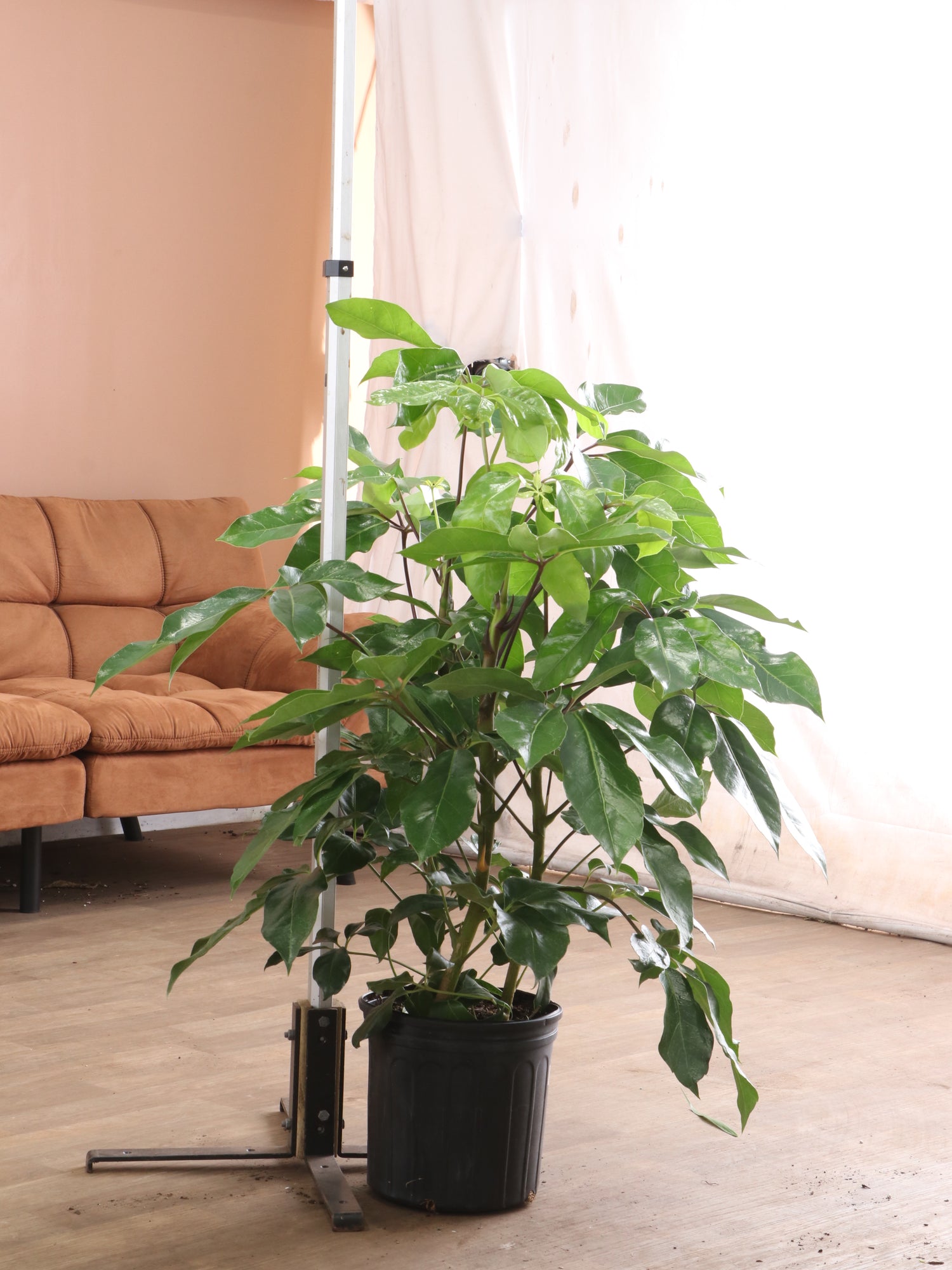
SKU: 59872673274
amate schefflera arboricola

amate schefflera arboricola 3-5 FT Schefflera Amate | NYC, NJ, CT, Boston, Providence, Washington DC, Baltimore, Philadelphia, Princeton, Long Island, and Upstate NY Delivery

Sale price$23.93 Regular price$26.59
Save 10%

Pay in installments of $6.65 with ShopPay, AfterPay and Klarna

Shipping Estimate
USA
  • USA
  • CAN

Ships within 48 hours · Estimated delivery Jul 21 - Jul 26

Promo Codes Available:

For Your Every Summer RSVP, with Code: SUMMER15

Description

amate schefflera arboricola 3-5 FT Schefflera Amate | NYC, NJ, CT, Boston, Providence, Washington DC, Baltimore, Philadelphia, Princeton, Long Island, and Upstate NY DeliveryDescription The Schefflera Amate brings gentle elegance and natural beauty to your home with her graceful umbrella shaped leaves and forgiving nature. The Schefflera plant has been quietly winning hearts for years, creating peaceful green spaces that feel like a warm embrace. Also known as the Umbrella Tree, with glossy leaflets that fan out like nature's own parasol, it adds a touch of tropical calm to any room while working quietly to purify your

Description

The Schefflera Amate brings gentle elegance and natural beauty to your home with her graceful umbrella-shaped leaves and forgiving nature. The Schefflera plant has been quietly winning hearts for years, creating peaceful green spaces that feel like a warm embrace.

Also known as the Umbrella Tree, with glossy leaflets that fan out like nature's own parasol, it adds a touch of tropical calm to any room while working quietly to purify your air. It’ll steadily reach 8-10 feet indoors, giving you time to enjoy each stage of her journey without overwhelming your space. Her forgiving spirit makes Schefflera plant care wonderfully manageable, even if you're still finding your rhythm with plant parenthood. 


Care 

How do you care for a Schefflera Amate?

Your Schefflera Amate thrives with gentle, consistent care that feels natural once you get the hang of it. Bright indirect light keeps her happy, water when soil feels dry halfway down, and monthly feeding during the growing season.

We've found that Schefflera care works best when you develop a gentle routine with your plant. She appreciates attention but doesn't demand constant fussing, making her a wonderful companion for both new and experienced plant lovers.


Is Schefflera Amate an indoor plant? 

The Schefflera Amate has adapted beautifully to indoor life, growing into a stately presence that feels perfectly at home in your living space. She reaches a comfortable 8-10 feet tall indoors, creating vertical interest without overwhelming smaller rooms.

This variety has become so well-suited to indoor growing that many people forget she originally came from warmer climates. She's truly made herself at home with us.


How often should I water a Schefflera Amate?

Water your Schefflera Amate every 7-14 days, letting the top 30-50% of soil dry completely between waterings for healthy root development and growth. Trust your finger more than any calendar when checking proper soil moisture levels throughout the pot.

During warmer months, she'll be a bit thirstier as she puts energy into new growth. In winter, she naturally slows down and needs less frequent watering.


Does a Schefflera Amate like to be misted? 

Your Schefflera Amate appreciates occasional misting, especially during dry winter months when indoor heating systems can make the air quite harsh and uncomfortable. Think of it as a gentle spa treatment that helps her feel much more comfortable and happy.

While she tolerates average home humidity well, a light mist every so often helps prevent dry leaf edges and keeps spider mites at bay. It's one of those small kindnesses that makes a real difference.


Do Schefflera Amate plants like coffee grounds? 

Skip the coffee grounds for your Schefflera Amate, as they can hold too much moisture and create potential drainage issues that harm roots. Instead, stick with quality balanced fertilizer during spring and summer for the very best growing results.

Coffee grounds work better in outdoor compost than directly in houseplant soil. Your plant will be much happier with proper fertilizer designed for indoor plants.


Where should a Schefflera Amate be placed indoors? 

Place your Schefflera Amate near a north or east-facing window where she'll receive plenty of bright, filtered light without harsh direct sun exposure. A few feet back from south or west windows works absolutely beautifully too for optimal plant health.

Remember to rotate her occasionally so all sides get equal light exposure. This helps her grow evenly and prevents her from leaning too much toward the light source.


What is the best plant food for a Schefflera Amate? 

A balanced, all-purpose houseplant fertilizer applied monthly during spring and summer gives your Schefflera Amate exactly what she needs for steady, healthy growth and development. Nothing fancy required, just consistent nutrition during her most active growing period each year.

Come winter, you can skip fertilizing entirely as she naturally rests during cooler months. It's pretty cool how plants know exactly when to slow down and conserve energy.


Do Schefflera Amate’s like sun or shade? 

Schefflera Amate prefers bright, indirect light that mimics the dappled sunlight she'd receive under taller trees in her natural habitat environment. She can adapt to medium light conditions but grows most beautifully with consistent brightness throughout the day.

Direct sunlight can actually burn her leaves, so add a sheer curtain to filter the light. Or, just position her away from intense windows to keep her comfortable and thriving.


Is Schefflera Amate good for a bedroom? 

The Schefflera Amate makes a lovely bedroom companion, quietly purifying your air while you sleep and tolerating the lower light levels bedrooms often have. Just make sure curious pets and children can't reach her delicate leaves or stems.

Her gentle presence adds a calming, natural element to bedrooms without being overwhelming. Many of our customers love having her peaceful energy in their most restful spaces.


Pet-friendly?

Your Schefflera Amate contains calcium oxalate crystals that can cause discomfort for pets who nibble on her leaves, so she's best kept in spots where curious paws and noses can't reach her.


How toxic is Schefflera Amate to cats? 

The Schefflera Amate can cause oral irritation, drooling, and upset stomach if your cat takes a taste of her leaves. You’ll need to keep her in a room your feline friend doesn't frequent.

While not life-threatening, the calcium oxalate crystals can cause real discomfort. Prevention is always the kindest approach for both your pet and your plant.


Are Schefflera Amates toxic to dogs? 

Dogs who chew on Schefflera Amate may experience mouth pain, drooling, and digestive upset from the plant’s calcium oxalate crystals. Most dogs learn to leave plants alone, but it's wise to position plants where they won't tempt curious canine investigations.


Factoids

Is Schefflera Amate an air purifying plant?

Your Schefflera Amate works quietly around the clock, removing harmful chemicals like benzene, formaldehyde, and toluene from your indoor air while adding natural beauty to your space. Think of her as a beautiful, living air filter that never needs replacing.


Where did Schefflera Amate get its name? 

The Schefflera genus is named after 18th-century German botanist Johann Peter Ernst von Scheffler, while the 'Amate' part of the name celebrates California nurseryman Archie Amate who selected and shared this particular variety with plant lovers everywhere.


Is there a cultural significance to Schefflera Amate? 

While the broader Schefflera family has come to be associated with protection and vitality, the 'Amate' variety is primarily treasured for bringing natural beauty and clean air into our daily lives. A pretty good reason to welcome one home.


Buy a Schefflera Amate

Your home deserves a plant that gives back as much as it receives, and that's exactly what you'll find with the Schefflera Amate. She'll grow alongside you for years, quietly purifying your air and adding that perfect touch of natural elegance your space has been missing.

With her forgiving nature and air-cleaning abilities, she's an ideal choice for anyone wanting a statement plant that truly cares for you in return. We're here to support you both as she settles into her new home and grows into the stunning umbrella tree she's meant to be.

Shipping Notes
  • Free Standard Shipping on $100+ Orders to the USA.
  • Except Preorder products are shipped in 48 hours.
  • Delivery to the USA:
  1. Standard Shipping : 3-10 business days
  • If time is of the essence, please consider selecting expedited delivery for faster service.
Exchange/Return Notes
  • We offer a 30-day return/exchange service after receiving.
  • Final sale items are not eligible for returns or exchanges.
  • To process your return/exchange, please contact us at [email protected]
  • Please click here for more details>>> Return & Exchange Policy
SKU: 59872673274

Discover Niche Categories That Outsell amate schefflera arboricola

Top-Converting Item to Boost Your Average Order

4.1 ★★★★★
Based on 15 reviews
Sort
Highest Rating
Newest First
Oldest First
Product Reviews
K
Verified Purchase
Kev21392
Bozeman, US
★★★★★ 5
I love Dr Jen products
Item Package Quantity: 1, Item Package Quantity: 1
This is my favorite dry mouth gel that I’ve tried. I sleep with my mouth open and take medication at night that causes dry mouth so I have zero saliva during sleep. This gel has helped the most. Sometimes I wake up in middle of night and my mouth will still be dry so I reapply. The taste is very mild , I love that it has nano hydroxyapatite as I have gerd and like the extra enamel support.
WAS THIS REVIEW HELPFUL?YesReportShare
Reviewed in the United States on February 8, 2026
E
Verified Purchase
eden
New York, US
★★★★★ 5
A treasure: surprisingly easy read for being so well researched and referenced
was recommended by Chris Kresser (Healthy Sceptic blog). I admit I was skeptical: the titel, at first glance, comes across as pretentious, and the front page has a weird 80s feel to it. Anyway, Chris knows his stuff, so I bought it. The PHD book is priceless. Yes, this is the best book about diet. I had been on a Paleo diet for a month when I got the book. I was motivated to change my diet, but after reading the book, first quickly once, and then more carefully a second time, I was even more motivated. I was convinced that I had to make a change for life. Other reviewers have summarized the contents well, so I will not. Eliminate processed foods, grains (except rice), legumes and most sugars. Stick to high fat diary. Bottom line in terms of macronutrient ratios is: not too much carbs, plenty of good fats, and ideally some protein restriction. I believe better authors could not have been found. Even though Shou-Ching Jaminet is a cancer researcher, none of them came to this from a medical or nutrition background, which is probably an advantage. They have experienced chronic disease themselves, and were committed to find solutions and understand pathways that were not well understood. They have enormous intellectual capacity (scrutinizing studies from PubMed the way they do is, well, impressive). They are open minded. And, not the least, I think they are driven by not only intellectual curiosity, but alturism, which, gives the whole project a very humane and caring feel to it. What is the difference between this diet and the Paleo diet? There are many variations of the Paleo diet, but Cordain at least recommends lean meats, which is the opposite of what the PHD recommends. The PHD "allows" full fat diary and rice, which is not recommended by most other Paleo diets. The PHD also has a rather specific macronutrient ratio recommendation. The results? Well, I started on a Paleo / GAPS protocol about a month before I got this book, so I cannot really say that all the improvements I have had can be attributed to this book. And after 48 hours without any processed foods, grains, legumes, sugar (apart from low carb from starches) and diary, I went from standing, sitting and walking with great joint pain, to only slight pain. A skin condition I had improved as well. Two weeks after I got the book, I tried using almost only rice as my carbohydrate source for 10 days. That increased my joint pain slightly. I think I in any case might have been in the high range of the carbohydrate intake during this period, which might be the reason for the change to the worse, rather than the type of starch I ate. The other thing though, is that once I started eating rice, and maybe too generous portions, my carb cravings were significantly elevated. I will try to stick mostly to sweet potatoes, taro, pumpkin, carrots, zucchini, berries and fruits (in the morning) for carbs. I have started implementing their supplement regime. I was skeptical at first, because, like many people, I prefer getting micronutrients from food, not supplements. But I decided to try since I had some heath issues and blood panel results that had to be improved. After about two weeks, I feel a bit better. I have a bit more energy and my head feels clearer. Am I skeptical to anything? Not much. - As I said, they convinced me to try their supplement regime and I do not regret it. I think anyone with an autoimmune condition, chronic disease - even a suspected chronic infection - should do so. For those who are fortunate to be 100% healthy and full of energy, well, maybe they do not need to take all the supplements if the diet is very dialed in. - At first I thought the macronutrient ratios were a bit too rigid. After reading the book a second time, I felt they presented a convincing argument. I will never weigh and measure my food, so I do not know exactly what my macro ratios look like, but the book provides very useful guidance. - Then, rice. I would have liked to see a bit more on why they think rice is a "safe" grain. Also, since it is not very nutrient dense, I think it gets a bit too much favorable mention. Eating food with low nutrient density and then taking lots of supplements does not sound like a perfect health diet. But this is a detail - people do not have to eat a lot of rice on this diet, and it is good to know that it is pretty okay to eat it from time to time. I have used their blog a lot, for tweaking my supplement regime, for recipes etc. It is an excellent companion to the book. For the next edition, I have the following wishes: - An index - Improvements in lay-out (sorry, but it is incredibly ugly): margins needed, footnotes can be smaller, table of contents more reader friendly etc. - A chapter with summary recommendations for common autoimmune conditions and chronic infections. - A bit more info on diary. Why high fat diary is okay for most people, and for what conditions diary should be eliminated completely (and why). Conclusion: I honestly think this book is such a treasure. I have translated and adapted the main recommendations into my native language for my family. It is difficult to persuade anyone about diet, but it is difficult not to try with people you really love. I do not doubt for a second that following the recommendations contained in this book can go a long way in reversing, even curing diseases, and definitely preventing diseases. I feel very grateful to Paul and Shou-Ching Jaminet. Thank you.
WAS THIS REVIEW HELPFUL?YesReportShare
Reviewed in the United States on July 27, 2011
I
Verified Purchase
Isaac J. Knoflicek
Belleville, US
★★★★★ 5
Changed My Life
Format: Hardcover
The year the Green Bay Packers drafted BJ Raji I remember being extremely shocked that I weighed almost the same as him (319 was my peak). Winter of 2009 I started riding a stationary bike fairly regularly, Spring of 2010 I started bike commuting regularly and by summer of 2012 I was down 60 pounds. As I became more interested in fitness I was more interested in how the body handled different kinds of macro nutrients. I did a few random Google searches for a book on the topic and in June of 2012 I found a review of the original PHD edition which made it sound like what I wanted. I wasn't looking to change my diet, I had a lot of joint pain and was very susceptible to binge eating/drinking, but I was loosing weight so overall I was happy. I remember reading the first chapter where it explained the "gotchyas" like having to give up wheat and laughing out loud at the though of it. I was a complete carb fiend to the point where I'd been baking my own homemade artisan breads. I found the book to be a quick read, it took me only a week. I definitely went a bit cross eyed at some of the more complex biology, but overall I found it as entertaining as it was informative, and when I'd finished I thought "What the hell", I'll try it for a week or two and see what happens. My first weekend was a little rough because I went out with some friends and because bar we were at only had fried foods, I ended up drinking way too much on an empty stomach. My first attempt at baking salmon the next day was promptly thrown up, but fortunately it didn't give me a bad taste for the fish. In only a few days I started to notice how different being hungry felt. I'd always made it a point to have breakfast and not eat again until Lunch, but I usually had a few spikes of intense hunter which I had to fight past. On this diet the hunger was there but it was more of a casual suggestion. Needless to say I had such an easy time on my two week trial that I kept the diet. That summer I lost as much weight as I had the previous two combined. I feel much more even in terms of mood, my mind feels sharper, I have a nice even energy level all day. I had hoped my joint pain would clear up faster, but it has definitely gotten better as well. I'd been wanting to reread the PHD for a while, but I knew the new edition was coming out soon so I held off. I was aware of some of the changes from following the blog (which is excellent, it's such a trip to have Paul give expert answers to your questions personally), but still wanted to go through the whole thing again. The new version is a definite improvement. Like I'd mentioned some of the biology in the original edition, particularly on the different types of fats, came early and confused and discouraged me a bit. This version they hook you in with simpler explanations and do a better job of building up the biology as you go. Also after the original edition I had to do a lot of fine tuning to the diet based on questions I'd ask Paul on blog, or going back and reading other peoples questions. In this edition they do a much better job of practically spelling out things so its easier to jump in. Finally the reader results that are included in the new edition are a really neat addition. I'd read a lot of them on the blog as well, but they're so amazing and inspiring, sprinkling them into the text the way they did was a really great idea. After finishing this new edition I feel freshly excited about a diet I've been on for half a year. I also feel better about recommending this edition to friends because it reads so much easier. I highly recommend this book to anyone looking to gain health, loose weight, or even just learn about how their bodies work.
WAS THIS REVIEW HELPFUL?YesReportShare
Reviewed in the United States on December 29, 2012
G
Verified Purchase
gp2x
Dallas, US
★★★★★ 5
I can't believe how much better I feel!
I had been eating (very) low-carb and high-protein for the better part of a decade - and I had gotten a lot of practice arrogantly dismissing suggestions (from any source) that I should change anything about my diet. It is a testimony to the insightfulness of this book that it persuaded me to change. How was I persuaded? * The Jaminets are highly educated (Ph.D.s both), but not they're not nutritionists and are not bound by any party line. * They amass a huge volume of scientific literature in support of their assertions - about 1/3 of every page is journal citations. * They write clearly, and are clearly motivated by a desire to share the keys they've discovered for better health. * Time after time, while reading, I exclaimed "so *that's* why!" - there's an overarching framework they build, and after reading it I have a much broader and deeper understanding of health and nutrition. The changes I made were: 1. Eat a modest amount (15-20%) of calories as carbs from what they call "safe starches" (rice & potatoes in my case.) 2. Eat a large (~70%) of calories from fat. In particular, I consume dramatically more butter (kerrygold!), and I've added a fair bit of coconut oil too. 3. (As a result, the amount of protein I eat has dropped somewhat.) 4. Supplementing with a mix of the vitamins they recommend. 5. Doing a 24-hour fast once a week. Results: (after 1.5 months or so.) 1. I'm no longer "brain-dead" and unable to think in the evenings after work. 2. I no longer have fruit or chocolate cravings. 3. I'm much happier, and wake up looking forward to the day. 4. I've been much more social. 5. The extra starch has not resulted in weight gain. (I always gained weight when eating carbs before.) 6. It looks like the fasting (which I've never tried before) is helping my alertness and also contributing to healthy weight loss. It took less than a week for me to notice dramatic changes. The diet guidelines are straightforward and fit on a page, but the explanatory material is priceless. The Jaminets post on an ongoing basis at their perfecthealthdiet dot com blog as well. I can't recommend this book highly enough.
WAS THIS REVIEW HELPFUL?YesReportShare
Reviewed in the United States on January 2, 2011
C
Verified Purchase
Chris Kleeschulte
Lake Worth, US
★★★★★ 4
Best diet/health book I have ever read
Format: Kindle
For scientifically-minded laypeople, this is an excellent read. I altered my diet because of this book. Using a bit of intuition, it seems much more logical that nature attempts to achieve balance with respect to macro nutrients and vitamins/minerals. I loved Mr. Jaminet's explanation of the relationship of vitamin A,D, and K. I do have about a thousand questions for the author (Paul Jaminet), such as his lower protein recommendations (this differs greatly from a typical gym rat's recommendation of 1 gram of protein per pound of body mass). The book recommends more protein for the athlete, but not at the levels recommended elsewhere (high protein diets). I think Mr. Jaminet and others that are recommending a smaller ratio of protein to fat/carbs are ahead of the game. I find my diet in desperate need of more insoluble fiber, although this book does not treat fiber as being extremely important and advises against too much fiber. I use PGX daily fiber once per day and it had made a big difference for me. All in all, there are 3 big aspects that I would like Mr. Jaminet to weigh in on in future books or other publications. First, please expand more on repairing the health of your gut and the good bacteria that live there. What is the absolute quickest way to optimize gut flora and, subsequently, keep inflammation at a minimum? I understand Mr. Jaminet's stance on legumes, but it seems very contradictory to common sense. From the surface, not eating any legumes would raise my BS flag. Overall, if the answer is "don't eat legumes because you can get all the benefits from other foods and, therefore, better safe than sorry", then this should be considered a dubious argument (I am not saying that this is the argument in the book). To be fair, the book has much more detailed reasons to steer clear of legumes, but I am still a little on the fence about it. Lastly, PHD refers to the Shangri-la diet and using MCT or Coconut oil to suppress appetite, but I would LOVE a detailed scientific explanation of what the body's "setpoint" really is. From my clinical trials (on myself!), this is a huge factor. My body seems to want to be at a set weight and even body fat percentage and it takes quite a bit of effort to lower or raise that setpoint. This applies to the PHD because assertions are made with respect to the body's need for a certain quantity of protein and carbs. How does the setpoint interact with those processes? PROS: * Clearly, Mr. Jaminet or his editors took a technical writing course. This book is written using the active voice and uses a conversational tone. Extremely easy to read! It is simple, direct, clear, and concise. CONS: * This book cites clinical studies as evidence to buttress certain assertions. This is not a problem if you factor in what the study was trying to measure and external variables that would greatly affect the conclusions. Here is an example of clinical studies that are almost worthless (at least from drawing a single conclusion): Patient group A ate such and such and patient group B ate such and such over a 20 year period. The death rate was 11% higher in patient group A, therefore eating what they ate "may" have been the cause of the higher death rate. Drawing conclusions from such a study is really difficult, I think. I am no scientist, but even I can see that these sorts of studies should be used as a starting point for more investigation and not as the final word on a subject.
WAS THIS REVIEW HELPFUL?YesReportShare
Reviewed in the United States on July 7, 2013

recommand products