SKU: 59427010581
lantana plant fertilizer

lantana plant fertilizer Radiation Lantana Phoenix, AZ | Lantana camara

Sale price$24.12 Regular price$26.80
Save 10%

Pay in installments of $6.70 with ShopPay, AfterPay and Klarna

Shipping Estimate
USA
  • USA
  • CAN

Ships within 48 hours · Estimated delivery Jul 22 - Jul 27

Promo Codes Available:

For Your Every Summer RSVP, with Code: SUMMER15

Description

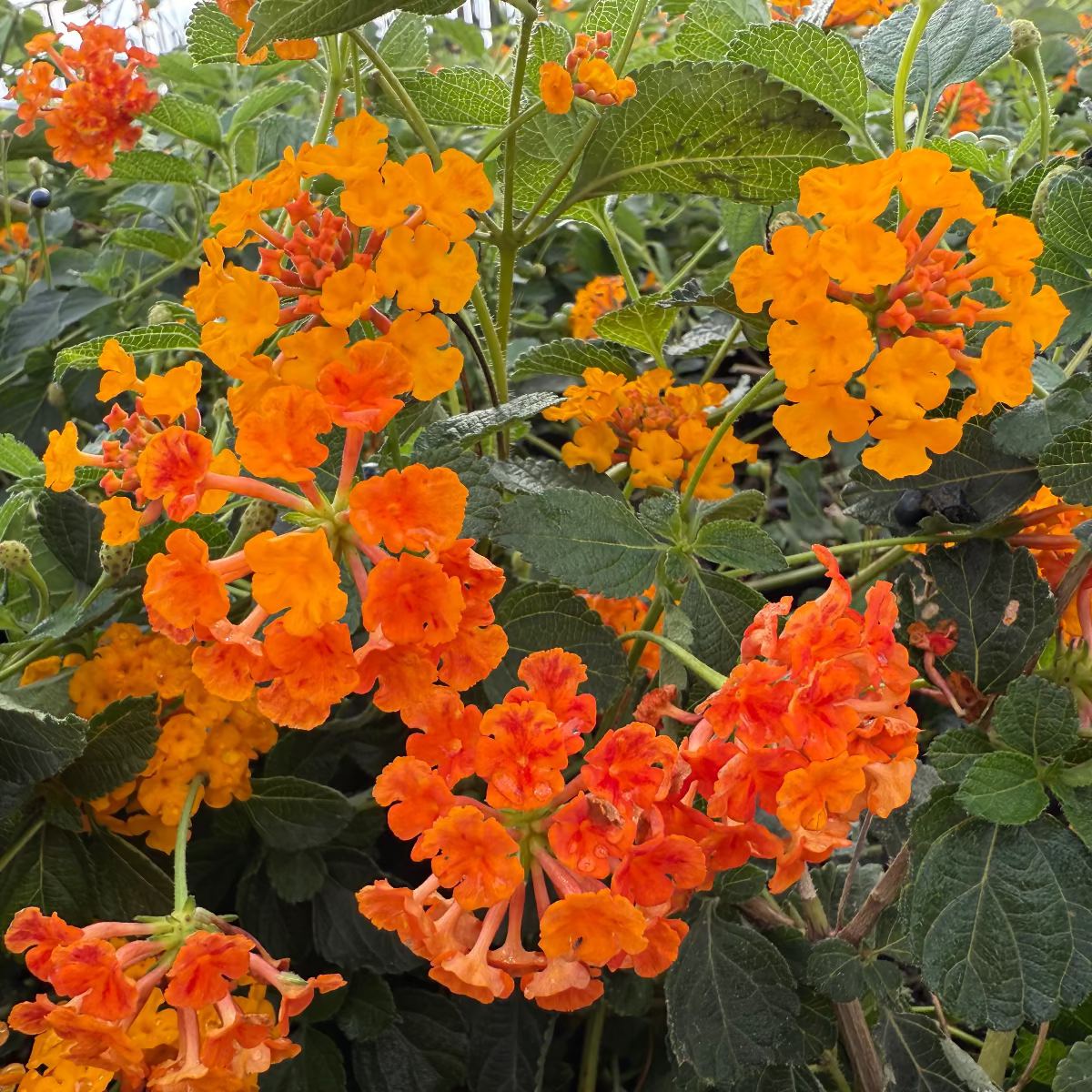
lantana plant fertilizer Radiation Lantana Phoenix, AZ | Lantana camaraPhoenix's Most Vibrant Orange Red Blooming Groundcover for Full Sun Radiation Lantana (Lantana camara 'Radiation') is one of the most colorful and reliable blooming groundcovers for the Phoenix Valley. Its bold orange red blooms with bright yellow centers create a continuous fireworks display from spring through fall and in Phoenix's mild winters, it often keeps blooming nearly year round. It grows fast, spreads 24 feet wide, and handles full desert

Phoenix's Most Vibrant Orange-Red Blooming Groundcover for Full Sun

Radiation Lantana (Lantana camara 'Radiation') is one of the most colorful and reliable blooming groundcovers for the Phoenix Valley. Its bold orange-red blooms with bright yellow centers create a continuous fireworks display from spring through fall — and in Phoenix's mild winters, it often keeps blooming nearly year-round. It grows fast, spreads 2–4 feet wide, and handles full desert sun with minimal water once established. Whether you're covering a sunny slope in Chandler, adding color to a xeriscape in Scottsdale, or lining a wall in Mesa — Radiation Lantana delivers nonstop tropical color without the tropical water bill.

Radiation Lantana Plant Details

Attribute Detail
Scientific Name Lantana camara 'Radiation'
Common Names Radiation Lantana, Orange Lantana
Mature Height 2–4 feet
Mature Width 2–4 feet
Growth Rate Fast — 1–2 feet per year in Phoenix
Sun Full sun (6+ hours). Thrives in intense Phoenix heat and reflected heat from walls.
Water Low once established. Highly drought-tolerant.
USDA Zones 8–11 (Phoenix is Zone 9b–10a)
Soil Well-draining. Tolerates Arizona caliche soils.
Foliage Evergreen in warm Phoenix winters; may die back in hard freezes
Bloom Color Orange-red with yellow center; multi-toned
Bloom Season Spring through fall; near year-round in Phoenix

Radiation Lantana Uses in Phoenix Landscapes

High-Impact Color for Sun-Baked Beds

Radiation Lantana thrives in the brutal Phoenix sun that kills less heat-tolerant plants. Its multi-toned orange-red and yellow blooms intensify with heat, making it most vibrant during Phoenix's hottest months when other plants struggle. Plant in full sun beds, along south-facing walls, or anywhere you need bold color without constant watering. One plant at maturity covers 2–4 square feet of bare soil beautifully.

Slope Stabilization and Mass Plantings

The spreading habit and fast growth rate make Radiation Lantana ideal for covering slopes, berms, and large open areas where weed suppression and erosion control are important. Mass plantings create a stunning carpet of orange-red color visible from the street. For slope coverage: plant 3 feet apart for full coverage in 1–2 seasons. For mass color beds in Gilbert or Tempe, plant 2.5 feet apart for quicker fill-in.

Butterfly and Pollinator Gardens

Radiation Lantana is a top butterfly plant for Phoenix landscapes. The dense flower clusters provide nectar for monarchs, swallowtails, Gulf fritillaries, and dozens of other species throughout the blooming season. Pair with Desert Marigold, Salvia, and Autumn Sage to create a pollinator corridor that supports wildlife from spring through fall in Peoria, Glendale, and beyond.

Low-Water Border and Edging Plant

At 2–4 feet tall, Radiation Lantana works perfectly as a low border shrub along driveways, pathways, or property lines. Its mounding habit fills in cleanly without staking or heavy pruning. Plant 3 feet apart along a fence or driveway edge for a continuous color hedge that stays colorful with almost no maintenance in Phoenix's desert climate.

Best Time to Plant Radiation Lantana in Phoenix

Fall (October–November) is ideal — warm soil supports root development while cooler air reduces transplant stress, giving the plant 6–8 months to establish before its first Phoenix summer. Spring (February–April) is a strong second option as temperatures are still manageable. Avoid summer planting if possible — although Lantana is tough, transplant stress in summer heat increases water demand and slows establishment.

How to Plant Radiation Lantana

  1. Dig wide, not deep — dig a hole 2–3x the width of the root ball and the same depth.
  2. Check for caliche — break through any hardpan layer to ensure water can drain below the roots.
  3. Backfill with native soil — a light 20% organic blend is fine; avoid heavy compost that retains excess moisture.
  4. Spacing — 2.5–3 feet apart for mass plantings; 3 feet for borders; 4 feet for standalone accent plants.
  5. Water basin — mound a 3–4 inch soil ring around the plant to direct water to the root zone.
  6. Mulch — apply 2–3 inches of bark or gravel mulch to reduce evaporation and moderate soil temperature.

Watering Radiation Lantana in Phoenix

First Year Watering Schedule

  • Weeks 1–2: Every 1–2 days, deep and slow (20–30 minutes)
  • Months 1–2: Every 3–4 days
  • Months 3–6: Every 7–10 days (every 5–7 days during peak summer)
  • After Year 1: Every 10–14 days in summer; every 3–4 weeks in winter

Drip Irrigation

Use a 1–2 GPH emitter placed 18–24 inches from the plant center. Water deeply and infrequently to encourage deep root development. Once established, Radiation Lantana is one of the most drought-tolerant flowering plants for Phoenix landscapes — cutting back to once every 2 weeks in summer is typically sufficient.

How fast does Radiation Lantana grow in Phoenix?
Expect 1–2 feet of growth per year under Phoenix conditions. It grows fastest in spring and fall and may slow during peak summer heat, but will resume vigorous growth when temperatures moderate.

Is Radiation Lantana drought-tolerant once established?
Yes — one of the best. After its first growing season, Radiation Lantana is highly drought-tolerant and will thrive with deep, infrequent watering every 10–14 days in summer. It's among the most water-efficient flowering shrubs available for Phoenix landscapes.

What's the difference between Radiation and other Lantana varieties?
Radiation Lantana features distinctive orange-red and yellow multi-toned blooms — one of the most vivid color combinations in the Lantana family. It's more compact than some Lantana species and keeps a tighter mounding habit, making it easier to use as a border or edging plant compared to trailing or sprawling varieties.

Does it attract butterflies?
Yes — Radiation Lantana is one of the top butterfly-attracting plants for the Phoenix Valley. The dense flower clusters are rich in nectar and draw monarchs, swallowtails, painted ladies, and many other species throughout the blooming season.

Will it survive Phoenix summers?
Absolutely. Radiation Lantana was made for desert heat. Full sun, reflected heat, and Phoenix's 110°F summers don't faze it. It actually blooms more intensely under heat stress, making it one of the most reliable summer-color plants for Scottsdale and Phoenix landscapes.

You May Also Like

Dallas Red Lantana — deep red blooms on a similarly spreading habit, great for bold color contrast in xeriscape and full-sun beds.

New Gold Lantana — bright solid yellow blooms on a spreading groundcover form, pairs beautifully with Radiation for a vibrant orange-and-gold color combo.

Purple Trailing Lantana — cool purple blooms that complement Radiation's warm tones perfectly in mixed groundcover plantings.

White Trailing Lantana — bright white blooms on a low-spreading form that creates a crisp contrast with Radiation's warm orange-red color.

How Many Radiation Lantana Do I Need?

Radiation Lantana mounds 2 to 4 feet tall and wide. For a solid mass of color or slope coverage, plant on 3-foot centers; tighten to 2.5 feet for a faster fill. At 3-foot spacing one plant covers roughly 8 square feet once filled in.

Area to Cover Plants Needed (3 ft spacing)
50 sq ft about 6 plants
100 sq ft about 12 plants
200 sq ft about 24 plants

As a color hedge along a driveway or path, space plants 3 feet apart in a single row: about 4 plants per 10 linear feet.

Radiation Lantana Season-by-Season in Phoenix

  • Spring (Feb to Apr): A late-winter cutback triggers a flush of new growth and the first orange-red blooms. Strong spring planting window.
  • Summer (May to Sep): Peak season, and it actually blooms harder under heat stress. Shrugs off 110-degree days and reflected heat off walls and pavement, and the monsoon (Jul to Sep) fuels even more bloom. Among the toughest summer-color plants for the Valley.
  • Fall (Oct to Nov): Prime planting season and heavy continued color as nights cool.
  • Winter (Dec to Jan): Often keeps a little color in mild Valley winters, but Lantana camara is frost-tender: tops can freeze back below about 28°F. It re-sprouts from the crown in spring. Cut frost-damaged stems back hard in late February.

At a Glance

✔ Pollinator-Friendly   ✔ Heat-Loving (Reflected-Heat Tolerant)   ✔ Drought-Tolerant   ✔ Low-Maintenance   ✔ Deer & Rabbit-Resistant   ✔ Cold-Hardy to 20°F (recovers from roots)

Plant It With

Is Radiation Lantana Right for Your Yard?

This is a top pick for hot, sunny, low-water beds, slopes, and color hedges in full sun and reflected heat on well-draining soil. It is not a fit for shade or for cold low spots that trap frost, and lantana foliage and unripe berries are toxic if eaten, so keep it away from areas where pets or small children graze.

Shipping Notes
  • Free Standard Shipping on $100+ Orders to the USA.
  • Except Preorder products are shipped in 48 hours.
  • Delivery to the USA:
  1. Standard Shipping : 3-10 business days
  • If time is of the essence, please consider selecting expedited delivery for faster service.
Exchange/Return Notes
  • We offer a 30-day return/exchange service after receiving.
  • Final sale items are not eligible for returns or exchanges.
  • To process your return/exchange, please contact us at [email protected]
  • Please click here for more details>>> Return & Exchange Policy
SKU: 59427010581

Discover Niche Categories That Outsell lantana plant fertilizer

Top-Converting Item to Boost Your Average Order

4.4 ★★★★★
Based on 19 reviews
Sort
Highest Rating
Newest First
Oldest First
Product Reviews
W
Verified Purchase
William Prince
Bozeman, US
★★★★★ 5
Woollacott has done an amazing job of beginning to document the nature of the ...
Format: Hardcover
Ms. Woollacott has done an amazing job of beginning to document the nature of the conscious substrate that forms the very foundation of our existence, and she does so in a scientifically responsible fashion. An endeavor of this nature by a professional scientist takes not a small amount of courage because this is a topic that is ignored and often ridiculed by many mainstream scientists. The fact that we have attained a large body of evidence that points ineluctably to the reality of non-corporeal consciousness in the universe is enough to warrant serious investigations into this phenomenon, and hopefully this erudite work and others like it will spur further scholarly investigations into this subject of overarching importance. As an added bonus this book is a thoroughly enjoyable and stimulating read; it's hard to put down once you start reading. This is must read for all people who are curious about the ultimate nature of their being, and by all rights that should include everyone.
WAS THIS REVIEW HELPFUL?YesReportShare
Reviewed in the United States on June 27, 2016
H
Verified Purchase
Howard Schumann
Alexandria, US
★★★★★ 5
Logical, Coherent, and Inspiring
Format: Hardcover
I have read an infinite number of books on the nature of reality and our spiritual nature and I don't hold back in saying that "Infinite Awareness" is one of the best. Ms. Woollacott's book is logical, coherent, and inspiring. It can be challenging but it is 100% beyond many New Age tropes. While the book does repeat several well known NDEs and again discusses Ian Stevenson's studies on reincarnation, it is always with a fresh approach. In addition, this is one of the very few books that discusses our power to create our own reality through intention. Though not mentioned in the book, to me it is a tribute to the groundbreaking work of Werner Erhard and the Est Training of the 1970s.
WAS THIS REVIEW HELPFUL?YesReportShare
Reviewed in the United States on March 13, 2017
P
Verified Purchase
PK1950
Cuba, US
★★★★★ 5
The book's title says it all - Highly recommended
Format: Hardcover
A very interesting read of a scientist (a neuroscientist) who began as a nonbeliever in anything outside of empirical, mainstream science. Her encounters with patients near death experiences (NDEs) during surgery slowly convinced her otherwise. She also had read Ian Stevenson's seminal work on reincarnation (published in the 1960s), and Raymond Moody's book (Published in the 1970s) on NDEs. She also came to believe that reincarnation and the spiritual realm are real, not fiction. Our earthly science is very far from understanding these aspects of reality. Scientists can't even explain consciousness An excellent read. highly recommended..
WAS THIS REVIEW HELPFUL?YesReportShare
Reviewed in the United States on June 1, 2016
L
Verified Purchase
Lorraine Haataia, PhD
Belleville, US
★★★★★ 5
A guidebook for escaping the rat race
Format: Kindle
This book provides a completely new way of looking at your job and potential residual income. It's a guide to help you shift your focus to your residual income which can set you free. Our school system teaches kids that, until they're in their late teens or early 20s, they're going to spend their days in school and college. These habits of showing up and punching the clock (via attendance) are so ingrained by this point in life that few question whether there's another realistic option. And adults go into jobs that perpetuate this cycle of clocking in early in the morning and checking out late in the evening. Timothy Ferris shows that it is indeed possible to escape this rat race. He shows a clear step-by-step plan to do so. And it's there for the taking if you're bold enough to grab the steering wheel of your life. This is quite a comprehensive book discussing everything from your job transition to your travel, and how to set up your company and manage it without taking too much financial risk. He talks about guarding your time, which I believe is one of the most valuable points in the book. He mentions throughout the book strategies to reduce getting caught up in time-wasting activities such as meetings, spending too much time on email at the wrong times, or wasting time on phone calls. He details out his techniques to keep distracting people on the sidelines while he's living his life and doing the things that his heart desires. This book is an instruction manual for escaping the rat race. It's somewhat of a memoir, and a work in progress, of how he's doing it. He has examples throughout the book of how different people have applied his principles and changed their lives. He included a few people who had kids, which is great because a lot of people will use that excuse as a reason to not be able to do what he's doing. He's so open in the book revealing how he takes care of many personal matters in his life, even down to giving his travel checklist and his preferred brand of underwear, relevant for people who want to travel light. He's probably one of the world's most eligible bachelors. That is, if he's willing to let someone get any time on his calendar? I like him. I'd love to run into him in a coffee shop in a foreign country and have some time to just chat with him. He warns that some people really don't know what to do if they aren't working. This is a vital component of the book. He's going full-force at experiencing life in different cultures and getting involved in many different activities that give him new life experiences and perpetuate more new ways of thinking. It's important to know what to do when you are free. Otherwise you just have a vacuum of time which can feel like a boring retirement, where you're available, but all your friends and family are at work. I'm a writer, so I wasn't interested in setting up another company, but he also addresses intellectual property and its intrinsic value. Despite the fact that I don't want to set up a product-based business, many of his strategies are completely applicable and I've begun to apply the techniques right away. Yesterday, I choose to schedule a quick phone call instead of an in-person meeting when the in-person meeting would have been much more time-consuming, for example. He reminded me that I really need to guard my writing time. I certainly can't spin out books on 4 hours a week, but I could if I were willing to farm out the writing activity. He gave me a whole new appreciation for time and what I do each day of my life. If you're not satisfied with your work, or if you're searching for more ways to expand your income and free up your time, this book will be well worth your time. It's urgent for parents to put their kids in a different situation if they don't want them to get caught up in the same rat race that hasn't been fulfilling for them. If they change their own happiness level, it will certainly inspire their family and everyone they know as well. I love the title--The 4-Hour Workweek. At first it seems so absurd, like how could anyone do that? Yet after I read the book, I have tremendous respect this man who is the architect of his own freedom. And he shares his path for others who want to follow.
WAS THIS REVIEW HELPFUL?YesReportShare
Reviewed in the United States on February 2, 2016
S
Verified Purchase
Sweetpea Waterlilly
Charlottesville, US
★★★★★ 5
Learn to live life now
I am a first time reviewer. I don't know Tim. I only know his book. That there are so many first time reviewers speaks volumes about the book. That said, here is my review: It took a kid to get the grown-ups to acknowledge what everyone knew to be true: the emperor was naked. Tim Ferriss is a kid relative to most other "self-help" authors but, like the young boy in the fable, his simple, uncluttered collection of "information we already know" more explicitly and successfully states the truth: our idea of achievement that requires a slavish obsession with working ourselves into the ground is a naked religion. Success is joy. Few books have the potential to inspire passion and fuel personal revolutions. The 4-Hour Workweek is one of them. This book speaks the common yearning to be liberated from the punishing work habits that our society has convinced us are compulsory for success. In simple, often humorous, terms, Tim Ferriss tells us how most of us lie to ourselves about why and how we work and shows us how we can become free. The modern age promised to bring freedom to humanity. Automation would liberate us from the drudgery of many common tasks, allowing us to complete our work with lightening speed, reserving the rest of our time for leisure. Like millionaires who can afford servants to do the drudgery, the common person would be able to forget the mundane and engage in the profound, to travel, to explore, and most importantly, to be free of worry. Unfortunately, we humans forgot about freedom and became slaves to our machines. Machines increased productivity and the availability of things. We reacted by convincing ourselves that we had to have them all to be satisfied and so became slaves to the jobs we believed necessary to obtain those things. More recently, email and cell phones, which were intended to increase productivity and communication, did so by making us instantly accessible and required us to be instantly responsive at any time of the day or night. Cable television and the Internet also increased communications and the flow of information, but also resulted in an information bombardment that left us catatonic, unable to disengage, yet unable to absorb it all. The result? At the end of our working lives - many times not by our own choice but because of downsizing and outsourcing -- exhausted and demoralized, we cannot enjoy the delayed gratification that has been our beacon of light, our holy grail, for so many years. Tim Ferris has the audacity to set the whole paradigm on fire in order to illuminate its true nature. Tim questions our assumptions about what progress is and what progress has done for us by highlighting the terrific costs we have imposed on ourselves. With gleeful delight Tim opens our eyes to the fact that we have become the cyborgs, less human rather than more. In a clear, step-by-step fashion, he presents elegant concepts and applies them to life in practical ways that have profound results. He reminds us that "the opposite of happiness is not sadness but boredom" and employs Pareto's 80/20 principle to demonstrate how we can identify those aspects of our lives that hold us back from being happy. He urges us to understand that life is not about the acquisition of things for later enjoyment, life is about happiness, fulfillment in the present, rather than in some un-promised future. Unfettered by useless jargon and overly academic presentation, Tim demonstrates how we can return to sanity and achieve happiness by finally becoming masters over the technology that was supposed to free us. He challenges us to give ourselves permission to quit the rat race and rejoin the human race. These ideas are not entirely new, but Tim's particular expression of them is like sparkling water to the parched souls of millions who now labor incessantly to achieve success yet yearn to quench their thirst for freedom. You don't have to be a millionaire to live a millionaire lifestyle, Tim says. Do you have a dream? Live it now.
WAS THIS REVIEW HELPFUL?YesReportShare
Reviewed in the United States on June 17, 2007

recommand products