SKU: 53676747125
prickly pear cactus image

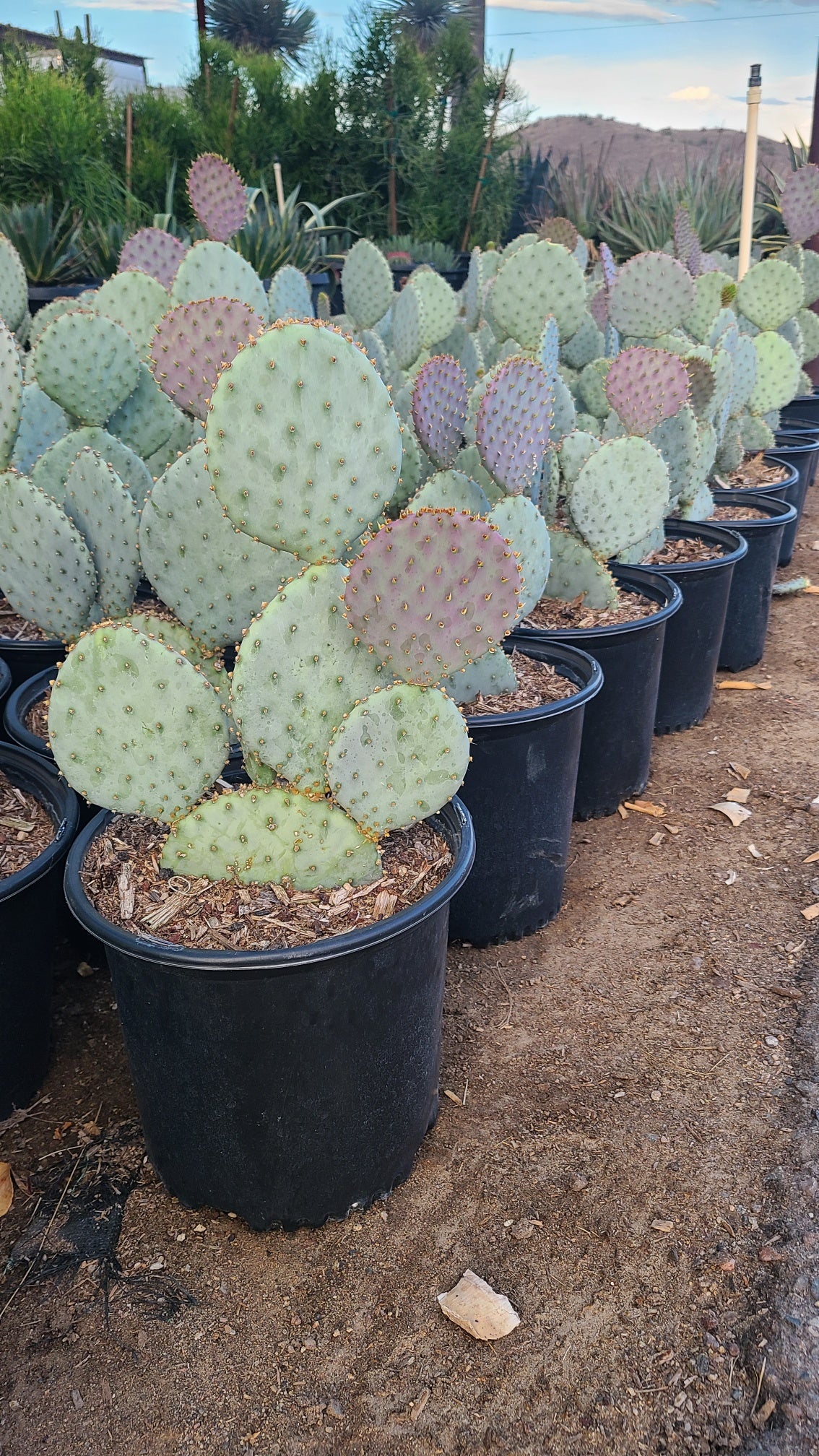
prickly pear cactus image Buy Purple Prickly Pear Phoenix, AZ | Opuntia santa-rita

Sale price$26.30 Regular price$29.22
Save 10%

Pay in installments of $7.30 with ShopPay, AfterPay and Klarna

Shipping Estimate
USA
  • USA
  • CAN

Ships within 48 hours · Estimated delivery Jul 16 - Jul 21

Promo Codes Available:

For Your Every Summer RSVP, with Code: SUMMER15

Description

prickly pear cactus image Buy Purple Prickly Pear Phoenix, AZ | Opuntia santa-ritaArizona's Most Colorful Native Cactus Purple Pads Year Round The Purple Prickly Pear (Opuntia santa rita) is the showstopper of the prickly pear family and one of the most eye catching native cacti you can plant in a Phoenix landscape. Its broad, flat pads shift from blue green to deep purple under cold or drought stress meaning you get stunning color exactly when your garden needs it most. Growing just 23 feet tall and spreading 35 feet wide, this

Arizona's Most Colorful Native Cactus — Purple Pads Year-Round

The Purple Prickly Pear (Opuntia santa-rita) is the showstopper of the prickly pear family and one of the most eye-catching native cacti you can plant in a Phoenix landscape. Its broad, flat pads shift from blue-green to deep purple under cold or drought stress — meaning you get stunning color exactly when your garden needs it most. Growing just 2–3 feet tall and spreading 3–5 feet wide, this low-growing cactus produces showy yellow flowers with red-orange centers in spring, followed by edible reddish-purple fruit. Whether you're building a drought-tolerant front yard in Scottsdale, filling a rocky slope in Fountain Hills, or creating a native cactus garden in Mesa — Purple Prickly Pear delivers year-round color with zero irrigation once established.

Purple Prickly Pear Plant Details

Attribute Detail
Scientific Name Opuntia santa-rita
Common Names Purple Prickly Pear, Santa Rita Prickly Pear, Violet Prickly Pear
Mature Height 2–3 feet
Mature Width 3–5 feet (spreading)
Growth Rate Moderate — fills in within 1–2 years in Phoenix
Sun Full sun (6+ hrs). Handles reflected heat from walls and pavement.
Water Extremely low once established. Thrives on rainfall alone in Phoenix.
USDA Zones 8–11 (Phoenix is Zone 9b–10a)
Soil Well-draining. Adapts to Arizona caliche and rocky native soils.
Foliage Evergreen — pads stay year-round, turn purple in cold/drought
Native Status Native to Arizona, southern New Mexico, and northern Mexico

Purple Prickly Pear Uses in Phoenix Landscapes

Drought-Tolerant Front Yard & Xeriscape

Purple Prickly Pear is the ultimate zero-water landscape plant once established. Mass-plant 3–5 specimens across a gravel or decomposed granite bed for a colorful, maintenance-free front yard. The purple pads pop against warm-toned gravel — a look that's become a signature of modern Scottsdale and Gilbert xeriscapes. Pair with Golden Barrel Cactus and Desert Spoon for texture contrast.

Native Cactus Garden

Create an authentic Sonoran Desert garden by grouping Purple Prickly Pear with Engleman's Prickly Pear, Mexican Fence Post, and Totem Pole cactus. The color contrast between the purple pads and the green columnar cacti creates a striking display. This combination thrives in Tempe, Chandler, and Mesa with almost no supplemental water.

Slope & Erosion Control

The spreading growth habit and dense root system make Purple Prickly Pear an excellent choice for stabilizing slopes and hillsides in Fountain Hills, Cave Creek, and north Scottsdale. Plant 3 feet apart on slopes — the pads will knit together within 2 seasons to create a colorful, erosion-resistant groundcover.

Wildlife & Pollinator Garden

The spring flowers attract native bees and butterflies, while the edible fruit feeds birds and desert wildlife through summer. Plant near a patio or window in Peoria or Glendale for front-row wildlife viewing.

Best Time to Plant Purple Prickly Pear in Phoenix

Fall (October–November) is ideal — warm soil encourages root growth while cooler air reduces transplant stress. This gives your prickly pear 6–8 months of root establishment before its first Phoenix summer. Spring (February–April) is the second-best window. Avoid planting in peak summer if possible, though established Purple Prickly Pear is incredibly heat-tolerant.

How to Plant Purple Prickly Pear

  1. Dig wide, not deep — 2–3x the root ball width, same depth as the container.
  2. Check for caliche — break through any hardpan layer for drainage. Prickly pear will rot in standing water.
  3. Backfill with native soil — no amendments needed. This cactus prefers lean, rocky soil.
  4. Spacing — 3 feet apart for mass planting or slope coverage; 4–5 feet for individual specimens.
  5. Water basin — build a shallow ring to direct water to roots during establishment only.
  6. Mulch — 2–3 inches of gravel or decomposed granite. Never use organic mulch against cacti.

Watering Purple Prickly Pear in Phoenix

First Year Watering Schedule

Weeks 1–2: Every 3–4 days, deep and slow. Month 1–2: Every 7–10 days. Month 3–6: Every 2 weeks. After Year 1: Rainfall only in most Phoenix locations. Supplement once monthly in peak summer only if pads look shriveled.

Drip Irrigation

Place one 1 GPH emitter 12 inches from the base during the first year. After establishment, remove or turn off supplemental irrigation — overwatering is the #1 killer of prickly pear in Phoenix landscapes.

How fast does Purple Prickly Pear grow in Phoenix?
Moderate growth — a 1-gallon plant will fill a 3–4 foot area within 2 years in full sun. New pads emerge in spring and summer, each one adding to the spreading clump.

Why do the pads turn purple?
The purple coloring intensifies during cold weather (winter) and drought stress. It's caused by anthocyanin pigments — the same compounds that make blueberries blue. The more stress, the deeper the purple. In summer with regular water, pads shift back toward blue-green.

Is Purple Prickly Pear fruit edible?
Yes! The reddish-purple fruit (called tunas) is edible and has been used in traditional Southwestern cuisine for centuries. Harvest with tongs in late summer — they make excellent jams, syrups, and agua fresca.

Does Purple Prickly Pear have spines?
Purple Prickly Pear has fewer spines than most prickly pear species, but it does have glochids (tiny hair-like barbs). Plant it at least 3 feet from walkways and play areas. Use leather gloves when handling.

Can Purple Prickly Pear handle Phoenix summer heat?
Absolutely — it's native to the Sonoran Desert and handles temperatures well above 115°F. It also tolerates reflected heat from walls, concrete, and asphalt without any issues.

You May Also Like

Engleman's Prickly Pear — Arizona's classic green prickly pear, perfect for pairing with Purple Prickly Pear for a two-tone cactus display.
Golden Barrel Cactus — A round, golden-spined cactus that contrasts beautifully with the flat purple pads.
Mexican Fence Post — A tall columnar cactus that adds vertical height behind low-growing prickly pear.
Queen Victoria Agave — A compact, geometric agave with white markings — stunning accent next to purple pads.
Totem Pole Major — A smooth, spineless columnar cactus that pairs perfectly in modern desert gardens.

How Many Purple Prickly Pear Do I Need?

This is a low, spreading cactus (3 to 5 ft wide) that knits together for slope cover, mass plantings, and erosion control. Space plants about 3 ft on center to fill in within two seasons. Use the coverage table to plan a bed or slope:

Area to Cover Plants at 3 ft Centers
50 sq ft 5–6
100 sq ft 11–12
200 sq ft 22–24

For a single color accent in a gravel bed, one plant reads beautifully. Keep all plantings at least 3 ft back from walkways and play areas, since the pads carry glochids.

Purple Prickly Pear Season-by-Season in Phoenix

  • Spring (Feb–Apr): Showy yellow flowers with red-orange centers open along the pad edges, drawing native bees and butterflies. New pads flush as the weather warms. Strong second planting window.
  • Summer (May–Sep): Shrugs off temperatures well above 115°F and reflected heat on rainfall alone. Edible reddish-purple tunas ripen by late summer. Keep soil dry between any supplemental soaks.
  • Fall (Oct–Nov): Prime planting season. Warm soil and mild air give roots months to establish.
  • Winter (Dec–Jan): Cold and drought stress deepen the pads to vivid purple, the plant's signature look. Very cold hardy to about 15°F, so it sails through Valley winters with no protection.

At a Glance

✔ Arizona Native   ✔ Heat-Loving (Reflected-Heat Tolerant)   ✔ Drought-Tolerant   ✔ Pollinator-Friendly   ✔ Edible   ✔ Evergreen   ✔ Low-Maintenance   ✔ Fire-Wise   ✔ Deer & Rabbit-Resistant   ✔ Cold-Hardy to 15°F

Plant It With

  • Engleman's Prickly Pear: Arizona's green native prickly pear for a two-tone pad display.
  • Mexican Fence Post: tall columns that add vertical height behind the low purple pads.
  • Totem Pole Major: a smooth sculptural column that pairs cleanly in a modern desert bed.
  • Desert Spoon: a silvery rosette that adds soft texture contrast to the flat pads.

Is Purple Prickly Pear Right for Your Yard?

It thrives in full sun and reflected heat in lean, fast-draining native soil, making it a no-irrigation choice for front yards, slopes, and native cactus gardens. Break through caliche so water never stands at the roots. It is not a fit right beside walkways, patios, or play areas, since the glochids catch skin and clothing: give it at least 3 ft of clearance.

Shipping Notes
  • Free Standard Shipping on $100+ Orders to the USA.
  • Except Preorder products are shipped in 48 hours.
  • Delivery to the USA:
  1. Standard Shipping : 3-10 business days
  • If time is of the essence, please consider selecting expedited delivery for faster service.
Exchange/Return Notes
  • We offer a 30-day return/exchange service after receiving.
  • Final sale items are not eligible for returns or exchanges.
  • To process your return/exchange, please contact us at [email protected]
  • Please click here for more details>>> Return & Exchange Policy
SKU: 53676747125

Discover Niche Categories That Outsell prickly pear cactus image

Top-Converting Item to Boost Your Average Order

4.1 ★★★★★
Based on 14 reviews
Sort
Highest Rating
Newest First
Oldest First
Product Reviews
R
Verified Purchase
Robert Higginson
Lowell, US
★★★★★ 5
Skeptical...... to Believer
Style: Modifier, Style: Modifier
I've waited awhile to write this review, to see how time effected my opinion. A little background, my daughter really wanted a 328i, so I went out and found a clean, single owner vehicle with a little over 100k on it. Its the family's first BMW, but as a mechanic I've seen and worked on them all. The BMW N52 engine seems overly complicated for what it does. Power output and economy are just average even though its got just about every bell and whistle including variable valve timing. One thing that struck me was how noisy it was. Kinda like a quiet sewing machine. I changed the oil to Mobil 1 0w/40 Euro blend and she drove it for 7k miles. During this time I read up on all the LL/01 oils for this car, so next oil change I used Castrol Edge, which is LL/01 certified. No difference. Car runs well, still sounds like a sewing machine. 7k more miles go by, and I learn about this CeraTec additive, and decide to give it a try based on all the good reviews. Yup, looks like a Orange Julius!! Well, I dump it it, and take it around the block. Engine seems a little quieter and smoother, but figure its my brain screwing with me. I slam the hood, and give my daughter the keys back, and off she goes. And here's where it gets interesting.... My 19 year old daughter doesnt know squat about cars. She a 100% gas it up and go girl. So about 2 weeks after the CeraTec goes in we are sitting at the dinner table and she says... " Oh Daddy, I forgot to thank you for tuning up my car". I ask her what makes her think I did? She replies that since the last service its much smoother idling at red lights and its quieter. (Remember, she's driven it for 7500 miles at this point) I asked her how could she tell, as the radio is always at least half volume. She says when its running and she's got the window down ordering at a drive -thru it used to go "tickity-tickity" ( her words)as it echo'ed off the building.. and now its silent. I go out and fire it up and roll down the window and stick my head out.... yup. Silent and verrry smooth. She also has average MPG constantly on display , and its improved about .65 mpg. So, if you add all that up, it seems to work. Liqui-Moly says its lasts 30k miles. I service the car every 7k, so we'll see if this all stays the same after a service, which is coming up soon. The car uses zero oil between services, so I cant comment on that. But from a smoothness, quietness point of view, if my daughter noticed it without me prompting her, I would say thats what made me a believer more than anything. Thanks Liqui-Moly.
WAS THIS REVIEW HELPFUL?YesReportShare
Reviewed in the United States on February 1, 2019
R
Verified Purchase
Ricardo
New York, US
★★★★★ 5
Great product
Style: Modifier
Noticed a more smooth engine idle and less tick noise in my Tacoma. Is a win
WAS THIS REVIEW HELPFUL?YesReportShare
Reviewed in the United States on April 1, 2026
B
Verified Purchase
Brian Kolley
San Leandro, US
★★★★★ 5
My 2018 Mustang GT BBQ Tick went away but came back.
Style: Modifier
Update 1-26-2019: The BBQ/Typewriter tick came back this morning. So, I'd say that if you're trying to use the Ceratec to quiet the tick, it will work for a little while, but will eventually return. I don't think there's anything else that can be done to quiet the tick and it's a crap shoot if you get it serviced. In my case, it only ticks during warm up after the transition from high idle, and goes away completely once the entire engine is fully warmed up, so I'm just going to live with it. I'm still giving the Ceratec a 5 because it did reduce my friction enough for a small MPG improvement, so I believe it works as advertised and I'm not going to blame them for not silencing the tick. Update 1-20-2019: After a few days with only the one bottle poured in, my tick came back. Since one bottle is only 1/2 the recommended concentration for the 10 quarts in a 2018 Mustang GT, I bought another bottle and added it and the tick is now gone again. We'll see if it lasts. I can tell you that my fuel economy has improved. I have a little over 11,000 miles now and I always display my fuel economy meter and I use it. I've never reset my average fuel economy meter since the day I bought the car new. I've been pretty well stuck at 21.6 MPG for the last couple months. Since I've put in the Ceratec, my average fuel economy has increased to 21.8 MPG, so it's jumped 0.2 MPG in roughly 2 weeks. With over 11,000 miles included in the average, it takes a pretty significant improvement in friction to make that average move that much in that short a time. Even if my tick comes back again, I'm sold on Ceratec for the friction reduction alone. I'll update the review again if the tick comes back. Original Review: My 2018 Mustang GT developed the infamous BBQ/Typewriter tick immedaitely after my first oil change. I used Mobil One synthetic at 3500 miles on my first oil change. I did my 2nd oil change at 10K miles with Mobile One, but the tick was still present. After seeing people on YouTube having success eliminating their tick with Ceratec and after reading the one other review of a 2018 Mustang GT owner here on Amazon, I decided to try it. I ordered 1 bottle. It arrived on a Friday and poured it in immediately after I got home from work. It's an hour drive one way to work, so the engine was at operating temperature, where, in my case, the tick goes away. I only get it when the engine switches from high idle to normal idle after a cold start and the tick is quite loud for at least the 15 minutes it takes for me to get to the drive through where I get my morning coffee, where I can really hear the tick echoing off the wall. After pouring it in, I started the car and let it idle, but didn't really notice any change. I then took it for a drive and did some hard pulls to get the engine to rev under load to the red line. After that, I put the car in the garage until I drove to work on Monday. When I went to the drive through to get my morning coffee, there was no tick! It was gone! I listened real hard, but all I could hear was the normal direct injector pump noise. Then, after my hour long drive to work, I left car running and got out to listen. With the hood closed, it was quieter than at any time since I bought it. It was virtually silent. Even the DI pump noise was barely audible. The car also sounded and felt different during the drive to work. The engine seemed like it was smoother somehow. It might have been my imagination, but after the silence in my parking spot at work, I wouldn't be surprised if the engine did run smoother. At any rate, I only used 1 bottle to treat the 10 quarts of oil, which is half the amount the mfg says to use. So, I'll see how long it lasts, but it definitely worked even at half its normal concentration. I highly recommend it for anyone who has the 2018 Mustang GT tick.
WAS THIS REVIEW HELPFUL?YesReportShare
Reviewed in the United States on January 14, 2019
M
Verified Purchase
Mike L
Phoenix, US
★★★★★ 5
Must have in modern high compression GDI engines!
Style: Modifier
So bought this for my new Mazda 3 Turbos' first oil change. I was originally going to use Liqui Moly MoS2, due to the OE Mazda oil using a very high Moly PPM (800ish) formula and not having easy access to a similarly formulated oil. After doing some more reading i decided to use Ceratec instead, mostly because it doesn't make the oil look super dark (for warranty purposes, If for some reason i do have a problem with the engin i don't want the dealer saying I just didn't change my oil). So initial results are awesome, the valve noise is pretty much gone. And the engin just feels smoother, and sounds like is not even trying when reving it out. With that success I bought another one for my girlfriends non turbo CX30 when i changed her oil. Her engine has always been just a little noisier than my old non turbo mazda 3, and my new Turbo model. I've used the same oil in both (Pennzoil Ultra Platinum 0w20 or 5w30 in the turbo). It had the normal lifter noise, but it always sounded raspy when accelerating hard, like it was really at the edge when floored. So as a before and after test I changed the oil fist with NO Ceratec, engin sounded happier, ran a little smoother, but basically the same as before, Normal stuff after an oil change. So I added the Ceratec, literally you could hear the lifter noise melt away as it mixed with the oil, I was in my garage so the effect was even more stark. The engine also idled smoother, to the point if you were in the car, you wouldn't know it was on without the engine RPM readout. So i took it for a test drive down the road and stepped on it after getting it up to Temp. The raspiness was completely gone, it sounded like it was happy as a clam reving right up to redline. This wasn't a "i think it might be better" differance, it was a night and day difference, a wow that impressive difference. As for fuel consumption reduction claims, i don't know yet, from what i read you need to dive it 300-400 miles to get a valid result. I only have 150ish on mine and 75 on hers. First impressions were really positive, highly recommend to anyone wanting to keep a car for a really long time. Only downside is the price, this stuff is really expensive... but i look at it like this, $600 over the life if the vehicle if you keep it to 150K miles, with 6k oil change intervals is pretty cheap insurance. compared to an engine rebuild.
WAS THIS REVIEW HELPFUL?YesReportShare
Reviewed in the United States on July 21, 2021
W
Verified Purchase
William L Rose Jr.
Whiting, US
★★★★★ 4
Results after 1500 miles....
Style: Modifier
Seems to have made my engine a little less noisy at startup.
WAS THIS REVIEW HELPFUL?YesReportShare
Reviewed in the United States on March 3, 2026

recommand products