Pay in installments of $6.33 with
 ,
,
 and
and

Shipping Estimate
USA
- USA
- CAN
- USA
- CAN
Ships within 48 hours · Estimated delivery Jul 16 - Jul 21
 Promo Codes Available:
For Your Every Summer RSVP, with Code: SUMMER15
Description
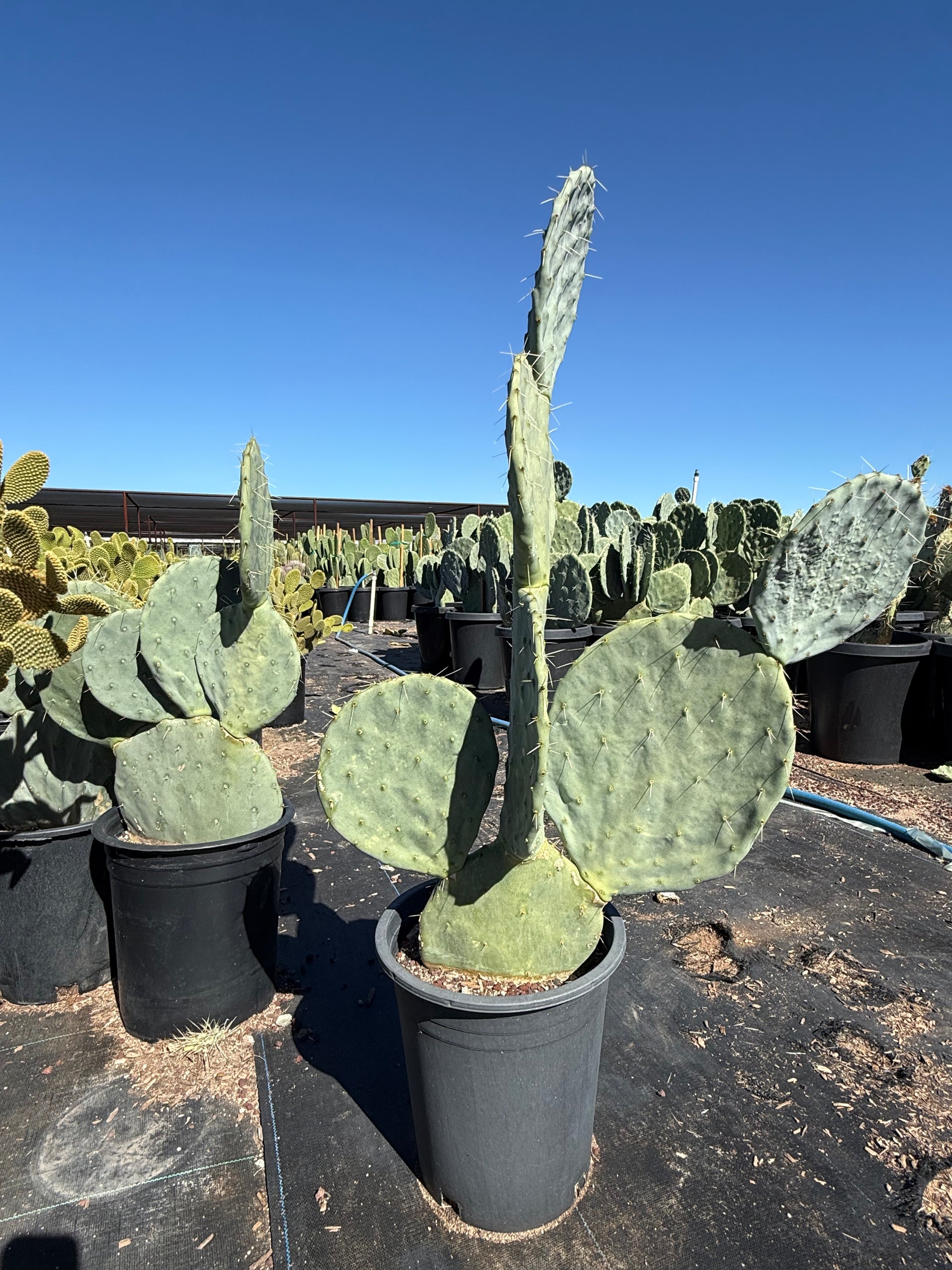
prickly pear cactus in arizona Buy Giant Prickly Pear Phoenix, AZ | O. robustaThe Largest Prickly Pear You Can Grow in Phoenix A Tree Form Cactus That Commands Attention Giant Prickly Pear (Opuntia robusta) is one of the most impressive cacti available for Phoenix Valley landscapes. This massive, tree form prickly pear can reach 1015 feet tall and 610 feet wide, with enormous blue green pads that dwarf every other Opuntia species. In spring, bright yellow flowers cover the upper pads, followed by large edible fruit in late
The Largest Prickly Pear You Can Grow in Phoenix — A Tree-Form Cactus That Commands Attention
Giant Prickly Pear (Opuntia robusta) is one of the most impressive cacti available for Phoenix Valley landscapes. This massive, tree-form prickly pear can reach 10–15 feet tall and 6–10 feet wide, with enormous blue-green pads that dwarf every other Opuntia species. In spring, bright yellow flowers cover the upper pads, followed by large edible fruit in late summer. Native to central Mexico, Giant Prickly Pear is fully adapted to Phoenix’s extreme heat and thrives on almost zero water once established. Whether you’re creating a dramatic focal point in Scottsdale, anchoring a large commercial landscape in Mesa, or building an edible desert garden in Chandler — Giant Prickly Pear delivers scale and presence that no other cactus can match.
Giant Prickly Pear Plant Details
| Attribute | Detail |
|---|---|
| Scientific Name | Opuntia robusta |
| Common Names | Giant Prickly Pear, Wheel Prickly Pear, Nopal Tapon |
| Mature Height | 10–15 feet |
| Mature Width | 6–10 feet |
| Growth Rate | Fast — 3–5 new pads per season in Phoenix |
| Sun | Full sun (6+ hrs). Handles reflected heat from walls. |
| Water | Very low once established. Extremely drought-tolerant. |
| USDA Zones | 8–11 (Phoenix is Zone 9b–10a) |
| Soil | Well-draining. Adapts to Arizona caliche soils. |
| Foliage | Evergreen — massive blue-green pads up to 12 inches across |
| Bloom Color | Bright yellow — spring |
Giant Prickly Pear Uses in Phoenix Landscapes
Dramatic Focal Point & Specimen Tree
At 10–15 feet tall, Giant Prickly Pear functions as a living sculpture or specimen tree in large desert landscapes. Plant a single specimen as the centerpiece of a gravel courtyard, estate entry, or commercial property. Its massive scale pairs beautifully with Saguaro, Palo Verde, and Ironwood trees in Scottsdale and Paradise Valley estates.
Privacy Screening & Living Walls
Planted 5–6 feet apart, Giant Prickly Pear forms an impenetrable living wall within 3–4 years. The enormous pads and tree-form growth create complete visual screening along property lines, parking lots, and commercial boundaries in Gilbert, Tempe, and Peoria. A 30-foot boundary needs approximately 5–6 plants.
Edible Desert Garden
Giant Prickly Pear produces large, fleshy tunas (prickly pear fruit) that ripen in late summer. The fruit is excellent for juice, jelly, candy, and fresh eating. The young pads (nopales) are also edible and widely used in Mexican cuisine. Plant alongside Indian Fig Prickly Pear and Spineless Prickly Pear for a productive desert food garden.
Best Time to Plant Giant Prickly Pear in Phoenix
Fall (October–November) is the ideal planting window. Soil stays warm for root establishment while cooler air reduces transplant stress. Your Giant Prickly Pear gets 6–8 months of root growth before its first Phoenix summer. Spring (February–April) is the second-best window. Avoid planting in peak summer if possible.
How to Plant Giant Prickly Pear
- Dig wide, not deep — 3x the root ball width, same depth
- Check for caliche — break through any hardpan layer so water drains freely
- Backfill with native soil — Giant Prickly Pear thrives in lean, fast-draining ground
- Spacing — 6–8 ft apart for screening; 10+ ft for individual specimens
- Water basin — build a 4–6 inch ring to direct water to the root zone
- Gravel mulch — 2–3 inches of decomposed granite to retain moisture
Watering Giant Prickly Pear in Phoenix
First Year Watering Schedule
- Weeks 1–2: Every 3–4 days, deep and slow (30+ min)
- Month 1–3: Every 7–10 days
- Month 3–6: Every 10–14 days (weekly in peak summer)
- After Year 1: Every 2–4 weeks summer; monthly or less winter
Drip Irrigation
Place two 2-GPH emitters 18–24 inches from the trunk on opposite sides. Established Giant Prickly Pear plants are extremely drought-tolerant and many thrive on rainfall alone after the first year.
How fast does Giant Prickly Pear grow in Phoenix?
Very fast for a cactus — expect 3–5 new pads per growing season. Plants can reach 6–8 feet within 3–4 years and their full 10–15 foot height within 6–8 years in full sun.
How big do the pads get?
Giant Prickly Pear produces some of the largest pads in the Opuntia genus — individual pads can reach 10–12 inches in diameter. The round, nearly circular pad shape is distinctive and gives the plant a bold, graphic appearance.
Is Giant Prickly Pear too big for residential yards?
It depends on your space. Giant Prickly Pear needs a minimum 8–10 foot footprint and should be planted at least 6 feet from walkways, patios, and structures. It’s ideal for large lots, estate properties, and commercial landscapes. For smaller yards, consider Indian Fig or Old Mexico Prickly Pear instead.
Does Giant Prickly Pear handle Phoenix summer heat?
Absolutely. This cactus thrives in temperatures above 110°F and handles reflected heat from walls and pavement with no issue.
You May Also Like
- Indian Fig Prickly Pear — the classic edible prickly pear for fruit and nopales
- Old Mexico Prickly Pear — large heritage prickly pear with bold yellow blooms
- Spineless Prickly Pear — large thornless Opuntia for safe landscaping and edible fruit
- Engelmann’s Prickly Pear — native Sonoran prickly pear with yellow blooms and purple fruit
- Purple Prickly Pear — stunning purple pads for dramatic desert color contrast
How Many Giant Prickly Pear Do I Need?
This is a fast, tree-form Opuntia that matures 6 to 10 feet wide, so it works as a single specimen or as a spaced screen. For a living wall, plant at roughly 6 foot centers and let the pads knit together. Because the pads carry spines and fine glochids, keep plants at least 6 feet off walkways, patios, and pool decks. Run lengths below are measured along the planting line.
| Run length | Plants at 6 ft spacing |
|---|---|
| 12 ft | 3 plants |
| 24 ft | 5 plants |
| 36 ft | 7 plants |
| 48 ft | 9 plants |
For a freestanding focal specimen, give it a full 8 to 10 foot footprint and skip the row spacing.
Giant Prickly Pear Season-by-Season in Phoenix
- Spring (Feb to Apr): Bright yellow flowers cover the upper pads and a flush of new pads begins. A strong second window to plant once frost risk passes.
- Summer (May to Sep): Peak growth, adding pads fast and handling 110°F-plus heat and reflected warmth with ease. Flowers give way to large tunas that swell through the monsoon and ripen in late summer.
- Fall (Oct to Nov): Prime planting season. Fruit finishes ripening for juice, jelly, and fresh eating, and roots establish well in warm soil.
- Winter (Dec to Jan): Holds its evergreen blue-green pads. Hardy down toward the mid teens (Zone 8), so it shrugs off typical Phoenix winter cold without protection.
At a Glance
✔ Heat-Loving (Reflected-Heat Tolerant) ✔ Drought-Tolerant ✔ Evergreen ✔ Low-Maintenance ✔ Pollinator-Friendly ✔ Edible ✔ Fire-Wise ✔ Cold-Hardy to 15°F
Plant It With
- Indian Fig Prickly Pear: the classic edible prickly pear, a natural partner in a productive nopal garden.
- Engleman's Prickly Pear: the native Sonoran prickly pear with yellow blooms and purple fruit.
- Chenille Prickly Pear: a shrubby orange-red-flowered Opuntia for color variety at the base.
- Desert Spoon: a fine-textured silver rosette that softens the bold round pads.
Is Giant Prickly Pear Right for Your Yard?
It thrives in full sun and reflected heat with fast-draining soil, including native caliche, and asks for almost no water once established. Give it a generous 8 to 10 foot footprint and frost-hardy winters, which Phoenix provides. It is not a fit for small yards or tight spaces near walkways, patios, and pools, since the spined pads and fine glochids need real clearance and the plant reaches tree size fast.
Shipping Notes
- Free Standard Shipping on $100+ Orders to the USA.
- Except Preorder products are shipped in 48 hours.
- Delivery to the USA:
- Standard Shipping : 3-10 business days
- If time is of the essence, please consider selecting expedited delivery for faster service.
Exchange/Return Notes
- We offer a 30-day return/exchange service after receiving.
- Final sale items are not eligible for returns or exchanges.
- To process your return/exchange, please contact us at [email protected]
- Please click here for more details>>> Return & Exchange Policy