SKU: 49594200342
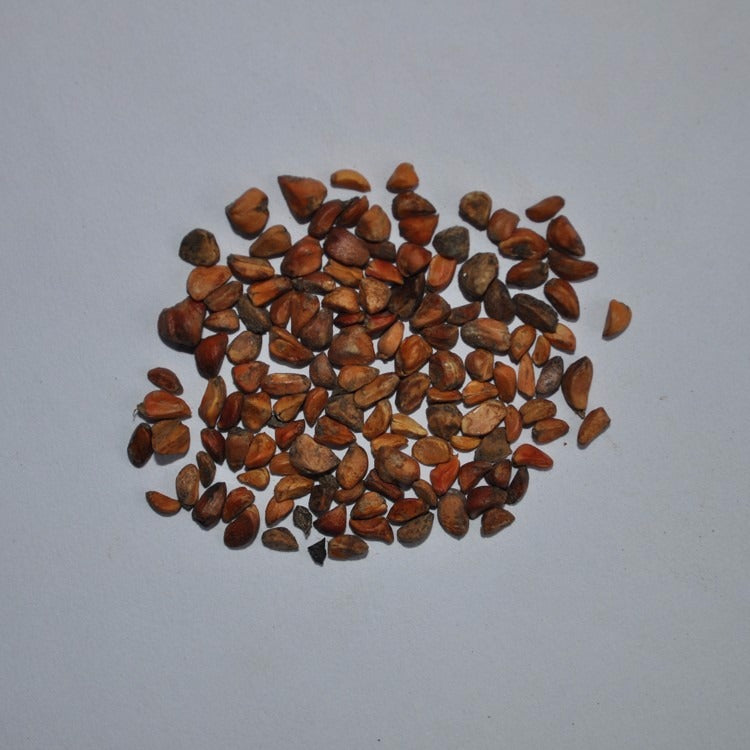
images of rose seeds

images of rose seeds Red Rose Seedlings Flower Seeds Perennial Growing Bonsai Corms Tubers Potted Planting Reblooming Fragrant Garden Roots Rhizomes Species Blooms Plant Bulbs Gardening Tree

Sale price$20.03 Regular price$22.26
Save 10%

Pay in installments of $5.57 with ShopPay, AfterPay and Klarna

Shipping Estimate
USA
  • USA
  • CAN

Ships within 48 hours · Estimated delivery Jul 19 - Jul 24

Promo Codes Available:

For Your Every Summer RSVP, with Code: SUMMER15

Description

images of rose seeds Red Rose Seedlings Flower Seeds Perennial Growing Bonsai Corms Tubers Potted Planting Reblooming Fragrant Garden Roots Rhizomes Species Blooms Plant Bulbs Gardening TreeAbout this item How to Grow Roses from Seeds Step 1: Treat Rose SeedsRose seeds need a much longer germination period than many flowers. If you arent careful, this extended moist storage can lead to the growth of molds that can threaten young rose seedlings. To prevent fungus spores from growing, you can destroy them with hydrogen peroxide. Add one half tablespoon of 3% hydrogen peroxide to one cup of water and soak the seeds in this solution for an

About this item

  • How to Grow Roses from Seeds

    Step 1: Treat Rose Seeds
    Rose seeds need a much longer germination period than many flowers. If you aren’t careful, this extended moist storage can lead to the growth of molds that can threaten young rose seedlings.
    To prevent fungus spores from growing, you can destroy them with hydrogen peroxide. Add one-half tablespoon of 3% hydrogen peroxide to one cup of water and soak the seeds in this solution for an hour.                                                                                                                                                                                      Step 2: Cold Germinate Seeds (Stratification)                                                        The natural rose germination process takes a few years. First, the rose hip needs to break down and decompose. After the seeds are fully exposed, they must undergo a period of stratification.Rose seed germination relies on a climate that experiences cold, moist winter months. You can simulate this winter environment using your home refrigerator.Place the rose seeds evenly spaced on a damp paper towel. Be sure to avoid overcrowding. Cover them with another layer of moist paper towels and seal the seeds in a plastic bag.Place the bag of seeds in a clean, empty crisper drawer. It would be wise to first sanitize the drawer with bleach and hot water to prevent mold contamination.Ensure the seeds remain moist throughout the entire stratification process. Add more clean water whenever they start to feel dry.Leave the seeds in the refrigerator for at least two months or until you are ready to sprout them.                                                                                                                                                                                                                     Step 3: Warm Germinate Rose Seeds
    Once the stratification process is complete, you can germinate rose seeds as you would other flowers. It is crucial to bring the seeds out of refrigeration into conditions warmer than 70 degrees.
    Ensure the seeds remain damp and leave them in a warm environment until they sprout. This can take up to a month, and it is likely that not all seeds will germinate.                                                                                                                                                                                                                                                  Step 4: Plant Rose Sprouts
    Add moistened seed-starter soil mix to seedling trays. Make a slight indentation for the rose seeds in each cell.
    The tiny tendrils that emerge are roots and must be handled very carefully. Gently remove the rose sprouts from the paper towel and place them root down in the seed trays.
    Cover the seeds with moist soil and leave the seed trays on a sunny windowsill. Use a clean spray bottle to mist the rose seedlings when they start to feel dry.
    For the best results, consider using Hoss Tools Deluxe Seed Starting Kit. This kit includes a 24-cell seed starting tray with a dome lid, seed-starter soil mix, fertilizer, and more.                                                                                                                                                                                                                                  Step 5: Transplant Rose Seedlings
    As the rose seedlings grow, pay close attention to the seed leaves so you know when to transplant. Wait until the true leaves develop, which take on the typical rose leaf appearance.
    Gently loosen the dirt from the tray cells and slide the seedlings free. Move them to individual containers and let them continue to grow for about a year before you transplant them outdoors.

  • Caring for Young Rose Plants

    Give your rose seedlings the support they need to grow strong stems and lush foliage. Add half-strength fertilizer to each planting location.
    Not all fertilizers are equal. Use a high-quality blend like Dry Fertilizer for guaranteed results.

    • How long does it take to grow a rose from seed

      Growing roses from seeds is a lengthy process. Without proper stratification, it can take multiple years for seedlings to emerge.
      Even the fastest-growing roses will likely take two full growing seasons to produce beautiful blooms.

    • Do roses grow true to seed

      Heirloom rose varieties grow true to the parent plants, while hybrid varieties are less predictable.
      The task of growing roses from seeds is very involved. For this reason, most gardeners prefer to grow roses from cuttings.
      If you want to experiment with cross-breeding unique roses, then you need to grow them from seed.
      To get predictable results, you must control pollination. This will ensure that your homegrown roses will grow true to color.

    • How to grow roses

      All you need to know about growing roses, in our detailed Grow Guide.Roses are some of the most beautiful and versatile garden plants. They come in a variety of forms, from patio roses to shrub roses, ramblers and climbers. Nearly all of them make an excellent cut flower. Single-flowered roses are great pollinator plants, while some species are used by leafcutter bees to make their nests. Most roses need sun and heavy soils to thrive, but some will grow well in partial shade and poorer soils. There really is a rose, or three, for every garden.Key points about growing roses
      Most roses thrive in full sun.Roses need rich, moist but well-drained soil.Water roses regularly so the soil stays moist but not waterloggedRoses are hungry plants. Mulch annually with organic matter such as well-rotted animal manure, and consider using a rose feed to promote flowering in summer.Prune roses annually to promote healthy growth, control the shape and encourage flowering
      Plant bare-root roses from November to March. Container-grown roses can be planted at any time of year.

    • How to grow shrub roses

      Shrub roses and English roses come in a huge range of sizes and colours âââ€?some can grow to 2m in height. Shrub roses are typically robust, healthy, repeat-flowering plants offering colour when other shrubs have finished flowering. Some shrub roses have a good fragrance, but if you want a scented shrub rose then English roses are for you. Shrub roses and English roses are perfect for growing in a mixed border, large container or as part of a rose garden. Some can also be trained as climbers or used to grow into a hedge.

    • How to grow climbing roses

      Climbing roses are the perfect plants to add height to a garden, without being too vigorous. There are climbing roses available in all the popular rose categories âââ€?hybrid tea roses, bourbons and English roses. Choose from double or single flowers, thornless or scented. Climbing roses can be grown up house walls, along garden fences, over pergolas or up large obelisks.

    • How to grow rambling roses

      Rambling roses are often confused with climbing roses. Ramblers are far more vigorous than climbers, and bear one fantastic flush of flowers, usually in June, followed by colourful hips. Climbing roses often repeat flower and have larger flowers.Rambling roses need plenty of space as they grow quickly. They’re ideal for growing up a tree or tumbling over a wall. They're perfect for covering an eyesore in the garden, such as an unsightly shed or out-building.A rambling rose looks great growing up into a tree, especially an apple tree, providing flowers after the apple blossom fades but before the fruits form. In this video guide from Gardeners' World, Monty Don shows you how to plant two different rambling roses âââ€?'Wedding Day' and 'Sander's White'. He details what conditions a rambling rose needs, how to prepare the soil, and how deep to plant it so it settles in well over autumn and gets off to a good start in spring. You'll also find out how far from the tree to plant the rose and how to encourage it to climb up the tree.

    • How to grow patio roses

      Patio roses are small enough to grow in pots. They are compact in habit and thrive in lighter soils than many other rose types. Patio roses are not as long lived as other types of rose, but they're easy to manage and remain compact if hard-pruned each spring.

    • How to grow ground cover roses

      Ground cover roses have a trailing or spreading habit. They're ideal for growing in a container, at the front of a border or on steep banks. Many are modern introductions have good disease resistance. If given the right conditions, ground cover roses can suppress weeds.

    • Roses to grow by colour

      Roses come in a huge variety of colours. Browse our lists of roses by colour, below, for the best one for your garden:
      Pink roses to grow
      Purple roses to grow
      Yellow roses to grow
      Beautiful red roses to grow
      Orange roses to grow

    • Growing roses in pots

      It's possible to grow roses in pots, meaning you can grow roses in even the smallest gardens. While all but rambling roses can be grown in pots, shorter growing bush varieties, or ‘patio roses', are ideal. They’ll do best in large, deep containers âââ€?an absolute minimum of 50cm in diameter and the same in depth âââ€?to keep their roots cool and moist during summer.In hot, dry weather, soak the compost every two to three days, and feed regularly.

    • What to grow with roses

      Many plants can be grown with roses to great effect. Climbing roses work well grown with clematis. Rambling roses can be trained to grow up a tree. Patio roses work well with a variety of other plants suitable for growing in pots, while shrub roses can be grown in a mixed ornamental border, alongside nepeta, lavender and other herbaceous perennials.

    • When to plant roses

      The best time to plant roses is in autumn, when the soil is warm and the water table is at its highest. Roses will establish quickly before becoming dormant, and then burst into life again in spring. Roses come as potted plants or as bare-root plants (sold without soil on the roots). Technically, you can plant a potted rose at any time of year and a bare-root rose from October to March, but autumn remains the best time to plant roses.

    • How to plant roses

      Plant roses in a well-prepared hole with added compost to improve soil structure and aid water retention. Back-fill with soil and firm in well, then water thoroughly.In this Gardeners' World programme clip, Monty Don shows you how to plant shrub roses. Watch as he plants the yellow-flowered, myrrh-scented rose 'The Pilgrim' in the Cottage Garden at Longmeadow. He explains how to prepare the soil and dig the hole, how and why you should add mycorrhizal fungi, and what rose care to provide to ensure the rose settles in well.

    • How to plant bare-root roses

      Planting bare-root roses during the dormant season is cheaper than planting container-grown roses, because the growers don't need to water and feed the plants when they're dormant, and they weigh less and take up less room when shipping. What's more, there's a far greater selection of bare root roses available to buy than container-grown roses, giving you more choice.You can plant bare-root roses at any time between October and the end of March, but planting them in autumn helps them establish more quickly because the soil is still warm from summer, and is typically moist.

    • Pruning roses

      Pruning is essential for the overall health, vitality and appearance of roses. Winter is the key time to cut back most varieties, except rambling roses, which are pruned in summer immediately after flowering.The basic principles of pruning are the same: cutting back hard will promote the strongest growth, while light pruning will result in less vigour. The other basic rules include cutting to an outward-facing bud to prevent compacted growth, and removing closely positioned stems that might rub or compete for space. Also remove stubby ‘snagsâââ€?(short, dead lengths of stem with no growth on them) and thin, twiggy stems, which are unlikely to produce anything worthwhile in terms of growth and flowering potential.

    • Growing roses: problem-solving

      Roses suffer from many problems, including black spot, aphids, die-back and bloom balling. In this Quick Tips video, Richard Jones explains why you shouldn't worry about leafcutter bees damaging your rose leaves:Find more solutions to rose growing problems, below.
      Rose problems solved
      Trouble-free roses
      How can I stop die-back on roses?
      Rose black spot
      Rose bloom-balling

    Why Seedsplant ?

    • Experts in the field
    • Family owned and operated - 100 years
    • Rigorous quality control
    • We strive for your success by offering the bulb size you need
    • Affordable quality

    Flower Bulb Facts of Life

    Bulbs: Beauty In a Bottle:

    Bulbs are a natural product. And, as such, follow a natural cycle of growth and rebirth. Enjoying their fabulous flowers means planting ahead in one season then results the next. Bulbs are among the easiest flowers to grow, not only are they affordable, but bulbs offer the most stunning colors available. Even the most novice gardener can create a breathtakingly beautiful spring garden with bulbs.

    What's a Bulb?

    A flower bulb is really a self-contained flower factory. Within this marvelous little package is nearly everything the flower needs to come to life! Split a bulb open, for instance, and you'll see its baby flower bud, leaves, roots, stem and food supply. All bulbs need from you is to be placed in the ground at the appropriate season of year, given a liberal drink of water then left to work their magic.

    Variety:

    Flower bulbs come in seemingly limitless varieties which makes them perfectly suitable for any garden design you can dream up.

    Is It a bulb ?

    The Difference Between Bulbs, Corms, Tubers, Roots,Today, people commonly us the term 'bulb' to refer to any plant that stores its own food underground. But, in truth, many popular 'bulbs' are not true bulbs at all. These include corms, tubers and roots and, while they all produce beautiful flowers, technically the plants are different

    When To Plant

    In fall, after soil temperatures are below 50ºF/10ºC. These bulbs bloom the following spring and require the cold winter temperatures for development. But let's say winter arrives and your bulbs are still in their bag. Not to worry! Bulbs are pre-programmed to grow so even if you have to plant through snow, plant your bulbs!

    How To Plant

    Most bulbs thrive in either full or partial sun and in almost any location with good drainage. Avoid planting at the base of hills or under drainage pipes where water collects and will rot the bulbs.

    • Dig a hole
    • Drop in the bulb
    • Water thoroughly

    Tips For success

    • A larger grouping of flower bulbs are far more fab than just a few planted here and there. Think clumps of color.
    • Buy the largest bulbs you can find.
    • Note the flowering times. Not all bulbs will bloom at the same time. A little planning will greatly increase the number of months you will enjoy bulb flowers.

    Passionate About bulbs

    Generally speaking, the best predictor for gardening success is bulb size. Almost always, the larger the initial bulb size planted, the larger and stronger the plants will be, producing more flowers. The first year end result will be noticeable to anyone.The best predictor for gardening success is bulb size.

    Shipping

    All items are shipped usually within 2 working days (usually sooner) except plug plants. Plants only dispatch Monday-Thursday to avoid problems with live plants sitting in a postal depot over the weekend. During busy periods , due to the nature of product and extra care needed when packing and preparing for post, please allow up to 7 days for delivery (depending on day purchased). Plants are only dispatched when crops are ready to travel , therefore some multi orders may be delivered separately and occasionally it may be necessary to hold back dispatch until plants are ready. Shipping is either via Post  or 24/48 Hour courier depending on order size/weight etc. at our discretion. Please be patient when ordering plants as you cannot rush nature. Please be aware delivery dates shown by Seedsplant are estimates only and do not apply to live plant orders. Any orders returned to us by Post or Courier will incur a further postage charge to resend.

    Returs

    You may return all unopened items within 14 days of delivery for a full refund less P&P charges. Any items received damaged in transit must be notified in writing/email within 24 hours of receipt. Live plants should arrive in perfect condition , If however for some reason they do not please contact us immediately upon receipt. A full refund including original P&P will be made for any items not as described or wrong part no etc. All returns must include your full details with a copy of original receipt. You may cancel any transaction as long as notice is received before item(s) are / have been dispatched.

    Contact us

    You can message us through Seedsplant messages , otherwise You can write to us by email :[email protected]

    Shipping Notes
    • Free Standard Shipping on $100+ Orders to the USA.
    • Except Preorder products are shipped in 48 hours.
    • Delivery to the USA:
    1. Standard Shipping : 3-10 business days
    • If time is of the essence, please consider selecting expedited delivery for faster service.
    Exchange/Return Notes
    • We offer a 30-day return/exchange service after receiving.
    • Final sale items are not eligible for returns or exchanges.
    • To process your return/exchange, please contact us at [email protected]
    • Please click here for more details>>> Return & Exchange Policy
    SKU: 49594200342

    Discover Niche Categories That Outsell images of rose seeds

    Top-Converting Item to Boost Your Average Order

    4.7 ★★★★★
    Based on 6 reviews
    Sort
    Highest Rating
    Newest First
    Oldest First
    Product Reviews
    P
    Verified Purchase
    PS
    Houston, US
    ★★★★★ 3
    Good place to start
    Format: Paperback
    I am an independent college adviser based in California and I recommend this book to my clients but only at the very beginning of the process (mostly to the parents of rising high school freshmen and sophomores). This book is a good place to start especially for many of the foreign educated or immigrant families, who are new to the US College Admission process. The parents do tell us that the book loses its effectiveness once they gain knowledge of the process and/or they begin working one-on-one with an independent and/or become more conscious about meeting the high school counselors early in the process. I personally like the fact that once this book is overviewed by the families, we can spend more time addressing specific concerns and giving more customized advice. As a result we only need quarterly meetings and these meetings are extremely targeted. The problem with this book though is it reads like a huge information session by colleges. Those of you who have attended some of the information sessions will know what I mean. The insights provided by the deans and admission officers of various colleges sound somewhat like a "sales pitch" at times and at other times are misleading. I also recommend my students to keep their knowledge up to date by referring to various free resources such as Nancy Griesemer's educational articles in Washington Examiner Online, or the Choice Blog. I spend considerable time volunteering my services at a high school in a mixed/low income neighborhoods; I wish the price had been more reasonable considering that this is a basic book. Lastly as members of NACAC (National Association of College Admission Counseling), all of us in the admissions field (College Admission Officers, High School Counselors, and Independent Counselors) subscribe to certain codes of ethics and one of the Statements of Good Practice says this about Fairness and Equity: We believe our members have a responsibility to treat one another and students in a fundamentally fair and equitable manner. Unfortunately, Ms. Mamlet and Ms. VanDeVelde do a great disservice by being disrespectful to a large community of Independent College Advisers, many of whom are needed when the high school counselors are juggling with case loads of 200-300 students each and are unable to keep up with the changing scene of college admissions (either due to the lack of funding or time). Gone are the days when people went to some "quack-independents" who promised admissions to Ivy Leagues--sure there are some of those but if families are careful in their research, they will soon find out that these Independents do not belong to any authentic professional organizations such as the NACAC, HECA or IECA. Most students who come to the authentic professionals are motivated to find their right fit college, explore their own strengths and weaknesses and find the best match for their talents, interests and financial situation. Most independents offer services that are reasonably priced. If Ms. Mamlet and VanDeVelde show more commitment to researching folks on the other side of the spectrum, I am sure that their book will be more enlightening.
    WAS THIS REVIEW HELPFUL?YesReportShare
    Reviewed in the United States on August 18, 2013
    A
    Verified Purchase
    AGB
    Lake Worth, US
    ★★★★★ 5
    Best College Info Book Ever!
    Format: Paperback
    I have read dozens of college-related books in the past 4 years, and this one ranks the highest by far. Written by industry experts and the authors got a lot of top talent to contribute. Full of real-life advice and useful information that is actually true (I fact-checked this against some other info). I read parts of it out loud to my junior on the plane en route to a college tour, and she actually listened! Humor is always appreciated, and these authors use it without going overboard. Great information, well-presented. A must-read!
    WAS THIS REVIEW HELPFUL?YesReportShare
    Reviewed in the United States on February 22, 2013
    B
    Verified Purchase
    B. Jones
    Cuba, US
    ★★★★★ 5
    A Must-Read for College (and Even High School) Students
    Format: Paperback
    First of all, this book really cuts to the point. If you are skilled with skim-reading, you can get this book in about 2 1/2 to 3 hours. Second, while these strategies are currently untested by me, they seem really practical. Rather than saying "study" or "write paper" or "take test", Dr. Newport lays down specific, useable guidelines for all areas that are intended to cut down on time spent on schoolwork. This helps you with more time to have fun, do extracurricular activities, or work 60 hours a week (like I will soon be doing). Third, this is THE anti-procrastination book, although I don't get the concept of starting term papers a month before they're due as the examples did. The whole concept behind this book is making sure you've got as little work going as possible that takes as little time as possible. Doing things upfront will ease your load later when the assignments and papers start rolling in and out. There are only a couple of issues I have with the book. 1) Dr. Newport almost makes the use of personal laptops compulsory in college. I get why it would be such an asset, but for some of us it is more of a liability than an asset. I really believe one can get through college without a laptop at a much smaller personal expense than the costs of buying a laptop/accessories, printer, ink, etc. If you already bought one, that's one thing, but if you haven't, why do you need one? Just use pen/paper and the computer labs' computers and printers. With the printers, odds are you're paying the same amount for 1000 pages that you would for toner (paper is free with the way they price it), and you don't have to drop the cost upfront, but pay as you need the printer. Financially, you're better off skipping the personal printer. 2) He didn't discuss what format to purchase textbooks, but considering he was so insistent on portability, I would probably haphazard a guess that a hard copy is the only way to go. Sure it may be expensive, but what if your Kindle or iPad gets stolen? Overall, highly, highly recommended. Get this for your child as an early (or very early) graduation present. Teaching them these things will save them a lot of headaches later on. One last note: This book is not for the lazy. If you aren't willing to do the work, don't expect this book to help. However, if you're someone like me who's sick of lazy and wants to convert, this book IS for you!
    WAS THIS REVIEW HELPFUL?YesReportShare
    Reviewed in the United States on December 18, 2012
    R
    Verified Purchase
    Ricky Luis
    Draper, US
    ★★★★★ 5
    One more crappy college study guide
    Format: Paperback
    When I was taking 4 classes at my local community college, I tried to follow the part of the book that said just to learn math by examples. I ended having to drop the class because at first I was actually ahead of the professor. Then I tried this stupid book's technique of learning by examples and I ended up falling behind. The same can be said of "What smart students know" it's actually a good technique (smart students), but you end up spending hours thinking up questions. Questions can be a part of the process, but it can't be the whole process. I just bought an online course than is way better than both of these combined. It's so good. The point I'm at in the course you can memorize up to 50 items in reverse and forward. You can also tell which place in the list. An example could be The order of my hallway: Dog = front door Cat = wall Duck = light switch Printer = holder Hitler = chair MAO = rug Goku = ceiling light Kurrin = mirror Gohan = heater Frieza = painting You would then connect / visualize each word / picture with a part of your house. The rule is to visualize each for only 6 seconds while recalling can only take 6 seconds. If you miss one you have to do the six second process again until you make no mistakes. P.S. I'm not telling anyone the name of the course or where to buy it. I want to be ahead of all other students. Edit: I'm back in college taking two college level courses. While I don't agree with everything in this book (I have to re-read it) I agree with 80-85% of the methods used in this book that I remember. Such as not doing the reading he was right. I haven't done the reading in my psychology 101 class and have only focused on taking / memorizing / learning the notes and while I haven't gotten a grade yet, I actually feel I'm learning enough and today in class I note notes from a documentary we watched. The professor said to do the reading for chapter 2 of the textbook. I'm not even going to do it. I'm going to just take notes in class then go over the reading. I did this for my 1st set of notes and I didn't understand something in the lecture notes. I ended up re-reading that / part / example [it was on the scientific method]. I remember from taking my developmental math class that the professor was actually doing examples (even though I couldn't figure out from what part of the book they were from and / or I couldn't write every example like he said) If I had just asked questions and either watched videos on Youtube I would've probably remembered the material from that class. I'll do another edit once I'm done with classes. I'm also going to write / provide a list of books that I think are good for learning and have good advice for college. Edit: I ended up trying to do the advice from this book and if I didn't look up the answers for the test for my psychology class I wouldn't be in college today. I'm not saying that all of this book is bad but I went from thinking that 85% of it is good to now thinking that 50% of this book is good. The other half is crap. Such as the technique for Q/E/C he doesn't give any examples or enough examples. The other advice like making your own problem sets I wouldn't have thought of. Even though this is an all right technique your wasting time because you can just practice doing other peoples problems (like those online or from a professor) or do Bullet point concept from another book I read (I'm going to provide a list once I'm done with this review). The one technique that is very good is the lecture technique he mentions in the book. For some reason, this technique helps with putting material into memory. His section on writing papers is also very good. His explanation on how to prepare for and take exams is also good. Also, he should have made the book more visual and put actual writing from actual students other than that it's an all right book. Here's the list of books I've read (so far) that will most likely get you A's College Rules https://www.amazon.com/College-Rules-4th-Survive-Succeed/dp/1607748525/ref=sr_1_1?s=books&ie=UTF8&qid=1530133408&sr=1-1&keywords=college+rules Guaranteed 4.0 https://www.amazon.com/Guaranteed-Follow-3-Step-Plan-Dont/dp/0974264806/ref=sr_1_1?s=books&ie=UTF8&qid=1530134451&sr=1-1&keywords=guranteed+4.0 How to study in college https://www.amazon.com/How-Study-College-Walter-Pauk/dp/1133960782/ref=sr_1_4?s=books&ie=UTF8&qid=1530134633&sr=1-4&keywords=how+to+study+in+college The only book I've read from cover to cover is GT 4.0 it's probably the best in my opinion because the system in this book will get you A's. The only reason last semester I didn't get A's was because I didn't follow the system to the t. If you follow the GT 4.0 system to a t and don't get all A's she'll give you $100. Hope this helps. Edit 2020: From what I remember reading this book, this applies to college level courses and even at the same time I tried using his question / evidence technique while taking a psy101 class and couldn't do it. Also he's right to a very large degree about living off of lecture notes. Living off of the lecture notes IMHO can only be done if it's a science science class or a college level math class. I'm currently taking a pre-req class and the professor explains everything. Along with the Guaranteed 4.0 technique this is a pretty decent book.
    WAS THIS REVIEW HELPFUL?YesReportShare
    Reviewed in the United States on January 24, 2012
    S
    Verified Purchase
    S. Bandy
    Natrona Heights, US
    ★★★★★ 4
    Wish I had read this sooner
    Format: Paperback
    This book is not that revolutionary, but very helpful. It essentially tackles three main problem areas for college students: 1) time management skills, 2) studying and exam prep, and 3) essay writing. Some of these are common sense things that many people resist implementing. If you are struggling with college, or are a high school senior unsure of what to expect in college, this book is very helpful. The true value in this book, for me at least, was in providing the satisfaction that these strategies worked. I would often start out a semester by doing the things listed in the book. I would manage my time, study effectively for exams, thoughtfully plan out papers and assignments. Halfway through the semester, I always had straight As. But as finals crept up, I would panic. Since every other student spent hours in the library studying, I abandoned the effective strategies to follow suit. As a result, my final exam grades were inconsistent and my final papers were always rushed. This book gave me the satisfaction of knowing that I can trust these time saving strategies. You do not need to spend hours and hours on projects to get a good grade. It's okay to not spend hours in the library studying for a final. Trust that these strategies work, and enjoy your stress-free semester. But, the book does have faults. While this book provides very useful information, I feel it misses two aspects of the college experience that can have a large impact on your grade: presentations and group projects. (Also the dreaded group presentation). While you can implement some of these strategies in these situations, it would be nice to know how top students manage working in group project settings, especially those that require research. I can't tell you how many times I've been in a group project where half the group doesn't show up to meetings, members refuse to do their work, or people drop the class halfway through the project. I still haven't figured out an adequate way to deal with these situations besides just doing the work myself at the last minute. Bottom line, this book is well worth the money. Whether you are a college senior or a high school senior and everything in between, this book will help you as long as you faithfully implement the strategies. But do search out other resources for help with managing group projects.
    WAS THIS REVIEW HELPFUL?YesReportShare
    Reviewed in the United States on December 12, 2012

    recommand products