SKU: 49459132073
philodendron davidsonii care

philodendron davidsonii care Philodendron Davidsonii

Sale price$23.45 Regular price$26.06
Save 10%

Pay in installments of $6.51 with ShopPay, AfterPay and Klarna

Shipping Estimate
USA
  • USA
  • CAN

Ships within 48 hours · Estimated delivery Jul 20 - Jul 25

Promo Codes Available:

For Your Every Summer RSVP, with Code: SUMMER15

Description

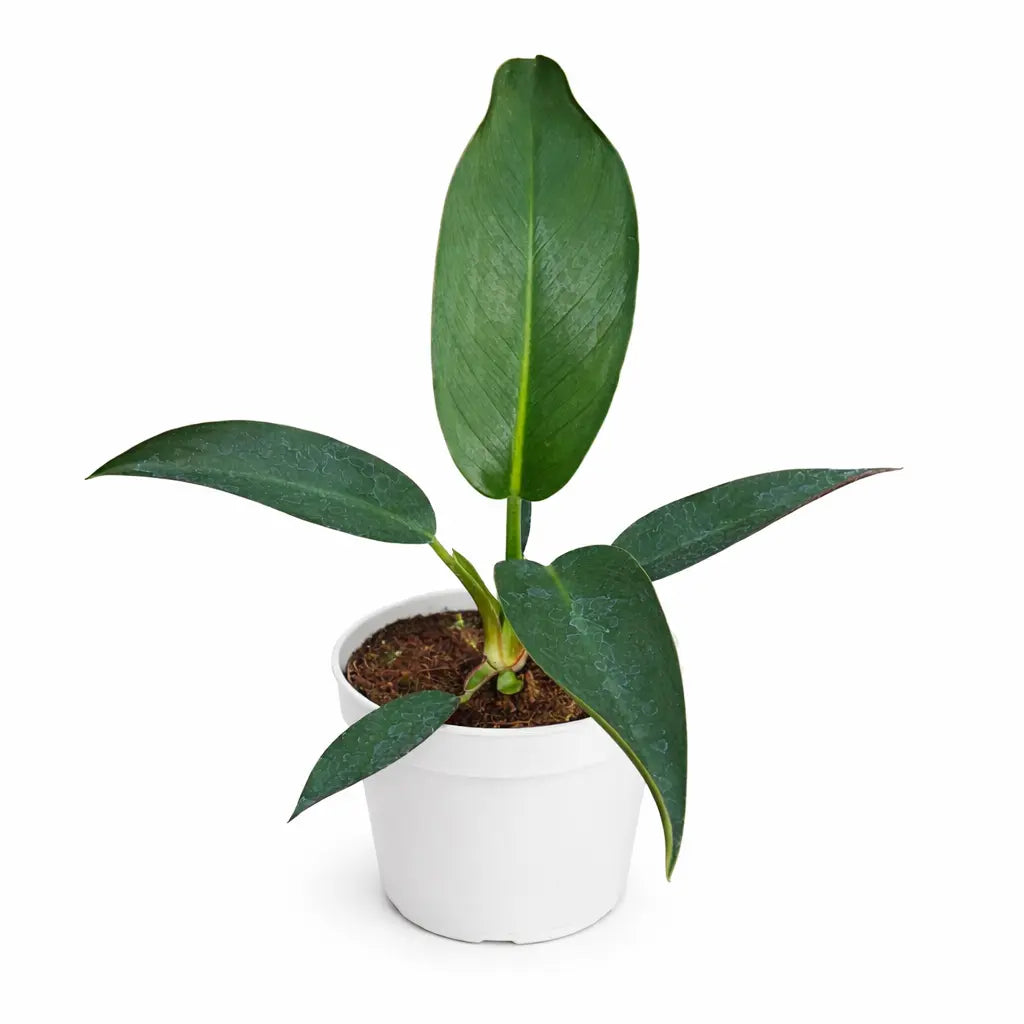
philodendron davidsonii care Philodendron DavidsoniiThe Philodendron Davidsonii is a plant that breaks nearly every rule you think you know about Philodendrons. There is no visible stem. There is no vine. Instead, an underground rhizome sends up a succession of large, stiff, glossy leaves directly from below the soil each one held out on a long petiole and arranged in a bold, outward spreading bird's nest that can span over a metre across at maturity. Named by Thomas Bernard Croat, the world's foremost

The Philodendron Davidsonii is a plant that breaks nearly every rule you think you know about Philodendrons. There is no visible stem. There is no vine. Instead, an underground rhizome sends up a succession of large, stiff, glossy leaves directly from below the soil — each one held out on a long petiole and arranged in a bold, outward-spreading bird's nest that can span over a metre across at maturity. Named by Thomas Bernard Croat, the world's foremost Araceae taxonomist at Missouri Botanical Garden, after the botanist who first collected it from the wet tropical forests of Costa Rica and Panama, davidsonii is one of the few truly terrestrial Philodendrons — a ground-dwelling giant that in the wild eventually finds a tree and climbs it to the canopy. In cultivation it performs equally well as a spectacular self-heading rosette or, given a moss pole, a bold statement climber. The leaves themselves are remarkable — ovate-oblong, deep glossy green, up to 60 cm long, stiff and leathery, with many deeply sunken primary lateral veins that give the surface a quilted, architectural texture. One of the most impressive large-format aroids available, and one of the most forgiving.

The Underground Stem — Why This Plant Looks Different Unlike the vast majority of Philodendrons, which produce a visible above-ground stem or vine, Philodendron davidsonii grows from a subterranean rhizome that stays permanently below the soil surface. The leaves emerge directly from ground level, without any stem connecting them visibly above the soil. In a pot this creates the characteristic bird's nest silhouette — a dense, radiating crown of large leaves with nothing visible at the centre. This growth pattern is what makes the plant so structurally stable, self-supporting, and unusually easy to maintain as a container specimen.
Bird's Nest or Climber — Two Plants in One In a container without support, Philodendron davidsonii grows as a broad, upright bird's nest — self-heading, symmetrical, and requiring no maintenance beyond regular watering and feeding. Introduce a large moss pole or coco coir totem and the plant's climbing instinct activates — nodes begin adhering to the support, internodes tighten, and the leaves produced become progressively larger with each successive growth cycle. Both expressions are spectacular; the climbing form simply produces the largest leaves the plant is capable of.
☀️Light

Medium to bright indirect light — one of the more light-adaptable large Philodendrons available. An east or west-facing window is ideal; it tolerates medium and lower-light conditions better than most collector aroids and can be positioned further from windows than species like the Emerald Queen or Prince of Orange. In lower light growth slows and leaves reduce in size but the plant remains healthy. No direct harsh afternoon sun — it scorches and bleaches the large glossy leaves. Gentle morning sun is fine and beneficial. A grow light at 12–14 hours works well indoors.

💧Watering

Allow the top 3–5 cm to dry before watering thoroughly. The davidsonii is more drought-tolerant than many aroids — its underground rhizome stores some moisture and the plant recovers well from brief dry spells. Consistently soggy soil causes root rot; let the mix approach dryness before the next watering. Water deeply and allow to drain completely; empty the saucer after watering. Reduce frequency slightly in winter but do not allow to dry out completely. Filtered or room-temperature water preferred.

💦Humidity

50–70% preferred — a humidifier is beneficial but not essential. The davidsonii is notably more humidity-tolerant across a wider range than most velvet aroids; it adapts well to typical Indian indoor conditions without supplemental humidity. Keep away from cold AC drafts and direct heating vents. Do not mist directly onto the leaves. India's tropical outdoor climate suits it naturally for semi-shaded garden or balcony growing.

🌿Growing Media

Rich, well-draining aroid mix — 40% quality potting soil or coco coir, 25% orchid bark, 20% perlite, 15% worm castings. pH 5.5–7.0. The underground rhizome benefits from a slightly richer organic mix than epiphytic aroids. The mix must drain freely — the rhizome is susceptible to rot in waterlogged conditions despite tolerating moderate dryness. A wide, deep pot accommodates the spreading rhizome system; repot every 1–2 years in spring. The plant prefers to be slightly snug rather than over-potted.

🌾Feeding

Balanced liquid fertilizer at half strength every 3–4 weeks during the growing season. The large leaves reward consistent feeding during active growth — visibly larger leaves and more frequent new growth flushes result from a good feeding schedule. Slow-release granules applied at repotting are an excellent low-maintenance option, supplemented with liquid feed monthly. Apply to moist soil only. Flush every 3 months to clear mineral salt build-up. Stop feeding in winter.

Common Issues & Quick Fixes
Leaves Staying Small

Insufficient light, underfeeding, or the plant being too root-bound. Move to a brighter indirect position, begin consistent feeding, and check whether roots are circling the pot base — if so, repot one size up in spring. Given a moss pole, the davidsonii will also produce progressively larger leaves with each growth cycle as it climbs.

Yellow Leaves

Overwatering — the most common cause. Allow the top 3–5 cm to dry before the next watering and ensure drainage is excellent. One older outer leaf yellowing as new growth pushes from the centre is normal cycling. Widespread yellowing with soggy soil: unpot, inspect the rhizome and roots, trim any soft or blackened sections, repot in fresh well-draining mix, and water less going forward.

Drooping or Wilting Leaves

Underwatering — the large leaves lose turgor quickly when the root zone is too dry. Water immediately and thoroughly. Adjust the watering schedule to check more frequently, particularly in hot Indian summer conditions. Once watered, the leaves recover within a few hours.

Brown Leaf Tips or Edges

Low humidity, tap water minerals, or salt build-up from fertilizer. Switch to filtered water, flush the soil thoroughly every 3 months, and boost humidity above 50%. Existing brown tips are permanent — trim neatly at a slight angle; new growth in corrected conditions will be clean.

Thrips or Spider Mites

Inspect the large leaf surfaces and undersides regularly. Thrips: silver streaking or distorted new growth — spinosad spray every 5–7 days for 4 weeks, quarantine immediately. Spider mites in dry conditions: boost humidity and treat with neem oil or insecticidal soap every 5–7 days for 3 weeks.

Quick Plant Profile
Botanical Name Philodendron davidsonii Croat
Named After Described by Thomas Bernard Croat — Missouri Botanical Garden's foremost Araceae taxonomist; named after its collector
Common Names Davidsonii Philodendron, Bird's Nest Philodendron, Giant Nest Philodendron
Family Araceae
Origin Costa Rica, Panama, Colombia; wet tropical rainforest; high canopy climber
Defining Feature Underground rhizome — no visible above-ground stem; leaves emerge directly from soil level
Growth Habit Bird's nest (self-heading rosette) in containers; climbing with a moss pole; both produce large glossy leaves
Leaf Detail Ovate-oblong; deep glossy green; stiff and leathery; up to 60 cm long; deeply sunken lateral veins giving a quilted texture
vs. Climbing Philodendrons No visible stem; more compact footprint; self-supporting without a pole; underground rhizome growth
Light Medium to bright indirect; tolerates lower light better than most collector aroids; no direct harsh sun
Watering Top 3–5 cm dry between waterings; more drought-tolerant than most aroids; never waterlogged
Humidity 50–70%; adaptable; no misting on leaves; humidifier beneficial but not essential
Temperature 18°C–30°C; no cold drafts; thrives in Indian indoor and outdoor tropical conditions
Mature Size 1–1.5 m spread in containers; larger in-ground; climbing form produces progressively bigger leaves
Propagation Rhizome division in spring; stem cuttings with at least one node
Ideal For Large Spaces, Floor Plants, Statement Aroids, Collectors, Moss Pole Climbers, Tropical Gardens
Care Level Easy to intermediate — one of the most forgiving large Philodendrons; bright light and correct watering are the two essentials
Shipping Notes
  • Free Standard Shipping on $100+ Orders to the USA.
  • Except Preorder products are shipped in 48 hours.
  • Delivery to the USA:
  1. Standard Shipping : 3-10 business days
  • If time is of the essence, please consider selecting expedited delivery for faster service.
Exchange/Return Notes
  • We offer a 30-day return/exchange service after receiving.
  • Final sale items are not eligible for returns or exchanges.
  • To process your return/exchange, please contact us at [email protected]
  • Please click here for more details>>> Return & Exchange Policy
SKU: 49459132073

Discover Niche Categories That Outsell philodendron davidsonii care

Top-Converting Item to Boost Your Average Order

4.6 ★★★★★
Based on 11 reviews
Sort
Highest Rating
Newest First
Oldest First
Product Reviews
B
Verified Purchase
Betty Jo Bradley
Los Angeles, US
★★★★★ 4
Great alternative to the grunting pigs!
Color: Pink, Style: Grunt Sound
We go through A LOT of dog toys at my dog based business. The grunting pigs are super cute, but they are also super fragile. It is incredibly easy to dislodge the squeaker. (Grunter?) These are certainly not robust chew toys, but the squeaker is about 30% better at staying put than that of the pigs. It's also smaller, so it's easier for the smaller dogs to play with. These are a new favorite! Update: August, 2024 I bought an orange hedgehog. Amazon won't let me review that separately so I had to add to my sheep review. The orange hedgehog is only 3 stars. It is made of a harder plastic than the bear and the sheep. It also has a standard squeaker, not the grunting of the bear and sheep. But harder plastic DOES NOT mean that it will withstand an aggressive chewer! If your dog likes to "kill the squeaker" they will be able to do so in minutes! This IS NOT a chew toy! If you are looking for a toy for an aggressive chewer, look at the Orbeez line from Outward Hound. The other thing that makes me less enthusiastic about the orange hedgehog is that the yellow paint started flaking off immediately. I will have to scrub it all off because it looks terrible! The dogs don't care, but their owners sure do! I haven't had that problem with the sheep or the bears. The orange hedgehog is almost like it's from a completely different company!
WAS THIS REVIEW HELPFUL?YesReportShare
Reviewed in the United States on February 16, 2024
M
Verified Purchase
Maeberry
Los Angeles, US
★★★★★ 3
Cute
Color: Pink, Style: Grunt Sound
Really cute toy broke in a day and It stopped honking but my dog still plays with it. Durable material. Good toy overall. Please fix the honk and we can buy more like it.
WAS THIS REVIEW HELPFUL?YesReportShare
Reviewed in the United States on April 1, 2026
F
Verified Purchase
FL Sunshine
Lowell, US
★★★★★ 5
Great find for my dog!
Color: Hedgehog, Style: Big Squeak Hedgehog
This is a Big squeaking toy And has become a favorite of my dog. He is a big chewer but he won’t chew at this one he just carries it around and plays catch with it. I believe the little spikes keeps him from heavy chewing on it! Great find for us! But it is a loud squeak!
WAS THIS REVIEW HELPFUL?YesReportShare
Reviewed in the United States on March 26, 2026
N
Verified Purchase
nonigrams
Grantham, US
★★★★★ 5
For the love of a dog!
Color: Blue, Style: Tootiez Hedgehog, Color: Blue, Style: Tootiez Hedgehog
Okay, first - this toy is a hoot. When you first get it and hear it's cute grunting/tooting sound, you can't help but grin and think, Yup! That sounds like somebody in here just tooted! Which for some reason always does seem to be a bit funny, doesn't it? And you'll probably find yourself chuckling a little and saying, Oh how cute. After that, the next logical step is you'll introduce the toy to your dog. And then, depending on your dog's particular personality, you may soon discover (as we did) the amazing love/hate relationship a human can develop with a simple dog toy. We have a 1-yr-old standard poodle whom we named Kenda. And yes, he is named after Joe (for any of you ID fans out there). His official AKC registered name is Lieutenant Kenda, Home Inside Hunter. Corny? No doubt. But it truly seemed an appropriate name for him, because this is the first dog we've ever owned that actually LOVES to play with dog toys and will endlessly hunt them down throughout the house. No toy, however well hidden, stands a chance with this determined toy hunter. As Joe might say, he WILL find you! :) His toys are his friends, and he is fiercely devoted to them. Enter the adorable little rubber hedgehog with his even more adorable "toot". The moment Kenda laid eyes (or ears?) on this little guy, all other toys were forgotten. It was love at first sight. So much so that within a few hours of him playing with this toy to the exclusion of all others, we decided to give him a name. We call him "Blue" (I know, we're so creative). Blue immediately became Kenda's best friend - or at least his best toy. He played with him constantly. He bit him, he wrestled with him, he chewed on him. He brought Blue to us and, if we were sitting down, very carefully placed this slobbery ball of rubber in our laps, as if asking, Can we play catch with Blue? Huh? Pretty please?? Sometimes we did, sometimes we didn't. On those occasions when we didn't, he would play catch with himself, picking Blue up in his mouth, swinging his head, and tossing him across the kitchen; then running/sliding across the kitchen floor to retrieve him on the other side of the room. In the beginning, if Blue was nowhere in sight (and with dogs, out of sight is usually out of mind), the hubby and I would get a kick out of saying, "Kenda, where's Blue?!" Just for the enormous fun of watching a 55-pound poodle suddenly leap a foot in the air, scramble his legs mid-air like Fred Flintstone getting his car started, then half running/half sliding across the kitchen hardwood floor in a desperate effort to find his beloved Blue. Oh, how we entertained ourselves in those early days watching Kenda with his Blue. And through it all, through every bite, squeeze, toss, push, throw, and chew of this toy.......the toot. The grunt. Okay, let's call it what it really sounds like, folks: a FART, okay? There, I've said it. It sounds like your grandpa just passed gas - bigtime. Funny? At first, yes. Hilarious. But a thousand times a day? Over and over and over? While you're trying to talk on the phone? While you're trying to have conversation with each other over coffee at the end of the day? Sometimes for an hour NON-STOP? Well, let's just say the humor of it all began to elude us a bit. And therein lies our love/hate relationship with this adorable little toy. We thought we'd died and gone to heaven one day when Blue stopped tooting. Turns out Kenda had chewed on him so much his tooter (located rather anatomically correctly in his tushie) had fallen out. Or rather IN, since it was now in Blue's tummy. Poor Blue, he couldn't make noise anymore, and although Kenda kept playing with him you could tell he was confused as to why his little buddy had fallen silent and wouldn't "talk" to him anymore. And as much as the hubby and I were enjoying the tooting reprieve, we couldn't take it. By the third silent day, I could almost feel the invisible hands of Amazon coaxing me toward my computer, gently urging me to buy another Blue. But I resisted, folks. I did NOT buy another Blue. I bought TWO more Blues! One for now, and one for that possible future day when this Blue, too, falls silent. Why? Because ... well, because it's BLUE! He's practically a member of the family now. The dog loves Blue, and we love the dog. I guess it's that simple. My final word on this dog toy? It's adorable. It's well made and will hold up to a ton of play and chewing. His tooter may not survive as long; I guess that remains to be seen. And if your dog is anything like mine, well then your sanity may take a hit as well. But if your dog loves his little hedgehog buddy as ours does, and if you love your dog (and you know you do!), then you might decide your sanity is worth the risk. Two thumbs way, WAY up! P.S. Blue now has a friend. We just bought the pink sheep. Kenda is in 7th heaven. Our house sounds like a retirement home after a chili bean supper. And yes, we named him "Pink". I told you - we are nothing if not creative.
WAS THIS REVIEW HELPFUL?YesReportShare
Reviewed in the United States on June 6, 2018
S
Verified Purchase
S. E. Ryan
Lake Worth, US
★★★★★ 5
RainboW Latex Dog Toy
Color: Life's A Paw-Ty, Size: 4.75" H X 5.25" W X 2" D
The size was a good fit for my wire haired fox terrier, Gady. Quality: colorful, durable, Gady could grab it anywhere and shake it and make it squeak. Squeaking was her best joy. I recommend this Fringe Studio dog toy.
WAS THIS REVIEW HELPFUL?YesReportShare
Reviewed in the United States on March 26, 2026

recommand products