Shipping Estimate
USA
- USA
- CAN
- USA
- CAN
Ships within 48 hours · Estimated delivery Jul 13 - Jul 18
 Promo Codes Available:
For Your Every Summer RSVP, with Code: SUMMER15
Description
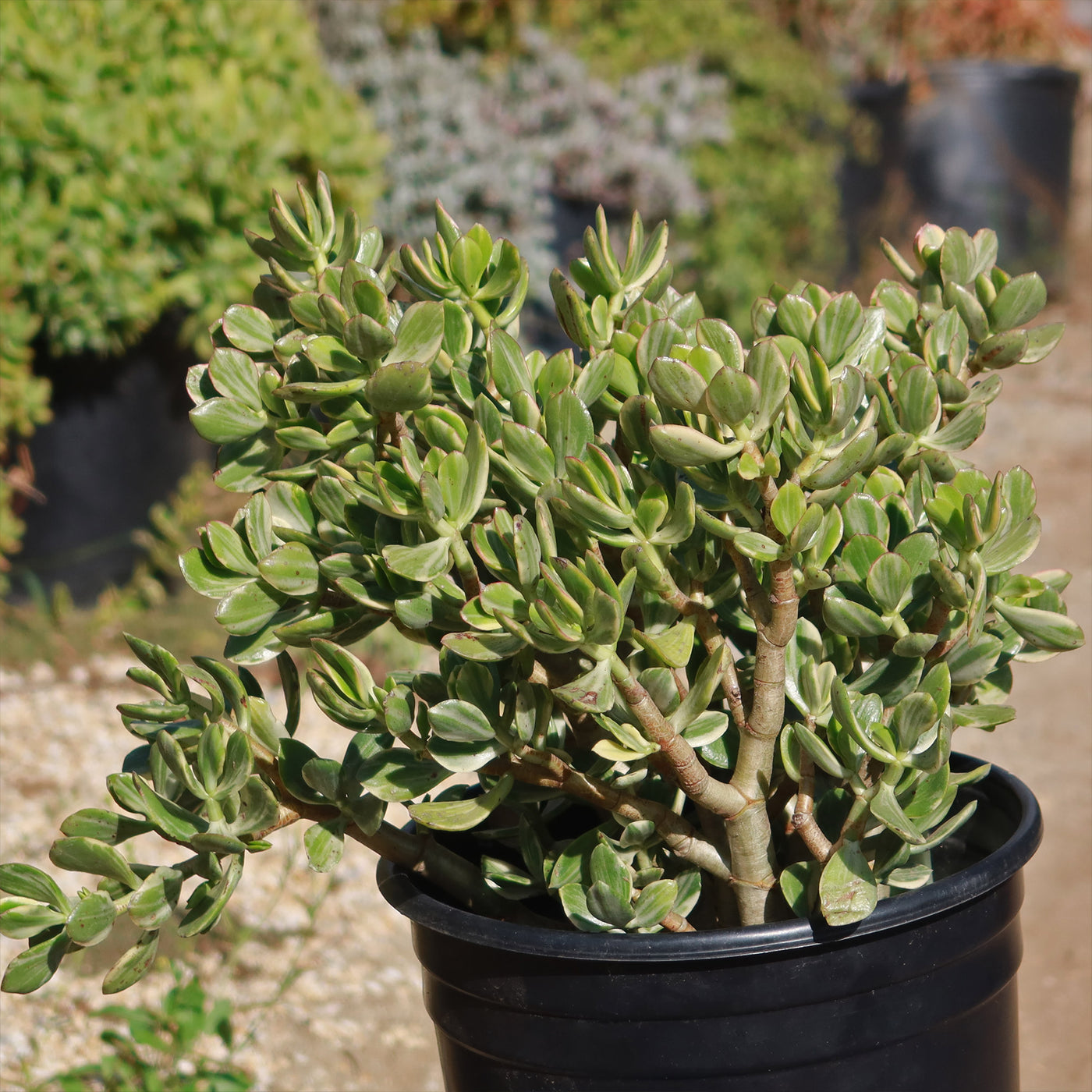
crassula ovata variegated jade plant Variegated Jade Plant 'Crassula ovata Variegata'Introducing the variegated jade plant, also known as Crassula ovata 'variegata, a vibrant member of the Crassula genus. Native to South Africa, it has several other common names such as; variegated money tree, Crassula ovata Tricolor, Crassula Argentea variegated, and Tricolor jade. The crassula ovata variegata is an elegantly branched shrub with attractive green foliage striped, thick, fleshy spoon shaped leaves with creamy white or pale yellow
Introducing the variegated jade plant, also known as Crassula ovata 'variegata, a vibrant member of the Crassula genus. Native to South Africa, it has several other common names such as; variegated money tree, Crassula ovata Tricolor, Crassula Argentea variegated, and Tricolor jade.
The crassula ovata variegata is an elegantly branched shrub with attractive green foliage striped, thick, fleshy spoon-shaped leaves with creamy-white or pale yellow patterns that turn pink in the sun. If given the proper care, your variegated jade crassula can live for up to 70 years. Although it grows slowly, adding only two inches to its height each year, this variegated jade plant can grow to a maximum height of three to six feet and 3 feet wide.
The flowers of the variegated jade plant are small and star-shaped and bloom in showy clusters from late winter to early spring. The overall appearance of your Crassula ovata variegata is delicately enhanced by these star-shaped flowers, which are usually white with pink overtones. Although they rarely bloom indoors, the green and white variegated leaves of this variegated jade are attractive.
This variegated Jade plant is a Chinese good luck plant because of its coin-shaped broad leaves, which symbolize wealth and fortune. Imagine adding a rare and beautiful Crassula jade plant to your collection that develops into a woody, branching shrub that makes an excellent large bonsai tree.
When and How to Water Your Variegated Jade Plant
The Variegated Jade Plant has low watering needs and is considered drought-tolerant. It prefers infrequent watering rather than being consistently moist. It's critical to let the soil dry out in between waterings because overwatering can cause root rot. A good rule of thumb is to hold off on watering again until the top inch of soil has dried out. Remember, it's always better to underwater than to overwater your Crassula ovata variegata plant. So, be sure to check the soil moisture before reaching for that watering can!
When watering, it's important to use a well-draining soil mix to prevent water from sitting in the pot and causing root issues. Make sure the pot has drainage holes to allow excess water to drain. During the winter months or when the plant is in a dormant phase, you can reduce watering frequency even further. It's always a good idea to observe your plant and adjust the watering schedule based on its specific needs and the conditions in your environment.
By providing the right amount of water, you can help your Variegated Jade Plant thrive and maintain its beautiful appearance.
Light Requirements - Where to Place Your Jade Plant
The Variegated Jade Plant thrives in bright, full sunlight to partial shade for at least 4-6 hours daily. It prefers a spot near a window where it can receive plenty of bright, filtered sunlight throughout the day. Under bright sunlight, bright red margins appear on leaves that are up to 2 inches long. However, it's important to protect your Crassula ovata variegata plant from direct sunlight for extended periods, especially during the hot afternoon hours, as it can scorch the leaves.
If you notice that the leaves of your Variegated Jade Plant are turning pale or yellowish, it may be an indication that it's not receiving enough bright light. On the other hand, if the leaves start to appear sunburned or develop brown spots, they might be getting too much direct sunlight. Finding the right balance is key to keeping your variegated jade happy and healthy.
If you don't have access to bright, indirect light, you can also grow the Variegated Jade Plant under fluorescent lights. This can be a great alternative for indoor spaces with limited natural light. Just make sure to keep the lights on for around 12-14 hours a day to mimic the variegated jade plant Crassula Ovata Variegata natural light cycle.
Optimal Soil & Fertilizer Needs
The Variegated Jade Plant prefers well-draining soil with soil ph 5.6 -6.5 that allows excess water to escape. A good mix for this plant is a combination of cactus soil and perlite, which provides the right balance of moisture retention and drainage. This type of soil helps prevent overwatering and root rot, which can be detrimental to the plant's health. Instead, make or buy a well-draining potting mix, or ideally use our specialized potting succulent mix that contains 5 natural substrates and mycorrhizae to promote the development of a strong root system that helps your variegated jade succulent to thrive.
When it comes to fertilizers, organic fertilizers with an equal mixture of 5-10-5 (NPK) also last longer and keep your soil alive by adding other beneficial compounds and microbes that encourage plant health and nutrient absorption. So, skip those harsh chemicals and give your succulent some love with some awesome organic fertilizer!
During the growing season, which is typically spring you can fertilize your jade plant variegated Crassula once a year. You can stop fertilizing completely during the dormant season.
Remember, it's always important to follow the instructions on the fertilizer packaging and avoid over-fertilizing, as it can lead to leaf burn or other issues. Keep an eye on your plant's growth and adjust the fertilizing schedule accordingly. With the right soil mix and proper fertilization, your Variegated Jade Plant will thrive and showcase its beautiful variegated leaves!
Hardiness Zones & More
Like the majority of Crassulas, the Crassula ovata variegata can withstand some short-term freezing, but it will lose its leaves and eventually die in extremely cold or hot temperatures. This Variegated Jade Plant is typically hardy in USDA hardiness zones 10-11. It prefers a warm climate and does best in temperatures between 65-75°F. In cooler zones, it can be kept outdoors during the summer and brought in as the temperature drops.
In terms of humidity, the Variegated Jade Plant is adaptable and can tolerate a range of humidity levels. It does well in average household humidity, but it's important to avoid excessive moisture and high humidity, as it can lead to fungal issues and root rot. Good air circulation is also beneficial for the plant's overall health.
Remember to keep an eye on the temperature and humidity levels in your specific location and adjust accordingly to provide the best conditions for your Variegated Jade Plant. With the right climate and care, your plant will thrive and bring beauty to your space!
Variegated Jade Plant Propagation
The Propagation of the variegated Jade Plant is relatively straightforward. It can be propagated through stem or leaf cuttings. Simply allow the cuttings to dry and callous over before placing them in well-draining soil. With proper ideal conditions and patience, you can enjoy a growing collection of these beautiful succulents.
Key Takeaways
- Variegated Jade Plant (Crassula ovata 'Variegata') is a beautiful succulent with green and cream-colored leaves.
- It is low-maintenance and easy to care for, perfect for indoor or outdoor growth.
- It thrives in bright, indirect light, but can also tolerate partial sunlight.
- It prefers well-draining soil and requires minimal watering, making it ideal for drought-tolerant gardens.
- It can tolerate a range of temperatures between 60°F and 75°F. It is suitable for beginners and experienced gardeners alike.
- Often grown as a decorative houseplant or outdoor accent in warm climates.
- Order your Variegated Jade Plant today to add elegance and resilience to your collection!
Shipping Notes
- Free Standard Shipping on $100+ Orders to the USA.
- Except Preorder products are shipped in 48 hours.
- Delivery to the USA:
- Standard Shipping : 3-10 business days
- If time is of the essence, please consider selecting expedited delivery for faster service.
Exchange/Return Notes
- We offer a 30-day return/exchange service after receiving.
- Final sale items are not eligible for returns or exchanges.
- To process your return/exchange, please contact us at [email protected]
- Please click here for more details>>> Return & Exchange Policy