SKU: 4430679944
large ponytail palm beaucarnea

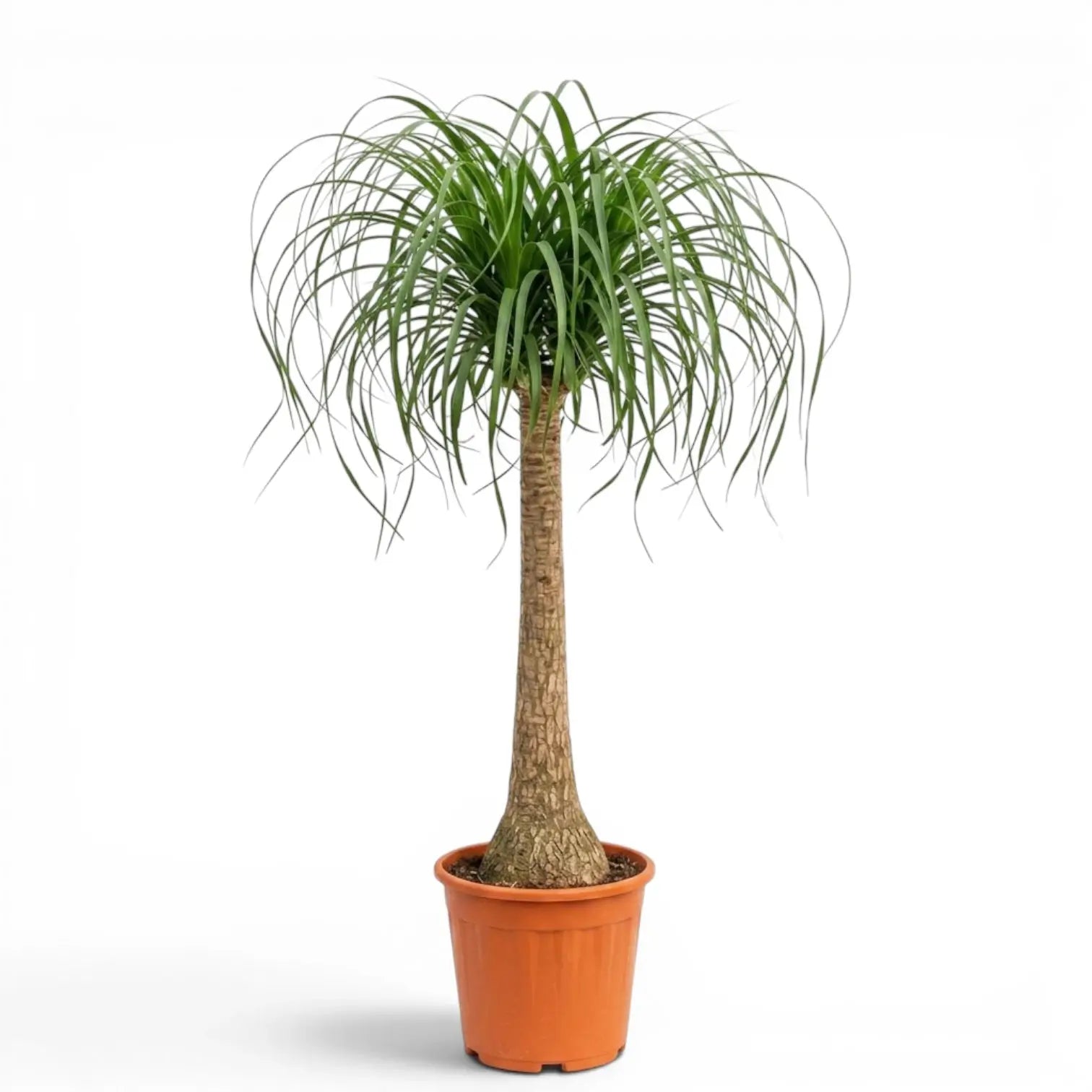
large ponytail palm beaucarnea Beaucarnea recurvata

Sale price$22.05 Regular price$24.50
Save 10%

Pay in installments of $6.12 with ShopPay, AfterPay and Klarna

Shipping Estimate
USA
  • USA
  • CAN

Ships within 48 hours · Estimated delivery Jul 16 - Jul 21

Promo Codes Available:

For Your Every Summer RSVP, with Code: SUMMER15

Description

large ponytail palm beaucarnea Beaucarnea recurvataBeaucarnea recurvata Beaucarnea recurvata, known as Ponytail Palm or Elephants Foot, is a slow growing plant with a swollen water storing base and a crown of long, narrow green leaves. The leaves curve back from the top of the trunk, which is where the common name Ponytail Palm comes from. It belongs to Asparagaceae. The thick base, or caudex, stores water and shapes the way this plant should be watered. It prefers a thorough soak followed by a clear

Beaucarnea recurvata

Beaucarnea recurvata, known as Ponytail Palm or Elephant’s Foot, is a slow-growing plant with a swollen water-storing base and a crown of long, narrow green leaves. The leaves curve back from the top of the trunk, which is where the common name Ponytail Palm comes from. It belongs to Asparagaceae.

The thick base, or caudex, stores water and shapes the way this plant should be watered. It prefers a thorough soak followed by a clear drying period. Young plants usually have one rounded base and one crown, while older plants can branch and develop a more tree-like outline over time.

Caudex and recurved crown

  • Swollen water-storing caudex
  • Long, narrow leaves that curve back from the crown
  • Slow container growth
  • Native to dry regions of Mexico
  • Considered non-toxic to cats, dogs and horses

Mexican dryland origin and slow growth

Beaucarnea recurvata belongs to Asparagaceae and is native to Mexico, including dry shrubland and semi-desert regions. In the wild, plants can grow into large caudex trees over long periods. In containers, they stay much smaller and grow slowly.

Mature plants may produce creamy white flowers, but this is mainly seen on older outdoor or greenhouse-grown specimens. Indoors, the swollen base, trunk and leaf crown are the parts you will notice most. Wild populations are critically endangered; nursery-propagated plants avoid pressure on wild plants.

Indoor Ponytail Palm care

  • Light: Give bright light with some direct sun where possible. Rotate the pot occasionally so the crown grows evenly.
  • Watering: Water thoroughly, then let the substrate dry well before watering again. The caudex stores water, so constant moisture around the roots causes trouble.
  • Substrate: Use a sharply draining cactus or succulent mix with mineral material. The root zone should dry evenly after watering.
  • Pot choice: Choose a stable pot with drainage holes. A slightly snug pot reduces excess wet substrate around the roots.
  • Temperature: Keep warm and frost-free. Protect from cold glass, cold floors and winter draughts.
  • Humidity: Average to dry indoor air suits this plant. Warmth, light and drainage matter more than high humidity.
  • Feeding: Feed lightly during active growth. Slow growth means heavy fertilising adds little benefit.
  • Repotting: Repot only when the roots have filled the pot or the substrate has degraded. Keep the caudex visible above the substrate line.
  • Leaf care: Remove fully dry lower leaves by hand or with clean scissors. Brown tips can be trimmed along the natural leaf shape.
  • Outdoor summer placement: Move outdoors only after gradual acclimation to stronger light and cooler nights. Bring indoors before autumn temperatures drop.

Caudex, leaf and root checks

  • Soft or dark caudex: Usually caused by prolonged wet substrate, cold exposure or root damage. Check the roots and reset the plant into a drier, mineral-rich mix if needed.
  • Brown leaf tips: Can come from irregular watering, physical damage, salts in the substrate or very dry heat. Check watering depth and flush the mix occasionally during active growth.
  • Pale, stretched crown: Indicates insufficient light. Move gradually to a brighter position.
  • Wrinkled base: A slight change can happen during dry periods. If the roots are healthy, deep watering after the mix has dried should restore firmness.
  • Mealybugs, scale or spider mites: Inspect the crown and the leaf bases, where pests can hide.

Long-term shape

Beaucarnea recurvata thickens its caudex slowly over many years. The crown renews from the centre, while older lower leaves dry naturally. Bright light, warmth and fast drainage help the base stay firm and the crown grow more compactly.

Large cuts to the trunk or crown change the plant’s future shape. Routine care is usually limited to removing dry leaves, cleaning dust from the leaves and adjusting watering to light and season.

Pet safety and placement

Beaucarnea recurvata is considered non-toxic to dogs, cats and horses. The long leaves can still be damaged if pets play with or nibble them. Mature plants can become heavy, so place larger pots securely.

Name and older synonyms

The genus name Beaucarnea is linked to Jean-Baptiste Beaucarne. The species name recurvata means curved backwards, referring to the leaves. Older names seen in literature include Nolina recurvata and Dasylirion recurvatum.

Shipping Notes
  • Free Standard Shipping on $100+ Orders to the USA.
  • Except Preorder products are shipped in 48 hours.
  • Delivery to the USA:
  1. Standard Shipping : 3-10 business days
  • If time is of the essence, please consider selecting expedited delivery for faster service.
Exchange/Return Notes
  • We offer a 30-day return/exchange service after receiving.
  • Final sale items are not eligible for returns or exchanges.
  • To process your return/exchange, please contact us at [email protected]
  • Please click here for more details>>> Return & Exchange Policy
SKU: 4430679944

Discover Niche Categories That Outsell large ponytail palm beaucarnea

Top-Converting Item to Boost Your Average Order

4.6 ★★★★★
Based on 30 reviews
Sort
Highest Rating
Newest First
Oldest First
Product Reviews
J
Verified Purchase
Joseph Johnson
Whiting, US
★★★★★ 3
This first part of this book was great for learning about Gandhi's life
Format: Kindle
This first part of this book was great for learning about Gandhi's life. The pictures were enjoyable as well. Near the end of the first part of the book, the main ideas were being repeated. I didn't enjoy the second part of the book which focused on analyzing Gandhi's philosophy and also repeated many of the ideas made in the first part of the book.
WAS THIS REVIEW HELPFUL?YesReportShare
Reviewed in the United States on February 27, 2015
M
Verified Purchase
Meg
Lake Worth, US
★★★★★ 5
A Rich and Wonderful Pictorial Biography
Format: Paperback
This is a beautiful book that tells Ghandi's story through wonderful photographs and a simple and elucidating text. Ghandi appears os a struggling human being who changes himself through hard work. It really is a story of transformation, and it's very well told here. I liked it so well, I used it as part of our study on world revolutions when I was teaching ninth grade last year, and the students also liked it very much.
WAS THIS REVIEW HELPFUL?YesReportShare
Reviewed in the United States on September 21, 2013
G
Verified Purchase
greg brown
Lexington, US
★★★★★ 4
A Tool for Study
Format: Kindle
Though this book feels like it has been cobbled together from different sources it provides a sense of Gandhi's spiritual growth and the sources for it. His ideas and principles are clearly and often repeatedly stated offering the student the benefit of repetition in varied words. I'll be reading it again and again to extract a summary of those. Recommended for beginning Gandhi explorers.
WAS THIS REVIEW HELPFUL?YesReportShare
Reviewed in the United States on May 16, 2016
G
Verified Purchase
GILES S RYAN
Boise, US
★★★★★ 5
Off the couch and on the road
Format: Kindle
Even those who are happy in their circumstance may find themselves discontented with the sameness of their days. An adventure will relieve this, and perhaps we can make the adventure happen, and yet the sameness of our days is the very thing that holds us back. But then we read how someone actually did it, had a true adventure to match the best of our daydreams, and we think, I could do that, too! Beth Jusino’s Camino memoir is for everyone who has ever considered doing something extraordinary, something beyond everyday life. She freely admits her life was sedentary — as couch-bound as you or I — but then the notion of the Camino grew from daydream to impulse, and then became irresistible, and she was fortunate to have a husband who gladly came along. It’s a book of astonishing quality, the words well-chosen, each page proof of her craft. She engages us not only with her physical ordeal (which is considerable, until she finds better shoes along the way), but also with her wonderment at the things she sees, the people she meets on the way, and we are compelled along, turning each page to see what happens next. Her story is not only rich in anecdote but also in the wealth of reflection on what she sees and hears along the way. Some particular scenes that stay fixed in memory are her encounters with a flock of sheep she meets at just the point when she needs them — a Camino miracle! — and also her descriptions of the great storks in their huge nests on all the church steeples and other high points along the way. Again and again I marked passages in the text so that I may come back and enjoy them once more. It’s also a love story, and the measure of this is the way we begin to anticipate her moments of particular challenge when her husband will do whatever needs doing or say whatever she needs to hear. It’s his story as well as hers, and she knows this and sets it down, and in so doing, tells us that perhaps she could not have finished her journey without him. Those who have walked any part of the road to Santiago will relive moments in familiar places and perhaps see what they missed the first time along the way and gain a new insight, a fresh view of what they overlooked before. And they may think, yes, I’ll go again! But if you’ve never had an adventure and Santiago is no more than the stuff of your daydreams, if you have so far only imagined such an undertaking, if the sameness of your days holds you back, then read this book. Then go out and do it. But make sure you buy the right shoes.
WAS THIS REVIEW HELPFUL?YesReportShare
Reviewed in the United States on January 27, 2021
M
Verified Purchase
Maggie
Lexington, US
★★★★★ 4
Walking from La Puy to Finisterre...a well written memoir
Format: Paperback
The key to writing a Camino book--at least from this reader's perspective--it to have a well-written, well-edited, and unique personal account of the adventure. I've read many Camino books that lack these three elements. WTTEOTW has all three elements and is a great addition to anyone's Camino library. The book is paced nicely and makes for an easy read. I was amused that the author had spent considerable time preparing for this trip yet seemed not to have absorbed some important information prior to the trip--e.g. appropriate footwear, the scramble for nightly accommodations, the frustrations that commonly occur while traveling in unfamiliar cultures. Her adjustments along the way provide humor and insight into preparing for things we've not yet experienced in our own lives.
WAS THIS REVIEW HELPFUL?YesReportShare
Reviewed in the United States on January 8, 2019

recommand products