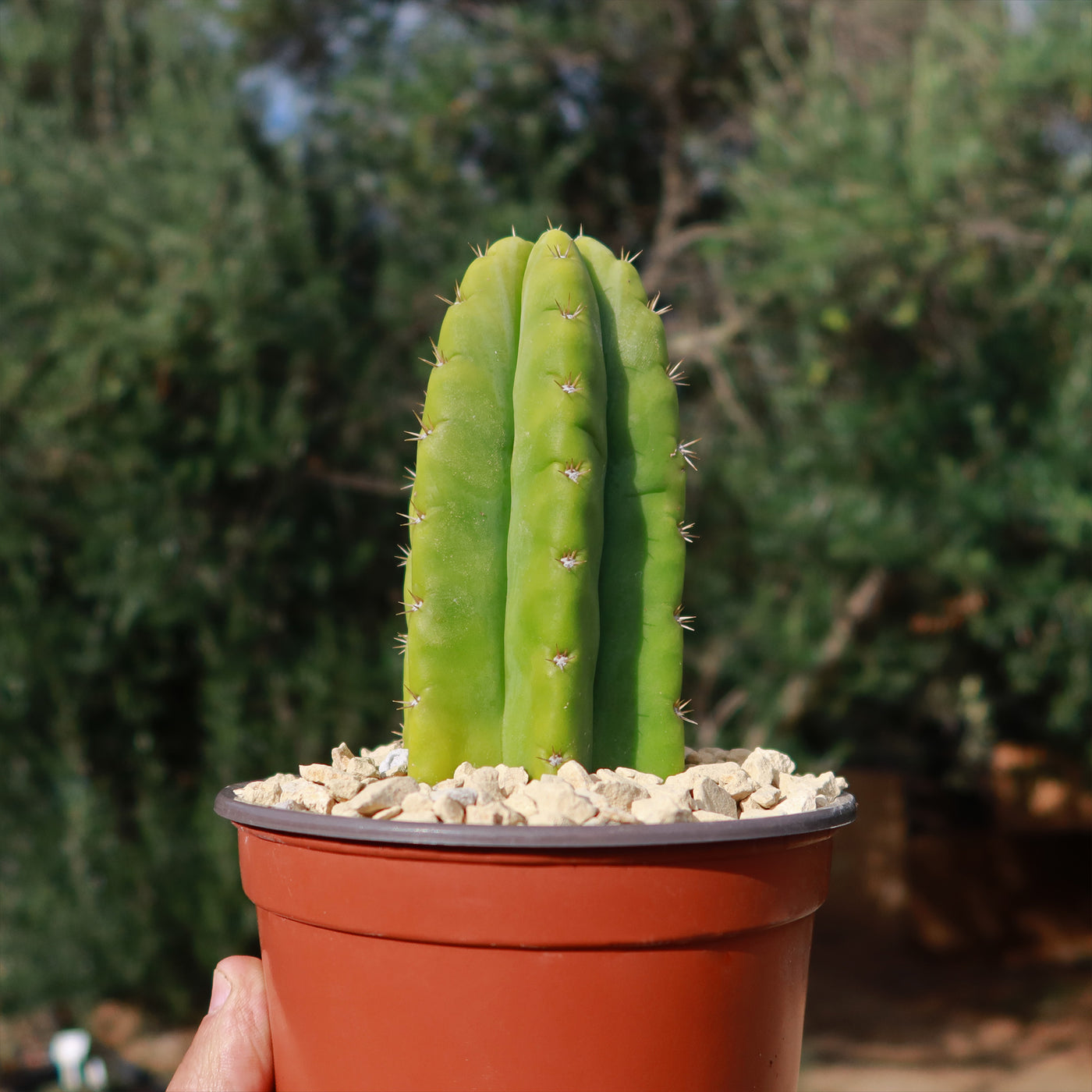
SKU: 44149096595
san pedro cactus hallucinogenic properties

san pedro cactus hallucinogenic properties Shop 'San Pedro Cactus - Echinopsis pachanoi' Care and Growing Guide

Sale price$22.48 Regular price$24.98
Save 10%

Pay in installments of $6.25 with ShopPay, AfterPay and Klarna

Shipping Estimate
USA
  • USA
  • CAN

Ships within 48 hours · Estimated delivery Jul 16 - Jul 21

Promo Codes Available:

For Your Every Summer RSVP, with Code: SUMMER15

Description

san pedro cactus hallucinogenic properties Shop 'San Pedro Cactus - Echinopsis pachanoi' Care and Growing GuideIntroducing the San Pedro cactus, also known as Echinopsis pachanoi (Syn. Trichocereus pachanoi) or Trichocereus Echinopsis pachanoi, which is among the superstars of the cactus world. This fast growing columnar cactus is also known as the Wachuma and Huachuma. Standing tall and proud, this magnificent San Pedro cactus columnar beauty can reach heights of up to 20 feet and spread its branches wide, up to six feet! With stems that range from vibrant

Introducing the San Pedro cactus, also known as Echinopsis pachanoi (Syn. Trichocereus pachanoi) or Trichocereus Echinopsis pachanoi, which is among the superstars of the cactus world. This fast-growing columnar cactus is also known as the Wachuma and Huachuma. 

Standing tall and proud, this magnificent San Pedro cactus columnar beauty can reach heights of up to 20 feet and spread its branches wide, up to six feet! With stems that range from vibrant green to mesmerizing blue-green shades, San Pedro is a true showstopper in any landscape. As your San Pedro cactus plant matures, its colors deepen and intensify, adding even more charm to its already captivating presence.  


When the San Pedro cactus flowers bloom, they emit a sweet fragrance that attracts pollinators like bees and butterflies.

The flowers are usually large and trumpet-shaped and come in various colors, including white, cream, and yellow. The petals have a delicate texture and often have a waxy appearance.

The fragrant flowers usually open during the day and close at night. They have a short blooming period, typically lasting for a day or two.

During the blooming season, which usually occurs in late spring or early summer, multiple flowers can bloom at once, creating a captivating sight.

The San Pedro cactus flowers are not only visually appealing but also have cultural significance. In some indigenous cultures, the flowers are used in traditional ceremonies and rituals. They are believed to have spiritual and healing properties.

The San Pedro cactus also has Pitahaya red San Pedro cactus fruits. These fruits are known for their sweet and refreshing flavor, making them a popular choice for consumption. Additionally, they are rich in antioxidants and vitamins, providing numerous health benefits.  

When and How to Water Your San Pedro Cactus 

San Pedro cactus is a drought-tolerant plant that can survive in dry conditions for long periods of time. However, regular watering is still needed to stay healthy. Generally, the San Pedro needs to be watered once every two weeks. During the summer months, when temperatures are high and the plant is actively growing, it may need to be watered more frequently.  

When watering your Trichocereus Echinopsis pachanoi, be sure to soak the soil thoroughly and allow it to drain completely. To prevent root rot and other issues, avoid overwatering.The leaves may become dry and brittle, and the cactus may stop growing if it is underwater. Over time, the San Pedro cacti may start to lose their shape and become misshapen.  

In addition to these physical symptoms, underwatering can also make the cactus more susceptible to pests and diseases. To keep your San Pedro cactus healthy and thriving, it is important to water it regularly and provide it with the right growing conditions. 

Light Requirements - Where to Place Your San Pedro Cactus

When grown indoors, your San Pedro cactus should be placed in a bright, sunny location where it can receive at least six hours of direct sunlight each day.

For outdoor cultivation, the San Pedro cactus requires a lot of sunlight to grow and thrive.

In its natural habitat, this cactus is exposed to direct sunlight for 4-6 hours each day.

If you live in an area with a lot of cloud cover or limited sunlight, you may need to supplement your cactus's light with artificial grow lights.

So, let's give your San Pedro cactus plant what it deserves—just the right amount of light to bloom into the ultimate showstopper! 

But beware; too much sun can lead to burns, so make sure you gradually increase exposure or bring it indoors during a heatwave. And if your Echinopsis pachanoi isn't getting enough light, it'll start stretching toward its source.

Optimal Soil & Fertilizer Needs 

Use well-drained soil that is designed specifically for your Echinopsis pachanoi cactus. These specialty soil mixes have been precisely developed to imitate well-draining desert soils. Commercial cactus soil is affordable and available online or at Home Depot.

Planet Desert specializes in cacti and has a specialty cactus potting mix that contains 5 natural substrates and organic mycorrhizae to promote the development of a strong root system that helps your San Pedro cactus thrive. 

When it comes to fertilizing your San Pedro cactus plant, it only needs a small amount of fertilizer applied once a year in the spring. Cacti prefer fertilizer with lower doses of NPK, with a maximum ratio of 5-10-5 which is higher in phosphorus than nitrogen. Remember, overfertilization can lead to root rot or even the death of the plant, so be cautious! 

Hardiness Zones & More 

San Pedro cactus is a hardy plant that can grow in a variety of different climates. It is native to the Andes Mountains, where it can be found growing at high altitudes in a range of temperatures. In the United States, San Pedro cactus is typically grown in warm, dry climates such as those found in the southwestern states. 

When growing indoors, the San Pedro cactus prefers a warm and dry environment. It thrives in temperatures ranging from 55°F to 75°F. Aim for a humidity level of around 40% to 50% to create an ideal indoor environment for your San Pedro cactus.

For outdoor cultivation, this cactus is hardy in USDA zones 8–11, which means that it can tolerate temperatures as low as 20 degrees Fahrenheit.

If you live in an area with extreme temperatures, you may need to take extra precautions to ensure that your San Pedro cactus Echinopsis pachanoi, stays healthy. 

In addition to its hardiness zone, it is also important to consider the humidity requirements of the San Pedro cactus. This cactus is adapted to dry, arid environments and does not require a lot of humidity to grow. In fact, high levels of humidity can be detrimental to the health of the plant, as they can promote the growth of mold and fungal diseases. 

When growing San Pedro cactus, it is important to provide good air circulation and avoid overwatering to prevent the buildup of excess moisture around the base of the plant.

Wildlife - San Pedro Cactus Attracts the Following Friendly Pollinators

The San Pedro Cactus flowers attract several friendly pollinators such as bees, butterflies, and hummingbirds. These pollinators are essential for the reproduction of the cactus and play a crucial role in maintaining the ecosystem's biodiversity.

Butterflies
Bees
Hummingbirds
Lady Bugs
Multi Pollinators
Other Birds

According to ASPCA, the San Pedro Cactus is safe for humans but can be mildly toxic to cats and dogs if ingested in a large amount. However, it is safe to touch and handle, making it a popular choice for ornamental cactus gardens. However, it is important to keep San Pedro Cactus out of reach of pets to prevent accidental ingestion.

How to Propagate Your San Pedro Cactus

Propagating the San Pedro cactus can be done through seeds or cuttings, but each method has its pros and cons. While cuttings are a quicker option, this method involves cutting off the top of the plant, which permanently alters its tall, elegant columnar form. For this reason, propagation by cuttings is only recommended if the plant has already broken or been damaged. In such cases, you can take a healthy segment, allow it to be callous for about a week, and plant it in well-draining soil to root. However, this approach is less ideal for those who wish to maintain the plant's natural aesthetics.

Seed propagation is a method for cultivating new cacti plants, and preserving their beauty. Harvested from mature cacti's fruit, seeds are cleaned, dried, and sown onto a well-draining soil mix. Despite the patience required, this method allows for healthy plants without compromising the parent cactus's appearance, despite the need for indirect sunlight or grow light.

Key Takeaways

  1. Unlike many other cacti, the San Pedro grows quickly, often reaching heights of 10–20 feet under ideal conditions, making it a popular choice for ornamental gardens.
  2. This cactus is highly adaptable, thriving in a variety of climates and requiring minimal care. It is drought-tolerant, hardy in USDA zones 8–11, and grows well in nutrient-rich, well-draining soil.
  3. San Pedro Cactus is a drought-tolerant that thrives in arid conditions and requires minimal watering. It is a popular choice for xeriscaping and landscaping in dry climates due to its ability to store water in its fleshy stems.

Final Thoughts

Overall, the San Pedro cactus (Echinopsis pachanoi) is a remarkable plant with unique features. It is characterized by its tall, columnar shape and beautiful white or yellow flowers. The cactus can grow to impressive heights, reaching up to 20 feet in optimal conditions. Its spines are relatively short and are arranged in clusters along the ridges of the cactus. The San Pedro cactus is a low-maintenance plant that thrives in well-draining potting soil and enjoys ample sunlight. It prefers a dry environment and can tolerate drought, so it should be watered sparingly, allowing the soil to dry out between waterings.

Don't miss out on this opportunity to add something truly exceptional to your garden. Buy San Pedro cactus for sale today to enhance your collection! 

Shipping Notes
  • Free Standard Shipping on $100+ Orders to the USA.
  • Except Preorder products are shipped in 48 hours.
  • Delivery to the USA:
  1. Standard Shipping : 3-10 business days
  • If time is of the essence, please consider selecting expedited delivery for faster service.
Exchange/Return Notes
  • We offer a 30-day return/exchange service after receiving.
  • Final sale items are not eligible for returns or exchanges.
  • To process your return/exchange, please contact us at [email protected]
  • Please click here for more details>>> Return & Exchange Policy
SKU: 44149096595

Discover Niche Categories That Outsell san pedro cactus hallucinogenic properties

Top-Converting Item to Boost Your Average Order

4.7 ★★★★★
Based on 22 reviews
Sort
Highest Rating
Newest First
Oldest First
Product Reviews
B
Verified Purchase
Brant Jones
Fort Morgan, US
★★★★★ 5
Brilliant, rigorous, balanced, and approachable
Format: Paperback
"The Resurrection of Jesus: A New Historiographical Approach," by Michael R. Licona is an outstanding, thorough yet highly approachable assessment of the evidence, sources, and explanatory hypotheses for the resurrection of Jesus Christ. As the subtitle suggests, it borrows significant methodological rigor and best practices from the field of historical analysis and applies them to biblical scholarship. Licona begins his assessment with a meticulous discussion of his historical analysis methodology. Included in this section is his definition of five criteria he uses to assess a set of explanatory hypotheses. He then uses those assessments to weigh the hypotheses based on nine levels of certainty ranging from “certainly not historical” to “certainly historical.” The hypothesis representing the best explanation for the resurrection of Christ is the one rated highest in historical certainty based on the five criteria. At the outset of the book, Licona also includes a robust discussion of historical analysis influences and issues because evaluating them openly is essential to his methodical approach and because they aren’t often discussed in biblical studies. It is in this section that he does something quite unique and insightful; Licona includes a full discussion of knowledge, experiences, worldviews, preferences and other influences, which he calls “horizons,” that tend to bias the assessment of history. Furthermore, he defines a set of six methods that he uses throughout the book to avoid his own biases as he strives to present outcomes based on methodical neutrality. It’s quite brilliant. Licona even includes a confession of his own “horizons” - his potential influences. With all this foundation in place, Licona proceeds to identify all sources of evidence for the resurrection of Christ and rates each according to its likelihood of providing reliable independent testimony. Included in this assessment are sources from the Bible, early Christian writers, non-biblical Christian literature and early non-Christian writers. He then uses the most reliable sources as the basis for attesting to the reliability for all the available evidence for the resurrection. This produces three pieces of evidence that he calls “historical bedrock” because they are well attested within multiple reliable sources and are validated by a broad range of scholars. In the final section of the book, Licona evaluates major assertions against the resurrection from skeptics and compares the results against a parallel evaluation of the resurrection hypothesis. Specifically, he uses his criteria and rating system to assess how well hypotheses from a range of skeptical scholars, like Gerd Ludemann and John Dominic Crossan, are able to explain the historical bedrock evidence. At the end of this extensive analysis, the biblical resurrection hypothesis is by far the most credible explanation for historical bedrock evidence associated with the resurrection of Jesus Christ. As noted above, Michael Licona’s book is an excellent assessment of the evidence, sources and competing hypotheses associated with the resurrection of Christ. The author uniquely applies the meticulousness of best practice historical analysis methodology to arguably the most important of all biblical questions. Using rigorous criteria and rating scales, Licona delivers a fair and balanced evaluation that achieves the methodical neutrality he was striving for while minimizing, as best as possible, influences from his “horizons.” It’s also worth noting that Licona assesses a broad range of possible sources, including those classified as gnostic and pseudepigraphal, and includes viewpoints from a broad range of scholars, supportive and skeptical alike. Furthermore, the author includes a very robust set of footnotes on the various topics discussed within the book. These footnotes are helpful for both scholars and non-scholars looking for a deeper understanding or pointers for additional exploration plus they include additional explanatory comments that complement Licona’s focus on delivering a fair and balanced assessment. The one issue I found while reading the book was its treatment of the empty tomb evidence. I was disappointed the author’s discussion was brief since I was looking forward to a robust evaluation. However, in his defense, Licona was looking for historical bedrock evidence that could be used to assess the various resurrection hypotheses. A large number of scholars are skeptical of the empty tomb so it doesn’t belong in his historical bedrock category. Beside this one brief moment of disappointment, I was greatly pleased with the totality of Licona’s analysis and outcomes.
WAS THIS REVIEW HELPFUL?YesReportShare
Reviewed in the United States on April 25, 2021
A
Verified Purchase
Amazon Customer
Pawtucket, US
★★★★★ 5
Detailed examination
Format: Paperback
The Resurrection of Jesus: A New Historiographical Approach is thus far my favorite textbook to refer to when exploring the Jesus’ resurrection. If you are looking for a timeless, structured, methodical, and systematic approach to the resurrection of Jesus, then this is the book for you. Although the massiveness of the volume can be intimidating, Licona’s scholarly work is well-written and easily followed, making it suitable for both scholars and layman. Rather than jump straight into the historical evidence for Jesus’ resurrection, as others do, Licona begins by discussing the nature of history, truth, bias, burden of proof, and method. In so doing Licona makes clear what his methodology is, and that is, to carefully establish a core of facts (called the historical bedrock) and evaluate which hypothesis best meets those facts according to the standard historical criteria (e.g., explanatory scope and power), which can also be referred to as a minimal facts approach. After these more metaphysical topics, Licona provides details all (or nearly all) relevant ancient texts surrounding the resurrection. And after a lengthy discussion on the historical bedrock, Licona weighs six hypotheses (five of which being naturalistic hypotheses), concluding that the resurrection hypothesis is the only one that meets all of the historical criteria. One of the many strengths of his book is that it attempts to look at the historical research for the resurrection of Jesus from an unbiased perspective. His attempt is to limit what he refers to as his “horizon”—his lens of prior beliefs and experiences that make him biased to the evidence. Licona cites and deals with a vast number of nonbiblical sources and skeptical scholars. I would gladly say that Licona does so with modesty and integrity. For skeptics, they should be easily able to interact with this text with gratitude and enthusiasm. For some Christians, though, Licona can seem a bit too unbiased. If you are looking for an examination of the resurrection of Jesus that does not address challenges and tough questions honestly, then this probably isn’t the book for you. There are occasional instances where some may find Licona’s conclusions to seem too critical. For instance in his assigned historical value to the canonical Gospels and in his historical bedrock. (Spoiler) Licona only includes three facts in his historical bedrock, omitting the historical fact of the empty tomb (although he does consider it a second-order fact). The reason for both are based on the historical method and standard criteria. While some may disagree with his conclusions, there is no doubt in Licona’s consistency. The only other downside to the textbook is that it does not have the wherewithal to go into deep discussion on certain topics, like the historical reliability for the empty tomb. Doing a deep dive into individual topics like such would result in a much larger volume. So, if you are looking for an exhaustive exploration into a specific topic, this may not be the right text for you. That is not to discredit the comprehensiveness that Licona does provide! Despite its inexhaustiveness, Licona does give a number of sources one could use for a deeper search into a specific topic. Overall, if you are a Christian who wants to research the skeptical challenges facing the resurrection and you want to know how to construct a minimal facts approach to the resurrection of Jesus, or if you are a skeptic who desires to know more about the subject and interact with the top Christian historians, then this is the book for you.
WAS THIS REVIEW HELPFUL?YesReportShare
Reviewed in the United States on November 29, 2023
S
Verified Purchase
Sidney
Draper, US
★★★★★ 5
Worth reading. Worth keeping. Conservative and narrow choice of 3 irrefutable facts of resurrection
Format: Paperback
Michael Licona was motivated to write this exhaustive book on the resurrection to fill a gap he perceived in Biblical scholarship—that Biblical scholars typically come from a theological background not a historical one, and historians often aren’t interested in religious topics but rather the history of an era. He wondered what would happen if someone studied the resurrection of Jesus using the same approach historical scholars do to discern the plausibility of the resurrection of Jesus Christ, which is the falsifiable core of Christianity. The book contains only five chapters but they are exhaustive in their coverage of each topic. His first chapter deals with the burden of proof laid on historians and the sleuthing they do to determine accuracy. A bedrock of historical research is that all researchers are tainted by their horizons, ie, presuppositions and/or biases. No one is devoid of them, maybe especially in the arena of studying the likelihood of the resurrection of Jesus. Licona is sensitively aware of his own bias—that of a Christian whose faith hangs on the resurrection—and so he took a very conservative, narrow approach to his study in order to minimize his own bias. Chapter 2 is titled “The Historian and Miracles.” It puts his discussion of horizon to the test with a topic most secular historians don’t believe—that miracles can and do exist. The rubber meets the road in Chapter 3 where he examines every first- and second-century document as to its content and believability regarding evidence and eyewitness accounts of the resurrection of Jesus. Chapter 4 is also exhaustive in using all these strong sources to put together a bedrock of historical facts. What can no one deny about the resurrection of Jesus? With his extremely conservative focus, he only has three foundational bedrock facts that virtually all Biblical scholars—even the skeptical ones—attest to. These are: 1. That Jesus died by crucifixion, 2. That the disciples believed they had experiences with the resurrected Jesus after his death, proclaimed it, and many were martyred for it, 3. That the apostle Paul converted from persecutor to proclaimer after Jesus appeared to him. Licona does not include other commonly used evidences like the conversion of Jesus’s brother James or the empty tomb because these are not attested to by >90% of Biblical scholars. In chapter 5 he puts his accumulative scholarship to the test by comparing the likelihood that the resurrection actually happened versus theories disputing it. He gives the best arguments for each in turn and then summarizes the strength of each theory in a table. The book is worth owning since it is exhaustively researched and for each assertion Licona makes, he provides copious evidences for and against his hypotheses—historiography, miracles the resurrection, the 3 bedrock facts, and his conclusions. I’ve read every word of this book for a Master-level class on the resurrection and it can get tedious because of the detail, however, at the end of every reading session I was invariably glad I’d read it. I always learned something new and was impressed with Licona’s scholarship and attempt to be as unbiased as he could. I think he was too sensitive toward his own horizons in some cases. Anyone who wants to decide for her- or himself whether the resurrection really happened, or anyone who wants to make a strong case for the resurrection with a skeptic, I would highly recommend getting this book and keeping it to refer to over and over again. The first chapter on horizon is applicable to many other areas of life; it alone is worth the price of the book (but definitely don’t ignore the rest!) For a companion tome to flesh out evidences for the resurrection being real, an equally scholarly but different thrust, check out N. T. Wright’s equally exhaustive book but viewed from a different angle: "The Resurrection of the Son of God".
WAS THIS REVIEW HELPFUL?YesReportShare
Reviewed in the United States on October 19, 2019
S
Verified Purchase
Steve Winters
Draper, US
★★★★★ 4
A Rational Approach To Examine Competing Explanations
Format: Paperback
This is the first book I have read on an investigation into the resurrection event of Jesus. I found Licona’s approach clear and easy to follow. His writing style is very structured which I found to be valuable since he this book is thorough and covers a lot of material. Each chapter Licona begins with a brief outline of what he will cover and then he summarizes his main points at the end as well. Structuring the book this way was very helpful in following Licona’s reasoning and method from beginning to end. Licona begins by laying out his approach to historical inquiry. As someone who is not a historian and unfamiliar with the specifics of how historians approach their work, I found this section very useful in setting the stage for Licona’s investigation. For example, Licona has a section on “horizons,” which he defines as our “preunderstanding.” Essentially, horizons are our own perspectives based on our personal experiences and various influences such as culture, race, political, and religious experiences, that shape how we form our judgments and what we might choose to be an acceptable claim about reality. For example, whether miracles are possible. The goal is to mitigate horizons as much as possible and look at what the evidence has to say on its own. Since the goal of the book is to arrive at a conclusion pertaining to whether Jesus rose from the dead it is important to define what is meant by “best explanation” when we weigh competing hypotheses. Licona devotes a section to set criteria for a best explanation candidate. He establishes five criteria; explanatory scope, explanatory power, plausibility, less ad hoc, and illumination. Licona utilizes this criterion in the final chapter to weigh competing hypotheses. Furthermore, the critical insight that Licona focuses on is what he refers to as the “historical bedrock.” According to Licona, the historical bedrock includes three facts that are virtually undisputed by historians. Licona states his two criteria for the facts as strongly evidenced and those which contemporary scholars unanimously regard as historical facts. He navigates through various historical details surrounding the resurrection of Jesus and narrows down to three bedrock facts; Jesus died by crucifixion, shortly after Jesus’ death his disciples had experiences that led them to believe and proclaim Jesus was resurrected and appeared to them, and Paul’s conversion after experiencing a postresurrection appearance of Jesus within a few years after the crucifixion. Licona claims that the vast majority of scholars grant these facts as historical. With the bedrock laid, now one can weigh competing hypotheses against the bedrock itself to determine which explanation the best accounts for all three facts. As one weighs any available hypotheses against the bedrock facts, the idea is that one can minimize biases and infer the best explanation as to what happened to Jesus in the first century. Ultimately, Licona concludes that the best explanation is the resurrection of Jesus as claimed by Christianity. His conclusion comes after a thorough examination of six common explanations (including the resurrection hypothesis) and showing how each fails to explain at least one of the three facts except for the resurrection hypothesis. He spends a good deal of time interacting with scholarly work on different explanations. Licona concludes that the resurrection hypothesis best accounts for the three bedrock facts as well as fulfills all five criteria for a best explanation. Overall, I thought Licona’s method is thorough and rigorous, ultimately showing that the resurrection hypothesis cannot simply be dismissed. I also found Licona to be very candid. At the end of the book he admits that he was surprised at the “very certain” level which he awards the resurrection hypothesis after applying his method. I would highly recommend this book to anyone interested in learning what can be determined about the fate of Jesus from a historical approach.
WAS THIS REVIEW HELPFUL?YesReportShare
Reviewed in the United States on October 17, 2019
C
Verified Purchase
Chris Slayton
Omaha, US
★★★★★ 5
Excellent book on the historicity of the resurrection!
Format: Paperback
There are many books devoted to the resurrection of Jesus. Licona’s book is unique in that it takes “a new historiographical approach” to the resurrection by applying the principles of secular historical analysis to the question of whether Jesus rose from the dead. In applying the historical method, Licona seeks to understand the objective truth about what happened regardless of his subjective Christian beliefs on the matter. In fact, Licona readily admits his personal bias – or “horizon” – and his desire to see the historicity of the resurrection confirmed. However, as he points out, all historians have a “horizon” of some sort, and in his research and analysis, Licona is careful – some would say too careful perhaps – to set aside his “horizon” in order to objectively consider the evidence. Licona considers a variety of historical sources pertaining to the resurrection, both biblical and extra-biblical, weighing each source on a spectrum of historicity – from “certainly not historical” to “certainly historical.” Licona seeks to find the best explanation for the evidence according to five criteria: plausibility, explanatory scope, explanatory power, less ad hoc, and illumination. After examining the evidence, Licona concludes that there are three virtually undisputed facts that he calls “historical bedrock:” (1) Jesus died by crucifixion; (2) Jesus’ disciples had experiences that led them to believe that he had been resurrected; and (3) Paul converted after experiencing what he interpreted as a post-resurrection appearance of Jesus. Licona then weighs five naturalistic hypotheses for the resurrection, demonstrating how each of these views falls short of providing the best explanation for the historical bedrock. Licona ultimately concludes that the resurrection is the only hypothesis that meets all five criteria. In other words, Jesus’ resurrection from the dead provides the best explanation of the historical bedrock, and the historian is warranted in regarding Jesus’ resurrection as an actual historical event. Licona’s historiographical approach to the resurrection produces a very strong case for the resurrection of Jesus of Nazareth. I particularly appreciated Licona’s treatment of “horizon.” Licona is transparent about his Christian beliefs, but he demonstrates a willingness to go where the evidence leads and bent over backwards to remain objective. For example, Licona does not include the empty tomb as part of the historical bedrock since many scholars dispute the empty tomb. Some would take exception to this, but I believe it actually strengthens the case for the resurrection and leaves the skeptic with very little to argue. In other words, Licona is able to make a convincing case for the resurrection without considering what many Christians consider the best evidence – the empty tomb! I found the book very helpful, but keep in mind it is an academic work, and at over 600 pages, it is not necessarily an easy read. That being said, Licona’s book is outstanding and is a “must-read” for anyone seeking to understand the historical evidence for the resurrection or seeking to counter skeptical arguments against it. This is a great book to add to your library.
WAS THIS REVIEW HELPFUL?YesReportShare
Reviewed in the United States on November 19, 2021

recommand products