Pay in installments of $6.98 with
 ,
,
 and
and

Shipping Estimate
USA
- USA
- CAN
- USA
- CAN
Ships within 48 hours · Estimated delivery Jul 19 - Jul 24
 Promo Codes Available:
For Your Every Summer RSVP, with Code: SUMMER15
Description
fishtail succulent plant Hoya polyneura – Fishtail HoyaHoya polyneura Hook. f. rare Himalayan Fishtail Hoya Hoya polyneura was described by Joseph Dalton Hooker in Flora of British India (1883). Native to the eastern Himalayas of India, this rare Himalayan Hoya grows epiphytically on moss covered branches between 1000 and 3000 m elevation, catching monsoon rain while roots stay aerated. Unlike many Hoyas, Hoya polyneura is not a climbing vine it forms arching, shrubby shoots that bend under their own
Hoya polyneura Hook.f. – rare Himalayan “Fishtail Hoya”
Hoya polyneura was described by Joseph Dalton Hooker in Flora of British India (1883). Native to the eastern Himalayas of India, this rare Himalayan Hoya grows epiphytically on moss-covered branches between 1000 and 3000 m elevation, catching monsoon rain while roots stay aerated.
Unlike many Hoyas, Hoya polyneura is not a climbing vine – it forms arching, shrubby shoots that bend under their own weight, creating a graceful, cascading form ideal for hanging pots or elevated displays.
Distinctive features of Hoya polyneura
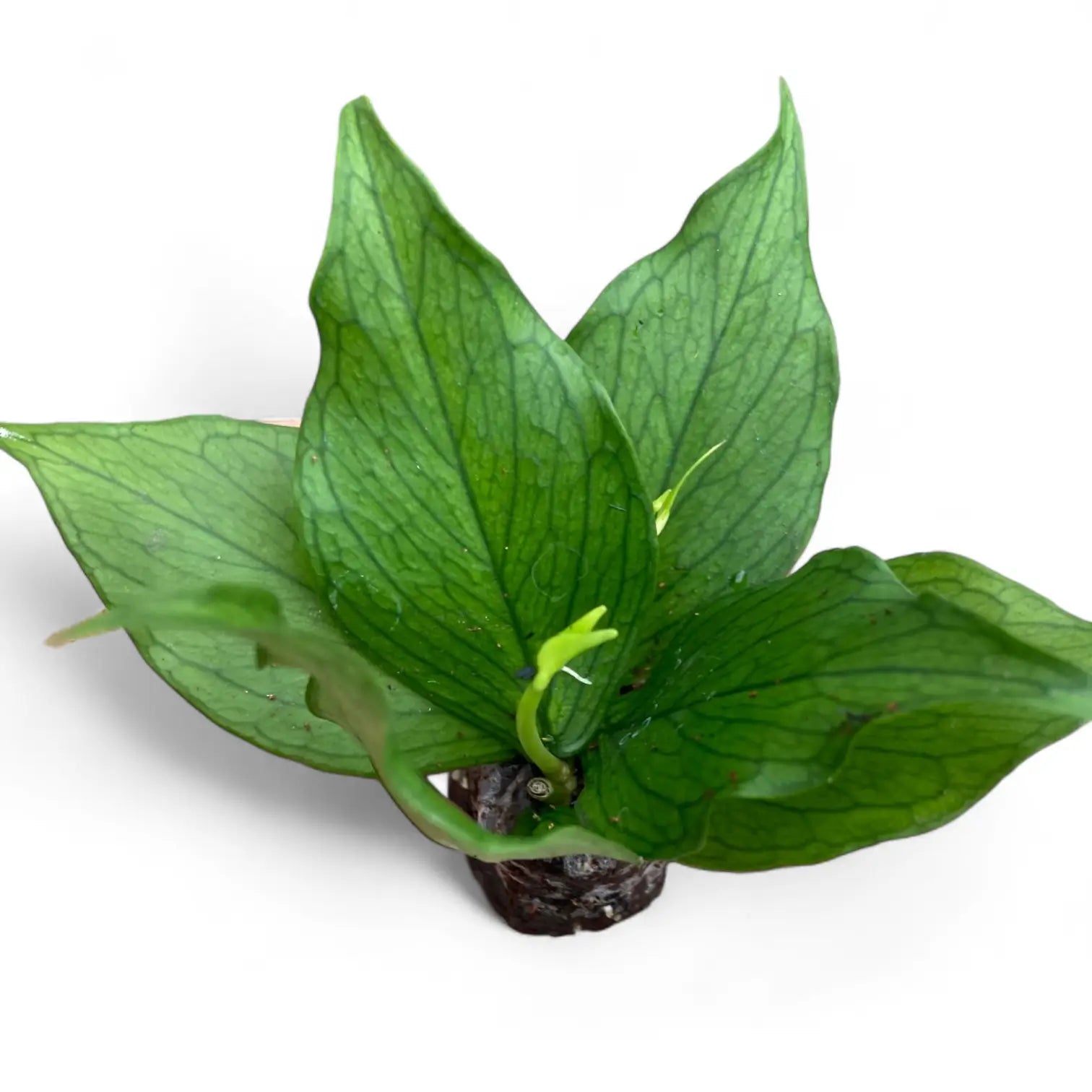
This species is instantly recognisable by its striking leaf pattern. Leaves are opposite, flat and diamond-shaped, typically 6–8 cm long and 2.5–4 cm wide. Their medium-green surface is lined with blue-green veins arranged like a fish skeleton – the feature behind the nickname Fishtail Hoya.
Leaves are slightly succulent, smooth and faintly glossy. With consistent conditions, Hoya polyneura forms a dense, pendulous mound that shows off its pattern beautifully.
Bloom and growth habit of Hoya polyneura
Flower umbels appear beneath the paired leaves, often without visible stalks, so blooms are best appreciated from below. Once established, Hoya polyneura blooms reliably and even younger plants may produce peduncles.
Flowers are waxy white with a deep carmine-red corona. Each umbel bears around 7–10 individual blooms, and a single peduncle can flower several times a year. They exude a mild, sweet scent, produce abundant nectar and last roughly a week.
Natural habitat and ecology
In its native mountain forests, Hoya polyneura grows as an epiphyte in cool, humid air under diffused light. Constant humidity, nightly cooling and good airflow are key to replicating its environment indoors.
When these conditions remain stable, plants respond with steady growth and regular blooming.
Care guidelines for Hoya polyneura
Light: Bright, indirect light. Avoid harsh direct sun that burns foliage.Temperature: Cool to moderate, ideally 15–22 °C. Cooler nights are helpful for bud formation.Humidity: High humidity supports healthy leaves and flowers. Regular misting or naturally humid rooms are ideal if airflow is good.Substrate: Slightly heavier than typical Hoya mixes – combine a chunky epiphytic blend with some mineral material or washed sand for drainage and weight.Watering: Keep evenly moist but never soggy. Let the top layer dry slightly before watering again and reduce watering in winter.Feeding: Use diluted liquid fertiliser every 4–6 weeks during active growth.Display: Perfect for hanging pots where arching stems and downward-facing umbels can be viewed clearly.
Common issues with Hoya polyneura
- No flowers: Often caused by constant warmth or lack of night-time cooling.
- Wrinkled leaves: Indicates low humidity or erratic watering.
- Leaf drop: Usually triggered by sudden temperature changes or prolonged excess moisture around roots.
Additional notes for Hoya polyneura growers
Hoya polyneura is not the easiest Hoya to grow, but patience and consistency are rewarded with graceful foliage and beautifully scented blooms. It dislikes heat and stagnant air yet thrives in stable, bright, cool conditions.
Prominent leaf veins act like miniature water channels – an adaptation to alternating dry and monsoon periods in its Himalayan habitat.
Etymology of Hoya polyneura
The genus name Hoya honours English botanist Thomas Hoy (1750–1822). The species epithet polyneura derives from Greek poly (“many”) and neuron (“vein”), referring to the characteristic fishbone venation.
Buy Hoya polyneura at Foliage Factory
Find carefully cultivated Hoya polyneura at Foliage Factory – grown under stable conditions, plastic-free packed and shipped with a 28-day guarantee. Add this rare collector’s plant to your lineup and watch delicate fishbone leaves unfold under cool, gentle light.
Shipping Notes
- Free Standard Shipping on $100+ Orders to the USA.
- Except Preorder products are shipped in 48 hours.
- Delivery to the USA:
- Standard Shipping : 3-10 business days
- If time is of the essence, please consider selecting expedited delivery for faster service.
Exchange/Return Notes
- We offer a 30-day return/exchange service after receiving.
- Final sale items are not eligible for returns or exchanges.
- To process your return/exchange, please contact us at [email protected]
- Please click here for more details>>> Return & Exchange Policy