Pay in installments of $5.70 with
 ,
,
 and
and

Shipping Estimate
USA
- USA
- CAN
- USA
- CAN
Ships within 48 hours · Estimated delivery Jul 21 - Jul 26
 Promo Codes Available:
For Your Every Summer RSVP, with Code: SUMMER15
Description
types of cactus with red flowers Shop 'Claret cup Cactus - Echinocereus triglochidiatus' Care and Growing GuideThe Claret Cup Cactus, known as Echinocereus triglochidiatus, is a cold hardy species that is widely cultivated for its flowers and bulbous stems. Its vibrant flowers and robust growth make it a favorite among gardeners and cactus enthusiasts alike. Native to the American Southwest and Mexico, it is also known as king cup cactus or red flowered hedgehog cactus. Its ability to survive in extreme climates adds to its reputation as a hardy and versatile
The Claret Cup Cactus, known as Echinocereus triglochidiatus, is a cold-hardy species that is widely cultivated for its flowers and bulbous stems. Its vibrant flowers and robust growth make it a favorite among gardeners and cactus enthusiasts alike.
Native to the American Southwest and Mexico, it is also known as king cup cactus or red flowered hedgehog cactus. Its ability to survive in extreme climates adds to its reputation as a hardy and versatile plant.
One of the most striking features of this cactus is its spherical, erect to cylindrical, spiny blue-green stems that grow in clusters.
The stems are ribbed, with prominent spines that provide protection from herbivores and aid in water retention.
Mature plants typically can grow up to 2 feet tall and spread up to 3 feet wide forming dense, attractive mounds.
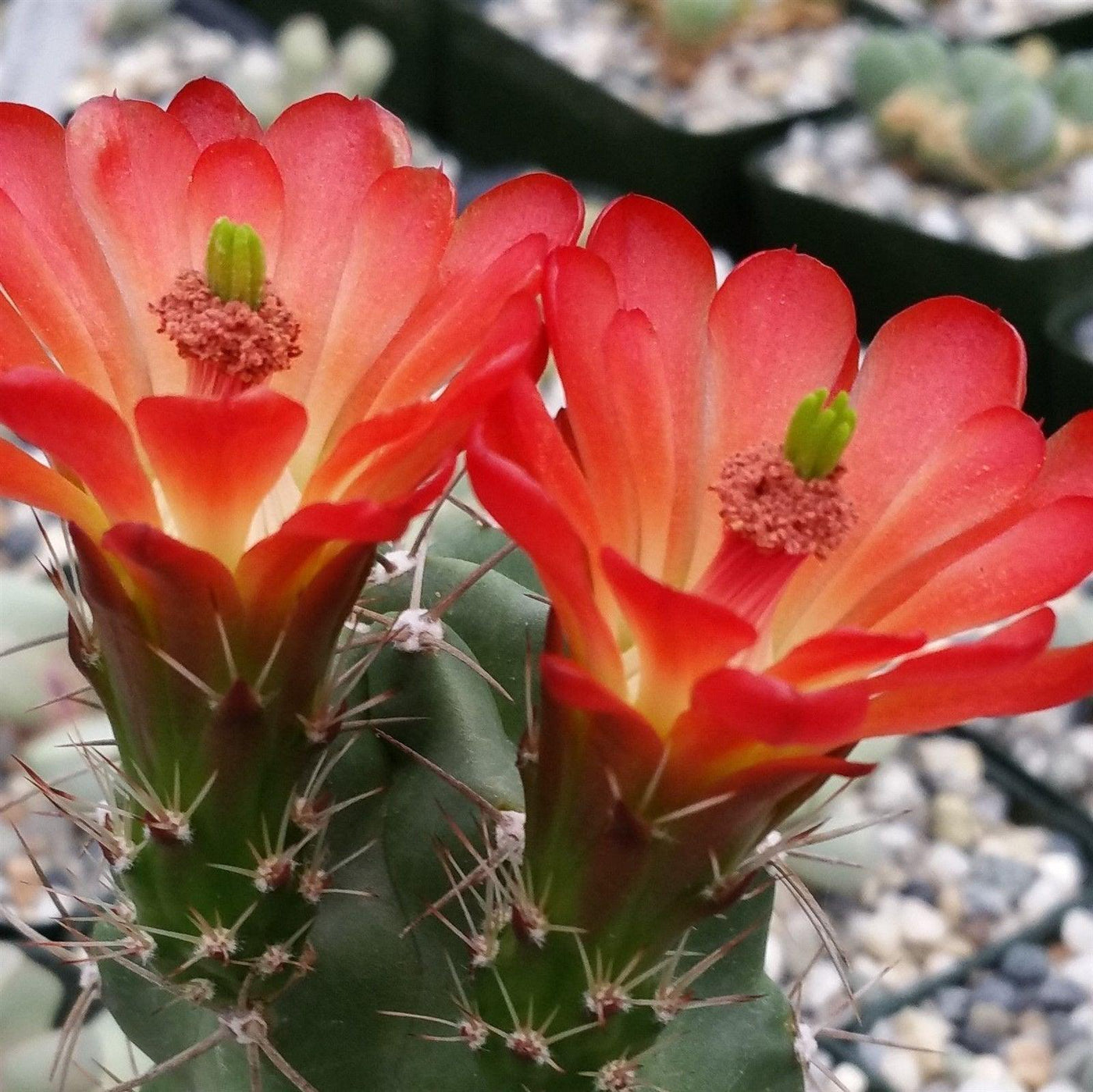
The claret cup cacti flowers produce bright scarlet-red to orange-red blooms and rounded petals that adorn all plants from spring to early summer.
The long-lasting, showy desert flowers are adorned with creamy-yellow at the base of their petals, emphasizing their bright green stigma in the center.
Yes, Echinocereus triglochidiatus produces juicy, edible fruits after flowering. The fruits are green to yellow-green, pink, or sometimes red and are often consumed by wildlife. They are safe for human consumption and have a mildly sweet taste.
An interesting fact about the Claret Cup Cactus is its incredible drought tolerance, making it an ideal choice for xeriscaping and water-wise gardens. Additionally, it is non-toxic to pets, making it a safe option for households with animals. This cactus is also highly resistant to pests and diseases, further cementing its reputation as a low-maintenance plant suitable for a variety of settings.
When and How to Water Your Claret Cup Cactus
The Claret Cup Cactus is highly drought-tolerant, making it an excellent choice for arid regions or low-maintenance gardens. Its thick, fleshy stems store water efficiently, allowing it to thrive in dry environments. Overwatering is one of the most common mistakes, so it’s essential to let the soil dry out completely between waterings to prevent root rot.
In the spring and summer, during its active growing season, the Claret Cup Cactus requires more frequent watering. Water deeply but infrequently, ensuring the soil is thoroughly soaked and then allowed to dry out. Depending on the climate, watering every two to three weeks is often sufficient. Always monitor the soil moisture and adjust watering based on your local conditions.
In the fall and winter, during its dormant season, the Claret Cup Cactus’ water needs decrease significantly. Reduce watering to once a month or even less, as the plant’s growth slows, and it enters a period of rest. Overwatering during this time can cause stress and lead to root damage.
Light Requirements - Where to Place Your Claretcup Cactus
When growing indoors, the Claret Cup Cactus thrives in bright, indirect sunlight. Place it near a south- or west-facing window where it can receive ample light for at least 4 to 6 hours daily. If natural light is insufficient, consider using a grow light to ensure the cactus receives the necessary brightness for healthy growth.
For outdoor cultivation, this cactus prefers the full sun and can tolerate intense light and heat.
Ideally, it should receive at least 8 hours of direct sunlight daily to promote flowering and maintain its vibrant appearance.
Ensure it’s placed in a well-draining area to prevent water accumulation around its roots.
Whether indoors or outdoors, gradually acclimate your cactus to changes in light exposure to avoid sunburn or stress.
A smooth transition will help the plant adapt and thrive in its new environment.
Optimal Soil & Fertilizer Needs
Claretcup Cactus requires well-draining soil to prevent waterlogging and root rot. A cactus-specific soil mix or a combination of sandy soil, perlite, and organic matter works best. Adding a layer of gravel or small rocks at the bottom of the pot can further enhance drainage. Planet Desert specializes in cacti and has specialized cactus potting soil, opens in a new tabGo to soil cactus mix blend 1 gal 4 qt cacti succulent dirt compost growing media that includes an organic substrate with mycorrhizae to help with the growth of a healthy root system to help your succulents thrive.
Fertilize your cactus sparingly once a year in the spring, during its growing season with a balanced, water-soluble NPK fertilizer diluted to half strength. Minimal feeding provides the necessary nutrients to support growth and flowering.
Avoid fertilizing during the dormant season, which is typically in the fall and winter, as the plant’s nutrient needs diminish. Over-fertilization can lead to salt buildup in the soil, which may harm the cactus over time.
Hardiness Zones & More
When growing indoors, the Claret Cup Cactus thrives in a warm temperature between 60-80°F with moderate humidity levels. Avoid placing it in drafty areas or near heating vents, as sudden temperature fluctuations can stress the plant. Ensure it receives adequate light, either from natural sources or grow lights.
For outdoor cultivation, this cold-hardy cactus can thrive in USDA zones 5-10, which makes it suitable for a wide range of climates.
It can tolerate low humidity and temperatures as low as -10°F when established.
Place it in a sunny location with well-draining soil to ensure its long-term health.
In both indoor and outdoor settings, good air circulation is essential to prevent fungal diseases. Avoid overcrowding the plant and provide sufficient spacing for optimal growth.
Wildlife – Claret Cup Cactus Attracts the Following Friendly Pollinators
The Claret Cup Cactus is a magnet for pollinators, particularly hummingbirds, bees, and butterflies. Its vibrant red flowers are not only visually stunning but also rich in nectar, making them an excellent source of food for these beneficial creatures.
According to the ASPCA, the Claret Cup Cactus is non-toxic to humans, cats, dogs, and horses, making it a pet-friendly option for households with animals. However, its spines can pose a physical hazard, so keep it out of reach of curious pets.
How to Propagate Your Claret Cup Cactus
Propagation of the Claret Cup Cactus is typically done through offsets or seeds. To propagate via offsets, carefully remove a healthy pup from the base of the parent plant using sterilized tools. Allow the offset to dry for a few days to form a callus, then plant it in well-draining soil.
Seed propagation is another method, though it requires more time and patience. Sow the seeds in a sandy, well-draining soil mix, keeping them warm and slightly moist until germination occurs. Provide bright, indirect light to support seedling growth.
Key Takeaways
- The Claret Cup Cactus is highly drought-tolerant and thrives in dry environments.
- It produces vibrant red flowers that attract pollinators like hummingbirds and bees.
- The blooms give way to juicy, edible fruits—green to yellow-green, pink, and sometimes red—that are devoured by wildlife.
- This cold-hardy hedgehog cactus thrives in USDA zones 5-10 and can withstand temperatures as low as -10°F.
- It is non-toxic to pets, making it a safe addition to pet-friendly homes.
The Bottom Line
Overall, the claret cup cactus (Echinocereus triglochidiatus) is a cold hardy hedgehog cactus native to the southwestern United States and northern Mexico. This cactus is characterized by its vibrant red or orange flowers that bloom in the spring and summer, adding a pop of color to any garden or landscape. The claret cup cactus typically grows in clusters, forming dense mounds of cylindrical stems covered in sharp spines. When it comes to caring for Echinocereus triglochidiatus, it is important to provide well-draining soil and ample sunlight. This cactus thrives in hot, dry conditions and should be watered sparingly to prevent root rot. Additionally, minimal fertilization during the growing season can help promote healthy growth and vibrant blooms. With proper care, the claret cup cactus can be a striking addition to any succulent collection or desert garden.
Shipping Notes
- Free Standard Shipping on $100+ Orders to the USA.
- Except Preorder products are shipped in 48 hours.
- Delivery to the USA:
- Standard Shipping : 3-10 business days
- If time is of the essence, please consider selecting expedited delivery for faster service.
Exchange/Return Notes
- We offer a 30-day return/exchange service after receiving.
- Final sale items are not eligible for returns or exchanges.
- To process your return/exchange, please contact us at [email protected]
- Please click here for more details>>> Return & Exchange Policy