SKU: 35930274310
taco plant succulent

taco plant succulent Shop 'Peperomia axillaris' Care and Growing Guide

Sale price$19.03 Regular price$21.14
Save 10%

Pay in installments of $5.29 with ShopPay, AfterPay and Klarna

Shipping Estimate
USA
  • USA
  • CAN

Ships within 48 hours · Estimated delivery Jul 19 - Jul 24

Promo Codes Available:

For Your Every Summer RSVP, with Code: SUMMER15

Description

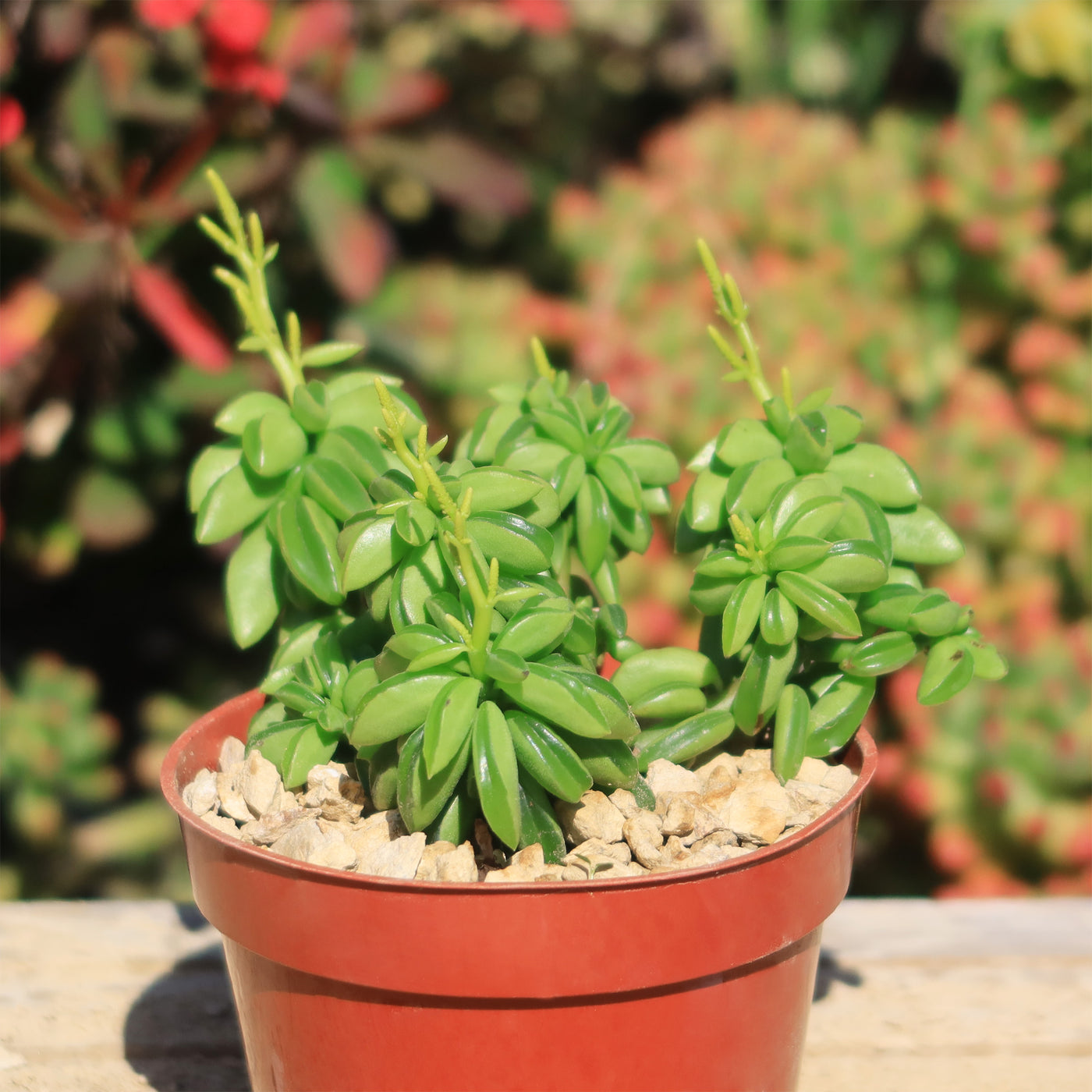
taco plant succulent Shop 'Peperomia axillaris' Care and Growing GuideIntroducing the Peperomia axillaris, which is a charming and popular houseplant that belongs to the Peperomia genus. This perennial epiphyte native to South America, is also known as the taco leaf plant or radiator plant, that thrives in warm and tropical regions. This delightful plant is loved for its unique foliage and compact size, making it a great addition to any indoor or outdoor space. The Peperomia axillaris with bright green pea pod shaped

Introducing the Peperomia axillaris, which is a charming and popular houseplant that belongs to the Peperomia genus. This perennial epiphyte native to South America, is also known as the taco leaf plant or radiator plant, that thrives in warm and tropical regions. This delightful plant is loved for its unique foliage and compact size, making it a great addition to any indoor or outdoor space. 


The Peperomia axillaris with bright green pea pod-shaped foliage, thrives in a shady jungle understory with translucent "leaf windows" that allow sunlight to irradiate the leaf interior, allowing it to survive.

Peperomia axillaris is a compact plant that typically reaches a mature height of around 12 inches tall.

This petite size makes it an excellent choice for small spaces, such as desks, shelves, or terrariums.

Its compact growth habit also makes it suitable for hanging baskets or as a trailing plant.

The Peperomia axillaris flower is usually greenish-white and appears on thin Peperomia flower stalks that emerge from the leaf axils.

These teeny tiny flowers bloom in the spring. However, it's important to note that flowering is relatively rare in indoor settings. 

When it comes to Peperomia axillaris propagation, this unique shrub-like succulent can be easily propagated through stem cuttings. To propagate a healthy stem cutting, remove lower leaves, place in a well-draining potting mix, keep soil moist, and provide indirect light. Roots should develop within weeks. 

Watering Needs 

When it comes to watering, the peperomia axillaris prefers a slightly different approach compared to other houseplants. It thrives when the top inch of soil dries out between waterings. This means you should allow the soil to dry out a bit before giving it a good drink. It's critical to strike the correct balance because overwatering can result in root rot and other problems. 

To determine when it's time to water, you can use the "finger test." Simply stick your finger into the soil up to the first knuckle. If the soil feels dry at that depth, it's time to water. If it still feels slightly moist, it's best to wait a bit longer.

Another important aspect of watering the peperomia axillaris is to avoid getting water on the leaves. This plant is prone to rot if water sits on its leaves for too long. To prevent this, it's best to water the soil directly at the base of the plant, rather than overhead watering. 

Remember, every plant is unique, and factors like temperature, humidity, and the type of potting mix used can affect watering needs. Observing your peperomia axillaris closely and adjusting your watering routine accordingly will help you provide the right amount of water for optimal growth. 

Light Requirements 

When growing indoors, the Peperomia axillaris prefers bright, indirect light. It thrives in a spot where it receives bright, filtered sunlight throughout the day. Placing it near a north or east-facing window is usually ideal. Avoid placing it in direct sunlight, as this can scorch the leaves. 

If you don't have access to natural bright light indoors, you can also provide artificial light using fluorescent or LED grow lights. Position the lights about 6 to 12 inches above the plant and keep them on for about 12 to 14 hours a day to mimic natural daylight. 

When growing outdoors, this Peperomia axillaris plant does well in partial shade to filtered sunlight. It can tolerate some direct morning sunlight, but it's best to protect it from intense afternoon sun, which can cause leaf burn. Consider placing it in a location that receives dappled sunlight or where it is shaded by taller plants or structures during the hottest part of the day. This will help maintain the right balance of light for optimal growth. 

Optimal Soil & Fertilizer Needs 

The Peperomia axillaris prefers sandy, well-drained soil, as excess moisture can promote root and stem rot. Planet Desert specializes in succulents and has specialized succulent potting soil that includes an organic substrate with mycorrhizae to help with the growth of a healthy root system to help your succulents thrive. As an okay alternative, you can create your own potting mix by combining equal portions of perlite, coarse sand, and good natural potting soil. 

For fertilization, the Peperomia axillaris don't require heavy feeding. You can use a balanced, water-soluble NPK fertilizer with a ratio of 5-10-5 or a similar NPK (nitrogen, phosphorus, and potassium) ratio. Dilute the fertilizer to half or quarter strength and apply it once a month during the growing season, which is typically spring and summer. 

Remember to always follow the instructions on the fertilizer packaging for proper dilution and application. An accumulation of salt in the soil caused by overfertilization may be detrimental to the plant. 

It's better to err on the side of caution and provide a little less fertilizer than too much. 

Additionally, it's a good practice to flush the soil occasionally to remove any excess salts. You can do this by thoroughly watering the plant until water drains out from the bottom of the pot. This helps prevent salt buildup and keeps the soil fresh.

Hardiness Zone & More 

When growing indoors, the peperomia axillaris thrives in average room temperatures between 65°F and 75°F. It can tolerate slightly cooler temperatures down to 60°F but should be protected from drafts and sudden temperature fluctuations. Avoid placing it near heating vents or air conditioning units as these can create hot or cold spots. 

In terms of humidity, the peperomia axillaris prefers moderate to high humidity levels. Aim for a humidity range of 50% to 60% to keep the plant happy. You can increase humidity by placing a tray filled with water near the plant or using a humidifier in the room. Misting the leaves occasionally can also help provide a boost of moisture. 

For outdoor cultivation, it is suitable in USDA zones 9-11.  It can tolerate temperatures as low as 50°F but is most comfortable in temperatures between 70°F and 85°F. If you live in a dry climate, you can create a microclimate for the plant by grouping it with other plants or placing it in a shaded area where it can benefit from the natural humidity created by nearby foliage. 

Final Thoughts 

Overall, the Peperomia axillaris is a wonderful plant among Peperomia varieties, that offers a variety of appealing features. With its compact size, unique teardrop-shaped leaves, and glossy green foliage, it adds a touch of beauty and freshness to any space. Whether you choose to grow it indoors or outdoors, this charming plant is relatively easy to care for. It prefers bright, indirect light and well-draining soil. Water it moderately, allowing the top inch of soil to dry out between waterings. Additionally, it appreciates a bit of humidity, so misting the leaves occasionally can be beneficial. 

Shipping Notes
  • Free Standard Shipping on $100+ Orders to the USA.
  • Except Preorder products are shipped in 48 hours.
  • Delivery to the USA:
  1. Standard Shipping : 3-10 business days
  • If time is of the essence, please consider selecting expedited delivery for faster service.
Exchange/Return Notes
  • We offer a 30-day return/exchange service after receiving.
  • Final sale items are not eligible for returns or exchanges.
  • To process your return/exchange, please contact us at [email protected]
  • Please click here for more details>>> Return & Exchange Policy
SKU: 35930274310

Discover Niche Categories That Outsell taco plant succulent

Top-Converting Item to Boost Your Average Order

4.4 ★★★★★
Based on 9 reviews
Sort
Highest Rating
Newest First
Oldest First
Product Reviews
P
Verified Purchase
PeaceBee
San Leandro, US
★★★★★ 2
Not good use of time
Format: Paperback
It’s not clear who this book targets - neither experts nor novice will benefit. There are expert perspectives, only few of these are helpful, rest are too generic to be of any use. For instance the last entry is one an engineer who shares how she went from zero to expert in cloud engineering in six months but fails to mention a single resource or pathway for others to follow.
WAS THIS REVIEW HELPFUL?YesReportShare
Reviewed in the United States on April 2, 2022
N
Nilendu Misra
Louisville, US
★★★★★ 3
Uneven compendium of tips and insights, but still very useful
Format: Kindle, Format: Kindle
“In theory, theory and practice are the same. In practice, they are not" is why such bottom-up insights and lessons from the field are the fastest way to learn real life stuff. This series had a GREAT start with "Engineering Management" - I guess because it is way more subjective than Cloud Engineering and offered a variety of non-overlapping POVs. This one is a mixed bag, perhaps because "Cloud Engineering" was perceived amorphously by the authors. The scope was broad - from cloud-native (architecture), to cloud-ready (topology), to cloud-operations, to choosing tech (e.g., Lambda/serverless), to -ilities and economics -- it is like celebrating Halloween, Christmas and Labor Day together in a single long weekend. I would give it 4/+ stars if at least 25% of such a book was "superb", giving 3 because about 10% of the book is. That still leaves 10 solid insights or learning that would otherwise take many failures to learn. And failures, especially in this emerging domain of complexity, is VERY expensive. Would love to see more books like this. Let's summarize some key insights - -- Real-time visibility across the entire DevOps lifecycle is key to winning in cloud. -- Operations, especially operations at scale, is extremely hard. So, wherever possible, use Managed Services. -- Distinguish between "availability" and "uptime" and measure each separately, and concretely. -- In FaaS/Serverless, calling a function synchronously increases debugging complexity. -- Good code is like good joke - it needs no explanation. -- "Building your app or platform on top of the abstractions that a cloud provider gives you does not make the underlying layers stop existing. In many cases, it makes them even more important." That makes the failure modes LESS obvious than we were used to. Therefore having "extreme visibility" into your systems will help "separate the issues at the layer you're focused on from the fundamental system issues". i.e., just because what was under the hood is now even less visible, don't forget them. Many recent "cloud failures" have been in networking fault domains. -- Cloud is not optimized for replacing static infrastructures. -- Containers, service meshes and serverless jumpstart dev productivity but they also change the attack surface of apps and infra. -- "Number of containers that are alive for 10 sec or less has doubled to 22%". 73% of all containers live for 30 minutes or less. -- Adopt an "assume breach" stance for everything. Have a break-glass account. -- Ensure you have a thorough understanding of where and how secrets are secured. -- Grey failures (transient degradation of services) are often worse than complete crashes, since the latter have a short feedback loop. -- Resilience engineering has existed as a sub-discipline within safety sciences. We just recently started applying its concepts in technology. Resilience can be thought of as a "socio-technical system" with Robustness ("system X has property Y that is robust in sense Z to perturbation W"); Reliability (consistent operations or service levels); Rebound (ability to deal with a chaotic situation using structures developed AND deployed BEFORE the chaos). In other words, robustness protects systems against a SPECIFIC type of failure mode. When a system is robust in many dimensions, it approaches good resilience to failure. -- Resilience is something you "do", not something you "have". Resilience is a verb. -- Moving from one class of nines to the next is 10 times more expensive. -- Production System really means "system that someone else, anyone else, can hold you accountable for". -- Most common theme across incidents is that something, somewhere was surprising. -- Incidents are unplanned investments...your challenge is to maximize ROI. -- We used to think of scale in two dimensions - horizontal (more) and vertical (bigger). In cloud, think of "scale out" (when demands increase) and "scale in" (when demand decreases). -- Architecture diagram is also a map of failure modes. -- Async communication is a friend of Cloud Reliability. -- Test in production is a competitive advantage. The complexity of traffic patterns going through high-scale production systems is increasingly harder to reproduce in a controlled env. -- Hundreds of open issues is fine, but if the repo has gone months (or, years!) without a release, THAT is a warning sign. -- It is hard to write good tests for bad code. -- Platforms come and go. But first principles and patterns will always exist, because they are the ones and zeros.
WAS THIS REVIEW HELPFUL?YesReportShare
Reviewed in the United States on November 6, 2023
M
M. Klocker
Boise, US
★★★★★ 2
Shallow, biased and significantly overpriced
Format: Paperback
Well, this purchase was a disappointment. 20% of the pages are dedicated to just highlighting the bios and backgrounds of the many different authors that contributed this great wisdom. And let me be clear, the authors are solid. They are professionals with credible backgrounds and experience. But it's the format and constraints of this book that makes it virtually impossible for that to shine through. Because the rest of the book (80%) is dedicated to the so called "97 things every cloud engineer should know". And unfortunately the average length of one of these "things" is about 1.5 pages long, and as such extremely shallow and in about 30% of the cases straight up promotions for specific company services. You will find Google cloud advocates telling you to use managed services, of Google of course. AWS engineers telling you to avoid them and use IaaS. LaunchDarkly employees telling you to use feature flags. The list goes on. The TL;DR: here is that if you have built anything on the cloud in the last 2 years, this book is going to be a waste of your time and money. You are better of googling: "cloud best practices" and dedicating 2h to reading the first 10 non-ad related search results.
WAS THIS REVIEW HELPFUL?YesReportShare
Reviewed in the United States on March 23, 2022
A
Verified Purchase
Andrew Smith
San Leandro, US
★★★★★ 5
Improve Your Relationships
Format: Kindle
In Relationship Goals, Michael Todd has written a book that discussed marriage, dating, and even singleness to help us to grow in our relationships. He wants to help readers to win in relationships and he encouraged us to read the Bible and set goals to improve our relationships. Godly relationships consist of sacrificing for others, displaying kindness, integrity, forgiving others, and loving others. Scriptures declare that we must first love God with all our heart, soul, and mind see Matthew 22:37-38. We are also called to love our neighbors as ourselves (verse 39). He explained how we are supposed to have good relationships with others even if you are introverted. One of the keys, he uses is asking himself does this relationship help me. When we meet the right person, they will help us toward our purpose in life and they will believe in us and love us and they will fit. But if they are moving you away from God, run. He shared how he met his wife when he was 15 years old at a mutual friend’s birthday party. He did everything to make sure she noticed him. This led to a spark and they dated for 8 years except when they experienced an 8-month breakup and he explained what happened. They eventually reconnected and got married in 2010. I liked how he talked about lot about singleness and how in this time of our life could be the most important time. The reason why is because it’s a time we can focus on what God wants to reveal to us about ourselves and who we are. We are become self-aware and find purpose. This can help us to become whole before we commit to someone else. This is a critical time to heal from our past pains and deal with our fears. You can use this time to get closer to God and getting to know Him. I would recommend this life changing book to anyone who is ready to improve their relationships it doesn’t have to be just romantic relationships. The same principles can apply to friendships. This book is a very well written book about dating and marriage and how we can change the scope of our relationship. I also liked how he explored the important keys to having a good marriage and what men need and what women needs and the differences. He tries to assist readers in understand each other in marriage and I believe if readers really tried to work on these lessons, they would be less divorce and our marriages would be a stronger example to our children. This book is an awesome book for couples to read and reflect on.
WAS THIS REVIEW HELPFUL?YesReportShare
Reviewed in the United States on January 5, 2025
T
Verified Purchase
Tracey Dessesaure
Draper, US
★★★★★ 5
Written from a Biblical position.
Great read!!!❤️ Excellent for couples who want to create a strong bond and grow.
WAS THIS REVIEW HELPFUL?YesReportShare
Reviewed in the United States on April 1, 2026

recommand products