Pay in installments of $6.87 with
 ,
,
 and
and

Shipping Estimate
USA
- USA
- CAN
- USA
- CAN
Ships within 48 hours · Estimated delivery Jul 18 - Jul 23
 Promo Codes Available:
For Your Every Summer RSVP, with Code: SUMMER15
Description
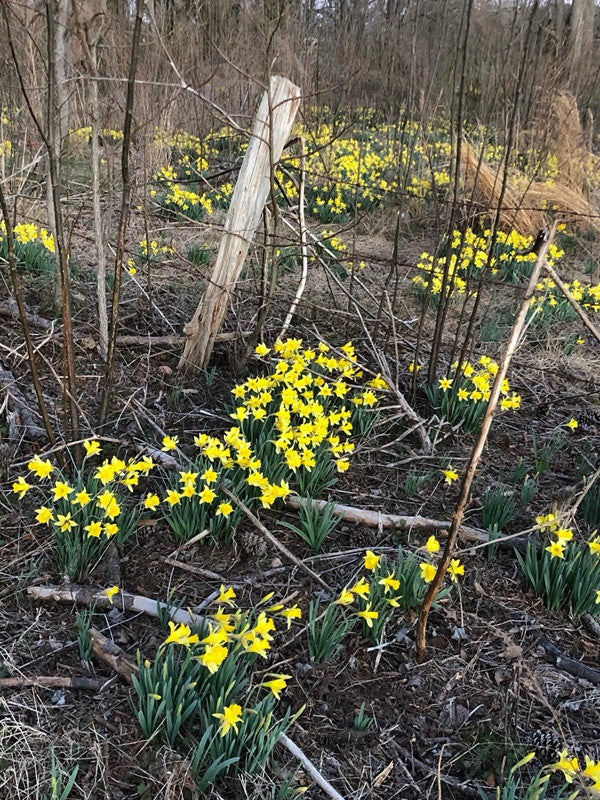
lent lily flower Heirloom 'Lent Lily'The Lent lily (Narcissus pseudonarcissus) Harsh conditions often deter other bulbs from blooming during the cold February months, but one brave daffodil is in a class all its own. The traditional trumpet shaped Lent lily (Narcissus pseudonarcissus) was the first narcissus to be called a "daffodil" and is believed to be the mother of all modern trumpet daffodil varieties. Why the Lent lily name? Because very often it is blooming around Ash Wednesday,
The Lent lily (Narcissus pseudonarcissus)
Harsh conditions often deter other bulbs from blooming during the cold February months, but one brave daffodil is in a class all its own. The traditional trumpet shaped Lent lily (Narcissus pseudonarcissus) was the first narcissus to be called a "daffodil" and is believed to be the mother of all modern trumpet daffodil varieties. Why the Lent lily name? Because very often it is blooming around Ash Wednesday, the beginning of the Lenten Season! These are valued for their reliable large trumpet shaped blooms and their ability to naturalize over large areas.
The Bloom: One way to check and see if your bloom is a true lent lily is to close the petals on the trumpet center. If the trumpet extends beyond the length of the petals, you have one strong clue that you might have a Lent lily.
The lent lily blooms early. Weather in the south is erratic at best during the winter months. One week we had to cover the plants because it was below freezing and two days later it is in the 80s. If the winter weather is warm, some Narcissus might try to bloom and get caught in an unexpected winter cold spell. The lent lily is perfectly suited for the unexpected twists and turns of the weather. This bulb knows exactly when to bloom, and you can pretty much count on it to bloom right around Ash Wednesday whether that is early or late. You can cut the blooms and bring them in for a lovely centerpiece as well.
Size: We want to take a moment and talk about how the size of this heirloom bloom is probably an important reason for its longevity and charm. These blooms will not stand more than about 8-12" tall. This helps protect them from the cold winters. Because the stems aren't very tall but the bloom itself is about 2-3" in length, the balance of the flower seems more whimsical and charming especially as it sways in a cool breeze
They are such an early bloomer in February and March that the cold weather almost seems to keep them growing low to the ground. We prefer to dig, divide, and transplant these daffodils immediately after they bloom, but we also try to harvest more in summer for dry bulb sales in the fall. It seems that the bulbs of the Narcissus psuedonarcissus are small enough that they tend to dry out when left out all summer long. Our trick is to move them with their foliage on them, plant them, and then let the foliage die down naturally as the nutrients are sent back to the bulb. This means we won’t enjoy a bloom until the next season, but once established, they will be in your garden for a lifetime. They want plenty of winter sun! Be sure to read our full write up on daffodil and Narcissus care on our category page here.
Easy to Grow: The Lent lily will spread easily as it naturalizes an area. As long as you plant them where they will receive 6+ hours of sunlight during the winter months, you can honestly simply plant the bulbs and forget about them. Plant the bulbs 2-3x the depth of the bulb. In other words, if the bulb is 1 inch tall, plant it 2-3 inches deep.
Animals: The lent lily bulb is perfectly suited for pollinators as it holds its pollen deep within the trumpet and protects it from winter storms. Animals tend to leave the bulbs and flowers alone.
Mulitply: The Lent lilies multiply very well once established.
When can I buy Narcissus psuedonarcissus online?
We sell Narcissus psuedonarcissus in the spring (immediately following its bloom and in the green), summer and fall (as dormant bulbs with the foliage died down).
What does “in the green” mean?
In the summer and fall, we ship dry bulbs that many consumers are familiar with. However, in the spring we ship some flower bulbs with their foliage still on them, having dug them right after their bloom. When the customer receives them, the foliage is in the process of drying down naturally. Plant the bulbs, with foliage and all in the ground and let the foliage turn brown and die back naturally. Another option is to not plant the flower bulbs and store the bulbs with the foliage in a cool, dark, and well ventilated spot, and most importantly let the foliage die down naturally. In other words, DON'T cut the foliage of bulbs when you receive them in the green. The browning and dying back of the foliage is the natural process of the bulb sending food and energy from the leaves down into the bulbs for their summer dormancy.
I thought daffodil bulbs are normally shipped in the fall? We grow many of our own daffodils here on our farm, and while it is unconventional in the United States, it is common to have bulbs shipped in the green in other parts of the world. We grow many of our own heirloom daffodils that we originally collected from old gardens on former homesites. Shipping these in the green allows us to:
1) Ship them during the bloom season when most gardeners are thinking of and remembering to plant daffodils
2) Ensures correct identification of the flower bulb. These are heirlooms and buying and receiving the right genetic selections is important to having varieties that are perennials and will naturalize in your garden
3) Allows us to offer more bulbs are lower prices to customers
Remember that bulbs shipped in the green are coming to an end of their growth cycle. You can expect:
1) The foliage to yellow and die down naturally
2) The bulb to be dormant in the summer and early fall
3) Roots to start growing in mid fall
4) Foliage appears next January
5) Bulbs to bloom next February and March
Fun Facts about the Lent Lily:
1. The "Lent lily" is not a lily at all nor is it the "Lenten rose" which it is also mistaken for on occasion. When people new to flower bulbs call and ask about traditional-looking daffodils, we always focus on the Lent lily and campernelle bulbs. It seems that every time we start to talk about the Lent lily people stop us to say that they are looking for daffodils, not lilies. We agree the name seems a little careless at first. So why the Lent lily name? Because very often it is blooming around Ash Wednesday, the beginning of the Lenten Season, as it is this year!
2. The traditional trumpet-shaped Lent lily (Narcissus pseudonarcissus) is often simply called a "daffodil" and is believed to be the mother of all modern trumpet daffodil varieties. These are valued for their reliable large trumpet-shaped blooms and their ability to naturalize over large areas. One way to check and see if your bloom is a true lent lily is to close the petals on the trumpet center. If the trumpet extends beyond the length of the petals, you have one strong clue that you might have a Lent lily.
3. The word Lent comes from the Old English word lencten, which means spring. This, in turn, is related to the Old High German word lenzin and the Dutch word lente, both of which also mean spring. The term originally referred to the lengthening of daylight hours in spring and later became associated with the Christian observance of Lent, which occurs during this season.
What is the daffodil scientific name?
The scientific name for the original daffodil is Narcissus pseudonarcissus. The botanical name for the daffodil is important because it is believed that all modern trumpet daffodils come from Narcissus psuedonarcissus.
For a great read on the genetics and the breeding that led to cultivated daffodils (tetraploid trumpet daffodils in modern culture), I highly suggest you read a scientific article written by B.J.M. Zonneveld titled "The involvement of Narcissus hispanicus Gouan in the origin of Narcissus bujei and of cultivated trumpet daffodils (Amaryllidaceae)."
If you recall from botany lessons, diploids produce seed, but tetraploids are often sterile. Tetraploids give us strong characteristics found in both parents – think of a horse bred with a donkey to produce a mule. The Lent lilies or Narcissus psuedonarcissus found wild, but not a native, in the Southeastern United States is a diploid that breeds with our jonquils (Narcissus jonquilla) to give us campernelles (Narcissus x odorus). Thus, all three varieties and naturally occurring hybrids are often found in close proximity to each other. This is a great example of basic daffodil characteristics and how they apply to many antique or heirloom flower bulbs found in old house gardens across the South.
Zonneveld offers a brief description of when daffodils were first wildly collected in commercial numbers from Portugal and Spain in the late 16th century, and how those daffodil characteristics were bred into many modern trumpet shaped daffodil selections. He covers the following species:
- N. hispanicus Gouan
- N. 'Hispanicus Maximus'
- N. bujei Fern. Casas
- N. pseudonarcissus L.
- N. abscissus (Haw.) Schult. f.
- N. moleroi Fern. Casas
- N. poeticus L.
- N. cyclamineus DC
- N. longispathus Pugsley
- N. nevadensis Pugsley
- N. pseudonarcissus ssp. bicolor
What are some common names given to daffodils?
Daffodil is the common name given to trumpet shaped yellow flowers that bloom in the spring and come up from a bulb. They are in the genus Narcissus. Usually when asking this question, many gardeners are searching for daffodils that would fall into different colloquial phrases for daffodils such as, what are/is the:
- lent lily
- wild daffodil
- Tenby daffodil
- wild daffodil bulbs
- native daffodil
- trumpet daffodils
- wild daffodils
- British daffodils
- English daffodils
From this list of daffodil names, we see that people are searching for the name of daffodils they see in mass plantings around the countryside. These are the spring images of daffodils that fill us with nostalgia and bring back memories. Almost all of these common searches are trying to identify this bulb in question, the Narcissus pseudonarcissus, often called the Lent lily here in the United States and especially in England.
What about that Tenby daffodil name?
This is a tricky one to answer, because oftentimes the Tenby daffodil is what is sold in the larger flower bulb trade as Narcissus pseudonarcissus. See this excerpt from Wikipedia on Lent lilies: “Among the subspecies is the Tenby daffodil (N. pseudonarcissus ssp. obvallaris, sometimes classed as a separate species), which probably originated in cultivation but now grows wild in southwest Wales." There is also a quick read from the National Botanical Garden of Wales on the bulb, where it notes that there is a disputed claim "The Tenby daffodil is a Welsh species which some people say is unique to Britain."
The Lent Lily in Literature: William Wordsworth
Steeped in literary history, this trumpet shaped daffodil is reportedly the one Wordsworth so eloquently spoke of in his early poetry. Take a moment to read it out loud, then take a breath, and read it again! We hope you enjoy the Lent lily as much as we do:
I Wandered Lonely as a Cloud
BY WILLIAM WORDSWORTH
I wandered lonely as a cloud
That floats on high o'er vales and hills,
When all at once I saw a crowd,
A host, of golden daffodils;
Beside the lake, beneath the trees,
Fluttering and dancing in the breeze.
Continuous as the stars that shine
And twinkle on the milky way,
They stretched in never-ending line
Along the margin of a bay:
Ten thousand saw I at a glance,
Tossing their heads in sprightly dance.
The waves beside them danced; but they
Out-did the sparkling waves in glee:
A poet could not but be gay,
In such a jocund company:
I gazed—and gazed—but little thought
What wealth the show to me had brought:
For oft, when on my couch I lie
In vacant or in pensive mood,
They flash upon that inward eye
Which is the bliss of solitude;
And then my heart with pleasure fills,
And dances with the daffodils.
Shipping Notes
- Free Standard Shipping on $100+ Orders to the USA.
- Except Preorder products are shipped in 48 hours.
- Delivery to the USA:
- Standard Shipping : 3-10 business days
- If time is of the essence, please consider selecting expedited delivery for faster service.
Exchange/Return Notes
- We offer a 30-day return/exchange service after receiving.
- Final sale items are not eligible for returns or exchanges.
- To process your return/exchange, please contact us at [email protected]
- Please click here for more details>>> Return & Exchange Policy