Shipping Estimate
USA
- USA
- CAN
- USA
- CAN
Ships within 48 hours · Estimated delivery Jul 10 - Jul 15
 Promo Codes Available:
For Your Every Summer RSVP, with Code: SUMMER15
Description
aloe vera plant lowes Buy Coast Dune Aloe Phoenix, AZ | Aloe thraskiiA Sculptural Statement Aloe Built for Phoenix Heat Coast Aloe, also known as Dune Aloe (Aloe thraskii), is one of the most architectural succulents you can plant in the Phoenix Valley. Native to the coastal dunes of South Africa, this large rosette forming aloe develops a dramatic single trunk over time and produces tall spikes of bright red orange flowers in winter right when your landscape needs color the most. It thrives in full desert sun, handles
A Sculptural Statement Aloe Built for Phoenix Heat
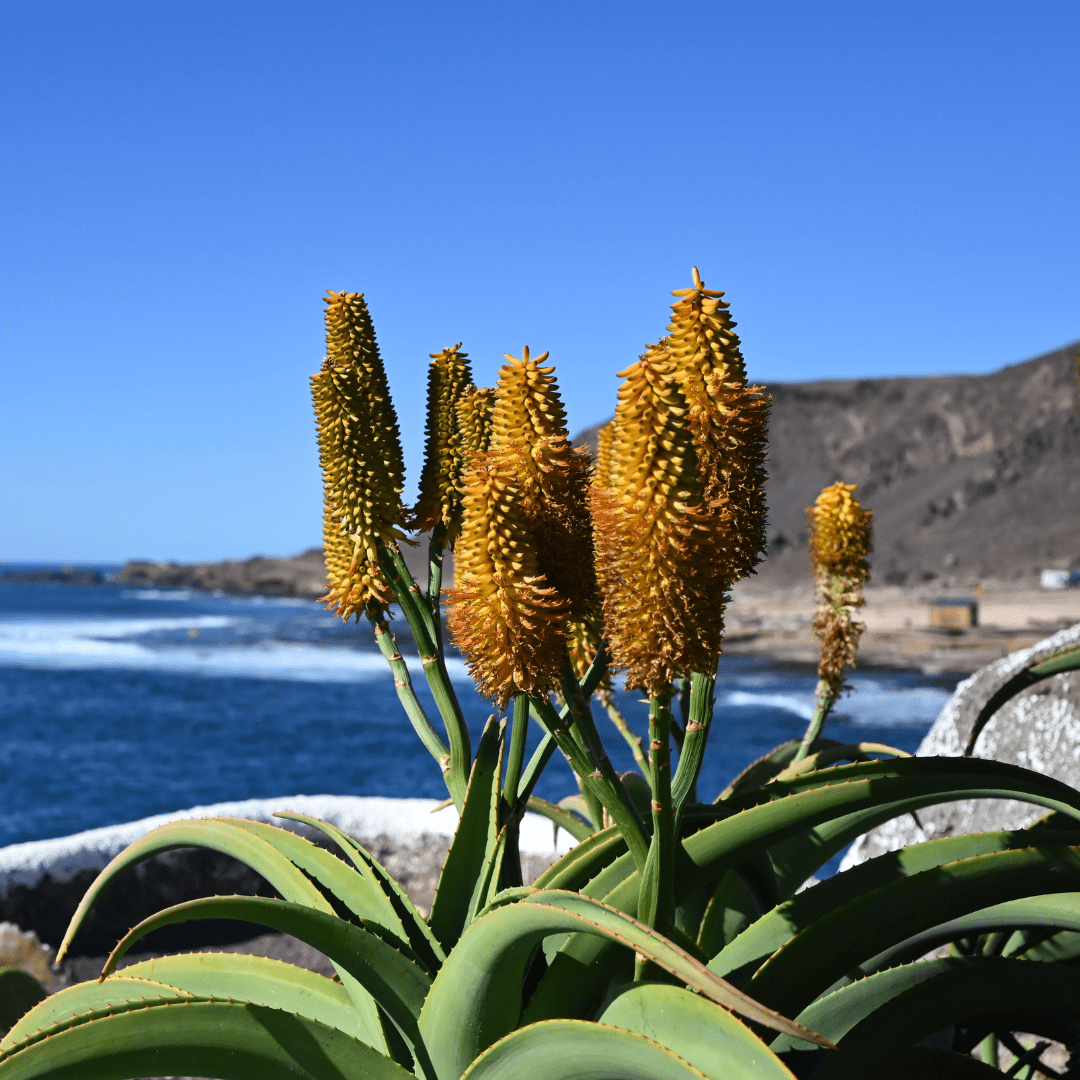
Coast Aloe, also known as Dune Aloe (Aloe thraskii), is one of the most architectural succulents you can plant in the Phoenix Valley. Native to the coastal dunes of South Africa, this large rosette-forming aloe develops a dramatic single trunk over time and produces tall spikes of bright red-orange flowers in winter — right when your landscape needs color the most. It thrives in full desert sun, handles reflected heat, and needs almost no water once established. Whether you're creating a modern desert entry in Scottsdale, anchoring a succulent garden in Mesa, or adding sculptural height to a xeriscape in Chandler — Coast Aloe commands attention year-round.
Coast / Dune Aloe Plant Details
| Attribute | Detail |
|---|---|
| Scientific Name | Aloe thraskii |
| Common Names | Coast Aloe, Dune Aloe, Thrask's Aloe |
| Mature Height | 2–3 feet (rosette); up to 6–10 feet with trunk over time |
| Mature Width | 2–4 feet |
| Growth Rate | Slow to moderate — 4–6 inches per year in Phoenix |
| Sun | Full sun to partial shade. Handles reflected heat from walls. |
| Water | Very low once established. Extremely drought-tolerant. |
| USDA Zones | 9b–11 (Phoenix is Zone 9b–10a) |
| Soil | Well-draining sandy or rocky soil. Adapts to Arizona caliche. |
| Foliage | Evergreen — thick, recurving gray-green leaves with small teeth along margins |
| Bloom Color | Bright red to orange flower spikes |
| Bloom Season | Winter (December–February in Phoenix) |
Coast Aloe Uses in Phoenix Landscapes
Sculptural Focal Points & Modern Desert Design
Coast Aloe's dramatic rosette and eventual trunk make it a living sculpture in contemporary desert landscapes. Use a single large specimen as a focal point near an entry, courtyard, or pool area. The architectural form pairs beautifully with Desert Spoon, Blue Yucca, and large agaves for a curated succulent garden look popular in Scottsdale and Paradise Valley.
Succulent & Rock Gardens
Plant Coast Aloe among boulders and decomposed granite for a naturalistic rock garden. Its gray-green rosette contrasts well with the orange tones of Arizona granite. Group with smaller aloes like Aloe vera, Tiger Aloe, and Crosby's Prolific for a layered succulent display with varying textures and heights.
Low-Water Foundation & Border Plantings
Use Coast Aloe in foundation plantings along south- or west-facing walls where reflected heat would stress most plants. Space 3–4 feet apart for a bold border. The winter flower spikes attract hummingbirds during the cooler months when few other plants are blooming in Gilbert, Tempe, and Peoria.
Best Time to Plant Coast Aloe in Phoenix
Fall (October–November) and spring (March–April) are both excellent planting windows. Warm soil promotes root establishment while moderate temperatures reduce transplant stress. Avoid planting in the peak summer months (June–August) if possible, as extreme heat can stress newly planted succulents.
How to Plant Coast Aloe
- Dig wide, not deep — 2–3× the root ball width, same depth. Never bury the crown.
- Check for caliche — break through any hardpan layer for drainage. Aloes rot in standing water.
- Backfill with native soil — add pumice or coarse sand if your soil holds water.
- Spacing — 3–4 ft apart for groupings; single specimens need 4–5 ft clearance.
- No water basin needed — unlike most plants, aloes prefer water to drain away quickly.
- Mulch — 2–3 inches of gravel or decomposed granite (avoid bark mulch which retains too much moisture).
Watering Coast Aloe in Phoenix
First Year Watering Schedule
- Weeks 1–2: Every 5–7 days, deep soak then let dry completely
- Months 1–3: Every 7–10 days
- Months 3–6: Every 10–14 days
- After Year 1: Every 3–4 weeks summer; monthly or less in winter
Drip Irrigation
Place one 1 GPH emitter 12–18 inches from the base. Coast Aloe stores water in its thick leaves and is extremely drought-tolerant. Overwatering is the #1 killer — always let soil dry completely between waterings.
How big does Coast Aloe get in Phoenix?
The rosette reaches 2–3 feet across. Over many years, Coast Aloe develops a single trunk that can eventually reach 6–10 feet tall, creating a tree-like silhouette. This is a slow process — expect trunk development over 5–10+ years.
Is Coast Aloe frost tolerant in Phoenix?
Coast Aloe handles Phoenix's typical winter lows (mid-30s°F) without issue. In rare hard freeze events below 28°F, provide temporary frost cloth protection. Established plants recover from light frost damage.
When does Coast Aloe bloom?
Expect tall spikes of bright red-orange flowers from December through February. The winter bloom time is a major asset since few other plants flower during Phoenix's coolest months. Hummingbirds love the nectar-rich flowers.
What's the difference between Coast Aloe and other large aloes?
Coast Aloe (A. thraskii) is distinguished by its gracefully recurving leaves and eventual trunk formation. It's hardier and more heat-tolerant than many South African aloes, making it especially well-suited to the Phoenix climate.
You May Also Like
- African / Tiger Aloe — a smaller spotted aloe perfect for rock gardens and containers.
- Blue Yucca — a bold blue-gray rosette that complements Coast Aloe's form and color palette.
- Desert Spoon — a native Arizona rosette plant that pairs perfectly in sculptural desert designs.
- Aloe vera — a smaller, multi-use aloe that fills in the lower layer of succulent groupings.
How Many Coast Aloe Do I Need?
Coast Aloe is a large rosette aloe (2 to 4 ft wide) that eventually forms a single trunk. It works as a solo sculptural focal point or in odd-numbered groups of 3 to 5 plants set 3 to 4 ft apart so each recurving rosette reads cleanly. For a bold low-water border along a sunny wall, use the spacing guide below.
| Run Length | Plants Needed (at 3.5 ft spacing) |
|---|---|
| 10 ft | 3 plants |
| 20 ft | 6 plants |
| 30 ft | 9 plants |
| 40 ft | 12 plants |
Coast Aloe Season-by-Season in Phoenix
- Spring (Feb to Apr): Winter bloom spikes finish and fresh leaf growth pushes from the rosette center. A strong second planting window as soil warms and frost risk passes.
- Summer (May to Sep): Thrives in full Phoenix sun and reflected heat off block walls. Monsoon rain is fine where soil drains fast. Back off supplemental water to every 3 to 4 weeks since overwatering in summer heat is the main risk.
- Fall (Oct to Nov): Prime planting season. Warm soil and cooling air let roots establish before winter. Flower spikes begin forming late in the season.
- Winter (Dec to Feb): The show season. Tall red-orange spikes feed hummingbirds when little else blooms. Evergreen rosette holds form through typical Valley lows in the mid-30s. In a rare hard freeze below 28°F, drape frost cloth over young plants overnight.
At a Glance
✔ Hummingbird-Friendly ✔ Pollinator-Friendly ✔ Heat-Loving (Reflected-Heat Tolerant) ✔ Drought-Tolerant ✔ Evergreen ✔ Low-Maintenance ✔ Deer & Rabbit-Resistant ✔ Cold-Hardy to 28°F
Plant It With
- African / Tiger Aloe: a smaller spotted aloe that fills the lower layer of a rock-garden grouping.
- Desert Spoon: a native silvery rosette that echoes Coast Aloe's sculptural form in xeriscape designs.
- Aloe vera: a low multi-use aloe that softens the front edge of a succulent border.
- Cape Aloe: a taller spiny aloe for a layered winter-bloom display behind Coast Aloe.
Is Coast Aloe Right for Your Yard?
Coast Aloe thrives in full sun and reflected heat, in fast-draining or amended caliche soil, with 3 to 5 ft of space to develop its rosette and eventual trunk and winter lows around 28°F or warmer. It is one of the most heat-adapted large aloes for the Valley. It is not a fit if your site stays wet or shaded: soggy soil rots the crown, and deep shade flattens both the form and the winter bloom.
Shipping Notes
- Free Standard Shipping on $100+ Orders to the USA.
- Except Preorder products are shipped in 48 hours.
- Delivery to the USA:
- Standard Shipping : 3-10 business days
- If time is of the essence, please consider selecting expedited delivery for faster service.
Exchange/Return Notes
- We offer a 30-day return/exchange service after receiving.
- Final sale items are not eligible for returns or exchanges.
- To process your return/exchange, please contact us at [email protected]
- Please click here for more details>>> Return & Exchange Policy