SKU: 26733164558
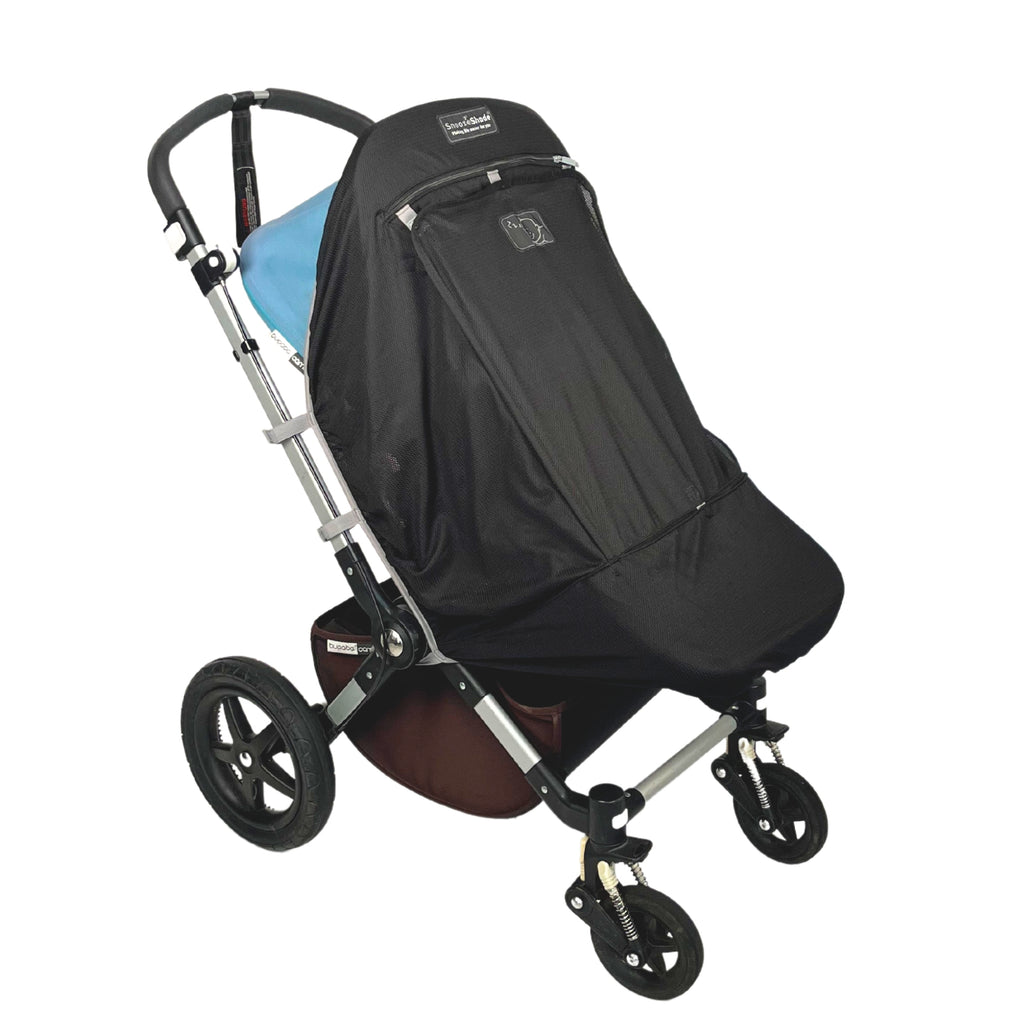
double stroller sun shade extender

double stroller sun shade extender SnoozeShade Plus Extra - Universal Stroller Sun Shade - Blocks Up to 9

Sale price$23.27 Regular price$25.86
Save 10%

Shipping Estimate
USA
  • USA
  • CAN

Ships within 48 hours · Estimated delivery Jul 11 - Jul 16

Promo Codes Available:

For Your Every Summer RSVP, with Code: SUMMER15

Description

double stroller sun shade extender SnoozeShade Plus Extra - Universal Stroller Sun Shade - Blocks Up to 9How does SnoozeShade Plus Extra work? SnoozeShade creates a comfortingly dark space that encourages naps by boosting melatonin (the sleepy hormone). When your baby naturally stirs at the end of their sleep cycle, the unique fabric prevents them from latching on to visual stimuli that may stop them getting the deeper, longer nap they need. Use it in snooze mode or shade mode both provide UV protection. What is the shade mode? SnoozeShade Plus Extra can

How does SnoozeShade Plus Extra work? SnoozeShade creates a comfortingly dark space that encourages naps by boosting melatonin (the sleepy hormone). When your baby naturally stirs at the end of their sleep cycle, the unique fabric prevents them from latching on to visual stimuli that may stop them getting the deeper, longer nap they need. Use it in snooze mode or shade mode – both provide UV protection.

What is the shade mode? SnoozeShade Plus Extra can be used in shade mode to shield your child from up to 80% of UV rays while allowing them to see out. Simply zip up the inner window – a single panel of our unique mesh – to protect from sun, wind, light rain and insects. The shade panel has two zips, so you can leave it partially or fully open or close it completely for maximum protection.

What is the snooze mode? When it’s time for a stroller nap, convert SnoozeShade Plus Extra to snooze mode by zipping up the shade panel and securing the outer snooze panel (an extra layer of mesh) using our baby-safe poppers. This creates a sleep-friendly environment that blurs distractions, shuts out 94% of light and blocks 99% of UV rays (UPF 50+).

A sleeping-baby emblem deters people from disturbing your child, while the sneak-a-peek zip lets you check on them without letting in too much light.

When the snooze and/or shade panels are not in use, simply roll them up and store them in the integrated front pocket to stop them snagging on your wheels.

Will SnoozeShade Plus Extra help my child nap? When in snooze mode, SnoozeShade acts like a portable blackout blind to create a sleep-friendly space. It’s recommended by baby-sleep experts worldwide, because when used regularly it becomes a sleep cue for your child, helping them learn when it’s naptime in the same way shutting the curtains at home does.

What age is it for? We recommend SnoozeShade Plus Extra for babies and toddlers who are seated in the stroller seat, because it’s proportioned to fit around a child who is sitting up and wanting to see out. We say from around 6-9 months but it's just a guide - the most important thing is baby's seating position.  If you’re looking for a SnoozeShade for a baby who's in a carrycot, SnoozeShade Original will be a better fit.

You can continue using your SnoozeShade Plus Extra as long as your child is in their pushchair. Our founder, Cara, still used her Plus Deluxe occasionally for the odd holiday, airport or airplane trip until her daughter was five!

Is it machine washable? Of course – it was invented by a mum! All SnoozeShade products are machine washable at 30° and can be tumble dried on a low heat.


Will it fit my pushchair? Yes! SnoozeShades are all universally sized and fit all single-width pushchairs and strollers with a hood, including jogging strollers. We’ve even seen them used on Thule bike trailers and festival trolleys!

You don’t need to worry about the type of pushchair you have; simply choose the SnoozeShade that suits the age of your child.

How does it attach to my pushchair? SnoozeShade Plus Extra attaches to absolutely any pushchair or stroller in seconds. The soft mesh, elasticated sides, stretchy straps and baby-safe poppers make it effortless to fit. Here are our top tips:

1. SnoozeShade Plus Extra has eight sets of straps, but you don’t need to use them all. As long as you have a secure fit with no gaps to let in light, you’re good to go.

2. Attach the straps to the frame of your stroller or through any gap you find (hood hinges are ideal). They can also be attached to each other around the back of (or under) the stroller. It’s fine to stretch the straps – they’re designed to extend as needed.

3. Pull the hood of the buggy forward at least halfway before attaching the top straps. Your SnoozeShade will then sit lower at the front and will be easier to attach at the bottom.

You haven't had time to get all the video demos done before launch so you can find full instructions for SnoozeShade Plus Deluxe here which is very similar in terms of fitting.  If you need any personalised advice on fitting or using it, please click here to get in touch.

Do I need to leave it on my pushchair all the time? No, SnoozeShade Plus Extra is super lightweight and packs down into a storage bag (free with every order) that’s compact enough to pop into your change bag or buggy basket.
 
Why SnoozeShade is safe to use: SnoozeShade was invented by Cara Sayer – a safety-obsessed mum who needed to help her daughter sleep and stay protected from the sun in her pushchair. Unlike a blanket or muslin, our scientifically tested fabric is completely air permeable, which means air passes through it freely. If you hold a SnoozeShade up to your face, you’ll find you can breathe comfortably.

All our products exceed UK, European and US safety standards. Our fabric is not chemically treated, and every component is safe enough for a newborn, including our zips, straps and poppers. SnoozeShade is approved by the Melanoma International Foundation.

Shipping Notes
  • Free Standard Shipping on $100+ Orders to the USA.
  • Except Preorder products are shipped in 48 hours.
  • Delivery to the USA:
  1. Standard Shipping : 3-10 business days
  • If time is of the essence, please consider selecting expedited delivery for faster service.
Exchange/Return Notes
  • We offer a 30-day return/exchange service after receiving.
  • Final sale items are not eligible for returns or exchanges.
  • To process your return/exchange, please contact us at [email protected]
  • Please click here for more details>>> Return & Exchange Policy
SKU: 26733164558

Discover Niche Categories That Outsell double stroller sun shade extender

Top-Converting Item to Boost Your Average Order

4.3 ★★★★★
Based on 1986 reviews
Sort
Highest Rating
Newest First
Oldest First
Product Reviews
T
Verified Purchase
Tone Waters
Lowell, US
★★★★★ 5
Your Next Church Read
Format: Paperback
Brilliant. Important. Timely. Pastor Lamar calls the Western church to decenter itself so that ableism and racism will dissipate. I will go back to this book time and again for my advocacy work inside and outside of the church.
WAS THIS REVIEW HELPFUL?YesReportShare
Reviewed in the United States on March 15, 2024
P
Panda Incognito
Pawtucket, US
★★★★★ 4
Powerful and Hard-Hitting
Format: Paperback
This book explores how racism and disability justice issues intersect and intertwine, particularly within the American church. Lamar Hardwick writes from his perspective as an autistic Black pastor, and his recent battles with cancer also inform his writing. He takes an incisive look at the ways that people sideline and make judgments about "abnormal" bodies, and he explores how different racist and ableist ideas developed in early American history, primarily related to enslaved Africans. Because I share Hardwick's interest in American history, I was already familiar with most of this information, but it will be new and eye-opening for many readers. Hardwick clearly explains the historical connection between ableism and racism, showing how people justified slavery by arguing that Black people were intellectually inferior, were childlike, and should not have agency over their own lives. Hardwick explores both glaring and subtle implications of this ideology, and he makes a number of very excellent points. He is bold and doesn't mince words, and he explains complicated, abstract ideas in accessible terms. He also touches on a variety of side issues to his main thesis, such as desirability politics, body shame, and issues with grind culture. Hardwick gives examples of how early American Christians contributed to pervasive cultural problems, and he also shares contemporary stories to show how problematic ideas cause harm in real life. His personal stories add a lot to the book, and I appreciate his honesty and vulnerability. I also appreciate how Hardwick uses Scripture throughout the book, especially when he is writing about disability theology. Some similar books focus primarily on personal experiences and secular social justice theories, with only loose Scriptural connections, but Hardwick bases his arguments in specific Bible passages and the big story of Scripture. I disagree with some of his interpretations, but found his arguments significantly more persuasive than ones I've seen before. One confusing, weaker element of this book is that Hardwick begins using "ableism" as a catch-all term for any kind of hierarchy of human value. Even though different forms of discrimination can overlap in complex ways, Hardwick often uses the word "ableism" in cases where there isn't a direct reference to physical or mental abilities. Because he stretches this word's definition, readers who are new to this conversation may struggle to follow his arguments at times. My other critique is that even though Hardwick is accurate and persuasive in his coverage of historical wrongs in the American church, he sometimes makes it sound like all of these issues started with American Christianity. Even though we can trace back particular expressions of racism and ableism to influential people like Cotton Mather, the root issues are part of the human condition. Many Christians throughout time have absorbed harmful ideas from their societies and expressed these assumptions in Christian language, but they weren't inventing these forms of oppression. Also, even though people created specific racist beliefs to justify the institution of slavery, ableism has been an issue in all cultures since the beginning of time. Christianity began in a cultural context where it was normal and acceptable for parents to discard female and disabled infants to die in the elements, and early Christian advocacy is part of why that is so gut-wrenching and unthinkable to us now. Even though Hardwick's analysis is helpful, it's only part of the story. I think that he could have balanced it out better with more context, while still holding the same American historical figures accountable for their sins and failings. "How Ableism Fuels Racism" covers a variety of issues in a thought-provoking, engaging way. I appreciate the author's historical analysis, thoughtful reflections, and personal stories, and I would recommend this book to people who are invested the topic. Also, even though some aspects of this book might be confusing for people who haven't read anything like this before, the author's accessible writing style, clear explanations, and personal stories can help engage readers who are new to the topic. Overall, I was impressed with this book and am interested in reading more from this author.
WAS THIS REVIEW HELPFUL?YesReportShare
Reviewed in the United States on February 21, 2024
K
Verified Purchase
Kristen
Fort Morgan, US
★★★★★ 5
Amazing Book Every Church Leader Should Read
Format: Paperback
Great Book and worth reading
WAS THIS REVIEW HELPFUL?YesReportShare
Reviewed in the United States on April 6, 2024
L
LGB
Lake Worth, US
★★★★★ 5
Provocative Read!
Format: Audiobook
I found this book to be profound, provocative, and very different than any other books I have read on racism and ableism. I never understood how ableism is the catalyst for racism, and how disability compounds racism. Highly recommend especially for those who are well versed in social justice.
WAS THIS REVIEW HELPFUL?YesReportShare
Reviewed in the United States on September 25, 2025
R
Richard P.
Waukegan, US
★★★★★ 5
Destined to Be One of My Favorite Books of the Year
Format: Paperback
I will openly acknowledge that Lamar Hardwick, the lead pastor of Atlanta's Tri-Cities Church and a pastor with autism, wasn't on my disability theology radar and I wasn't sure what to expect from his upcoming release "How Ableism Fuels Racism: Dismantling the Hierarchy of Bodies in the Church." I was blown away. With "How Ableism Fuels Racism," Hardwick proposes that ableism and the resulting disability discrimination are the root causes of racial bias and injustice in American culture and in the church. Weaving together a tapestry of historical records, biblical interpretation, and disability studies, Hardwick examines how ableism in America led to the creation of images, idols, and institutions that would ultimately fuel both disability and racial discrimination. After engaging in this discussion, Hardwick calls the church into action to address the deeper issues of ableism and offers practical steps to help readers dismantle ableism and racism in both attitude and practice. As an ordained minister and seminary graduate who is also a paraplegic and double amputee, I've long immersed myself in the world of disability theology and long believed that the church embraces the hierarchy of bodies about which Hardwick writes. "How Ableism Fuels Racism" served up a myriad of Aha! moments for me and times when long-held beliefs were finally communicated with clarity. Interestingly, Hardwick even clarified for me what had troubled me with another book I recently read around the issue of "deconstruction." I may have actually shouted out "Yes, that's it!" I've long believed that being accommodated by a church is the ground floor step toward full inclusion. It's far from enough, yet for an institution that fought against the ADA it's often seen as the ultimate gift for those with disabilities. Instead, Hardwick argues that the church should be passionately pursuing those with disabilities and others outside the "typical" hierarchy of bodies." I'm telling you. Brilliant stuff here. I can't stop thinking about it. Precise in its criticism yet also constructive and forward thinking, "How Ableism Fuels Racism" confronts the shameful and shame-filled underbelly of American Christianity and offers a broader and more inclusive vision of God, faith, and church life. How much did I love this book? I'm already reading it again.
WAS THIS REVIEW HELPFUL?YesReportShare
Reviewed in the United States on February 20, 2024

recommand products