Pay in installments of $5.20 with
 ,
,
 and
and

Shipping Estimate
USA
- USA
- CAN
- USA
- CAN
Ships within 48 hours · Estimated delivery Jul 17 - Jul 22
 Promo Codes Available:
For Your Every Summer RSVP, with Code: SUMMER15
Description
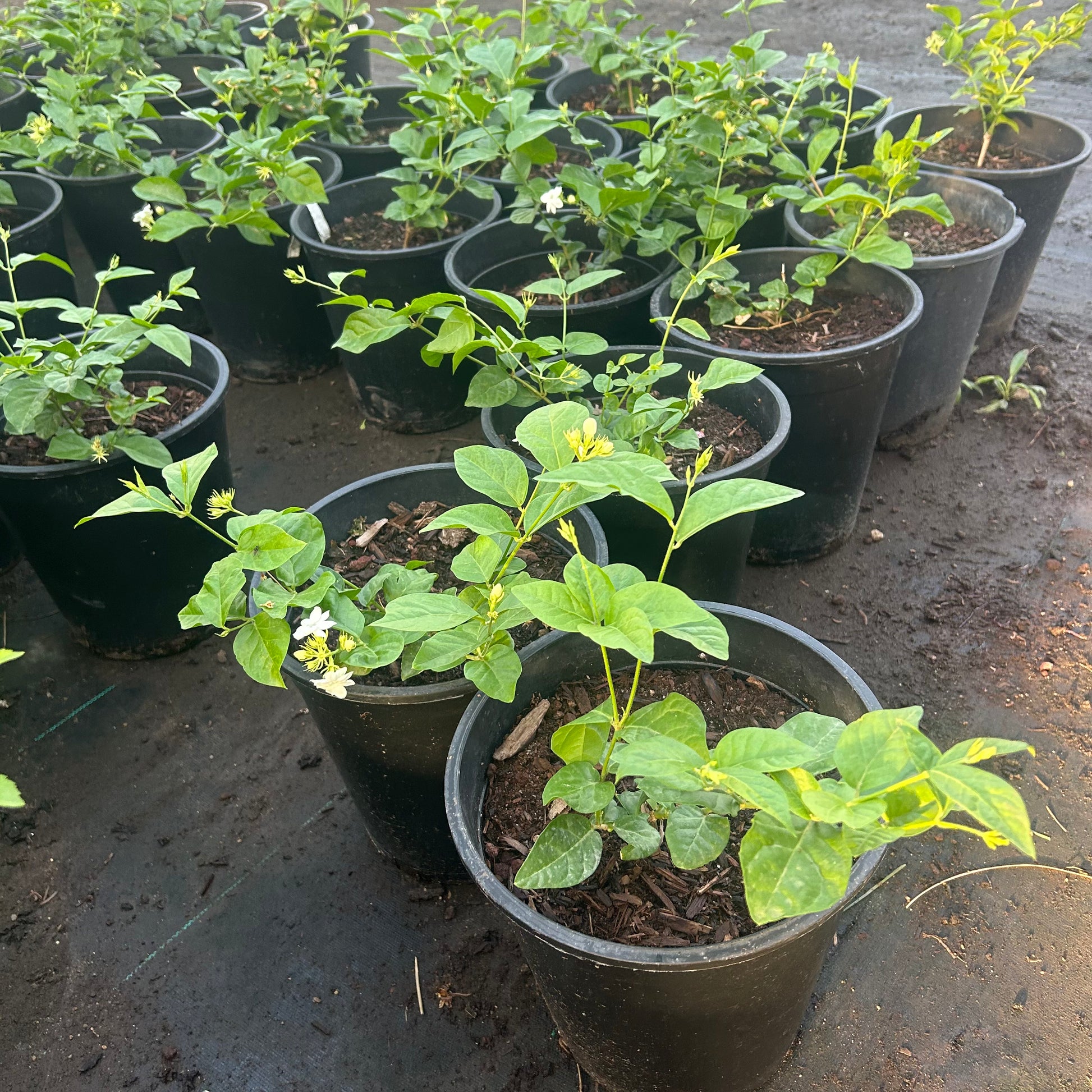
sambac white jasmine arabian plant in pot Buy Arabian Jasmine Phoenix, AZ | Jasminum sambacPhoenix's Most Fragrant Flowering Shrub Arabian Jasmine Arabian Jasmine (Jasminum sambac) is the most intensely fragrant flowering shrub available for Phoenix landscapes producing clusters of pure white blooms with a rich, intoxicating scent that fills patios, entryways, and gardens from spring through fall. Growing 36 feet tall in a full, rounded form, Arabian Jasmine is heat tolerant and surprisingly low maintenance once established. Whether you're
Phoenix's Most Fragrant Flowering Shrub — Arabian Jasmine
Arabian Jasmine (Jasminum sambac) is the most intensely fragrant flowering shrub available for Phoenix landscapes — producing clusters of pure white blooms with a rich, intoxicating scent that fills patios, entryways, and gardens from spring through fall. Growing 3–6 feet tall in a full, rounded form, Arabian Jasmine is heat-tolerant and surprisingly low-maintenance once established. Whether you're planting near an entryway in Scottsdale, along a patio wall in Chandler, or beside a seating area in Tempe — Arabian Jasmine turns any outdoor space into a fragrant retreat.
Arabian Jasmine Plant Details
| Attribute | Detail |
|---|---|
| Scientific Name | Jasminum sambac |
| Common Names | Arabian Jasmine, Sambac Jasmine, Hawaiian Lei Flower |
| Mature Height | 3–6 feet |
| Mature Width | 3–6 feet |
| Growth Rate | Moderate to fast — 1–2 feet per year in Phoenix |
| Sun | Full sun to partial shade (morning sun preferred in hotter Phoenix microclimates) |
| Water | Low to moderate. Drought-tolerant once established. |
| USDA Zones | 9–11 (Phoenix is Zone 9b–10a — Arabian Jasmine thrives here) |
| Soil | Well-draining. Adapts to Arizona caliche soils with light amendment. |
| Foliage | Evergreen — glossy dark green leaves year-round |
| Bloom Color | Pure white, star-shaped, intensely fragrant |
| Bloom Season | Spring through fall (March–November in Phoenix) |
Arabian Jasmine Uses in Phoenix Landscapes
Fragrant Entryway and Patio Shrub
Arabian Jasmine is the premier choice for planting near entryways, front doors, gates, and outdoor seating areas in the Phoenix Valley. The fragrance is strongest in the evening and early morning, making it ideal for patios and outdoor living spaces in Scottsdale, Mesa, and Peoria. Plant 4–5 ft apart along a fence line or wall to create a living fragrant border that greets guests at the door.
Privacy Hedge and Foundation Planting
With its dense, evergreen growth habit reaching 3–6 feet, Arabian Jasmine works beautifully as a privacy hedge, foundation planting, or garden backdrop. Its glossy dark foliage provides year-round screening even when not in bloom. Plant 3–4 ft apart for a solid hedge. Pairs beautifully with Pink Trumpet Bush and Plumeria in Gilbert and Chandler tropical-style gardens.
Container and Courtyard Planting
Arabian Jasmine excels in large containers, courtyard planters, and raised beds where its fragrance can be enjoyed up close. In Phoenix's warm climate, potted Arabian Jasmine can bloom for months on end — making it a favorite for covered patios, rooftop gardens, and outdoor dining areas across the Valley.
Pollinator and Wildlife Garden
The pure white blooms of Arabian Jasmine attract butterflies and beneficial insects throughout the growing season. Plant alongside Ruellia, Asparagus Fern, and Asian Jasmine to create a layered, fragrant, wildlife-friendly garden design that blooms from spring through fall in Phoenix, Tempe, and Glendale.
Best Time to Plant Arabian Jasmine in Phoenix
Fall (October–November) is the ideal planting window — warm soil encourages root establishment, and cooler air reduces transplant stress, giving the plant 6–8 months to establish before its first Phoenix summer. Spring (February–April) is the second-best option. Avoid planting during peak summer heat if possible, as newly planted shrubs are most vulnerable in their first months.
How to Plant Arabian Jasmine
- Dig wide, not deep — 2–3x the root ball width, same depth as the container
- Check for caliche — break through any hardpan for proper drainage
- Backfill with native soil — mix in 20% compost for best establishment
- Spacing — 3–4 ft apart for hedging; 4–5 ft for individual accent plants
- Water basin — build a 3–4 inch ring around the drip line to direct water to roots
- Mulch — 2–3 inches of bark or gravel mulch to retain moisture and moderate soil temperature
Watering Arabian Jasmine in Phoenix
First Year Watering Schedule
Weeks 1–2: Water every 1–2 days, deep and slow (15–20 minutes). Month 1–2: Reduce to every 3–4 days. Month 3–6: Every 7–10 days (5–7 days during July–August peak heat). After Year 1: Every 10–14 days in summer; every 3–4 weeks in winter.
Drip Irrigation
Place 1–2 GPH drip emitters 12–18 inches from the base of the plant. Arabian Jasmine appreciates consistent moisture during the bloom season, but deep infrequent watering encourages stronger root systems and better drought tolerance. Established plants need very little supplemental water in winter.
How fragrant is Arabian Jasmine?
Arabian Jasmine is considered one of the most intensely fragrant plants in the world — the same flower used to make jasmine tea and perfume. In Phoenix's warm evenings, the fragrance carries on the breeze and can fill an entire patio or garden space. It's often described as sweet, floral, and intoxicating.
Does Arabian Jasmine bloom all year in Phoenix?
Arabian Jasmine blooms most heavily from spring through fall in Phoenix (March–November). In mild winters, it may produce occasional blooms even in December and January. The more sun it receives, the more prolific the bloom.
Is Arabian Jasmine drought tolerant once established?
Yes. Once established (typically after 12–18 months in Phoenix), Arabian Jasmine is quite drought tolerant and can handle extended dry periods with deep, infrequent irrigation. It blooms best when it receives consistent moisture during the warm season.
What's the difference between Arabian Jasmine and Star Jasmine?
Arabian Jasmine (Jasminum sambac) is a shrub with intensely fragrant white blooms — used to make jasmine tea. Star Jasmine (Trachelospermum jasminoides) is a vine with smaller, star-shaped flowers and a lighter fragrance. Both grow well in Phoenix, but Arabian Jasmine is prized for its superior scent.
Does Arabian Jasmine attract hummingbirds?
Arabian Jasmine primarily attracts butterflies and beneficial insects. While hummingbirds occasionally visit, it's the butterflies and bees that are the most frequent visitors to the white blooms throughout the season.
You May Also Like
Star Jasmine Espalier — A vining jasmine with fragrant star-shaped blooms, perfect for walls and trellises alongside Arabian Jasmine shrubs.
Asian Jasmine — A low-growing, evergreen ground cover that pairs beautifully beneath Arabian Jasmine as a fragrant landscape layer.
Plumeria — Another intensely fragrant tropical that thrives in Phoenix heat — combine with Arabian Jasmine for a sensory garden experience.
Asparagus Fern — A lush, feathery ground cover that adds texture and softness around the base of Arabian Jasmine plantings.
Pink Trumpet Bush — A bold, colorful companion tree that contrasts beautifully against Arabian Jasmine's white blooms in Phoenix landscapes.
How Many Arabian Jasmine Do I Need?
At 3 to 6 feet wide, space plants about 3.5 feet apart for a fragrant hedge or border. Use this table to estimate plant count by run length:
| Run Length | Plants Needed (3.5 ft spacing) |
|---|---|
| 12 ft | 4 |
| 24 ft | 7 |
| 36 ft | 10 |
| 48 ft | 14 |
For a patio container or a single accent by a doorway, one well-placed plant scents the whole seating area on warm evenings.
Arabian Jasmine Season-by-Season in Phoenix
- Spring (Feb to Apr): New growth flushes and the first fragrant white blooms open as nights warm. A strong second planting window once frost danger passes.
- Summer (May to Sep): Peak bloom and peak fragrance, carried on warm evening air. In the hottest, most reflected spots it appreciates afternoon shade and steady moisture; monsoon humidity keeps it flowering.
- Fall (Oct to Nov): Prime planting season and continued bloom into November before nights cool.
- Winter (Dec to Jan): Evergreen foliage holds, but bloom stops and the plant is frost-sensitive: expect leaf damage below about 30°F. Cover on hard frost nights and wait until spring to prune.
At a Glance
✔ Evergreen ✔ Drought-Tolerant ✔ Pollinator-Friendly ✔ Low-Maintenance
Plant It With
- Gardenia: another richly fragrant white-flowering shrub for a layered scent garden.
- Carolina Jessamine Vine: a fragrant evergreen climber for the wall or trellis behind the jasmine.
- Foxtail Fern: soft feathery texture and rich green color at the base of the planting.
- Mock Orange Pittosporum: a fragrant evergreen backdrop that reinforces the privacy screen.
Is Arabian Jasmine Right for Your Yard?
Yes if you want intense fragrance near a patio, entry, or seating area, have full sun to part shade with well-draining soil, and can give it steady water through the warm season. It is one of the best plants for a sensory garden. Not a fit if your spot bakes in harsh all-day reflected heat with no afternoon relief, stays soggy, or sits in a frost pocket where winter temperatures regularly drop below 30°F without protection.
Shipping Notes
- Free Standard Shipping on $100+ Orders to the USA.
- Except Preorder products are shipped in 48 hours.
- Delivery to the USA:
- Standard Shipping : 3-10 business days
- If time is of the essence, please consider selecting expedited delivery for faster service.
Exchange/Return Notes
- We offer a 30-day return/exchange service after receiving.
- Final sale items are not eligible for returns or exchanges.
- To process your return/exchange, please contact us at [email protected]
- Please click here for more details>>> Return & Exchange Policy