Shipping Estimate
USA
- USA
- CAN
- USA
- CAN
Ships within 48 hours · Estimated delivery Jul 15 - Jul 20
 Promo Codes Available:
For Your Every Summer RSVP, with Code: SUMMER15
Description
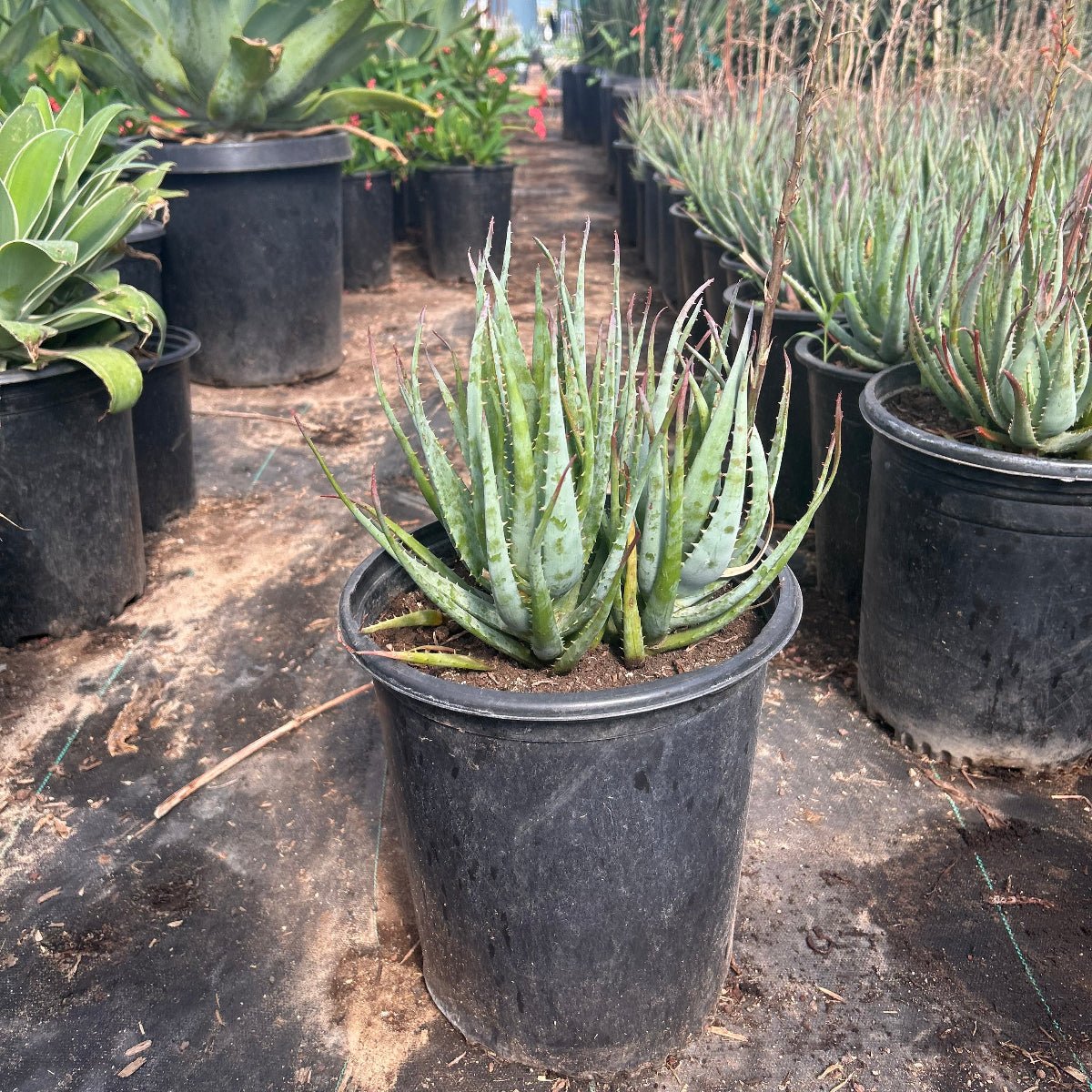
aloe vera plant where to buy Buy Blue Elf Aloe Phoenix, AZ | Aloe 'Blue Elf'The Perfect Compact Succulent for Phoenix Yards & Patios Blue Elf Aloe (Aloe 'Blue Elf') is one of the most popular small aloes for desert landscaping in the Phoenix Valley. This hybrid succulent forms dense, blue green rosettes that stay compact at 12 feet tall while producing stunning orange red flower spikes that hummingbirds love. Virtually maintenance free once established, Blue Elf Aloe handles full Arizona sun, reflected heat, and long
The Perfect Compact Succulent for Phoenix Yards & Patios
Blue Elf Aloe (Aloe 'Blue Elf') is one of the most popular small aloes for desert landscaping in the Phoenix Valley. This hybrid succulent forms dense, blue-green rosettes that stay compact at 1–2 feet tall while producing stunning orange-red flower spikes that hummingbirds love. Virtually maintenance-free once established, Blue Elf Aloe handles full Arizona sun, reflected heat, and long stretches without water. Whether you're filling a rock garden in Scottsdale, adding color to a patio planter in Chandler, or building a drought-tolerant border in Mesa — Blue Elf Aloe delivers year-round beauty with almost zero effort.
Blue Elf Aloe Plant Details
| Attribute | Detail |
|---|---|
| Scientific Name | Aloe 'Blue Elf' (hybrid) |
| Common Names | Blue Elf Aloe, Blue Elf Succulent |
| Mature Height | 1–2 feet |
| Mature Width | 2–3 feet (clumping) |
| Growth Rate | Moderate — forms offsets freely |
| Sun | Full sun to partial shade. Handles reflected heat from walls and pavement. |
| Water | Very low once established. Highly drought-tolerant. |
| USDA Zones | 9–11 (Phoenix is Zone 9b–10a) |
| Soil | Well-draining. Adapts to Arizona caliche soils with good drainage. |
| Foliage | Evergreen — blue-green rosettes year-round |
| Bloom Color | Orange-red tubular flowers on tall spikes, winter through spring |
Blue Elf Aloe Uses in Phoenix Landscapes
Rock Gardens & Succulent Beds
Blue Elf Aloe is a rock garden staple in the Phoenix Valley. Its compact rosettes and blue-green color contrast beautifully against decomposed granite, boulders, and warm-toned gravel. Plant in groups of 3–5 for a natural drift effect, spacing 18–24 inches apart. Pairs well with Agave, Desert Spoon, and other Three Timbers succulents for a layered desert garden look.
Patio Containers & Poolside Accents
This aloe thrives in containers, making it ideal for patios, entryways, and pool decks throughout Scottsdale, Gilbert, and Tempe. Blue Elf stays manageable in pots for years and its non-aggressive root system won't crack planters. The winter flower spikes add a burst of warm color right when the garden needs it most. No thorns or spines make it safe around pool areas and walkways.
Low-Water Borders & Mass Plantings
For a low-maintenance, drought-tolerant border, mass-plant Blue Elf Aloe along walkways, driveways, or property edges. Space 18–24 inches apart for a filled-in look within one growing season. The clumping habit means each plant naturally fills its space. Works beautifully along the front of a mixed planting bed with taller plants like Texas Sage or Ruellia behind.
Best Time to Plant Blue Elf Aloe in Phoenix
Fall (October–November) is the ideal planting window. The soil is still warm enough for root establishment while cooler air temperatures reduce transplant stress. This gives Blue Elf Aloe 6–8 months to develop a strong root system before its first Phoenix summer. Spring (February–April) is the second-best window. Avoid planting in the peak of summer if possible, though established Blue Elf Aloe handles summer heat without issue.
How to Plant Blue Elf Aloe
- Dig wide, not deep — hole should be 2–3x the root ball width, same depth as the container.
- Check for caliche — break through any hardpan layer to ensure drainage. Standing water will rot aloe roots.
- Backfill with native soil — a 20% perlite or pumice mix improves drainage in heavy clay.
- Spacing — 18–24 inches apart for borders and mass plantings; 2–3 feet for individual specimens.
- Water basin — build a 3–4 inch ring around the plant to direct water to the root zone.
- Mulch — 2–3 inches of gravel or decomposed granite mulch. Avoid bark mulch that holds moisture against the stem.
Watering Blue Elf Aloe in Phoenix
First Year Watering Schedule
- Weeks 1–2: Every 2–3 days, deep and slow
- Month 1–2: Every 5–7 days
- Month 3–6: Every 10–14 days (weekly in peak summer)
- After Year 1: Every 2–3 weeks in summer; monthly or less in winter
Drip Irrigation
Place one 1-GPH emitter 6–8 inches from the plant base. Established Blue Elf Aloe needs very little supplemental water — overwatering is the most common mistake. In-ground plants often survive on rainfall alone after the second year.
How fast does Blue Elf Aloe grow in Phoenix?
Blue Elf Aloe reaches full size (1–2 feet tall, 2–3 feet wide) within 2–3 years in the ground. It freely produces offsets that fill surrounding space, so you get a lush colony look faster than most succulents.
Is Blue Elf Aloe drought tolerant?
Extremely. Once established (about 6 months in the ground), Blue Elf Aloe can survive on rainfall alone in the Phoenix Valley. It stores water in its thick leaves and is one of the most forgiving succulents for forgetful waterers.
Does Blue Elf Aloe attract hummingbirds?
Yes — the tall orange-red flower spikes bloom in winter and early spring, providing nectar for hummingbirds at a time when few other plants are flowering in Phoenix.
Can Blue Elf Aloe handle full Phoenix summer sun?
Yes. Blue Elf Aloe thrives in full sun including reflected heat from walls and concrete. In extreme heat (115°F+), leaves may temporarily stress to a purplish hue, which is normal and adds visual interest.
Is Blue Elf Aloe safe around pools?
Absolutely. It has no thorns or sharp spines, stays compact, and its root system won't damage pool decking or plumbing. It's one of the most pool-friendly succulents available.
You May Also Like
- Candy Corn Aloe — Colorful compact aloe with striking red and yellow leaf tips, perfect for containers and borders.
- Gold Tooth Aloe — Eye-catching rosette aloe with golden teeth along leaf margins, great companion for Blue Elf.
- Ghost Aloe — Silvery-white aloe that provides stunning color contrast planted alongside Blue Elf.
- Pink Blush Aloe — Compact aloe with pink-edged leaves that complements Blue Elf in mixed succulent beds.
- Flapjacks — Paddle-shaped succulent with red-edged leaves, adds bold texture contrast to aloe groupings.
How Many Blue Elf Aloe Do I Need?
Blue Elf is a compact clumping aloe 2 to 3 feet wide that offsets freely, so it fills in fast as a front-of-bed mass or low border. Space plants about 24 inches apart (center to center) for a solid look within a season or two. In rock gardens, set odd-numbered drifts of 3 or 5.
| Area to cover | Plants needed (24 in spacing) |
|---|---|
| 25 sq ft | 6 plants |
| 50 sq ft | 12 plants |
| 100 sq ft | 25 plants |
| 200 sq ft | 50 plants |
Blue Elf Aloe Season-by-Season in Phoenix
- Spring (Feb to Apr): Orange-red flower spikes carry on from winter and the clump pushes new offsets. Excellent second planting window.
- Summer (May to Sep): Takes full sun and reflected heat. In extreme highs the leaves may blush purple, which is normal stress color, not damage. Keep soil draining freely through monsoon rains.
- Fall (Oct to Nov): Prime planting season. Roots establish quickly in warm soil before the bloom season.
- Winter (Dec to Jan): Peak bloom. Tall orange-red spikes feed hummingbirds when little else flowers. Hardy into the mid-20s°F, so it rides out typical Valley winters with no cover.
At a Glance
✔ Hummingbird-Friendly ✔ Pollinator-Friendly ✔ Heat-Loving (Reflected-Heat Tolerant) ✔ Drought-Tolerant ✔ Pool-Friendly (Low-Litter) ✔ Spineless ✔ Evergreen ✔ Low-Maintenance ✔ Deer & Rabbit-Resistant ✔ Cold-Hardy to 25°F
Plant It With
- Candy Corn Aloe: Red-and-yellow tipped rosettes that add warm color in the same compact bed.
- Gold Tooth Aloe: Golden-toothed margins that play off the blue-green leaves.
- Ghost Aloe: Silvery-white rosettes for striking color contrast beside the blue.
- Aloe 'Pink Blush': Pink-edged compact rosettes that round out a mixed succulent border.
Is Blue Elf Aloe Right for Your Yard?
Yes if you want an easy, spineless, pool-safe succulent for a full-sun or lightly shaded spot with fast-draining soil, especially at the front of a bed, in a container, or as a low border. It is about as low-maintenance as desert plants get. Not the best fit for soggy, poorly drained ground, where the crown and roots can rot from holding too much water.
Shipping Notes
- Free Standard Shipping on $100+ Orders to the USA.
- Except Preorder products are shipped in 48 hours.
- Delivery to the USA:
- Standard Shipping : 3-10 business days
- If time is of the essence, please consider selecting expedited delivery for faster service.
Exchange/Return Notes
- We offer a 30-day return/exchange service after receiving.
- Final sale items are not eligible for returns or exchanges.
- To process your return/exchange, please contact us at [email protected]
- Please click here for more details>>> Return & Exchange Policy