Shipping Estimate
USA
- USA
- CAN
- USA
- CAN
Ships within 48 hours · Estimated delivery Jul 13 - Jul 18
 Promo Codes Available:
For Your Every Summer RSVP, with Code: SUMMER15
Description
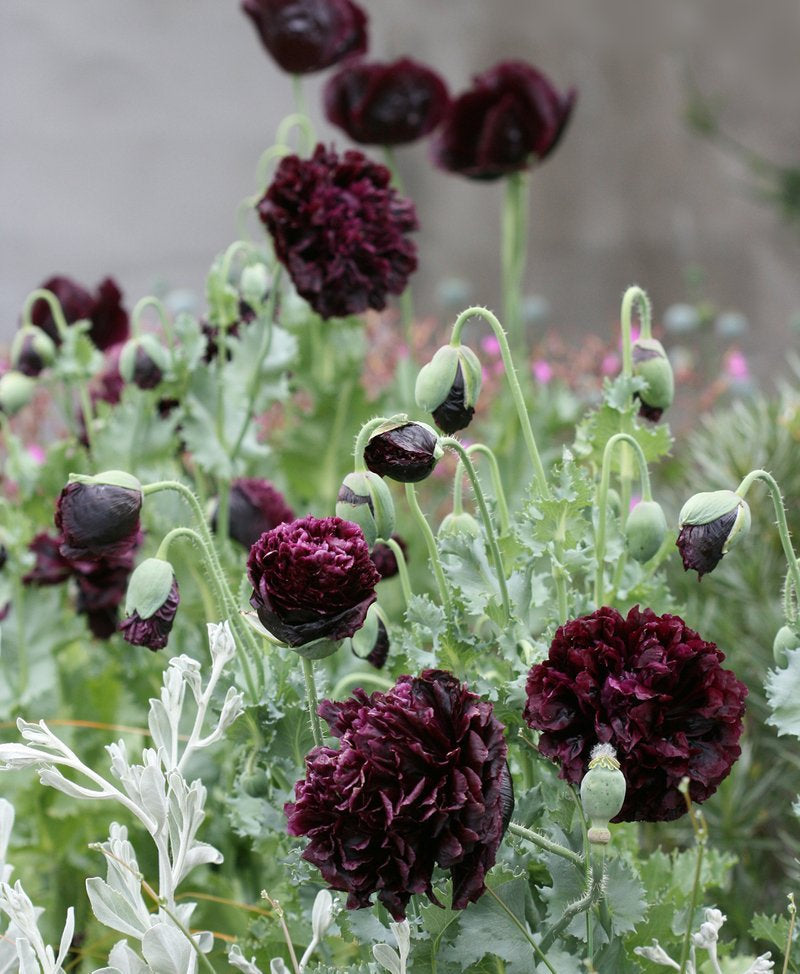
black poppy flower seeds 300 Black Double Peony Poppy Flower SeedsUp for sale is one pack of 500 Black Double Peony Poppy seeds (Papaver Paeoniflorum). Perfect for spring time blooms these poppy seeds create large 4" peony type blooms on 32" stems. Blooms appear black but are actually a very deep dark purple. We offer flat rate combined shipping on all orders, no limit on the amount or type of seed packets. CULTURE Soil temperature: 55 60 degrees fahrenheit Germination lighting: Light required Germination days: 20 2
Up for sale is one pack of 500 Black Double Peony Poppy seeds (Papaver Paeoniflorum). Perfect for spring time blooms these poppy seeds create large 4" peony type blooms on 32" stems. Blooms appear black but are actually a very deep dark purple.We offer flat rate combined shipping on all orders, no limit on the amount or type of seed packets.
CULTURE
Soil temperature: 55 - 60 degrees fahrenheit
Germination lighting: Light required
Germination days: 20 -2 8 days
Plant spread: 6 - 10 inches
Plant height: 32''
Plant type: Annual
Maturation days: 55 days
How to Sow Poppy Seeds:
Best Way (Fall/Winter): In late fall loosen enriched garden soil down to a 6" depth. For zones 3-7 it's best to direct seed into your garden after your first freeze in the fall. For zones 8-9, or mild zones like California, you will get better results if you cold treat your seeds (see below) sow them during the winter.
These poppy seeds are very small so we use the shaker method where you mix your seeds with peat or sand to spread the seeds evenly in your sowing area. We then we top with a fine dusting of peat or sand as they need light to germinate. The poppies will germinate over winter and pop up in very early spring (see the last picture which a young fall sown poppy taken the following April in zone 7).
You can transplant winter sown poppies in the spring. We wait until they are about 3" in diameter and then transplant their root ball if we are expecting mild weather for a few days. Usually they will suffer a bit but will pull through. Be sure and thin or transplant to around 12".
Ok Way (Spring): If you are buying your seeds in late winter or early spring, first try a germination test with 4-5 of your seeds. Place them in a moist paper towel, and then place in a sealed baggie, and put in a window where the temp is at least 65 degrees. If they are ready they will germinate in 4-5 days by sending a fine root hair from the seed. If they germinate you can direct sow them after your last frost using the shaker method. If you are in zones 8-9 where you get a hot summer you need to sow your poppy seeds by March 15th.
If they don't germinate they will have to be cold treated. Place your packet of seeds into a mix of 1/4 cup fine peat (or a mix of peat and coarse sand) and 1 tablespoon of water. You want your mix moist but not soggy. Place the mix in a sealed baggie, inside a sealed container, inside your refrigerator (not your freezer) for 60 days. Check after 30 days to see if you need to add more water as you don't want the mix to dry out. What this does is trick the poppy seed into thinking it has gone through a full cold winter. After 60 days you can take your seeds out and let them dry overnight and then use the shaker method. You can plant the poppies in the late winter or spring, after the 60 day cold treatment, as long as your ground is workable and it's past your last frost date. As always we give them a light dusting with peat so as to disguise them from birds.
When poppies germinate in spring they send up a stalk that looks like a very fine blade of grass. This stalk grows to about 1"-2" before it grows it's first leaf set. Once your poppies are around 2" tall it's time to thin them out. Don't try to transplant as they won't make it. The risk on spring planted poppies is if they germinate and you get a crazy heat wave there is a chance they won't make it. The race in the spring is to try and get the poppy to establish it's root system before the summer heat arrives. A bit easier in zones 3-6 but a more difficult thing for zones 7-9.
Bad Way (Summer): Unless you live in southern California or Hawaii do not try to sow poppy seeds in the Summer. They will germinate but the heat will kill them before they can develop.
Worst Way: We do not recommend starting in pots as poppies disliked being transplanted, but if you want to try use a compostable 4" peat pot and do not remove the plant from the pot when transplanting in the spring. They will probably not mature correctly and have a small chance of flowering
During the summer dead head any spent flowers but at the end of the growing season you can let the flower head form into seed pods where you can collect seeds in late fall, but note that if you have multiple varieties of poppies in your garden they will cross pollinate and you will end up with some different colors.
Shipping Notes
- Free Standard Shipping on $100+ Orders to the USA.
- Except Preorder products are shipped in 48 hours.
- Delivery to the USA:
- Standard Shipping : 3-10 business days
- If time is of the essence, please consider selecting expedited delivery for faster service.
Exchange/Return Notes
- We offer a 30-day return/exchange service after receiving.
- Final sale items are not eligible for returns or exchanges.
- To process your return/exchange, please contact us at [email protected]
- Please click here for more details>>> Return & Exchange Policy
4.2 ★★★★★
Based on 565 reviews
Sort
Product Reviews
★★★★★ 5
Good toy
Great toy for med dogs. A small one might have a bit of a hard time with the size but med and large dogs will love it. Thick plastic so they can’t pierce it quickly.
WAS THIS REVIEW HELPFUL?YesReportShare
Reviewed in the United States on February 4, 2026
★★★★★ 5
good chew toy
Color: Yellow
My fur baby is small (13 lbs) but can chew anything apart (even squeaker balls). she likes the toy, tried her hardest to chew it apart, but is has been four of five days now and it is still like new
WAS THIS REVIEW HELPFUL?YesReportShare
Reviewed in the United States on March 23, 2026
★★★★★ 5
Most liked
Color: Yellow and Purple
My pups love it
WAS THIS REVIEW HELPFUL?YesReportShare
Reviewed in the United States on April 19, 2026
★★★★★ 2
It is breakable
Although it was an exciting toy, it was not long lived. I can’t say it’s as durable as it claimed to be. My 12 lbs dachshund chewed through it in less than a day. He had fun, but there were too many little pieces he tore off. Not worth the risk of him ingesting them.
WAS THIS REVIEW HELPFUL?YesReportShare
Reviewed in the United States on March 6, 2026
★★★★★ 5
The dogs like it very much, it produces a lot of noise.
Size: Large, Size: Large
I’m rating this based on my dogs’ response to this toy – they absolutely love it, and it has seen more use without damage than any of their regular throwing toys. At the same time, unless you enjoy, REALLY ENJOY the sound of crunching water bottles, you may not like having this ball in the house.
Pros:
The rubber outer shell of the ball is durable, and can survive both chewing and pulling forces (as a note, my dogs do not concentrate on chewing - they use it more for play games). It’s big enough for my dogs to play tug of war with it, hooking their teeth in the mesh, and they since it bounces around if they drop or kick it, it makes the game more interesting than rope. They did crush the interior plastic, but they don't really seem to care.
It’s much more engaging than a normal ball, and can be modified to hold treats, sticks, rope elements and other external bits, which my shepherd mix loves; he gets bored easily and frequently, and this can actually entertain him.
Cons:
This toy is loud, and produces repetitive crunching sounds. It is apparently really engaging to chew, and my dogs will produce the horrid plastic crackling up to half an hour at a time. If you let your dogs in and out, it would make a fine outdoor toy, but since I have a dog door, it migrates around to pretty much wherever the dogs are. I kind of hate it, but will probably buy another if they break this one since they enjoy it so much.
WAS THIS REVIEW HELPFUL?YesReportShare
Reviewed in the United States on October 17, 2016
recommand products
Professional Liquid Pothos Plant Fertilizer | 3-1-2 Concentrate for Epipremnums and Houseplants
28.53
Feast Micro Master™ Manganese
25.50
Grow Big® Liquid Plant Food
24.51
Buy Lettuce Fertilizer for Sale Online
29.28
WONDER GOURD PLANT FERTILSER for bottle gourd, lao,dudhi,laauki feed – LUCKYSEEDS
26.93