SKU: 20060704446
can yucca plants be outside

can yucca plants be outside Spineless Yucca

Sale price$25.85 Regular price$28.72
Save 10%

Shipping Estimate
USA
  • USA
  • CAN

Ships within 48 hours · Estimated delivery Jul 14 - Jul 19

Promo Codes Available:

For Your Every Summer RSVP, with Code: SUMMER15

Description

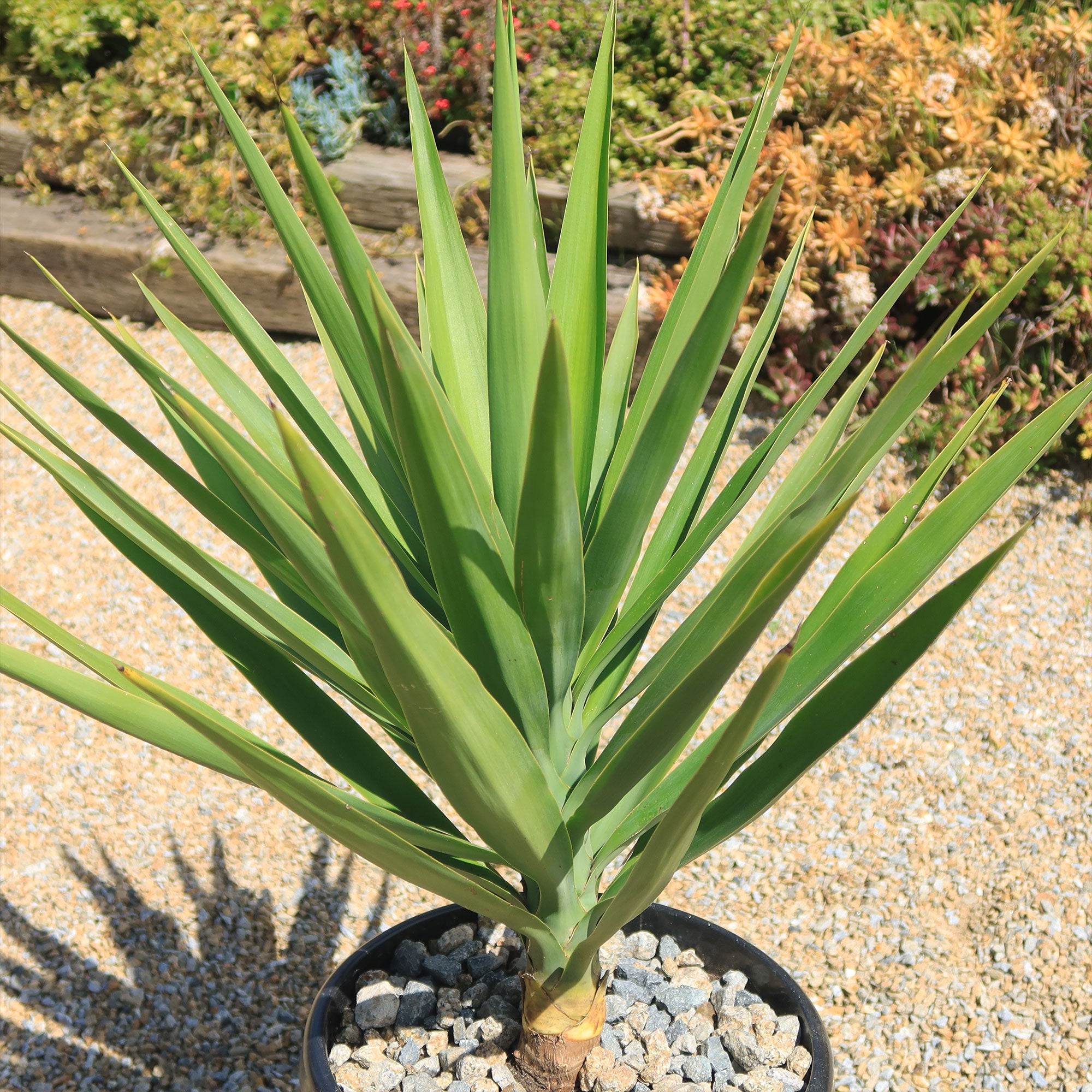
can yucca plants be outside Spineless YuccaIntroducing the Yucca elephantipes, known as Spineless Yucca, which is a popular indoor and outdoor Yucca plant known for its striking appearance and low maintenance nature. Besides Yucca elephantipes, this plant is commonly referred to as the Giant Yucca, Soft tip Yucca, Yucca gigantea, or Stick Yucca. Native to Central America, the Yucca elephantipes gets its name from its resemblance to an elephant's foot. The thick, branched trunks of this air

Introducing the Yucca elephantipes, known as Spineless Yucca, which is a popular indoor and outdoor Yucca plant known for its striking appearance and low-maintenance nature. Besides Yucca elephantipes, this plant is commonly referred to as the Giant Yucca, Soft-tip Yucca, Yucca gigantea, or Stick Yucca. 

Native to Central America, the Yucca elephantipes gets its name from its resemblance to an elephant's foot. The thick, branched trunks of this air-purifying spineless yucca thicken over time, giving it that unique elephant-like appearance. As for the name "Spineless Yucca," it refers to the fact that, unlike other Yucca species, this particular plant doesn't have sharp spines on its leaves.  


This resilient plant has gained popularity worldwide for its unique features and ability to thrive in various environments.

It is well-adapted to hot and dry climates, making it a suitable choice for xeriscaping and desert-themed gardens.

The Spineless Yucca is characterized by its thick, woody trunk and long, sword-shaped leaves.

These leathery blue-green leaves have smooth edges, lacking the sharp spines typically found on other Yucca plants.

The plant's architectural form and spiral rosettes of foliage make it an eye-catching addition to any space. 

In ideal conditions, the slow-growing Spineless Yucca plants can reach impressive heights of up to 30 feet outdoors. However, when grown indoors as a houseplant, it usually stays more compact, reaching around 6 to 8 feet in height. 

The flowers of Spineless Yucca elephantipes produce beautiful white or cream-colored blooms on tall stalks known as inflorescences. These white flowers are bell-shaped and appear in clusters during the summer months. The flowers are edible, high in calcium and potassium, and can be used in salads. While the plant can flower indoors, it is relatively rare and requires specific conditions, including ample sunlight and proper care. 

The Spineless Yucca can be propagated through various methods, including stem cuttings and offsets. Stem cuttings can be taken from the main trunk or branches of mature plants, allowing the cut end to dry before planting it in well-draining soil. Offsets, or "pups," are small plantlets that grow at the base of the parent plant. These can be carefully separated and replanted to establish new plants. 

Watering Needs 

The Yucca elephantipes Spineless Yucca is a hardy and low-maintenance plant when it comes to watering. It has adapted to survive in arid environments, so it prefers drier soil. When watering your Spineless Yucca, it's important to strike a balance to prevent overwatering, which can lead to root rot. 

In the spring and summer, during the growing season, you can water your Yucca elephantipes once every two weeks. Before watering, make sure the top inch or so of the soil is dry. When watering, give it a thorough soak, allowing the water to penetrate deep into the soil. Afterward, allow the soil to dry out completely before watering again. This helps mimic the plant's natural habitat and prevents the roots from sitting in soggy soil. 

In the winter months, when the plant is in its dormant phase, you can reduce watering frequency. Water your Spineless Yucca only when the soil is completely dry, which may be once every four to six weeks. Remember, it's always better to underwater than to overwater this resilient plant. 

Keep in mind that factors like temperature, humidity, and the type of pot and soil used can affect watering needs. Always monitor the moisture level of the soil and adjust your watering schedule accordingly. With a little attention and care, your Yucca elephantipes will thrive and bring a touch of natural beauty to your space! 

Light Requirements 

When growing indoors, the Spineless Yucca thrives in bright, indirect light. It enjoys being near a window where it can receive plenty of filtered sunlight throughout the day. However, it's important to avoid placing it in direct sunlight, as this can scorch the leaves. If you don't have a well-lit area, don't worry. The Spineless Yucca is also tolerant of lower light conditions and can still grow, although it may not be as lush. 

When planted outdoors, the Spineless Yucca elephantipes prefer full sun or light shade. It can tolerate direct sunlight for 6-8 hours a day, but it also appreciates some shade during the hottest parts of the day, especially in hotter climates. If you live in an area with harsh, intense sunlight, providing some afternoon shade can help protect the plant from sunburn. 

Remember, it's always a good idea to gradually acclimate your Yucca elephantipes to different light conditions if you're moving it from indoors to outdoors or vice versa. Sudden changes in light can shock the plant and lead to stress. So, take it slow and allow the plant to adjust gradually. 

Optimal Soil & Fertilizer Needs 

The Yucca elephantipes prefers sandy, well-drained sandy soil, as excess moisture can promote root and stem rot. Planet Desert specializes in succulents and has specialized succulent potting soil that includes an organic substrate with mycorrhizae to help with the growth of a healthy root system to help your succulents thrive. As an okay alternative, you can create your own potting mix by combining equal portions of perlite, coarse sand, and good natural potting soil. 

The Spineless Yucca is a relatively low-maintenance plant when it comes to fertilizing. During the growing season, once a year in the spring, you can fertilize your Yucca elephantipes with a balanced (5-10-5), water-soluble NPK fertilizer. Dilute the fertilizer to half the recommended strength to avoid overfertilization. Apply the fertilizer to moist soil, as this helps prevent root burn. 

In the winter months, when the plant is in its dormant phase, you can reduce or even stop fertilizing altogether. The Spineless Yucca doesn't require as much nutrient input during this time. 

Remember, it's always a good idea to follow the instructions on the fertilizer packaging and adjust the frequency and strength of fertilization based on the specific needs of your plant. With the right soil and occasional fertilization, your Yucca elephantipes will thrive and bring a touch of natural beauty to your space! 

Hardiness Zones & More 

When growing indoors, your Spineless Yucca elephantipes is widely grown as a houseplant, making it well-suited for indoor environments. It can tolerate a wide range of temperatures, ideally between 60°F and 80°F. It's important to keep the plant away from drafts or sudden temperature fluctuations, as it prefers a stable indoor climate. As for humidity, the Spineless Yucca is quite adaptable and can tolerate average indoor humidity levels. If the air in your home is particularly dry, you can increase humidity by using a humidifier or placing this house plant on a tray filled with water and pebbles. 

When grown outdoors, the Spineless Yucca is best suited for USDA hardiness zones 9 to 11. It can withstand temperatures as low as 25°F but may suffer damage or die back if exposed to prolonged freezing temperatures. In terms of temperature, the Spineless Yucca thrives in warm climates with temperatures ranging from 70°F to 90°F. It can tolerate higher temperatures as well, but providing some shade during the hottest parts of the day can help protect the plant. 

As for humidity, these hardy plants are relatively drought-tolerant and can adapt to different humidity levels, including lower humidity in arid regions. 

Remember, while the Spineless Yucca is adaptable to a range of conditions, it's important to provide it with optimal temperature and humidity levels to promote healthy growth and prevent stress. With the right care, your Yucca elephantipes will thrive, whether indoors or outdoors! 

Final Thoughts 

Overall, the Yucca elephantipes (Spineless Yucca) is a stunning plant with a thick trunk and long, sword-shaped leaves. Unlike other Yucca species, it lacks sharp spines, making it safer and easier to handle. This plant can grow up to 30 feet tall outdoors, but indoors it typically reaches around 6 to 8 feet in height. The Spineless Yucca produces beautiful white or cream-colored bell-shaped flowers during the summer. When it comes to Yucca elephantipes care, make sure it gets plenty of bright, indirect sunlight and waters it sparingly, allowing the soil to dry out between waterings. It thrives in well-draining soil and can tolerate a wide range of temperatures.  

With its striking appearance and low-maintenance nature, the Spineless Yucca is a fantastic choice for both indoor and outdoor spaces. 

Shipping Notes
  • Free Standard Shipping on $100+ Orders to the USA.
  • Except Preorder products are shipped in 48 hours.
  • Delivery to the USA:
  1. Standard Shipping : 3-10 business days
  • If time is of the essence, please consider selecting expedited delivery for faster service.
Exchange/Return Notes
  • We offer a 30-day return/exchange service after receiving.
  • Final sale items are not eligible for returns or exchanges.
  • To process your return/exchange, please contact us at [email protected]
  • Please click here for more details>>> Return & Exchange Policy
SKU: 20060704446

Discover Niche Categories That Outsell can yucca plants be outside

Top-Converting Item to Boost Your Average Order

4.7 ★★★★★
Based on 237 reviews
Sort
Highest Rating
Newest First
Oldest First
Product Reviews
A
Verified Purchase
Arty
Cuba, US
★★★★★ 4
The end is only the beginning
Format: Kindle
Theo appears in a small fictional Georgia town named Golden. He’s a distinguished old man with a mysterious past. He’s a quiet observer; then he makes friends in a coffee house and there pursues a plan to personally gift every portrait drawing on the wall to the townsfolk simply pictured there. As an artist, I appreciated the detailed descriptions of each face, and then the invited dialogue with each person behind those drawings. The characters Theo gets to know are varied and storied. Of even more value to me was Theo’s visit to the studio of the originator of all the portraits. Layers start getting unpeeled in this tale. I started to highlight phrases when the motivation for doing the work got uncovered between them. There were times when I felt the main character was “too good” to be believable. I personally appreciated the subtle (and sometimes not so subtle) references to Theo being a Christ figure. But remember that Jesus was the one who said “woe to you when all men speak well of you”. The Theo who is pictured in this book, and the reactions of most around him is maybe a little too syrupy? A friend who is in my book club felt herself being “manipulated” when reading this book. I ponder that. There was a plethora of reactions to Jesus too, but I don’t think any honest quester ever felt manipulated. He let them walk freely away. For me the significance of each face was the key theme, and each face held sorrow. There are some beautiful lines in the book around this. The ambitions: true and false in the “art world” also the business world resonated also. The Pastor’s words during a funeral at the end were valuable. And the little girl’s imagination (prompted by Theo) of all the musical notes flying on their wings into the chandeliers so that they can sing again later was a wonderful metaphor. There are some excellent passages in this book if you remain in it. As one grandmother said in this tale: “Baby, they’s justice and they’s mercy. If you not sure what to do and you gotta choose one or the other, I say always go the mercy way. If you make a mistake, make it for mercy. Bad mercy don’t hurt nearly like bad justice and always remember, the eye of God can see.”
WAS THIS REVIEW HELPFUL?YesReportShare
Reviewed in the United States on May 11, 2026
C
Verified Purchase
christine
Phoenix, US
★★★★★ 5
Theo of Golden
Format: Kindle
Amazingly beautiful. This is a deeply moving story of humanity. I saw many reviews and I didn't let the negative aspect impact my decision, in fact I think it motivated me to see for myself, I am so glad I did. Uplifting, inspiring and deeply moving. This is a book to be read more than once, its ment to be shared. A must read. Enjoy
WAS THIS REVIEW HELPFUL?YesReportShare
Reviewed in the United States on May 25, 2026
M
Verified Purchase
Megan
Alexandria, US
★★★★★ 5
⭐️ A Beautifully Written Story That Stays With You ⭐️
Format: Paperback, Format: Paperback
Theo of Golden by Allen Levi is one of those rare books that quietly settles into your heart and lingers long after the final page. The writing is intelligent, thoughtful, and beautifully crafted, with storytelling that feels both timeless and deeply human. The characters are wonderfully developed and feel incredibly real, but Theo himself is unforgettable. I found myself learning so much from him along the way about life, people, kindness, and perspective. Allen Levi has a gift for creating a world that feels warm, meaningful, and genuine. This was a truly lovely read, full of wisdom, heart, and beautiful prose. An easy five stars for me. 📚✨
WAS THIS REVIEW HELPFUL?YesReportShare
Reviewed in the United States on May 27, 2026
M
Verified Purchase
mavo
Omaha, US
★★★★★ 5
A story of art, music and writing
Format: Kindle
Like the face of heaven. That’s how I see Theo, and I hope this will be a movie. “Theo of Golden” is the debut novel by Allen Levi. He was writing as a personal challenge and just doing some scenes. He began writing in 2019-2020. He had been a songwriter and lawyer. He has no connection to Portugal, which is mentioned in the book quite a bit and led me to try Port wine. This book will lead me to do a lot of things. Theo is a supremely interesting man! More on that other familiar interesting man in a later post. The book will make you want to look at the faces of people. Use a gaze that calms and loves. Be kind and generous. Greet people. Be less fearful and exchange stories. Be attentive. Love people up close. Invest in the art of living. Be beautiful, useful and pleasurable. All which I should be doing, but will now do for Lent. Theo listened with genuine interest, adoringly, encouraging and with gratitude. Newborns look for their mother’s face, a particular gaze that calms, loves and welcomes them. Someone they recognize, run to greet and someone to bond with. Levi signs the books “With thanks for the Theo in you.” He greets kids at a high school three days a week. He reads to second graders. He doesn’t mind being around people not like him. The coffee shop setting is a real place in Columbus, Ga. It’s called Fountain City Coffee. In picking bestowals of the sketches there, Theo looked for someone lost, weary, worried or troubled that the gift would encourage or help. I got to hear him in a Zoom. A group of women from Vermont who lost their daughters came to Georgia on a pilgrimage. He was a steward of clean rivers and water and said the river still flows after death. He went through a “walking season” in losing his daughter. In a book about knowing a person, it is mentioned that a bench is a good way to do this. 7 p.m. was Theo’s meeting time with the strangers for bestowals and ended up being the time of the funeral. He also mentioned “Think Little” by Wendell Berry. Do so and if everyone does, it spreads. Levi was born in 1956. His dad is 98. His mother passed and he lost his brother, whom he called a clone of Theo, at 55. His dad was a forester, explaining his interest in nature. Springtime is an end with a future, said Theo. One character named Tony runs the Verbivore book store and has the Penny Loafers out there because they haven’t spent a penny and they majored in loafing. Theo and Tony end up having Port together and he told Theo is Viet Nam stories. The Penny Loafers were better than a room full of Senators. They lie. Tony ends up being more of a believer of Jesus at the end because he wasn’t before Theo. James Ponder has no degrees hanging in his office. Note the “ponder” mentions throughout. He is a dispenser of advice, secret keeper and agent of calm. Secretary Mrs. Gidley was suspicious of Theo at first but comes around. Ponder was Theo’s landlord and mentioned the 18-inch railing and three flights of stairs before the 86 year old decided to live there. Kendrick reminds me of the custodian who won “America’s Got Talent,” who has an ill daughter Lamisha, who wants to be a physical therapist or artist in the end. Her education will be paid for by Theo as were some of her medical bills. Maria Menendez is the daughter of the “little man” who killed Theo’s wife and daughter in an accident. Maria had cancer. I don’t want to give away too much, but Theo decided to love Asher, the sketch artist, with two hearts. And there is much more to that. Simone wears a wardrobe that honors music on stage and guests who come to listen did the same. Cello intricacies became fascinating to me and I looked up some of the music mentioned. His bow was a gift from Theo. He played Fado for Theo at his concert. It ended up being a requiem with three characters, Kendrick and Basil, the busker. Simone’s parents were there and I wasn’t clear if Theo sprang for their trip. At the end, Basil studies to get a doctorate in American literature. Katherine is the reporter who respects Theo’s wishes while many people she interviews are praise seekers and applause junkies. He was a friend, not a headline. Ellen rides a bike and I’ll just call her different. He gave her a foldable handsaw, cordless sander, drill and wood burner to make feather boxes. I have made one because of this book. She had $1,600 to her name from selling them, but gave the money to the cello fund after she and Simone were assaulted and the perpetrator was never caught. Cleave is the poisonous guy—like a snake, hemlock, black widow or “words with no wisdom guy.” All but Cleve show community in sitting on the same row or pew. They all have sparks of hope. I loved this line: We walk all roads, long and winding. Road to ruin. Easy Street. Road less traveled. I’m so mad that my notes from Chapter 10-28 somehow disappeared. I may reread. This post would be longer. I probably have a dozen favorite books and just added this one.
WAS THIS REVIEW HELPFUL?YesReportShare
Reviewed in the United States on February 5, 2026
W
Verified Purchase
Walter Desmond
Alexandria, US
★★★★★ 5
Recognizing the Hearts that Burn Within Us
Format: Paperback
Yes, Theo of Golden does, at times, border on the melodramatic and the sentimental. It can be repetitive. It can take an awfully long time to make its point. And yet, the novel speaks very significantly of the need for love, compassion, generosity and forgiveness---in a world that is not always kind, in a world where many of us carry secret burdens---where sadness (mixed with intermittent joy) might be viewed as a universal human affliction. Theo of Golden is, overall, a book of glad tidings. An end with a future. Thoughtfully, warmly and intelligently written. A novel that often addresses the beauty of Art, most notably painting and music. A novel in which I learned what a fado is. In fact, I learned a lot from this novel. Unlike some readers, I did not see the book as misogynistic or xenophobic. I didn't necessarily see it as "Christian fiction"---unless you mean doing good, striving for strength of spirit and understanding the connection between "the ultimate and the proximate, the wide grace and the narrow way." Finally, I don't view the novel's conclusion as disappointing, but simply as falling action and resolution. It is, after all, a very traditionally structured work. Kudos to the author Allen Levi for having written an initially self-published book that was later picked up by a major publishing house. That is, indeed, a rarity.
WAS THIS REVIEW HELPFUL?YesReportShare
Reviewed in the United States on May 17, 2026

recommand products