Pay in installments of $6.22 with
 ,
,
 and
and

Shipping Estimate
USA
- USA
- CAN
- USA
- CAN
Ships within 48 hours · Estimated delivery Jul 17 - Jul 22
 Promo Codes Available:
For Your Every Summer RSVP, with Code: SUMMER15
Description
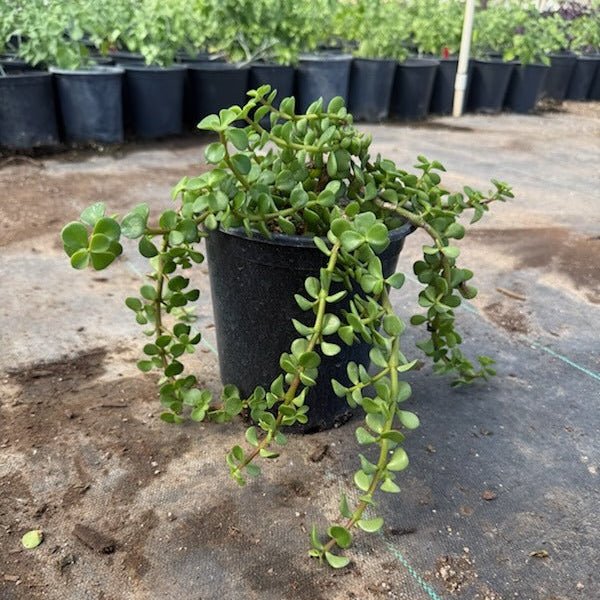
elephant pot plant Buy Elephant's Food Phoenix, AZ | Portulacaria afraThe Best Drought Tolerant Privacy Shrub for Phoenix & Scottsdale Elephant's Food (Portulacaria afra) is Phoenix's #1 choice for a fast growing, ultra low water privacy shrub that delivers lush, year round structure with virtually no maintenance. This South African native reaches 815 feet tall with dense, succulent foliage on eye catching reddish brown stems creating a thick, living wall that thrives in the most punishing Arizona heat. Whether you're
The Best Drought-Tolerant Privacy Shrub for Phoenix & Scottsdale
Elephant's Food (Portulacaria afra) is Phoenix's #1 choice for a fast-growing, ultra-low-water privacy shrub that delivers lush, year-round structure with virtually no maintenance. This South African native reaches 8–15 feet tall with dense, succulent foliage on eye-catching reddish-brown stems — creating a thick, living wall that thrives in the most punishing Arizona heat. Whether you're building a privacy screen in Scottsdale, a poolside backdrop in Chandler, or a sculptural accent in Mesa or Gilbert — Elephant's Food delivers outstanding results on minimal water and care.
Elephant's Food Plant Details
| Attribute | Detail |
|---|---|
| Scientific Name | Portulacaria afra |
| Common Names | Elephant's Food, Elephant Bush, Spekboom, Porkbush |
| Mature Height | 8–15 feet |
| Mature Width | 8–15 feet |
| Growth Rate | Fast — 1–2 feet per year in Phoenix conditions |
| Sun | Full sun to partial shade. Thrives with reflected heat from walls and hardscape. |
| Water | Very low once established. One of Arizona's most drought-tolerant shrubs. |
| USDA Zones | 9–11 (Phoenix is Zone 9b–10a) |
| Soil | Well-draining. Highly adaptable to Arizona caliche soils. |
| Foliage | Evergreen — small, round succulent leaves; reddish-brown stems year-round |
| Bloom Color | Pink (small star-shaped flowers in spring) |
| Native Region | South Africa (proven performer in desert climates worldwide) |
Elephant's Food Uses in Phoenix Landscapes
Privacy Hedge and Screening
Elephant's Food is one of the fastest ways to build a dense privacy screen in the Phoenix Valley. With its thick, succulent foliage and upright growth habit, it forms an impenetrable green wall that blocks sightlines from neighboring homes, streets, and pools. Plant 4–5 feet apart for a fast hedge, or 6–8 feet apart for a looser screen. Density guide: 20 ft fence — 5 plants / 40 ft fence — 10 plants. Pair with Texas Sage or Desert Spoon for a layered desert look that's both beautiful and functional.
Poolside Planting
Elephant's Food is one of the best plants for pool-adjacent landscaping in Scottsdale, Phoenix, and Tempe. Its succulent leaves don't drop in ways that clog filters, it handles reflected heat and water splashing without complaint, and its root system is non-invasive. The reddish stems and green foliage create a lush, tropical look that makes pool areas feel like resort-style retreats. It pairs beautifully with Ruellia or Bird of Paradise for a bold, colorful poolside planting.
Sculptural Accent and Modern Desert Design
Few plants offer the sculptural quality of a mature Elephant's Food. The twisted reddish branches and dense round leaves create striking architectural interest whether planted as a single specimen, used as a backdrop, or trained into a multi-trunk tree form. In modern desert landscapes across Chandler, Peoria, and Glendale, Elephant's Food is increasingly used as a high-impact focal point surrounded by decomposed granite or black gravel. For a bolder statement, pair it with a giant agave or sculptural cactus.
Wildlife-Friendly and Eco-Landscape
Elephant's Food is a proven wildlife magnet in Phoenix yards. Hummingbirds, native bees, and butterflies flock to the small pink spring flowers, and birds use the dense canopy for nesting and shelter. It's also one of the most carbon-sequestering plants on the planet — Spekboom forests in South Africa are celebrated for their ability to capture CO₂ at rates rivaling forests. If you're building a pollinator garden in Gilbert or Mesa, Elephant's Food belongs on your list.
Best Time to Plant Elephant's Food in Phoenix
Fall (October–November) is the ideal planting window. Warm soil temperatures encourage rapid root development, while cooler air temperatures reduce transplant stress. A fall-planted Elephant's Food gets 6–8 months of root establishment before its first Phoenix summer, setting it up to thrive for decades. Spring (February–April) is the second-best window. Avoid summer planting if possible — if you must plant in summer, provide afternoon shade for the first few weeks and water more frequently until the plant is established.
How to Plant Elephant's Food
- Dig wide, not deep — excavate a hole 2–3 times the width of the root ball and the same depth. Wide holes encourage lateral root spread.
- Check for caliche — break through any hardpan caliche layer to ensure water can drain freely. Poor drainage is the #1 killer of Elephant's Food in Arizona.
- Backfill with native soil — Portulacaria afra thrives in lean soil. A light 20% organic amendment is fine, but avoid heavy compost or peat.
- Spacing — 4–5 feet apart for a dense privacy hedge; 6–8 feet apart for a looser screen; 8–10 feet apart for individual specimens.
- Water basin — build a 3–4 inch raised ring of soil around the outer edge of the root zone to direct irrigation water to the roots during establishment.
- Mulch — apply 2–3 inches of bark mulch or gravel around the base to retain moisture, regulate soil temperature, and suppress weeds. Keep mulch 2–3 inches away from the trunk.
Watering Elephant's Food in Phoenix
First Year Watering Schedule
Consistent watering during the first year is critical to successful establishment, even for a drought-tolerant plant like Elephant's Food:
- Weeks 1–2: Water every 1–2 days, deep and slow (20–30 minutes per session)
- Month 1–2: Reduce to every 3–4 days as roots begin to spread
- Month 3–6: Every 7–10 days (increase to every 5–7 days during peak summer heat above 110°F)
- After Year 1: Every 10–14 days in summer; every 3–4 weeks in winter. Established plants handle long dry stretches with ease.
Drip Irrigation
Place drip emitters 18–24 inches from the trunk and use 1–2 GPH emitters per plant. Run for 30–45 minutes per session to ensure deep penetration. Once established, Elephant's Food requires very little supplemental irrigation in Phoenix and can often survive on rainfall alone in non-peak months — one of the most water-efficient large shrubs available in the Valley.
How fast does Elephant's Food grow in Phoenix?
In Phoenix's warm climate and full sun, Elephant's Food typically grows 1–2 feet per year. With regular water during the first two years, some plants can grow even faster, reaching 6–8 feet in just 3–4 years.
Is Elephant's Food truly drought tolerant once established?
Yes — once established (typically after 12–18 months), Portulacaria afra is one of the most drought-tolerant large shrubs available for Phoenix landscapes. Its succulent leaves store water, allowing it to withstand extended dry periods. It may drop some leaves during extreme drought but will rebound quickly once watered.
What's the difference between Elephant's Food and Elephant Bush?
They're the same plant. Portulacaria afra goes by many common names — Elephant's Food, Elephant Bush, Spekboom, and Porkbush are all the same species. At Three Timbers, we also carry a Variegated Elephant's Food with cream and green leaves, which is a slightly slower-growing variety with the same tough characteristics.
Can Elephant's Food handle Phoenix's reflected heat?
Absolutely. Portulacaria afra is native to the harsh, rocky hillsides of South Africa and was built for intense sun and radiant heat. It thrives planted against stucco walls, along south-facing fences, and in areas that would stress most other plants. It's one of the few large shrubs that can handle Phoenix's worst west-facing exposures.
Does Elephant's Food work near pools?
Yes — it's one of the best pool-adjacent plants in the Phoenix area. Its succulent leaves don't create significant litter, its roots are non-invasive, and it handles water splash and humidity without issues. It's a popular choice for creating resort-style poolscapes in Scottsdale and Paradise Valley.
You May Also Like
Variegated Elephant's Food — The same tough, water-wise species in a striking cream-and-green variegated form, perfect for a brighter, more decorative look.
Dwarf Elephant's Food — A compact, slower-growing variety that tops out around 4–5 feet, ideal for borders, containers, and smaller spaces.
Texas Sage — A native desert shrub with silvery foliage and purple blooms that pairs beautifully with Elephant's Food in privacy hedges and mixed borders.
Desert Spoon (Dasylirion) — A bold, architectural accent plant that complements the round, soft foliage of Elephant's Food with dramatic spiky structure.
Ruellia (Mexican Petunia) — A low-growing, prolific bloomer that pairs well at the feet of Elephant's Food hedges for a colorful, layered effect.
How Many Elephant's Food Do I Need?
For a fast privacy screen, space plants 4 to 5 feet on center. For a looser informal screen or where you want each plant to show its sculptural form, use 6 to 8 feet.
| Screen run length | Dense hedge (4 ft) | Loose screen (6 ft) |
|---|---|---|
| 20 ft | 5 plants | 4 plants |
| 40 ft | 10 plants | 7 plants |
| 60 ft | 15 plants | 10 plants |
As a single specimen or multi-trunk feature, give it 8 to 10 feet of clearance so the twisted reddish branches can spread.
Elephant's Food Season-by-Season in Phoenix
- Spring (Feb–Apr): Strong growth flush and small pink star flowers that draw bees and hummingbirds. Best second planting window after fall.
- Summer (May–Sep): Peak growth in extreme and reflected heat, even on west-facing walls. Very low water once established. Monsoon humidity poses no problem for these waxy succulent leaves.
- Fall (Oct–Nov): Prime planting season. Growth continues in the warm soil, giving roots months to establish before winter.
- Winter (Dec–Jan): Evergreen and steady, but frost-sensitive. Tips and leaves can burn below about 28 to 30°F. In low desert cold snaps, cover young plants or expect cosmetic tip damage that flushes out again in spring.
At a Glance
✔ Evergreen ✔ Drought-Tolerant ✔ Heat-Loving (Reflected-Heat Tolerant) ✔ Pool-Friendly (Low-Litter) ✔ Pollinator-Friendly ✔ Hummingbird-Friendly ✔ Low-Maintenance ✔ Edible
Plant It With
- Variegated Elephant's Food: the same tough species in cream and green for a brighter accent in the same bed.
- Dwarf Elephant's Food: a low, spreading form that layers neatly at the feet of the tall hedge.
- Texas Sage: silver foliage and purple blooms for color contrast along a privacy screen.
- Desert Spoon: spiky architectural form that plays off the soft round succulent leaves.
Is Elephant's Food Right for Your Yard?
It thrives in full sun and brutal reflected heat, drains-happy caliche, and needs almost no water once established, making it one of the best fast privacy shrubs in the low desert. The one caveat is frost: it is tender below about 28 to 30°F, so in cold pockets plan to cover young plants on hard frost nights or accept some tip burn that regrows in spring. Not the best fit for a spot that stays wet or poorly drained, since soggy roots will rot a succulent like this.
Shipping Notes
- Free Standard Shipping on $100+ Orders to the USA.
- Except Preorder products are shipped in 48 hours.
- Delivery to the USA:
- Standard Shipping : 3-10 business days
- If time is of the essence, please consider selecting expedited delivery for faster service.
Exchange/Return Notes
- We offer a 30-day return/exchange service after receiving.
- Final sale items are not eligible for returns or exchanges.
- To process your return/exchange, please contact us at [email protected]
- Please click here for more details>>> Return & Exchange Policy