SKU: 19647718520
philodendron moonshine care

philodendron moonshine care Shop 'Philodendron Moonlight Plant' Care & Growing Guide

Sale price$26.31 Regular price$29.23
Save 10%

Shipping Estimate
USA
  • USA
  • CAN

Ships within 48 hours · Estimated delivery Jul 14 - Jul 19

Promo Codes Available:

For Your Every Summer RSVP, with Code: SUMMER15

Description

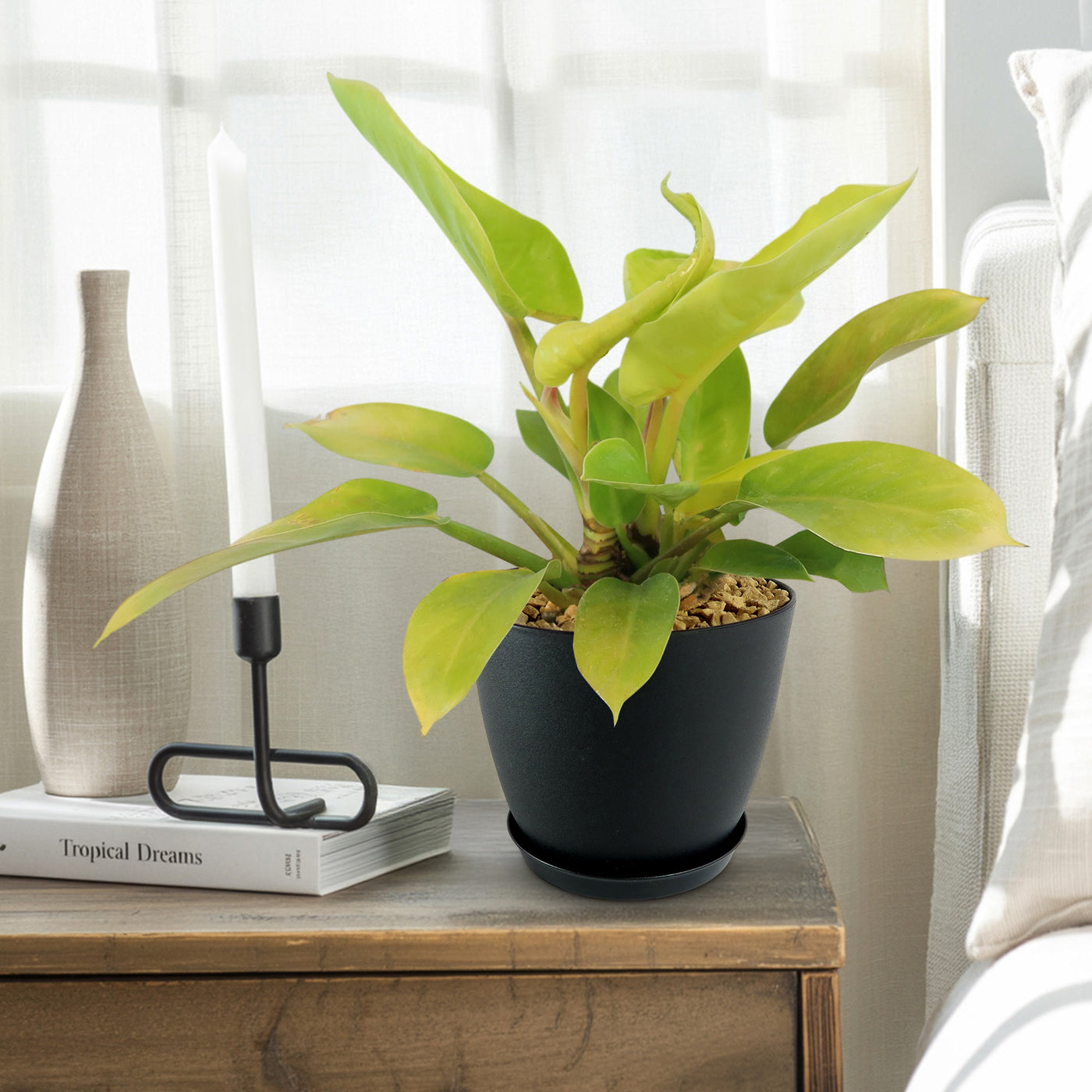
philodendron moonshine care Shop 'Philodendron Moonlight Plant' Care & Growing GuideThe Moonlight Philodendron is a beautiful and popular houseplant that has fluorescent yellow leaves that add a pop of color to your home. It is a tropical hybrid characterized by glossy, color changing leaves that change from bright neon yellow to a brilliant green color. Native to South America, the name Moonlight was inspired by the plants stunning chartreuse to lime colored leaves, which reflect and catch light in a way that appears to glow, much

The Moonlight Philodendron is a beautiful and popular houseplant that has fluorescent yellow leaves that add a pop of color to your home. It is a tropical hybrid characterized by glossy, color-changing leaves that change from bright neon yellow to a brilliant green color. 

Native to South America, the name “Moonlight” was inspired by the plant’s stunning chartreuse-to-lime-colored leaves, which reflect and catch light in a way that appears to glow, much like moonlight itself.

This plant is sometimes simply referred to as the “Moonlight Philodendron” or “Lemon Philodendron” due to its lemony hue.

The Philodendron Moonlight is a clump-forming, self-heading plant, meaning it doesn’t climb but rather grows in a bushy form.

This unique growth pattern makes it compact and well-suited for indoor settings. It typically reaches a mature size of about 4 feet tall and wide, though in optimal outdoor conditions, it can grow larger. 

The leaves are broad, egg-shaped, and leathery in texture, giving the plant a lush and full look. New leaves emerge in bright yellow or lime green and gradually deepen to a medium green as they mature, providing a striking contrast on the plant itself. 

While the flowers of Philodendron Moonlight rarely bloom indoors, mature plants may develop white or light green spathes, which resemble the blooms of peace lilies. These flowers are subtle compared to the plant’s foliage, but they add a unique touch to the plant when they do appear. To encourage flowering, the plant must have ample warmth, humidity, and light.

One of the most notable benefits of the Philodendron Moonlight is its air-purifying qualities. It helps to remove common indoor air pollutants, including formaldehyde and benzene, by absorbing these toxins and converting them into oxygen. Having this plant indoors can improve air quality, contributing to a healthier living environment. Its low-maintenance care requirements and compact size also make it a practical choice for offices, bedrooms, and small apartments.

It’s often used as an accent plant in homes and offices, bringing a pop of color to minimalist decor or complementing other green foliage in plant arrangements. Whether as a standalone statement or as part of a collection, this philodendron makes a striking addition that suits various aesthetic styles.

When and How to Water Your Moonlight Philodendron 

The drought-tolerant Philodendron moonlight plant doesn't need a lot of water to thrive. This means you can let the soil dry out somewhat between waterings to prevent overwatering, which can lead to root rot. When watering your Philodendron Moonlight, make sure to water it thoroughly but allow the top inch or so of the soil to dry out before watering again.

In the spring and summer, during the growing season, your Philodendron moonlight may appreciate a bit more hydration typically every 1-2 weeks. You can increase the frequency of watering slightly during this period to support its growth. Water the plant when the top inch of soil feels dry to the touch, ensuring that excess water can drain out of the pot to prevent waterlogged soil.

During the fall and winter months when the plant is dormant, modify your watering schedule to correspond with its slower growth rate. During these cooler months, the Philodendron Moonlight will require less water typically once a month, so you can space out your watering sessions. Allow the soil to dry out a bit more between waterings, but still ensure the plant receives adequate hydration to maintain its health during the dormant period. By adjusting your watering routine based on the plant's growth stages, you can help your Philodendron Moonlight thrive throughout the year. 

Light Requirements – Where to Place Your Philodendron moonlight 

When grown indoors, the Philodendron moonlight plant enjoys bright, indirect light for at least 4-6 hours a day. It thrives in spaces with ample natural light but without direct sunlight, which can scorch its leaves. You can place your Philodendron Moonlight near a window where it can receive filtered sunlight or use sheer curtains to diffuse the light.

If your indoor space lacks natural light, you can supplement with artificial grow lights to meet the plant's light needs.

For outdoor cultivation, ensure it is in a location that offers bright, indirect light. Avoid exposing the plant to direct sunlight, especially during the intense midday sun, as this can cause sunburn on the leaves.

Providing a shaded spot with filtered sunlight or dappled shade can create an ideal outdoor environment for your Philodendron Moonlight to thrive.

Remember to monitor the plant's response to its new outdoor setting and adjust its placement if needed to optimize its light exposure.

Optimal Soil & Fertilizer Needs 

The Moonlight Philodendron prefers well-drained soil to avoid root rot. A good mix for this plant is a well-aerated, peat-based potting mix that retains some moisture but allows excess water to drain away. Make sure the pot has drainage holes to let excess water escape. Instead, make or buy a well-draining potting mix, or ideally use our specialized potting mix, opens in a new tab that contains 5 natural substrates and mycorrhizae to promote the development of a strong root system that helps your plant to thrive.

In terms of fertilizing your moonlight plant, during the growing season in spring, you can feed it with a balanced NPK fertilizer once a year. This will provide the plant with essential nutrients to support its growth and keep its foliage vibrant. However, during the fall and winter months when the plant is in its dormant phase, you can reduce or stop fertilizing altogether since the plant's growth slows down during this time. 

Remember not to over-fertilize your plant, as this can lead to mineral buildup in the soil, causing harm to the plant. Always follow the instructions on the fertilizer packaging and adjust the feeding schedule based on the plant's growth and the time of year.

Hardiness Zones & More 

When growing indoors, this Philodendron plant thrives in typical indoor temperatures ranging from 65°F to 80°F. It's essential to avoid exposing the plant to sudden temperature fluctuations, drafts, or cold air, as this can stress the plant and affect its growth. Keeping the indoor humidity levels around 40% to 60% can create an ideal environment for your Philodendron Moonlight, preventing issues like dry leaf tips or yellowing. 

For outdoor cultivation, it typically thrives in bright, indirect light in USDA zones 10 to 11, where temperatures are consistently warm. These zones generally experience mild winters and warm to hot summers, providing ideal conditions for tropical plants to flourish.

If you live in a region outside these zones but still want to grow this plant outdoors, consider using containers that can be moved indoors during colder months to protect the plant from frost or freezing temperatures. 

Wildlife Moonlight Plants Attracts the Following Friendly Pollinators

The Philodendron Moonlight plant can attract pollinators like bees, hummingbirds, butterflies, and insects with its beautiful foliage and sometimes flowers. These pollinators play a crucial role in the plant's reproduction process by transferring pollen from one flower to another, aiding in the production of seeds and fruits.  

Butterflies
Bees
Hummingbirds
Lady Bugs
Multi Pollinators
Other Birds

According to the ASPCA, the Moonlight Philodendron plant is considered mildly toxic to humans, cats, and dogs if ingested in large amounts. While touching the Moonlight Philodendron is safe, ingesting even a small bite can cause symptoms such as oral irritation, drooling, and mild discomfort. Eating larger amounts may lead to more severe symptoms, including vomiting and difficulty swallowing. Always wash your hands after handling the plant and keep it out of reach of pets and children. 

How to Propagate Your Philodendron Moonlight

To propagate your Philodendron moonlight plant, you can use stem cuttings. Select a healthy stem with a few leaves and make a clean cut just below a node. Remove the lower leaves to expose the node. Place the cutting in water or a well-draining soil mix, ensuring the node is submerged or covered. Keep the cutting in a warm, humid environment with indirect light. Roots should start to develop in a few weeks. Once the roots are established, you can transplant the cutting into a pot with a potting mix suitable for Philodendrons. Regularly water the new plant and provide it with indirect light to help it thrive and grow into a mature Moonlight Philodendron. 

Key Takeaways 

  1. Philodendron Moonlight is celebrated for its vibrant, neon green to yellow leaves that appear to glow, especially under bright, indirect light. This unique color has earned it the name “Moonlight,” as its leaves resemble a soft, illuminated effect.
  2. Unlike many philodendrons, which are known for climbing or trailing, Moonlight is a self-heading variety. This means it grows in a compact, bushy shape rather than vining, making it ideal for indoor spaces where vertical space is limited.
  3. It has air-purifying properties, helping to remove toxins like formaldehyde from indoor environments. This can improve air quality, making it a practical choice for homes and offices.
  4. It is relatively drought-tolerant once established, able to go without water for short periods. While it prefers consistently moist soil, it can handle occasional dry spells, making it a resilient choice for plant owners who may occasionally forget a watering.

The Bottom Line 

Overall, the Philodendron Moonlight is a visually striking and easy-care plant, perfect for adding vibrant color and life to any indoor space. With its glowing lime-green foliage and compact, self-heading growth habit, this philodendron is ideal for those looking to make a statement without needing extensive care. As a resilient, drought-tolerant plant, it thrives in bright, indirect light but can adapt to lower light conditions, making it suitable for various home or office settings. To keep it happy, provide well-draining soil and water when the top inch of soil feels dry, allowing it to dry out slightly between waterings. Additionally, its natural air-purifying abilities and relatively low maintenance needs make it an excellent choice for both new and experienced plant enthusiasts. With the Philodendron Moonlight, buyers can enjoy an attractive, low-maintenance plant that not only enhances their space but also contributes to a healthier indoor environment. 

Shipping Notes
  • Free Standard Shipping on $100+ Orders to the USA.
  • Except Preorder products are shipped in 48 hours.
  • Delivery to the USA:
  1. Standard Shipping : 3-10 business days
  • If time is of the essence, please consider selecting expedited delivery for faster service.
Exchange/Return Notes
  • We offer a 30-day return/exchange service after receiving.
  • Final sale items are not eligible for returns or exchanges.
  • To process your return/exchange, please contact us at [email protected]
  • Please click here for more details>>> Return & Exchange Policy
SKU: 19647718520

Discover Niche Categories That Outsell philodendron moonshine care

Top-Converting Item to Boost Your Average Order

4.7 ★★★★★
Based on 416 reviews
Sort
Highest Rating
Newest First
Oldest First
Product Reviews
P
Verified Purchase
PK1950
Omaha, US
★★★★★ 5
The book's title says it all - Highly recommended
Format: Hardcover
A very interesting read of a scientist (a neuroscientist) who began as a nonbeliever in anything outside of empirical, mainstream science. Her encounters with patients near death experiences (NDEs) during surgery slowly convinced her otherwise. She also had read Ian Stevenson's seminal work on reincarnation (published in the 1960s), and Raymond Moody's book (Published in the 1970s) on NDEs. She also came to believe that reincarnation and the spiritual realm are real, not fiction. Our earthly science is very far from understanding these aspects of reality. Scientists can't even explain consciousness An excellent read. highly recommended..
WAS THIS REVIEW HELPFUL?YesReportShare
Reviewed in the United States on June 1, 2016
L
Verified Purchase
Lorraine Haataia, PhD
Natrona Heights, US
★★★★★ 5
A guidebook for escaping the rat race
Format: Kindle
This book provides a completely new way of looking at your job and potential residual income. It's a guide to help you shift your focus to your residual income which can set you free. Our school system teaches kids that, until they're in their late teens or early 20s, they're going to spend their days in school and college. These habits of showing up and punching the clock (via attendance) are so ingrained by this point in life that few question whether there's another realistic option. And adults go into jobs that perpetuate this cycle of clocking in early in the morning and checking out late in the evening. Timothy Ferris shows that it is indeed possible to escape this rat race. He shows a clear step-by-step plan to do so. And it's there for the taking if you're bold enough to grab the steering wheel of your life. This is quite a comprehensive book discussing everything from your job transition to your travel, and how to set up your company and manage it without taking too much financial risk. He talks about guarding your time, which I believe is one of the most valuable points in the book. He mentions throughout the book strategies to reduce getting caught up in time-wasting activities such as meetings, spending too much time on email at the wrong times, or wasting time on phone calls. He details out his techniques to keep distracting people on the sidelines while he's living his life and doing the things that his heart desires. This book is an instruction manual for escaping the rat race. It's somewhat of a memoir, and a work in progress, of how he's doing it. He has examples throughout the book of how different people have applied his principles and changed their lives. He included a few people who had kids, which is great because a lot of people will use that excuse as a reason to not be able to do what he's doing. He's so open in the book revealing how he takes care of many personal matters in his life, even down to giving his travel checklist and his preferred brand of underwear, relevant for people who want to travel light. He's probably one of the world's most eligible bachelors. That is, if he's willing to let someone get any time on his calendar? I like him. I'd love to run into him in a coffee shop in a foreign country and have some time to just chat with him. He warns that some people really don't know what to do if they aren't working. This is a vital component of the book. He's going full-force at experiencing life in different cultures and getting involved in many different activities that give him new life experiences and perpetuate more new ways of thinking. It's important to know what to do when you are free. Otherwise you just have a vacuum of time which can feel like a boring retirement, where you're available, but all your friends and family are at work. I'm a writer, so I wasn't interested in setting up another company, but he also addresses intellectual property and its intrinsic value. Despite the fact that I don't want to set up a product-based business, many of his strategies are completely applicable and I've begun to apply the techniques right away. Yesterday, I choose to schedule a quick phone call instead of an in-person meeting when the in-person meeting would have been much more time-consuming, for example. He reminded me that I really need to guard my writing time. I certainly can't spin out books on 4 hours a week, but I could if I were willing to farm out the writing activity. He gave me a whole new appreciation for time and what I do each day of my life. If you're not satisfied with your work, or if you're searching for more ways to expand your income and free up your time, this book will be well worth your time. It's urgent for parents to put their kids in a different situation if they don't want them to get caught up in the same rat race that hasn't been fulfilling for them. If they change their own happiness level, it will certainly inspire their family and everyone they know as well. I love the title--The 4-Hour Workweek. At first it seems so absurd, like how could anyone do that? Yet after I read the book, I have tremendous respect this man who is the architect of his own freedom. And he shares his path for others who want to follow.
WAS THIS REVIEW HELPFUL?YesReportShare
Reviewed in the United States on February 2, 2016
S
Verified Purchase
Sweetpea Waterlilly
Los Angeles, US
★★★★★ 5
Learn to live life now
I am a first time reviewer. I don't know Tim. I only know his book. That there are so many first time reviewers speaks volumes about the book. That said, here is my review: It took a kid to get the grown-ups to acknowledge what everyone knew to be true: the emperor was naked. Tim Ferriss is a kid relative to most other "self-help" authors but, like the young boy in the fable, his simple, uncluttered collection of "information we already know" more explicitly and successfully states the truth: our idea of achievement that requires a slavish obsession with working ourselves into the ground is a naked religion. Success is joy. Few books have the potential to inspire passion and fuel personal revolutions. The 4-Hour Workweek is one of them. This book speaks the common yearning to be liberated from the punishing work habits that our society has convinced us are compulsory for success. In simple, often humorous, terms, Tim Ferriss tells us how most of us lie to ourselves about why and how we work and shows us how we can become free. The modern age promised to bring freedom to humanity. Automation would liberate us from the drudgery of many common tasks, allowing us to complete our work with lightening speed, reserving the rest of our time for leisure. Like millionaires who can afford servants to do the drudgery, the common person would be able to forget the mundane and engage in the profound, to travel, to explore, and most importantly, to be free of worry. Unfortunately, we humans forgot about freedom and became slaves to our machines. Machines increased productivity and the availability of things. We reacted by convincing ourselves that we had to have them all to be satisfied and so became slaves to the jobs we believed necessary to obtain those things. More recently, email and cell phones, which were intended to increase productivity and communication, did so by making us instantly accessible and required us to be instantly responsive at any time of the day or night. Cable television and the Internet also increased communications and the flow of information, but also resulted in an information bombardment that left us catatonic, unable to disengage, yet unable to absorb it all. The result? At the end of our working lives - many times not by our own choice but because of downsizing and outsourcing -- exhausted and demoralized, we cannot enjoy the delayed gratification that has been our beacon of light, our holy grail, for so many years. Tim Ferris has the audacity to set the whole paradigm on fire in order to illuminate its true nature. Tim questions our assumptions about what progress is and what progress has done for us by highlighting the terrific costs we have imposed on ourselves. With gleeful delight Tim opens our eyes to the fact that we have become the cyborgs, less human rather than more. In a clear, step-by-step fashion, he presents elegant concepts and applies them to life in practical ways that have profound results. He reminds us that "the opposite of happiness is not sadness but boredom" and employs Pareto's 80/20 principle to demonstrate how we can identify those aspects of our lives that hold us back from being happy. He urges us to understand that life is not about the acquisition of things for later enjoyment, life is about happiness, fulfillment in the present, rather than in some un-promised future. Unfettered by useless jargon and overly academic presentation, Tim demonstrates how we can return to sanity and achieve happiness by finally becoming masters over the technology that was supposed to free us. He challenges us to give ourselves permission to quit the rat race and rejoin the human race. These ideas are not entirely new, but Tim's particular expression of them is like sparkling water to the parched souls of millions who now labor incessantly to achieve success yet yearn to quench their thirst for freedom. You don't have to be a millionaire to live a millionaire lifestyle, Tim says. Do you have a dream? Live it now.
WAS THIS REVIEW HELPFUL?YesReportShare
Reviewed in the United States on June 17, 2007
M
Verified Purchase
Michael D. Cole
Charlottesville, US
★★★★★ 4
Amazing book, unnecessary expansion
Format: Hardcover
If you haven't read the original version - the 4-hour Workweek books is for many one of the most important books they've ever read, including me. For those who have read the original - the revised version is an improvement on the original, but not a big enough one to justify a second purchase if you've already read the book before. I've read this book and taken action on just a few of the principles and it has greatly improved my life, and you can easily do the same with the content from this book. Why? First, almost of the content in the book includes not only the general idea of doing something (like liberating yourself from an oppressive workplace), but also practical tips on how to actually do it. Even if only one section really relates to you that alone is enormously valuable and justifies the entire price. Second, the book espouses a 'lifestyle' philosophy which had many points that I had not really considered before reading the original edition. No, it isn't the idea of a 4 hour workweek. Tim Ferriss in makes it extremely clear that a 4 hour work week without anything to replace that fre time leaves you feeling empty inside. The point is to change your life or build systems that let you minimize the stuff you hate doing to only 4 hours a week. To free up your time up from doing things you hate he provides practical tips on: optimizing your work, setting up remote work agreements, automating it through designing systems, or outsourcing it to a Virtual Assistant. After that, he provides ideas of what to do once you've generated so much free time; because, most of us think we know what to do if we didn't work but it's only on an abstract level not a practical plan. Examples of replacement activities: traveling the world, creating 'charities' or other things that give back to the community, or simply setting up companies that earn money promoting the things you love. From a basic glance all of these ideas might sound trite or obvious, but the difference with the book is that he gives practical advice on how to actually make them all happen. I don't think I have yet read a better single book for changing your life into a fulfilling entrepreneurial lifestyle. If you were interested enough to even look at the reviews for the book just go buy the book already - at least something in the book will resonate enough to justify the purchase. As a side note: I notice a lot of recent reviews complaining about the author's writing style. Honestly, the book is easy to read and the content is amazing. Even if you completely hated the author's style (I think their complaints are hugely exaggerated) you can still learn plenty of things to adapt to your life. As for the honesty of his stories just check out his blog which has plenty of transparency and video proof of many of the things claimed.
WAS THIS REVIEW HELPFUL?YesReportShare
Reviewed in the United States on January 4, 2010
S
Verified Purchase
Seth
Charlottesville, US
★★★★★ 5
Plus the title made it sound like it belonged on an infomercial and not in my ...
Format: Hardcover
I had seen the uber-orange cover of The 4 Hour Workweek by Tim Ferriss all over: Bookstores (duh!), backseats of cars, airplane terminals, frat houses and more. Yet despite its proliferation into the hands (and Kindles) of millions of people all over the world, and its catchy headline, I had yet to read it. In fact, I had no inclination to read it whatsoever. Quite frankly, I had no idea what it was about. Plus the title made it sound like it belonged on an infomercial and not in my book collection. Things changed when I started listening to the Tim Ferriss Show podcast just a few weeks ago. The podcast is fantastic and I haven’t been able to stop listening to it; I highly recommend it. From what I’ve noticed, if I enjoy reading someone’s articles or website, I generally enjoy their podcasts (the same holds true vice-versa). So when I saw that it was available for only $1.99 on Kindle I didn’t hesitate one bit. Can I really only work 4 hours? That’s what everyone wants to know. For the most part, no it is not feasible for most. In fact, Tim repeats in his podcasts and presumably other mediums that The 4 Hour Workweek is not to be taken literally. Rather, it drives the point home of what the book is really about: Optimizing your time, eliminating distractions, and finding passive streams of income to allow you to do minimal work while having maximum freedom. It’s a solid concept. In fact, there really is little basis for the traditional 9-5 schedule: How is it possible that all the people in the world need exactly 8 hours to accomplish their work? It isn’t. 9– 5 is arbitrary.” The idea behind this book is to essentially turn the idea of working hard on its head: Being busy is a form of laziness— lazy thinking and indiscriminate action. Being overwhelmed is often as unproductive as doing nothing, and is far more unpleasant. Being selective— doing less— is the path of the productive. Focus on the important few and ignore the rest.” Many books of this nature are simply filled with fluff, woo-woo, and other law of attraction platitudes, but The 4 Hour Workweek is absolutely filled to the brim with productivity tips. This makes the book worth the price of admission alone (that goes for the full price hardcover too!) There are a few concepts that he really stresses throughout the book and that will allow you to eliminate and optimize. The first of which is the 80/20 principle, also known as the Pareto Principle. This principle states that 80% of results (profit, happiness etc.) comes from 20% of output. Once Tim discovered this principle, he applied it to his nutritional supplement company so that he could focus on the select few clients that brought him the bulk of his income, and to eliminate the pesky customers who were nothing but trouble. Sure, it cost him some income, but it allowed him to reduce his stress exponentially and freed up a plethora of time. A second major principle is Parkinson’s law, which states: … that a task will swell in (perceived) importance and complexity in relation to the time allotted for its completion. It is the magic of the imminent deadline. If I give you 24 hours to complete a project, the time pressure forces you to focus on execution, and you have no choice but to do only the bare essentials. If I give you a week to complete the same task, it’s six days of making a mountain out of a molehill.” The best approach to Parkinson’s Law is to 1. Limit tasks to the important to shorten work time (80/ 20). 2. Shorten work time to limit tasks to the important (Parkinson’s Law). The best solution is to use both together: Identify the few critical tasks that contribute most to income and schedule them with very short and clear deadlines.” There are a plethora of other tidbits of wisdom throughout, such as: Check e-mail twice per day, once at 12: 00 noon or just prior to lunch, and again at 4: 00 P.M. At least three times per day at scheduled times [ask] the following question: Am I being productive or just active? More is not better, and stopping something is often 10 times better than finishing it. Getting Your Own Personal Assistant One of the most engaging and laughable topics in the book was the chapter on virtual assistants (VA). I say laughable because it’s actually incredibly feasible to have a 3rd world virtual assistant, and I couldn’t help myself from laughing at the idea of having a team of Indians heeding my every beck and call. Consider this: If you spend your time, worth $ 20-25 per hour, doing something that someone else will do for $ 10 per hour…” Makes sense. Plus there are other good reasons to consider getting a VA: Getting a remote personal assistant is a huge departure point and marks the moment that you learn how to give orders and be commander instead of the commanded. It is small-scale training wheels for the most critical of NR skills: remote management and communication.” The Original Internet Entrepeneur When I began to read Meditations by Marcus Aurelius, I noticed something: I had read this before. But it wasn’t because Aurelius was plagiarizing content 2000 years in the future, rather it was the inverse. I’ve noticed this phenomena with The 4 Hour Workweek in that much of the content seemed all too familiar with the Digital Nomad and lifestyle design communities and advice of today. But seeing as it was written originally in 2007, one could say it was the first of its kind. In fact, the proliferation of internet entrepreneurs are likely a result of this book. On that note, look where Tim Ferris is today. He’s not lounging on a beach in Guatemala making money off his supplements. Rather, he’s busting his ass in Silicon Valley helping startups turn into massive success stories. This is no fault of his; I just think many readers of this book and these internet entrepreneurs lose sight of this. They get caught in finding ‘passive income’ and settling for 1-3K a month; just enough to make do in a foreign country of their choice. This is what I wanted for so long, but now this doesn’t seem like enough. I’d much rather be doing what Tim is doing now as opposed to what he recommend in his book. Don’t Follow This Book Like the Gospel Again, the 4 Hour Workweek isn’t designed to be taken literally. This is a pattern throughout the book. In fact, much of the information regarding internet marketing and asking a boss for a remote work agreement is completely useless for me and may be for you. Yet, overall I was really impressed with the book. There was plenty of solid, actionable advice throughout. In fact, I’ve already marked this book down as one I will have to read again to internalize the concepts that stood out to me. http://masculinebooks.com/2015/05/26/the-4-hour-workweek-by-tim-ferriss/
WAS THIS REVIEW HELPFUL?YesReportShare
Reviewed in the United States on May 31, 2015

recommand products