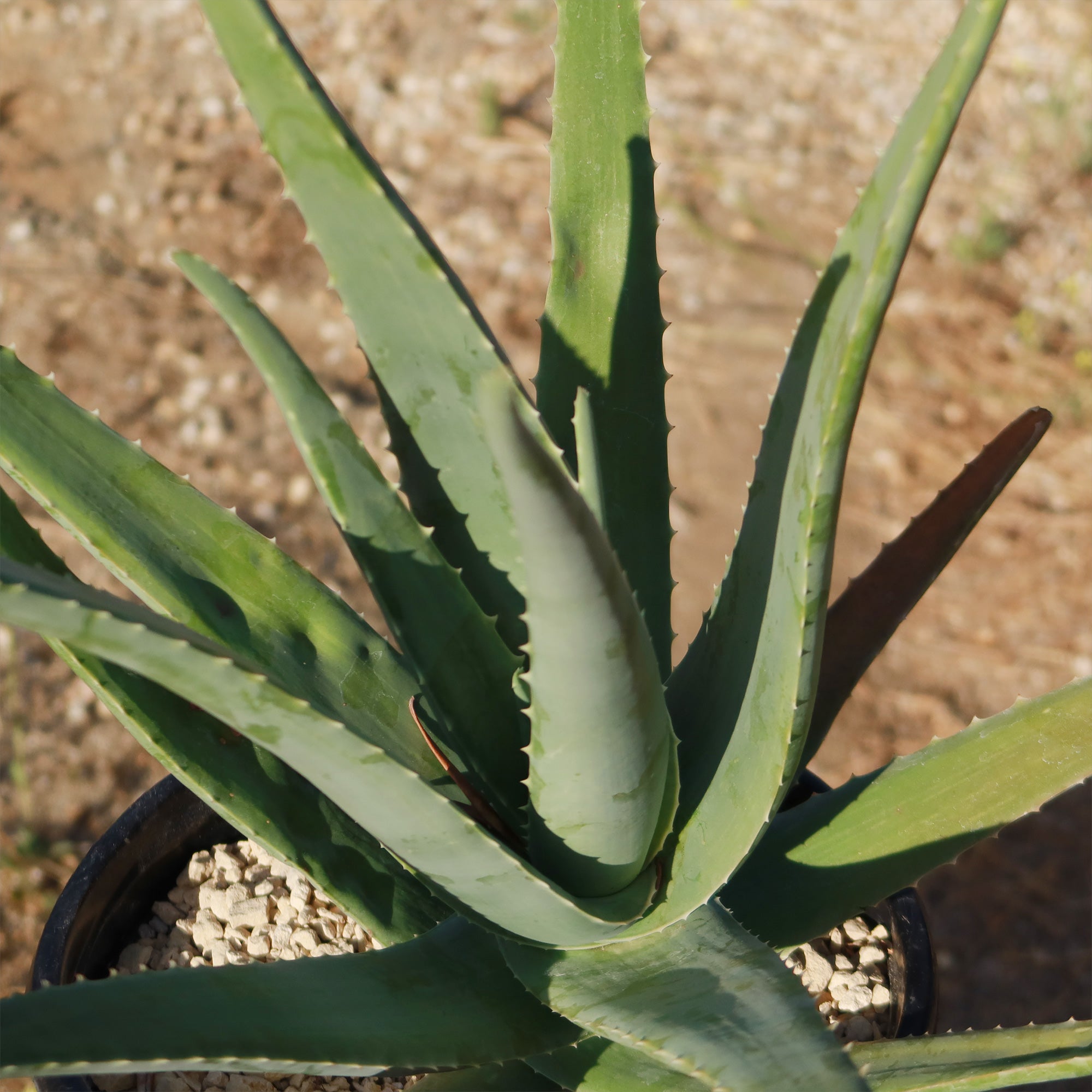
SKU: 1836765943
where buy aloe vera plant

where buy aloe vera plant Aloe Vera

Sale price$26.84 Regular price$29.82
Save 10%

Pay in installments of $7.46 with ShopPay, AfterPay and Klarna

Shipping Estimate
USA
  • USA
  • CAN

Ships within 48 hours · Estimated delivery Jul 16 - Jul 21

Promo Codes Available:

For Your Every Summer RSVP, with Code: SUMMER15

Description

where buy aloe vera plant Aloe VeraIntroducing the fabulous Aloe Vera plant also known as Aloe barbadensis 'miller,' it is also known as a medicinal aloe and burn plant. The Aloe vera plant is by far the most popular out of over 400 varieties of the Aloe genus. This incredible tropical succulent is not your average houseplant. It's a superstar known for its leaves, which hold a magical aloe vera gel for soothing sunburn and as a popular drink to help your stomach. This large Aloe vera

Introducing the fabulous Aloe Vera plant- also known as Aloe barbadensis 'miller,' it is also known as a medicinal aloe and burn plant. The Aloe vera plant is by far the most popular out of over 400 varieties of the Aloe genus.

This incredible tropical succulent is not your average houseplant. It's a superstar known for its leaves, which hold a magical aloe vera gel for soothing sunburn and as a popular drink to help your stomach.

This large Aloe vera plant boasts fleshy lance-shaped grey-green leaves with small white teeth along the edges growing out from a starfish-like basal rosette. 

The edible aloe vera flowers burst into bloom in vibrant shades of yellow at the tips of their stalks when given favorable conditions. Only mature plants will yield flowers, so you'll have to wait at least four years to see an aloe vera bloom. However, in some growing conditions (especially hybrid plants), the flowers can sometimes appear with orange or reddish hues. 

This fast-growing succulent can grow into a large aloe vera plant up to 3 feet tall and 2 feet wide and even produce adorable pups that you can repot or share as delightful gifts with fellow plant enthusiasts.

How to Get Aloe Vera Gel from the plant to use on your skin

  1. Choose and Cut a Leaf: Select a large, healthy leaf from the bottom of the plant. Use a sharp knife to cut the entire leaf off at the base.
  2. Prepare the Leaf: Let the leaf sit upright in a container for 10–15 minutes to allow the yellow sap (aloin) to drain out. This sap can be irritating to the skin.
  3. Slice and Extract the Gel: For a small amount of gel, cut a section from the leaf rather than using the whole thing. Slice the leaf lengthwise to expose the gel. Use a spoon or knife to scoop out the clear gel.
  4. Apply or Store: Apply directly to your skin for soothing relief. Store extra gel in an airtight container in the fridge for a few days.

Aloe vera juice has many benefits for humans, this succulent rich in antibacterial, antioxidant, and anti-inflammatory properties, may enhance digestion, blood sugar levels, and oral health, although certain compounds, particularly aloin, may cause digestive discomfort and other side effects.

An aloe vera indoor plant is a great addition to any home, as it is easy to aloe vera care for and provides a variety of aloe vera benefits. 

According to the American Academy of Dermatology, Aloe vera has anti-inflammatory properties that can help in wound healing. It can also help to moisturize the skin and prevent peeling.

When and How to Water Your Aloe Vera 

As a desert dweller, watering the aloe vera succulent may be tricky, it may shrivel and die if given too little water, but it may also easily rot when given excessive water. So be careful not to overwater your aloe plantyou only want to give it enough to keep it from drying out completely, not drown it! 

A good rule of thumb is to water the Aloe plants deeply and then allow the soil to dry out completely before watering again. In the spring and summer, during the growing season, watering can be done once every 2-3 weeks.

During the winter months, when aloe vera is in a dormant period, it can be watered even less frequently. If you live in a rainy climate, consider planting aloe in gravel or stones. 

It is also important to note that aloe vera plants are sensitive to water quality. They prefer water that is low in minerals and salts, so it is best to use distilled or filtered water. Tap water can be used, but it should be left out for 24 hours before watering the plant to allow the chlorine to evaporate.

Light Requirements - Where to Place Your Aloe Vera Plant 

When growing indoors as a houseplant, place the aloe vera a few feet away from the south-facing window that receives plenty of sunlight, but it is important to avoid direct sunlight, as this can cause the leaves to burn. If the aloe plant is not receiving enough light, the leaves will start to droop and turn brown. In this case, it may be necessary to move the aloe vera plant to a brighter location. 

When planted outdoors, your Aloe plants need their daily dose of sunshine like a beach-loving teenager needs their favorite tunes!

They thrive on at least 6 to 8 hours of direct sunlight, soaking up those glorious rays with joy.

But wait, before you go dragging your aloe plant from its cozy shady spot into the blazing sun, be cautious. That sudden move can dry out your leafy buddy and leave it looking as yellow as a lemon.  

Now imagine you live in one of those cooler climates where clouds have permanent residency or if your home lacks these sunny windows altogether.

Fear not; you can use artificial lights – they're like little suns in bulb form! Hang them about one to two feet above your precious plant during daylight hours (that's roughly 16 hours per day) and watch it flourish happily amidst dim interiors.

Optimal Soil & Fertilizer Needs 

Aloe vera plants prefer well-draining soil that is a mixture of sand, perlite, and peat moss. It is critical to avoid soil that retains excessive moisture, as this can cause root rot. Instead, make or buy a well-draining potting mix, or ideally use our specialized succulent potting mix soil for aloe vera that contains 5 natural substrates and mycorrhizae to promote the development of a strong root system that helps your succulent to thrive.  

In terms of fertilizer, aloe succulents do not require a lot of nutrients. They can be fertilized once a year in the spring with a balanced fertilizer (NPK) of 5-10-5 in ratio. It is important not to over-fertilize the aloe plant, as this can lead to root burn. 

Hardiness Zones & More 

When grown indoors as a houseplant, aloe vera plants prefer a warm and dry environment. They thrive in temperatures between 60°F and 80°F. Aloe vera is a succulent, so it's adapted to arid conditions and doesn't do well in overly humid environments. Aim for a humidity level of around 30% to 40% for your indoor aloe vera plant.

In the United States, this is mostly an indoor plant, but if you live in southern Florida or Hawaii then you can cultivate it outdoors in USDA zones 9-11

Aloe vera can tolerate temperatures as low as 40°F for short periods, but prolonged exposure to freezing temperatures can damage or kill the plant. If you live in a colder climate, it's best to keep your aloe vera indoors or provide protection during winter months.

Aloe vera plants prefer dry air and do not require high levels of humidity. They can tolerate low humidity levels and do not need to be misted or placed in a humid environment. 

Wildlife - Aloe Vera Attracts the Following Friendly Pollinators

Aloe vera plants attract a variety of friendly pollinators, including bees, butterflies, and hummingbirds. These pollinators are essential for the reproduction of aloe vera plants, as they help transfer pollen between flowers, ultimately leading to the production of seeds. Additionally, these pollinators play a crucial role in maintaining biodiversity and ecosystem health.

Butterflies
Bees
Hummingbirds
Lady Bugs
Multi Pollinators
Other Birds

According to the ASPCA, the Aloe vera can be mildly toxic to pets and humans. It is rare but can occur if consumed in large quantities and can cause abdominal cramps, diarrhea, and electrolyte imbalances. It is important to consult a healthcare professional if you experience any adverse effects from consuming aloe vera.

How to Propagate Your Aloe Vera Plant

To propagate your aloe vera plant, you can separate the offsets or "pups" that grow at the base of the main plant. Gently remove these pups and plant them in their own pots with well-draining soil to encourage root growth. Water sparingly until they establish themselves, and place them in a sunny spot to promote healthy growth.

Aloe Vera: The Natural Sunburn Remedy


Aloe vera gel is known for its ability to moisturize the skin, it helps soothe burns and sunburns, as well as being known for its anti-inflammatory and antibacterial properties.

Aloe Vera is also rich in vitamins and minerals that are essential for healthy skin. It is best to use pure aloe gel extracted directly from an aloe vera plant.

To use aloe vera gel to soothe sunburns, cut off a piece of the large aloe vera leaf and open it to reveal the gel.

To maintain the aesthetic appeal of your aloe plant, it is advisable to cut off the entire leaf of the large aloe vera plant when cutting one. Just chop the leaf off as close to the main stem as you can. Cutting leaves from the base of the plant is always preferable. These leaves will be thicker since they are older. If you cut off the tip of a leaf, it will eventually turn brown at the tip because cut leaves keep their scars.

Key Takeaways

  1. Aloe vera is renowned for its medicinal properties, particularly its soothing gel, which is widely used for treating burns, wounds, and skin irritations. Its natural compounds, like aloin and acemannan, have anti-inflammatory and healing properties.
  2. When cut, aloe vera can seal its own wounds by producing protective latex, showcasing its remarkable survival mechanism in harsh environments.
  3. Aloe vera is not just a skincare savior; it also purifies indoor air by removing harmful pollutants like formaldehyde and benzene, making it a great addition to homes and offices.
  4. Native to arid regions, aloe vera thrives in minimal water conditions. It stores water in its thick, fleshy leaves, allowing it to endure prolonged droughts.
  5. The inner gel of aloe vera leaves is edible and used in drinks and food for its health benefits, such as aiding digestion, boosting immunity, and providing hydration. Always ensure proper preparation to remove any bitter or toxic compounds.
  6. The presence of yellow flower buds is a strong indicator of the edible variety.

The Bottom Line

Overall, Aloe vera is a popular plant known for its healing properties and versatility. It has gained popularity for its ability to help heal wounds, cuts, and burns, including sunburns. The gel inside the aloe vera leaves contains soothing and moisturizing properties that can provide relief and promote healing. In terms of care, aloe vera is relatively low-maintenance. It thrives in well-draining soil and requires moderate watering. It prefers bright, indirect sunlight but can tolerate some shade. 

A lot of people have a hard time finding large aloe vera plants, but here at Planet Desert, we regularly have large sizes in stock. Don't miss out on adding an Aloe vera plant for sale to your garden! Order now and enjoy its beauty for years to come. 

Shipping Notes
  • Free Standard Shipping on $100+ Orders to the USA.
  • Except Preorder products are shipped in 48 hours.
  • Delivery to the USA:
  1. Standard Shipping : 3-10 business days
  • If time is of the essence, please consider selecting expedited delivery for faster service.
Exchange/Return Notes
  • We offer a 30-day return/exchange service after receiving.
  • Final sale items are not eligible for returns or exchanges.
  • To process your return/exchange, please contact us at [email protected]
  • Please click here for more details>>> Return & Exchange Policy
SKU: 1836765943

Discover Niche Categories That Outsell where buy aloe vera plant

Top-Converting Item to Boost Your Average Order

4.4 ★★★★★
Based on 12 reviews
Sort
Highest Rating
Newest First
Oldest First
Product Reviews
B
Verified Purchase
Brant Jones
Lexington, US
★★★★★ 5
Brilliant, rigorous, balanced, and approachable
Format: Paperback
"The Resurrection of Jesus: A New Historiographical Approach," by Michael R. Licona is an outstanding, thorough yet highly approachable assessment of the evidence, sources, and explanatory hypotheses for the resurrection of Jesus Christ. As the subtitle suggests, it borrows significant methodological rigor and best practices from the field of historical analysis and applies them to biblical scholarship. Licona begins his assessment with a meticulous discussion of his historical analysis methodology. Included in this section is his definition of five criteria he uses to assess a set of explanatory hypotheses. He then uses those assessments to weigh the hypotheses based on nine levels of certainty ranging from “certainly not historical” to “certainly historical.” The hypothesis representing the best explanation for the resurrection of Christ is the one rated highest in historical certainty based on the five criteria. At the outset of the book, Licona also includes a robust discussion of historical analysis influences and issues because evaluating them openly is essential to his methodical approach and because they aren’t often discussed in biblical studies. It is in this section that he does something quite unique and insightful; Licona includes a full discussion of knowledge, experiences, worldviews, preferences and other influences, which he calls “horizons,” that tend to bias the assessment of history. Furthermore, he defines a set of six methods that he uses throughout the book to avoid his own biases as he strives to present outcomes based on methodical neutrality. It’s quite brilliant. Licona even includes a confession of his own “horizons” - his potential influences. With all this foundation in place, Licona proceeds to identify all sources of evidence for the resurrection of Christ and rates each according to its likelihood of providing reliable independent testimony. Included in this assessment are sources from the Bible, early Christian writers, non-biblical Christian literature and early non-Christian writers. He then uses the most reliable sources as the basis for attesting to the reliability for all the available evidence for the resurrection. This produces three pieces of evidence that he calls “historical bedrock” because they are well attested within multiple reliable sources and are validated by a broad range of scholars. In the final section of the book, Licona evaluates major assertions against the resurrection from skeptics and compares the results against a parallel evaluation of the resurrection hypothesis. Specifically, he uses his criteria and rating system to assess how well hypotheses from a range of skeptical scholars, like Gerd Ludemann and John Dominic Crossan, are able to explain the historical bedrock evidence. At the end of this extensive analysis, the biblical resurrection hypothesis is by far the most credible explanation for historical bedrock evidence associated with the resurrection of Jesus Christ. As noted above, Michael Licona’s book is an excellent assessment of the evidence, sources and competing hypotheses associated with the resurrection of Christ. The author uniquely applies the meticulousness of best practice historical analysis methodology to arguably the most important of all biblical questions. Using rigorous criteria and rating scales, Licona delivers a fair and balanced evaluation that achieves the methodical neutrality he was striving for while minimizing, as best as possible, influences from his “horizons.” It’s also worth noting that Licona assesses a broad range of possible sources, including those classified as gnostic and pseudepigraphal, and includes viewpoints from a broad range of scholars, supportive and skeptical alike. Furthermore, the author includes a very robust set of footnotes on the various topics discussed within the book. These footnotes are helpful for both scholars and non-scholars looking for a deeper understanding or pointers for additional exploration plus they include additional explanatory comments that complement Licona’s focus on delivering a fair and balanced assessment. The one issue I found while reading the book was its treatment of the empty tomb evidence. I was disappointed the author’s discussion was brief since I was looking forward to a robust evaluation. However, in his defense, Licona was looking for historical bedrock evidence that could be used to assess the various resurrection hypotheses. A large number of scholars are skeptical of the empty tomb so it doesn’t belong in his historical bedrock category. Beside this one brief moment of disappointment, I was greatly pleased with the totality of Licona’s analysis and outcomes.
WAS THIS REVIEW HELPFUL?YesReportShare
Reviewed in the United States on April 25, 2021
A
Verified Purchase
Amazon Customer
Lowell, US
★★★★★ 5
Detailed examination
Format: Paperback
The Resurrection of Jesus: A New Historiographical Approach is thus far my favorite textbook to refer to when exploring the Jesus’ resurrection. If you are looking for a timeless, structured, methodical, and systematic approach to the resurrection of Jesus, then this is the book for you. Although the massiveness of the volume can be intimidating, Licona’s scholarly work is well-written and easily followed, making it suitable for both scholars and layman. Rather than jump straight into the historical evidence for Jesus’ resurrection, as others do, Licona begins by discussing the nature of history, truth, bias, burden of proof, and method. In so doing Licona makes clear what his methodology is, and that is, to carefully establish a core of facts (called the historical bedrock) and evaluate which hypothesis best meets those facts according to the standard historical criteria (e.g., explanatory scope and power), which can also be referred to as a minimal facts approach. After these more metaphysical topics, Licona provides details all (or nearly all) relevant ancient texts surrounding the resurrection. And after a lengthy discussion on the historical bedrock, Licona weighs six hypotheses (five of which being naturalistic hypotheses), concluding that the resurrection hypothesis is the only one that meets all of the historical criteria. One of the many strengths of his book is that it attempts to look at the historical research for the resurrection of Jesus from an unbiased perspective. His attempt is to limit what he refers to as his “horizon”—his lens of prior beliefs and experiences that make him biased to the evidence. Licona cites and deals with a vast number of nonbiblical sources and skeptical scholars. I would gladly say that Licona does so with modesty and integrity. For skeptics, they should be easily able to interact with this text with gratitude and enthusiasm. For some Christians, though, Licona can seem a bit too unbiased. If you are looking for an examination of the resurrection of Jesus that does not address challenges and tough questions honestly, then this probably isn’t the book for you. There are occasional instances where some may find Licona’s conclusions to seem too critical. For instance in his assigned historical value to the canonical Gospels and in his historical bedrock. (Spoiler) Licona only includes three facts in his historical bedrock, omitting the historical fact of the empty tomb (although he does consider it a second-order fact). The reason for both are based on the historical method and standard criteria. While some may disagree with his conclusions, there is no doubt in Licona’s consistency. The only other downside to the textbook is that it does not have the wherewithal to go into deep discussion on certain topics, like the historical reliability for the empty tomb. Doing a deep dive into individual topics like such would result in a much larger volume. So, if you are looking for an exhaustive exploration into a specific topic, this may not be the right text for you. That is not to discredit the comprehensiveness that Licona does provide! Despite its inexhaustiveness, Licona does give a number of sources one could use for a deeper search into a specific topic. Overall, if you are a Christian who wants to research the skeptical challenges facing the resurrection and you want to know how to construct a minimal facts approach to the resurrection of Jesus, or if you are a skeptic who desires to know more about the subject and interact with the top Christian historians, then this is the book for you.
WAS THIS REVIEW HELPFUL?YesReportShare
Reviewed in the United States on November 29, 2023
S
Verified Purchase
Sidney
Carnegie, US
★★★★★ 5
Worth reading. Worth keeping. Conservative and narrow choice of 3 irrefutable facts of resurrection
Format: Paperback
Michael Licona was motivated to write this exhaustive book on the resurrection to fill a gap he perceived in Biblical scholarship—that Biblical scholars typically come from a theological background not a historical one, and historians often aren’t interested in religious topics but rather the history of an era. He wondered what would happen if someone studied the resurrection of Jesus using the same approach historical scholars do to discern the plausibility of the resurrection of Jesus Christ, which is the falsifiable core of Christianity. The book contains only five chapters but they are exhaustive in their coverage of each topic. His first chapter deals with the burden of proof laid on historians and the sleuthing they do to determine accuracy. A bedrock of historical research is that all researchers are tainted by their horizons, ie, presuppositions and/or biases. No one is devoid of them, maybe especially in the arena of studying the likelihood of the resurrection of Jesus. Licona is sensitively aware of his own bias—that of a Christian whose faith hangs on the resurrection—and so he took a very conservative, narrow approach to his study in order to minimize his own bias. Chapter 2 is titled “The Historian and Miracles.” It puts his discussion of horizon to the test with a topic most secular historians don’t believe—that miracles can and do exist. The rubber meets the road in Chapter 3 where he examines every first- and second-century document as to its content and believability regarding evidence and eyewitness accounts of the resurrection of Jesus. Chapter 4 is also exhaustive in using all these strong sources to put together a bedrock of historical facts. What can no one deny about the resurrection of Jesus? With his extremely conservative focus, he only has three foundational bedrock facts that virtually all Biblical scholars—even the skeptical ones—attest to. These are: 1. That Jesus died by crucifixion, 2. That the disciples believed they had experiences with the resurrected Jesus after his death, proclaimed it, and many were martyred for it, 3. That the apostle Paul converted from persecutor to proclaimer after Jesus appeared to him. Licona does not include other commonly used evidences like the conversion of Jesus’s brother James or the empty tomb because these are not attested to by >90% of Biblical scholars. In chapter 5 he puts his accumulative scholarship to the test by comparing the likelihood that the resurrection actually happened versus theories disputing it. He gives the best arguments for each in turn and then summarizes the strength of each theory in a table. The book is worth owning since it is exhaustively researched and for each assertion Licona makes, he provides copious evidences for and against his hypotheses—historiography, miracles the resurrection, the 3 bedrock facts, and his conclusions. I’ve read every word of this book for a Master-level class on the resurrection and it can get tedious because of the detail, however, at the end of every reading session I was invariably glad I’d read it. I always learned something new and was impressed with Licona’s scholarship and attempt to be as unbiased as he could. I think he was too sensitive toward his own horizons in some cases. Anyone who wants to decide for her- or himself whether the resurrection really happened, or anyone who wants to make a strong case for the resurrection with a skeptic, I would highly recommend getting this book and keeping it to refer to over and over again. The first chapter on horizon is applicable to many other areas of life; it alone is worth the price of the book (but definitely don’t ignore the rest!) For a companion tome to flesh out evidences for the resurrection being real, an equally scholarly but different thrust, check out N. T. Wright’s equally exhaustive book but viewed from a different angle: "The Resurrection of the Son of God".
WAS THIS REVIEW HELPFUL?YesReportShare
Reviewed in the United States on October 19, 2019
S
Verified Purchase
Steve Winters
Los Angeles, US
★★★★★ 4
A Rational Approach To Examine Competing Explanations
Format: Paperback
This is the first book I have read on an investigation into the resurrection event of Jesus. I found Licona’s approach clear and easy to follow. His writing style is very structured which I found to be valuable since he this book is thorough and covers a lot of material. Each chapter Licona begins with a brief outline of what he will cover and then he summarizes his main points at the end as well. Structuring the book this way was very helpful in following Licona’s reasoning and method from beginning to end. Licona begins by laying out his approach to historical inquiry. As someone who is not a historian and unfamiliar with the specifics of how historians approach their work, I found this section very useful in setting the stage for Licona’s investigation. For example, Licona has a section on “horizons,” which he defines as our “preunderstanding.” Essentially, horizons are our own perspectives based on our personal experiences and various influences such as culture, race, political, and religious experiences, that shape how we form our judgments and what we might choose to be an acceptable claim about reality. For example, whether miracles are possible. The goal is to mitigate horizons as much as possible and look at what the evidence has to say on its own. Since the goal of the book is to arrive at a conclusion pertaining to whether Jesus rose from the dead it is important to define what is meant by “best explanation” when we weigh competing hypotheses. Licona devotes a section to set criteria for a best explanation candidate. He establishes five criteria; explanatory scope, explanatory power, plausibility, less ad hoc, and illumination. Licona utilizes this criterion in the final chapter to weigh competing hypotheses. Furthermore, the critical insight that Licona focuses on is what he refers to as the “historical bedrock.” According to Licona, the historical bedrock includes three facts that are virtually undisputed by historians. Licona states his two criteria for the facts as strongly evidenced and those which contemporary scholars unanimously regard as historical facts. He navigates through various historical details surrounding the resurrection of Jesus and narrows down to three bedrock facts; Jesus died by crucifixion, shortly after Jesus’ death his disciples had experiences that led them to believe and proclaim Jesus was resurrected and appeared to them, and Paul’s conversion after experiencing a postresurrection appearance of Jesus within a few years after the crucifixion. Licona claims that the vast majority of scholars grant these facts as historical. With the bedrock laid, now one can weigh competing hypotheses against the bedrock itself to determine which explanation the best accounts for all three facts. As one weighs any available hypotheses against the bedrock facts, the idea is that one can minimize biases and infer the best explanation as to what happened to Jesus in the first century. Ultimately, Licona concludes that the best explanation is the resurrection of Jesus as claimed by Christianity. His conclusion comes after a thorough examination of six common explanations (including the resurrection hypothesis) and showing how each fails to explain at least one of the three facts except for the resurrection hypothesis. He spends a good deal of time interacting with scholarly work on different explanations. Licona concludes that the resurrection hypothesis best accounts for the three bedrock facts as well as fulfills all five criteria for a best explanation. Overall, I thought Licona’s method is thorough and rigorous, ultimately showing that the resurrection hypothesis cannot simply be dismissed. I also found Licona to be very candid. At the end of the book he admits that he was surprised at the “very certain” level which he awards the resurrection hypothesis after applying his method. I would highly recommend this book to anyone interested in learning what can be determined about the fate of Jesus from a historical approach.
WAS THIS REVIEW HELPFUL?YesReportShare
Reviewed in the United States on October 17, 2019
C
Verified Purchase
Chris Slayton
Belleville, US
★★★★★ 5
Excellent book on the historicity of the resurrection!
Format: Paperback
There are many books devoted to the resurrection of Jesus. Licona’s book is unique in that it takes “a new historiographical approach” to the resurrection by applying the principles of secular historical analysis to the question of whether Jesus rose from the dead. In applying the historical method, Licona seeks to understand the objective truth about what happened regardless of his subjective Christian beliefs on the matter. In fact, Licona readily admits his personal bias – or “horizon” – and his desire to see the historicity of the resurrection confirmed. However, as he points out, all historians have a “horizon” of some sort, and in his research and analysis, Licona is careful – some would say too careful perhaps – to set aside his “horizon” in order to objectively consider the evidence. Licona considers a variety of historical sources pertaining to the resurrection, both biblical and extra-biblical, weighing each source on a spectrum of historicity – from “certainly not historical” to “certainly historical.” Licona seeks to find the best explanation for the evidence according to five criteria: plausibility, explanatory scope, explanatory power, less ad hoc, and illumination. After examining the evidence, Licona concludes that there are three virtually undisputed facts that he calls “historical bedrock:” (1) Jesus died by crucifixion; (2) Jesus’ disciples had experiences that led them to believe that he had been resurrected; and (3) Paul converted after experiencing what he interpreted as a post-resurrection appearance of Jesus. Licona then weighs five naturalistic hypotheses for the resurrection, demonstrating how each of these views falls short of providing the best explanation for the historical bedrock. Licona ultimately concludes that the resurrection is the only hypothesis that meets all five criteria. In other words, Jesus’ resurrection from the dead provides the best explanation of the historical bedrock, and the historian is warranted in regarding Jesus’ resurrection as an actual historical event. Licona’s historiographical approach to the resurrection produces a very strong case for the resurrection of Jesus of Nazareth. I particularly appreciated Licona’s treatment of “horizon.” Licona is transparent about his Christian beliefs, but he demonstrates a willingness to go where the evidence leads and bent over backwards to remain objective. For example, Licona does not include the empty tomb as part of the historical bedrock since many scholars dispute the empty tomb. Some would take exception to this, but I believe it actually strengthens the case for the resurrection and leaves the skeptic with very little to argue. In other words, Licona is able to make a convincing case for the resurrection without considering what many Christians consider the best evidence – the empty tomb! I found the book very helpful, but keep in mind it is an academic work, and at over 600 pages, it is not necessarily an easy read. That being said, Licona’s book is outstanding and is a “must-read” for anyone seeking to understand the historical evidence for the resurrection or seeking to counter skeptical arguments against it. This is a great book to add to your library.
WAS THIS REVIEW HELPFUL?YesReportShare
Reviewed in the United States on November 19, 2021

recommand products