SKU: 18271850579
flame moss bonsai tree

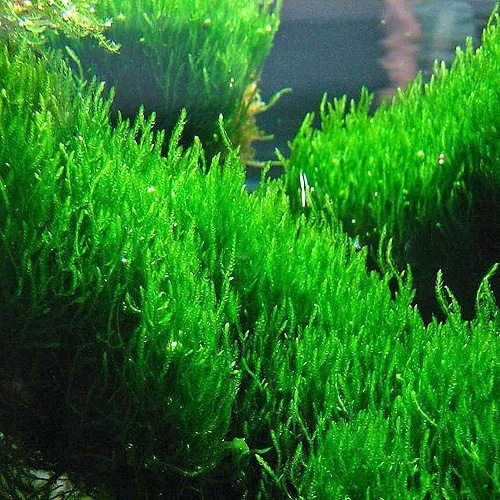
flame moss bonsai tree Flame Moss (Taxiphyllum 'Flame') Size: 1 Portion, Material: 4 Ounce Cup Live Aquarium Plants BUY 2 GET 1 Free

Sale price$24.58 Regular price$27.31
Save 10%

Shipping Estimate
USA
  • USA
  • CAN

Ships within 48 hours · Estimated delivery Jul 11 - Jul 16

Promo Codes Available:

For Your Every Summer RSVP, with Code: SUMMER15

Description

flame moss bonsai tree Flame Moss (Taxiphyllum 'Flame') Size: 1 Portion, Material: 4 Ounce Cup Live Aquarium Plants BUY 2 GET 1 FreeOverview Flame Moss (Taxiphyllum Flame) is a distinctive freshwater moss prized for its upright, twisting growth pattern that resembles small green flames. Unlike most mosses that spread horizontally, Flame Moss grows vertically, making it an excellent choice for adding height and structured texture to aquariums, shrimp tanks, and aquascapes. Its slow to moderate growth and easy care make it suitable for aquarists of all experience levels. Key

Overview

Flame Moss (Taxiphyllum ‘Flame’) is a distinctive freshwater moss prized for its upright, twisting growth pattern that resembles small green flames. Unlike most mosses that spread horizontally, Flame Moss grows vertically, making it an excellent choice for adding height and structured texture to aquariums, shrimp tanks, and aquascapes. Its slow to moderate growth and easy care make it suitable for aquarists of all experience levels.

Key Features

  • Upright, spiral flame-like growth

  • Unique vertical texture compared to other mosses

  • Hardy and adaptable to most freshwater conditions

  • Easily attaches to hardscape and décor

  • Slow to moderate growth for easy maintenance

Why Choose Flame Moss (Taxiphyllum ‘Flame’)?

  • One of the few mosses with true vertical growth

  • Adds height without aggressive spreading

  • Extremely low maintenance once established

  • Ideal for shrimp and fry habitats

  • Enhances aquascapes with minimal effort

Benefits

  • Adds structured texture and depth

  • Provides grazing surfaces for shrimp

  • Supports biofilm and microfauna

  • Contributes to biological stability

  • Maintains compact form over time

Product Specifications

• Scientific/Common name: Taxiphyllum ‘Flame’ / Flame Moss
• Plant or product type: Live freshwater moss
• Growth rate / usage: Slow to moderate growth, decorative and functional
• Lighting / requirements: Low to moderate light
• Placement / application: Attached to rocks, wood, mesh, décor
• Difficulty level: Easy
• Tank type: Freshwater, shrimp, nano, community

Care Guide / Usage Guide

Lighting

Low to moderate lighting is sufficient. Higher light may increase growth speed but is not required.

Water

Thrives in temperatures between 68–82°F (20–28°C) with a pH range of 6.0–7.5.

Substrate

Does not require substrate. Best grown attached to hard surfaces.

CO₂

Not required.

Maintenance

Occasional trimming maintains upright shape and prevents debris buildup.

Planting / Application Instructions

  1. Rinse moss gently with clean aquarium water.

  2. Attach to driftwood, rocks, mesh, or décor using thread or aquarium-safe glue.

  3. Place in area with gentle to moderate water flow.

  4. Allow moss to naturally anchor and grow vertically.

  5. Trim lightly if growth becomes uneven.

Perfect For

  • Shrimp and nano aquariums

  • Moss walls and vertical accents

  • Driftwood and rock hardscape

  • Low-tech and high-tech tanks

  • Fry-safe community setups

Important Notes

  • Plant Selection Notice: These will be a plant of our choice, selected based on current availability, size, and overall health to ensure the best quality upon arrival.

  • Live moss naturally varies in density and length.

  • Growth rate and final appearance depend on lighting and nutrients.

  • Some initial loosening after shipping is normal.

Disclaimer

Images are for reference only. Actual moss size, shape, and density may vary due to natural growth patterns and aquarium conditions. Live arrival and health guarantees are subject to store policies. Adjustment periods after shipping are normal for live plants and moss.

Frequently Asked Questions

Why is it called Flame Moss?

Flame Moss (Taxiphyllum sp. 'Flame') gets its name from its unique upward-growing pattern that resembles flickering flames. Unlike most mosses that grow outward, Flame Moss grows vertically, creating a dramatic flame-like appearance.

Is Flame Moss easy to grow?

Yes, Flame Moss is beginner-friendly. It grows in low to medium light without CO2. It grows slowly (about 1 inch per month) but requires almost no maintenance. Attach it to rocks or driftwood with super glue or thread.

Does Flame Moss need CO2?

No, Flame Moss grows well without CO2 injection. CO2 speeds growth slightly but isn't necessary. Provide low to moderate light and clean water for the best results.

Shipping Notes
  • Free Standard Shipping on $100+ Orders to the USA.
  • Except Preorder products are shipped in 48 hours.
  • Delivery to the USA:
  1. Standard Shipping : 3-10 business days
  • If time is of the essence, please consider selecting expedited delivery for faster service.
Exchange/Return Notes
  • We offer a 30-day return/exchange service after receiving.
  • Final sale items are not eligible for returns or exchanges.
  • To process your return/exchange, please contact us at [email protected]
  • Please click here for more details>>> Return & Exchange Policy
SKU: 18271850579

Discover Niche Categories That Outsell flame moss bonsai tree

Top-Converting Item to Boost Your Average Order

4.3 ★★★★★
Based on 68 reviews
Sort
Highest Rating
Newest First
Oldest First
Product Reviews
A
Verified Purchase
Amazon Customer
Waukegan, US
★★★★★ 4
Worth the money
Size: 16 Ounce (Pack of 1)
I'm inexperienced with matcha... Just wanted to order some good matcha, only to discover all of these obscure classifications and prices varrying wildly. Before this brand, I ordered ceremonial and also "culinary cafe" from the jade brand. Couldn't really taste a significant difference, so I didn't sweat purchasing this. There is a difference with this: the higher quality matchas did foam more when mixing and had slightly thicker consistency, and tasted a bit less grassy. This brand actually tastes fantastic, if you don't mind a very subtle grassy but sweet flavor. The savory sweet flavor dominates in a good way; grassy is very much still nothing more than an afterthought. But - and a very significant but - it hardly foams after mixing. So, the viscosity of the liquid when mixed, although enjoyable, leaves something to be desired. That said, like a good salesman the seller points out that this mathca is unusual because of its concentration on being organic, even at the expense of whatever desirable flavor profile could be contributed by pesticides, lead, radiation etc. Perhaps this is an exaggeration... Nevertheless I take comfort in their emphasis on safety anyway. It's definitely more affordable, being around $1 an ounce. Thanks for keeping other matcha brands honest... So I recommend the value absolutely. But it you want the best of the best, I just don't know enough to give you a good answer.
WAS THIS REVIEW HELPFUL?YesReportShare
Reviewed in the United States on March 30, 2023
K
Verified Purchase
Kevin M. Frad
Massapequa, US
★★★★★ 5
Micro Ingredients Organic Matcha makes a good anytime tea.
Size: 32 Ounce (Pack of 1)
Micro Ingredients Organic Matcha Green Tea Powder delivers exactly what it promises: a clean, earthy, first-harvest matcha that balances approachability with authenticity. It’s a versatile and surprisingly smooth everyday matcha. The flavor leans toward earthy, grassy, and mildly nutty, with a gentle bitterness that feels natural rather than harsh.
WAS THIS REVIEW HELPFUL?YesReportShare
Reviewed in the United States on April 3, 2026
R
Verified Purchase
Robert haney
Cuba, US
★★★★★ 5
Great. Just as good as fancy stuff But dose not pair with peppermint.
Size: 16 Ounce (Pack of 1)
If you're making Macha lattes or mixing the match with anything, this is perfect! No need to buy the expensive ceremonial level stuff unless you're drinking ONLY Macha. This is honestly perfect for everything. Mix 2 of its provided spoonfuls with 1/2 cup of kettle hot water and stir, maybe even add more matcha until a bit thick, pour over a glass full of ice (should fill half the glass if full of ice) as the last half as milk with a pump of your favorite syrup. Mine is strawberry, my gf's is Vanilla. Peppermint was not good, though fyi.
WAS THIS REVIEW HELPFUL?YesReportShare
Reviewed in the United States on June 1, 2026
R
Verified Purchase
Ronald DiMaggio
San Leandro, US
★★★★★ 4
Makes It Green; Doesn't Taste as Clean
Size: 16 Ounce (Pack of 1)
It is matcha. It makes things green. For all intents and purposes, this is enough for the typical matcha user. For those with a bit of an upturned nose to anything that's "inferior" to matcha, then this is not for you. By taste, this product is not as good on the tastebuds as, say, Jade Leaf. It doesn't do matcha justice and, in my opinion, does not mix that well when making lattes. In terms of color, this one is also paling in comparison when by itself, but when added to other things as a flavoring agent or colorant, then it does the job as well as it can. I am not saying this matcha is bad at all. I think if it comes down to drinking, save your money and get some Jade Leaf or equivalent ceremonial grade matcha. You WILL taste the difference. Now if you're going to be making a lot of baked goods or cooked goods? This wouldn't be that bad—you don't want an overbearing matcha taste anyway and the shade of green this produces is not THAT bad.
WAS THIS REVIEW HELPFUL?YesReportShare
Reviewed in the United States on October 19, 2025
B
Verified Purchase
Bill Pinches
Los Angeles, US
★★★★★ 5
Contemporary translation of a set of Christian classics
Format: Hardcover
How did the New Testament come to be formed? What books were left out? What did some of those books say? These are some of the questions on the minds of many curious people today. Too often, local congregations ignore these questions, to the detriment of the church. But these questions about Christian origins are very, very real in the hearts and minds of many people today. Now, from one of the most significant writers about Christian origins today comes a completely new edition of the Apostolic Fathers -- the letters of Clement, the letters of Ignatius, the letter of Polycarp, the Martyrdom of Polycarp, the Didache, the Epistle of Barnabas, the fragments of Papias and Quadratus, the Epistle to Diognetus, and the Shepherd of Hermas. These were early Christian writings that are generally attributed to church leaders of the late first and early second centuries CE (and, in most cases, are probably authentic). Clement, for example, was an early leader in Rome (circa 96 CE); Ignatius wrote a number of letters to churches in various cities (circa 110 CE), sort of following in the footsteps of Paul. This two-volume set replaces the classic edition of the Apostolic Fathers in the Loeb Classical Library edited by Kirsopp Lake nearly a century ago. As with all books in the Loeb Classical Library, the original (in this case, Greek) text is presented on the left-hand pages, and an English translation is presented on the right. The text is extremely readable, and the introductions to each of the books are clear, succinct, and to the point. Some of these books almost made it into the New Testament! The epistles of Clement are found in some early New Testament manuscripts and were widely read in the early churches. The Shepherd of Hermas may have been the most widely read book by early Christians. Several of these books were probably written before some of books in the New Testament. In an age in which people are asking questions about the origins of Christianity and the authority of the scriptures, it is crucial that we have at least a basic understanding of our early history. In my mind, a decent familiarity with the Apostolic Fathers -- as well as the Dead Sea Scrolls and the Nag Hammadi library -- is essential. This two-volume set is extremely valuable. Ehrman's critical textual work, his contemporary translations, and his up-to-date introductions are a welcome addition to current literature. The trained scholar will delight in having a new critical edition of the Greek text . . . but an ordinary lay reader could also profit tremendously from reading some of these early Christian writings that were not deemed to be sufficiently close to the first generation of apostles to make the cut into the New Testament.
WAS THIS REVIEW HELPFUL?YesReportShare
Reviewed in the United States on August 12, 2006

recommand products