SKU: 12988954317
areca palm nurserylive

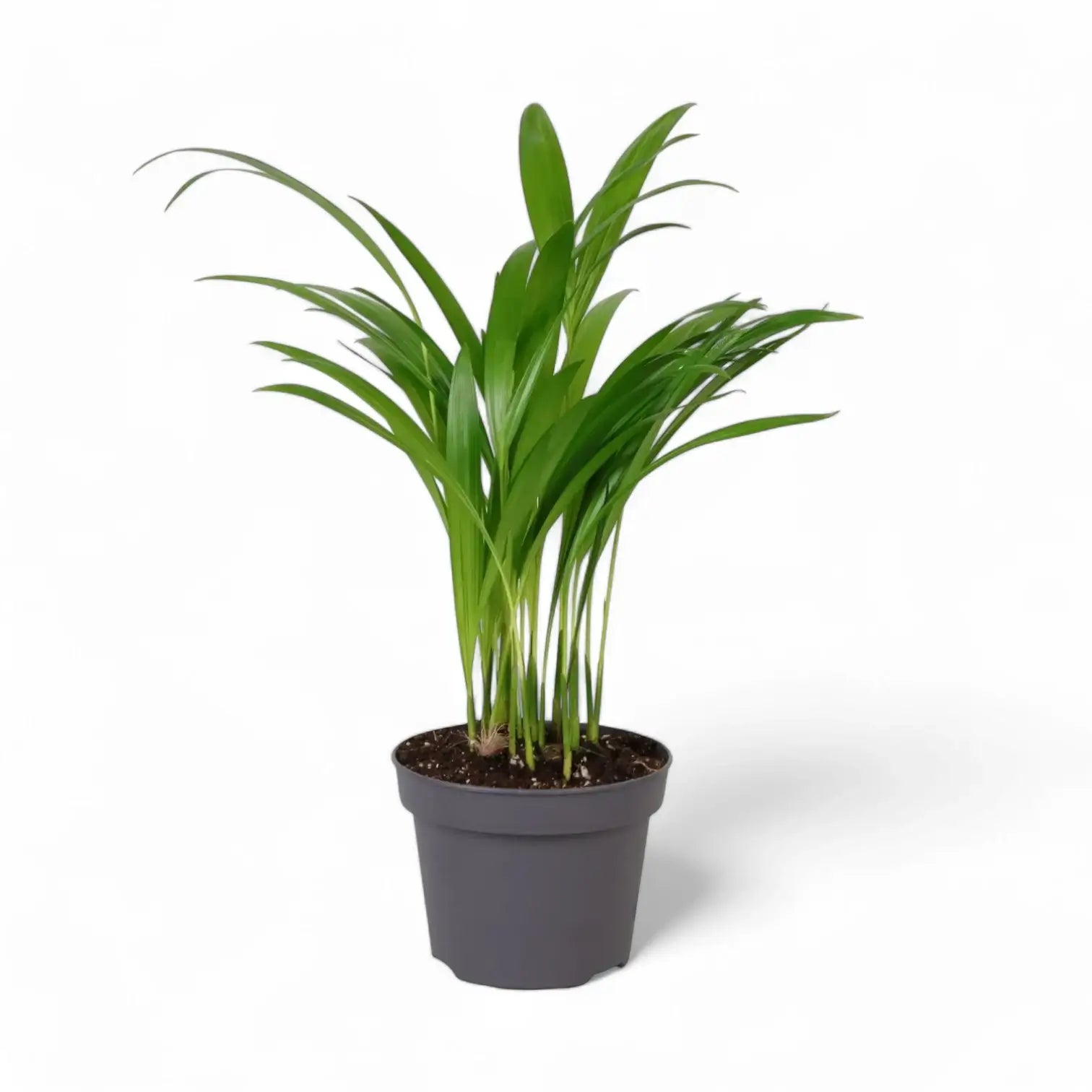
areca palm nurserylive Chrysalidocarpus lutescens

Sale price$21.93 Regular price$24.37
Save 10%

Pay in installments of $6.09 with ShopPay, AfterPay and Klarna

Shipping Estimate
USA
  • USA
  • CAN

Ships within 48 hours · Estimated delivery Jul 16 - Jul 21

Promo Codes Available:

For Your Every Summer RSVP, with Code: SUMMER15

Description

areca palm nurserylive Chrysalidocarpus lutescensChrysalidocarpus lutescens Chrysalidocarpus lutescens, still widely known under the synonym Dypsis lutescens, is a clustering palm with upright cane like stems and long, arching feather leaves. Several stems rise from the base, creating a soft, fountain shaped crown with yellow green petioles and narrow leaflets arranged along each frond. Indoors, this palm develops slowly into a broad, leafy specimen with a layered vertical outline. As the stems

Chrysalidocarpus lutescens

Chrysalidocarpus lutescens, still widely known under the synonym Dypsis lutescens, is a clustering palm with upright cane-like stems and long, arching feather leaves. Several stems rise from the base, creating a soft, fountain-shaped crown with yellow-green petioles and narrow leaflets arranged along each frond.

Indoors, this palm develops slowly into a broad, leafy specimen with a layered vertical outline. As the stems mature, they become more defined, while the fronds keep the crown airy, layered, and finely textured.

Golden cane palm details

  • Golden cane palm forming grouped yellow-green stems
  • Arching pinnate fronds with many narrow green leaflets
  • Yellow-green leaf stalks and midribs give the plant its warm tone
  • Can form a sizeable indoor floor plant over time
  • Rarely flowers indoors; mature outdoor plants may produce yellow flowers and small fruits

Eastern Madagascar origin and clumping growth

Chrysalidocarpus lutescens is native to Madagascar and belongs to the palm family, Arecaceae. In habitat and tropical cultivation it can grow as a shrub-like or tree-like palm, with multiple stems forming a broad clump. Indoors, its final shape depends on light, root space, and steady watering.

Each stem grows from a central crown. Fully brown fronds can be removed at the base, while green fronds should stay in place so the palm retains enough leaf area for new fronds. New fronds emerge from the growing points and gradually open into the palm’s feathered canopy.

Because this palm forms a clump, uneven growth is normal: some canes may sit lower while newer stems fill the centre. Turn the pot occasionally so the crown develops evenly, and keep the leaf bases open enough for inspection because pests often settle where the fronds meet the stems.

Keeping Chrysalidocarpus lutescens evenly leafy

  • Light: Use a bright, indirect position. Gentle morning or late afternoon sun suits acclimated plants, while strong midday sun behind glass can scorch fronds.
  • Watering: Keep the substrate evenly lightly moist during active growth, then let the upper layer dry before watering again. Avoid cold, saturated soil.
  • Substrate: Use an airy, well-drained palm or houseplant mix with mineral drainage material to keep the root zone open.
  • Temperature: Keep the palm warm, ideally above 18 °C, and avoid cold draughts or temperatures below about 15 °C.
  • Humidity: Average to moderate indoor humidity is workable, although very dry heated air can crisp leaflet tips. Use a humidifier where winter air becomes persistently dry.
  • Feeding: Use a low-strength fertiliser in spring and summer. Too much feed can show as yellowing or salt stress on leaflet tips.
  • Repotting: Move up one pot size when roots have filled the container, often after 2–3 years. Avoid oversized pots that keep the mix wet for too long.
  • Pruning: Remove only fully spent fronds. Cutting green fronds reduces the palm’s active leaf area.
  • Leaf cleaning: Wipe dusty leaflets gently or rinse the fronds with lukewarm water so the narrow leaflets can receive light evenly.

Frond, cane and pest checks

  • Brown tips: Often linked to dry air, irregular watering, salt build-up, or old leaf age. Check moisture pattern and flush the substrate if fertiliser salts have built up.
  • Yellowing fronds: Can follow overwatering, poor drainage, low light, nutrient imbalance, or natural ageing of older leaves. Check the root zone before feeding.
  • Mites or scale insects: Fine stippling, webbing, sticky residue, or bumps on stems and leaf bases need early inspection and treatment.
  • Collapsed stems: Soft bases usually point to root or crown stress from persistently wet, cool conditions.

Pet-safe palm status

ASPCA treats the areca palm, Chrysalidocarpus lutescens, as non-toxic to cats and dogs. Sensitive pets may still get mild stomach upset from chewing the fronds.

Accepted name and synonym note

Chrysalidocarpus lutescens H.Wendl. is the accepted botanical name for this Arecaceae species. Dypsis lutescens remains a common synonym in horticulture. The genus name refers to chrysalis-like fruits, while lutescens means turning yellow, matching the yellow tones in the flowers, stems, and leaflet midribs.

Chrysalidocarpus lutescens grows into golden cane clusters with airy fronds and a full upright palm outline.

Shipping Notes
  • Free Standard Shipping on $100+ Orders to the USA.
  • Except Preorder products are shipped in 48 hours.
  • Delivery to the USA:
  1. Standard Shipping : 3-10 business days
  • If time is of the essence, please consider selecting expedited delivery for faster service.
Exchange/Return Notes
  • We offer a 30-day return/exchange service after receiving.
  • Final sale items are not eligible for returns or exchanges.
  • To process your return/exchange, please contact us at [email protected]
  • Please click here for more details>>> Return & Exchange Policy
SKU: 12988954317

Discover Niche Categories That Outsell areca palm nurserylive

Top-Converting Item to Boost Your Average Order

4.3 ★★★★★
Based on 27 reviews
Sort
Highest Rating
Newest First
Oldest First
Product Reviews
M
Verified Purchase
Maria Behar
West Palm Beach, US
★★★★★ 4
Fascinating, informative, but not for everyone.
Format: Paperback
The idea of a human energy field is not new; numerous books have been published on the subject, many of which I've seen on Amazon. I do think it makes sense, to some extent, that the human body should be surrounded by such a field or fields. As the author herself states, our psyche and spirit need protection just as much as our physical body does. The author of this book, Cyndi Dale, cites numerous scientific sources as evidence that these fields do exist. Of course, Kirlian photography has been around for many years now. For those who might not be familiar with this type of photography, it's basically a technique used to photograph the electrical discharges surrounding people and other living beings, including plants. Dale briefly discusses this process in the first chapter, "Energy and our Energetic Fields". This book also deals with the subject of the chakras, which are centers of energy in the physical body, and are also part of what is known as "the subtle body". These centers of energy are a well-known aspect of Hindu beliefs, and specifically, the yogic tradition. Although I do feel that much of New Age philosophy, psychology, and spirituality needs to be taken with a grain of salt, I nevertheless enjoyed reading this book. It's not one for casual reading, either; in fact, studying it will yield more food for thought than just one reading will provide. The author introduces the concept of energy balancing with an exploration of the four basic energy boundaries -- the physical, the emotional, the relational, and the spiritual. These are actually comprised of several of the twelve auric layers surrounding the physical body, and each has a different color, when viewed clairvoyantly; the physical is red, the emotional, orange, the relational, green, and the spiritual, white. She also discusses what life events can have detrimental effects on each of the boundaries. Next, she presents the eight specific boundary issues that most people will typically encounter. These she calls "spiritual syndromes". The first of them is named "The Paper Doll Syndrome", the basic manifestation of which being an endless repetition of the same troubling pattern in at least one area of a person's life. This might be, for example, a substance addiction that the person can't seem to break, or a pattern of getting involved in abusive relationships, also persistent in spite of therapy. The second boundary issue is named "The Vampire Syndrome". This one deals with the curious phenomenon of feeling energetically drained after being around certain people. It can manifest as a feeling of exhaustion, frustration or lack of motivation, as well. The third boundary issue, known as "The Mule Syndrome", is related to being a workaholic, of feeling duty-bound to take up the slack for others. It even involves worrying about others' concerns, to one's own detriment. Of course, physical exhaustion, as well as anxiety and depression, are also part of this boundary issue, which is related to co-dependency. The fourth boundary issue is named "The Psychic-Sensitive Syndrome". This one is specific to those people who are psychically gifted. It includes those who are highly empathic, as well as those who are able to sense supernatural beings. Admittedly, this sounds a little scary to me.... Physical symptoms such as anxiety and insomnia are typical of this syndrome, unsurprisingly enough! Dale mentions three other boundary issues -- "The Healer's Syndrome", which afflicts not only those in the medical or intuitive healing fields, but also those who are extremely kind-hearted; "The No-Boundary Syndrome", in which people are constantly hyperactive, as well as hypervigilant, and "The Environ Syndrome", which involves extreme sensitivity to environmental surroundings. Dale offers various solutions to all of these syndromes, starting, of course, with one's own self-diagnosis to see which one(s) a person might be affected by. From there, she discusses such things as visualization, guided meditations, color and crystal therapy, and sound therapy. I must admit to some skepticism as to the validity of using crystals for psychologically therapeutic purposes, because it just seems too "way out there". Some of the qualities Dale claims for crystals just seem to have no basis in scientific fact. Colors, on the other hand, do have valid psychological associations, although I'm not totally convinced of the therapeutic benefits thereof. Subsequent chapters deal with working on boundary issues to help in specific areas, such as work and success, financial issues, relationships, and parenting. Specific techniques that I do think are useful are "Uncovering Your Storyline", which is a means of digging into one's psyche in order to discover the origin of one's boundary issues, the use of sound therapy (music has scientifically been proven to profoundly affect the brain, and therefore, moods), visualization, and prayer. Although the author refers to God mostly as "the Divine", she does have a rather Christian-sounding tone in these sections of the book. I especially like her reference to "streams of grace" coming from God to take away the symptoms of the above-named syndromes. Again, this is a book that can be best appreciated by studying it, and putting its techniques into practice. While perhaps not everything will be helpful to individual readers (this depends on each reader's beliefs, as well as degree of skepticism), there is much to reflect on here, psychologically as well as philosophically speaking, not to mention the spiritual sense. Each chapter in the book is annotated, with references to scientific research articles on the Internet, for instance, as well as spiritually-related ones. There's also a bibliography for further reading. The tone of the writing is very soothing and peaceful, yet, the concepts discussed will ensure the reader's full attention. Dale never talks down to her readers, nor doe she engage in filling her chapters with any kind of jargon; in fact, she explains potentially new or confusing terms in clear, easy-to-understand language. In short, this book will not only be appreciated by veteran New Age adherents, but also by those who are open-minded enough to investigate a field of knowledge that might not entirely be sanctioned by the scientific establishment, yet, remains totally fascinating!
WAS THIS REVIEW HELPFUL?YesReportShare
Reviewed in the United States on June 23, 2014
R
Verified Purchase
Rose
Phoenix, US
★★★★★ 5
Wow!
Format: Paperback
This book was exactly what I needed as a sensitive and intuitive person. It's changed my life, and I use the techniques described daily. It's also given me greater insight into reading energy fields, and being aware of their impact in my life and work. Thank you for sharing this knowledge!
WAS THIS REVIEW HELPFUL?YesReportShare
Reviewed in the United States on November 30, 2022
A
Verified Purchase
a customer
Los Angeles, US
★★★★★ 5
Energizing
Format: Paperback
As a spiritualist Cyndi Dale is in a league of her own. She uses science, psychology and spirituality to explain her beliefs. She has a strong grasp of the energy systems - neural, cardiac, muscular, biochemical, electrical, magnetic, and esoteric. How each is vital on it's own and how each is affected by the others. How the mind, environment and contact with others affects the body's energy systems. In this book she covers the above along with Chakras, Meridians, spirit types, auric layers and much more. This book teaches and heals.
WAS THIS REVIEW HELPFUL?YesReportShare
Reviewed in the United States on October 22, 2013
M
Verified Purchase
MH
Belleville, US
★★★★★ 5
THIS BOOK SHOULD BE REQUIRED READING BY GRADE 5!!!!!!!!
Format: Paperback
THANK YOU CINDI DALE FOR ALL THE ESSENTIAL INFORMATION THAT IS IN THIS BOOK!!!!! MOST PEOPLE IN OUR AMERICAN CULTURE DON'T KNOW HOW WE ARE REALLY MADE IN SUCH SUBLE AND SACRED WAYS ENERGETICALLY. THIS BOOK SHOULD BE REQUIRED READING IN MEDICAL SCHOOLS AND IN ALL SCHOOLS THAT TEACH HEALING PROFESSIONS. WHAT A GIFT IT WOULD BE IF CHILDREN COULD BE TAUGHT ABOUT THERE OWN ENERGY BODIES AND HAVE THAT KNOWLEDGE TO CARRY WITH THEM INTO THEIR FUTURE. A MUST READ FOR EVERYONE!!!!!!
WAS THIS REVIEW HELPFUL?YesReportShare
Reviewed in the United States on April 27, 2014
E
Verified Purchase
eileen coristine
Bozeman, US
★★★★★ 5
Great little resource on tapping
Format: Paperback
Great little resource on tapping. Very concise and informative, with lots of practical applications. Well researched and easy to follow.
WAS THIS REVIEW HELPFUL?YesReportShare
Reviewed in the United States on February 23, 2018

recommand products