SKU: 12520858972
manjula pothos home depot

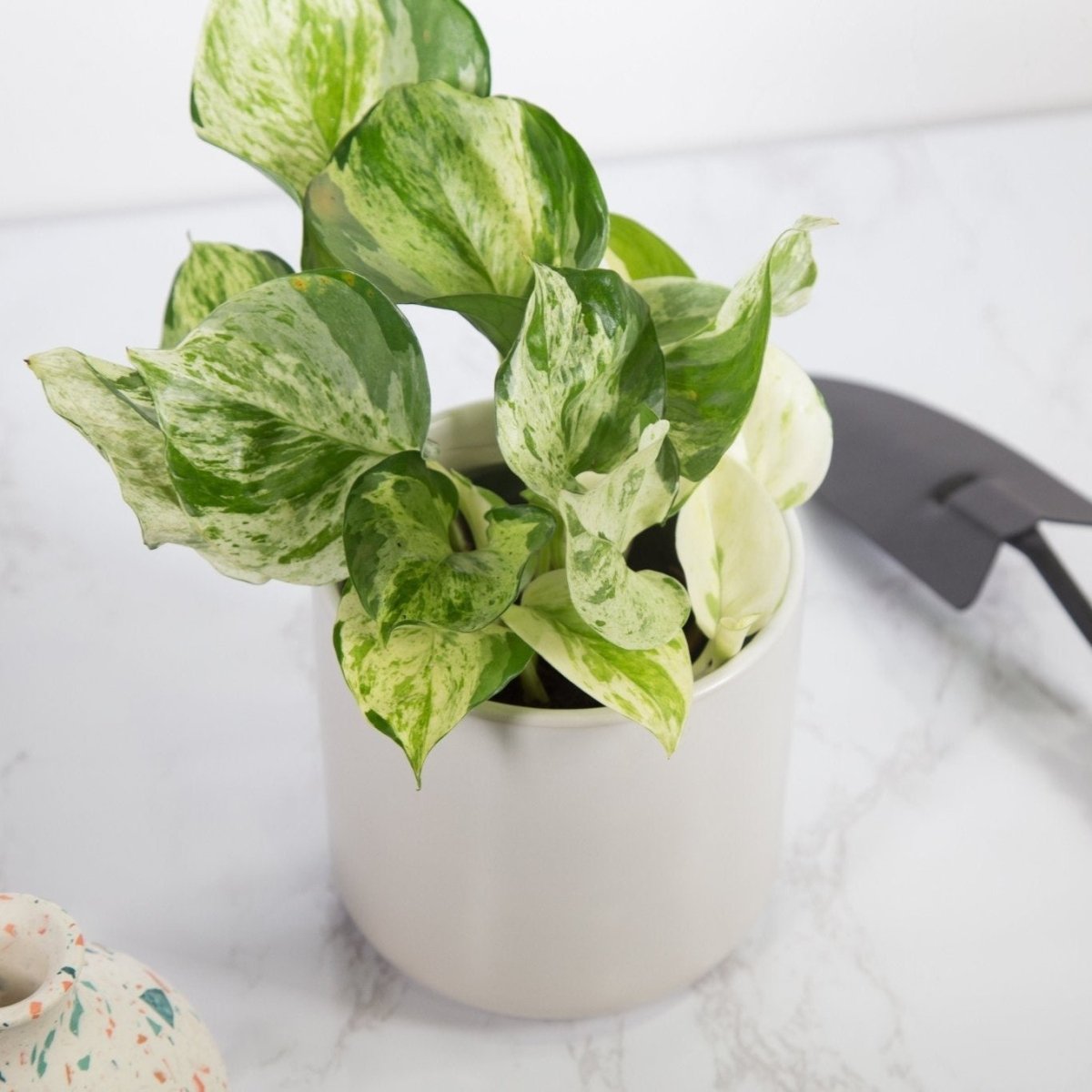
manjula pothos home depot Pothos Manjula – 4.5" Potted Rare Variegated Epipremnum | Rare Indoor Plant | Easy-Care Houseplant

Sale price$22.77 Regular price$25.30
Save 10%

Pay in installments of $6.33 with ShopPay, AfterPay and Klarna

Shipping Estimate
USA
  • USA
  • CAN

Ships within 48 hours · Estimated delivery Jul 23 - Jul 28

Promo Codes Available:

For Your Every Summer RSVP, with Code: SUMMER15

Description

manjula pothos home depot Pothos Manjula – 4.5" Potted Rare Variegated Epipremnum | Rare Indoor Plant | Easy-Care HouseplantElevate Your Space with the Manjula Pothos Epipremnum aureum Manjula is a collectors dream and a beginners delight. Each leaf presents a living watercolor of creamy white, pale green, and deep emerald, telling a story of refined elegance. Slow growing and stable in its variegation, this rare cultivar brings enduring beauty and effortless sophistication to any shelf, hanging basket, or tabletop. Plant Profile Botanical Name: Epipremnum aureum Manjula

Elevate Your Space with the Manjula® Pothos

Epipremnum aureum ‘Manjula’ is a collector’s dream and a beginner’s delight. Each leaf presents a living watercolor of creamy white, pale green, and deep emerald, telling a story of refined elegance. Slow-growing and stable in its variegation, this rare cultivar brings enduring beauty and effortless sophistication to any shelf, hanging basket, or tabletop.


Plant Profile

  • Botanical Name: Epipremnum aureum ‘Manjula’
  • Common Name: Manjula® Pothos
  • Family: Araceae
  • Native Range: Hybrid selection (parental species from Southeast Asia)
  • Mature Size: 8–12″ vine length per month under ideal conditions

Care & Cultivation

  • Light: Prefers medium to bright, indirect light. Enhanced brightness intensifies cream-white variegation; tolerates lower light with slightly slower growth.
  • Water: Water when the top 1–2″ of soil dries. Well-draining mix is essential—overwatering invites root rot.
  • Humidity: Thrives at 40–75% RH. Average home humidity is usually sufficient.
  • Temperature: 65–85 °F (18–29 °C); avoid exposure below 60 °F.
  • Soil: Use a loose, aerated potting blend (peat, orchid bark, perlite) for optimal root health.
  • Fertilizer: Feed every 4–6 weeks in spring and summer with a balanced liquid fertilizer (e.g., 20-20-20 NPK).
  • Pruning: Trim back leggy growth and remove any discolored foliage to maintain compact form.
  • Propagation: Root 4–6″ stem cuttings in water or directly into moist substrate; new roots appear within 2–3 weeks.
  • Pests & Problems: Monitor for mealybugs, spider mites, and scale. Wipe leaves with insecticidal soap at first signs of infestation.
  • Toxicity: Contains calcium oxalate crystals—keep out of reach of children and pets.

Why You’ll Love Manjula® Pothos

With its artful variegation and slow, steady growth habit, Manjula® Pothos is perfect for styling curated plant displays or gifting to special someone. Its unique color patterns ensure that every leaf is a miniature masterpiece, while its hardy nature makes it a low-stress addition to your indoor garden.


Fun Fact

This patented cultivar originated in India and is celebrated for maintaining consistent variegation even under moderate light—an uncommon trait among premium Pothos varieties.


Ready for More Expert Tips?

Explore our Pothos Care Guide for in-depth advice on lighting, watering, and propagation to keep your Manjula® Pothos thriving.

Shipping Notes
  • Free Standard Shipping on $100+ Orders to the USA.
  • Except Preorder products are shipped in 48 hours.
  • Delivery to the USA:
  1. Standard Shipping : 3-10 business days
  • If time is of the essence, please consider selecting expedited delivery for faster service.
Exchange/Return Notes
  • We offer a 30-day return/exchange service after receiving.
  • Final sale items are not eligible for returns or exchanges.
  • To process your return/exchange, please contact us at [email protected]
  • Please click here for more details>>> Return & Exchange Policy
SKU: 12520858972

Discover Niche Categories That Outsell manjula pothos home depot

Top-Converting Item to Boost Your Average Order

4.9 ★★★★★
Based on 27 reviews
Sort
Highest Rating
Newest First
Oldest First
Product Reviews
A
Verified Purchase
Amazon Customer
West Palm Beach, US
★★★★★ 5
Five Stars
Format: Paperback
Excellent
WAS THIS REVIEW HELPFUL?YesReportShare
Reviewed in the United States on April 10, 2015
C
Verified Purchase
Cuddles the Bichon
Whiting, US
★★★★★ 2
I feel as though they simplified a lot of the ...
Format: Paperback
I feel as though they simplified a lot of the information, as common sense could tell you things such as time commitment to law school and to work with your professors in the case of an emergency
WAS THIS REVIEW HELPFUL?YesReportShare
Reviewed in the United States on July 21, 2017
L
Verified Purchase
LUV 2 Read
Massapequa, US
★★★★★ 5
a nice simple history of the American flag
Format: Hardcover
This book is a history of the American flag. It has good illustrations, good print with 3 to 5 sentences per page. A page at the back show appropriate handling and uses.
WAS THIS REVIEW HELPFUL?YesReportShare
Reviewed in the United States on April 8, 2026
A
Verified Purchase
Allen G.
Port Orchard, US
★★★★★ 5
Good choice to teach kids to be well-mannered at Memorial Day.
Format: Hardcover
The book starts with the 13 colonies each with their own flag. Then it discusses the Revolutionary war and the story of Betsy Ross with the qualifier that It says no one really knows who sewed the first flag. Then it discusses Francis Scott Key and the bombardment of Fort McHenry. Then how a star is added for each state added to the union. Mentions the Civil War and raising the flag on Iwo Jima. After that it has two pages on protocol for displaying and honoring the flag, and gives the pledge of allegiance. It is a good choice to teach kids to be well-mannered at parades and Memorial Day services. The cover art depicts a series of historical flags, not all of which are mentioned in the book which raises the question “Why?”. Starting at the back is the red Saint George’s Cross on a white field. Saint George the dragon slayer is the patron saint of England. The plain cross without the centered crown is the flag of England. This flag is shown on page 2 as the flag of one of the colonies but it doesn’t say which. In front of that is the flag of Maryland Colony which is still used as their state flag. Next in line is the coiled rattle snake Don’t Tread on Me flag. According to my Compton’s Encyclopedia, this originated with Esek Hopkins the first US Navy commander in chief and was used from 1776 to 1778. Colonel Christopher Gadsden presented a copy of this flag to the South Carolina legislature, so it is often referred to as the Gadsden flag but this is incorrect. The rattle snake image was used in 1775 by the minute men of Culpepper County Virginia. The image was widespread in the revolution and may have been used earlier than that. The snake is portrayed with 13 rattles, one for each colony. Rattle snakes will not initiate an attack on humans as we are too big to eat, but if stepped on they will counter attack and can be deadly. The point of the image is that the colonists did not want war, but would not tolerate abuse. (There is a rumor that this flag is connected to the slave trade, but Hopkins was from Rhode Island which was not part of the Confederacy, and I have not found any evidence to support this rumor). Next is the flag of New England which has the Saint George cross with a Pine Tree on a blue field. This flag was used at the battle of Bunker Hill. Normally the New England flag has a red field, but blue was substituted because the red caused confusion with the British Royal Navy ensign which has a Union Jack in the top left on a red field. Naval ensigns are designed to be highly visible at distance or in the smoke of battle. The bright red field is more visible than the Union Jack alone. The Union Jack is the national flag of the United Kingdom. Next is the Union Jack on a field of thirteen stripes. This is the first flag of the thirteen colonies. It was used in 1775 and 1776 as the flag of the continental army and navy but never officially adopted. Next is the Betsy Ross flag, followed by the Fort McHenry flag, and the modern flag. I hope this helps.
WAS THIS REVIEW HELPFUL?YesReportShare
Reviewed in the United States on September 4, 2023
S
Verified Purchase
SweetT
Houston, US
★★★★★ 5
No progressive agenda! Perfect kids book!
Format: Hardcover
I'm a homeschooling parent of a kindergartener. As part of our social studies curriculum, I have been introducing the Pledge of Allegiance and the anthem, and I wanted to find a book that would go a little further into how the flag came to be and why we stand to say the Pledge, and this was the perfect book! It's written with great accuracy and at a child's level. There is also no progressive agenda, as I had discovered with some of the other kids books on the subject. It also lists when and how you are to stand for the flag, and has the Pledge printed in it. Would definitely recommend!
WAS THIS REVIEW HELPFUL?YesReportShare
Reviewed in the United States on September 27, 2025

recommand products